
Gas Oven Igniter Health Checker
Answer the following questions based on what you see and hear when attempting to start your oven. The tool will provide a preliminary diagnosis.
You turn the dial, hold down the button, and wait. Nothing happens. Or maybe you hear a faint click, but no flame appears. If your gas oven is acting up like this, the culprit is often not the main burner or the control board, but a small, unassuming part called the igniter. This component is the spark that starts the fire. When it fails, the whole cooking process stops. Knowing exactly what a failing igniter looks and sounds like can save you from unnecessary service calls and help you decide if a DIY fix is within reach.
The igniter in a gas oven is a resistive heating element, typically made of silicon carbide or ceramic. It glows red-hot when electricity passes through it, reaching temperatures high enough to ignite the natural gas or propane released by the valve. Unlike an electric spark plug used in some stovetops, most ovens use this glowing method because it’s more reliable for sustained heat. If this part cracks, burns out, or loses its electrical continuity, the gas never lights.
Key Takeaways
- A weak or failed igniter usually results in no pilot light or delayed ignition (taking more than 30 seconds).
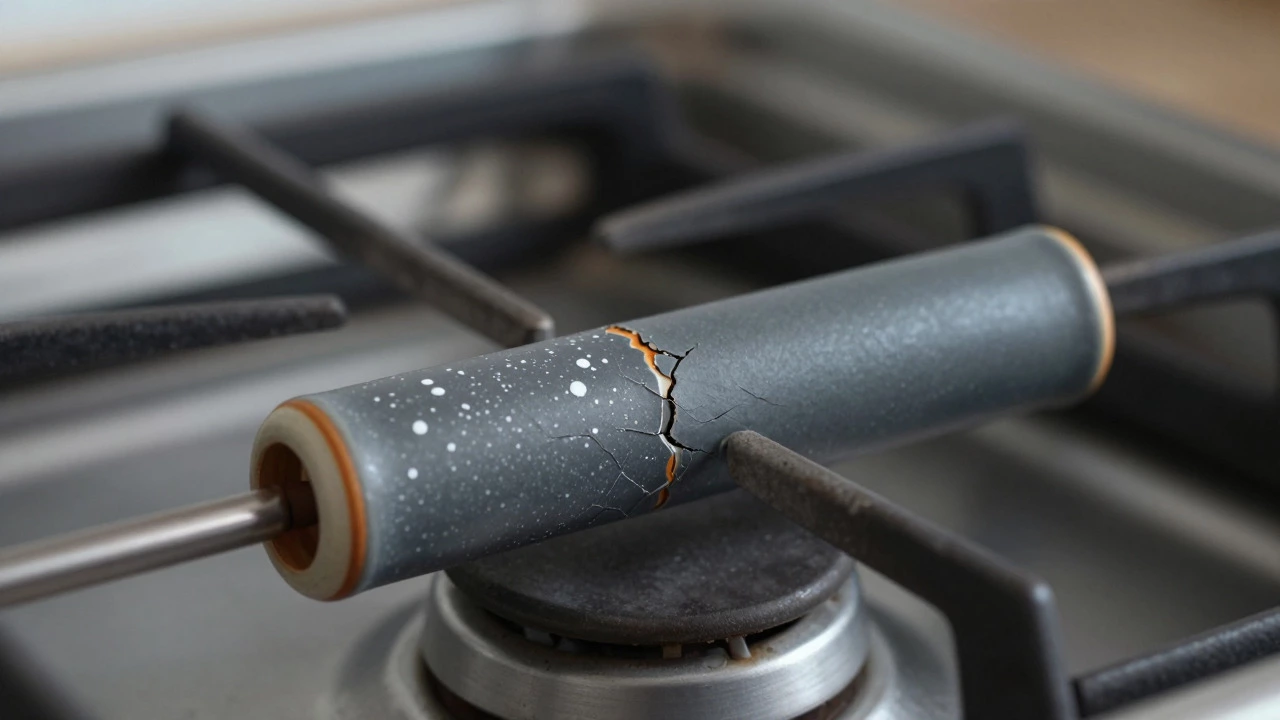
- Visible signs include physical cracks, blackened spots, or a discoloration that differs from the rest of the element.
- If the igniter glows but doesn’t get hot enough, the gas valve won’t open, leaving you with no flame.
- Replacing a standard igniter is a common DIY task, costing between $15 and $40 for the part itself.
- Always check the wiring connections before assuming the igniter is dead; loose wires are a frequent cause of failure.
Visual Indicators of Failure
The most obvious sign is visual. The igniter is usually located near the bottom of the oven cavity, close to the main burner assembly. When you look at it, you’re checking for physical integrity. A healthy igniter should have a uniform color, typically dark gray or black, depending on the material. If you see white spots, bright orange streaks, or deep cracks running along the length of the element, it’s likely compromised.
Ceramic ignitors are brittle. Over time, thermal cycling-the repeated heating and cooling-can cause micro-fractures. These cracks expand with each use until the element breaks completely or creates an open circuit. Even if the piece hasn’t snapped off entirely, a crack can prevent the current from flowing evenly across the surface. This uneven flow means only part of the igniter glows, which isn’t enough heat to trigger the gas valve sensor.
| Feature | Healthy Igniter | Failing/Faulty Igniter |
|---|---|---|
| Color Uniformity | Consistent dark gray/black | Patches of white, orange, or silver |
| Physical Structure | Smooth, intact surface | Cracks, chips, or broken tips |
| Glow Intensity | Bright red-orange glow | Dull glow, partial glow, or no glow |
| Time to Glow | Under 15-20 seconds | Takes 30+ seconds or never glows |
Behavioral Symptoms During Operation
If the igniter looks okay, pay attention to how it behaves when you try to start the oven. The sequence matters. You set the temperature, the control board sends power to the igniter, the igniter heats up, a thermocouple or flame sensor detects the heat, and then the gas valve opens. If any step fails, you don’t get a flame.
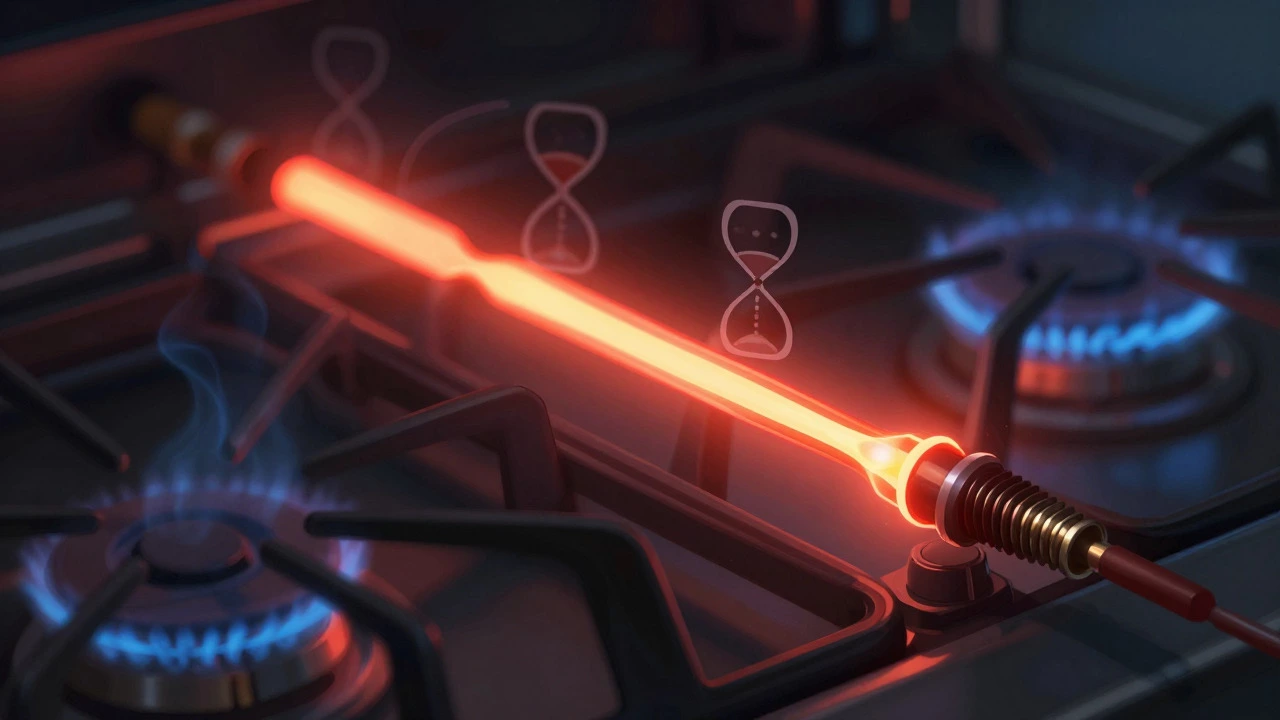
The most common behavioral symptom is a delay. In a properly functioning system, the igniter should start glowing within 10 to 15 seconds of pressing the start button. If you have to wait a minute or two, and you can smell gas before the flame finally catches, the igniter is weak. It’s taking too long to reach the required temperature. This delay is frustrating, but it’s also a safety risk because unburned gas accumulates in the oven chamber.
Another subtle sign is intermittent operation. Maybe the oven works fine today, but tomorrow it takes three tries to light. This inconsistency often points to a loose connection rather than a dead part. The heat expands the metal housing, causing a wire terminal to shift slightly. When the oven cools, the connection tightens again. Check the screws holding the igniter in place and the wire nuts connecting the power leads. Tightening these often resolves the issue without buying a new part.
Sound and Smell Cues
Your ears and nose can diagnose problems your eyes miss. A healthy gas oven ignition is quiet, aside from the initial hiss of gas. If you hear a loud *pop* or a sharp *crack* when the igniter activates, the element might be breaking under thermal stress. This sound indicates a structural failure that will likely lead to total breakdown soon.
Smell is another critical indicator. Natural gas has an odorant added to it so you can detect leaks. If you smell gas strongly but see no flame after several minutes, the igniter isn’t generating enough heat to convince the safety sensor that ignition has occurred. The system cuts off the gas supply to prevent an explosion. If you smell gas repeatedly during startup attempts, stop using the oven immediately. This suggests the igniter is failing slowly, allowing gas to leak into the chamber before the cut-off kicks in.
Diagnosing Electrical Continuity
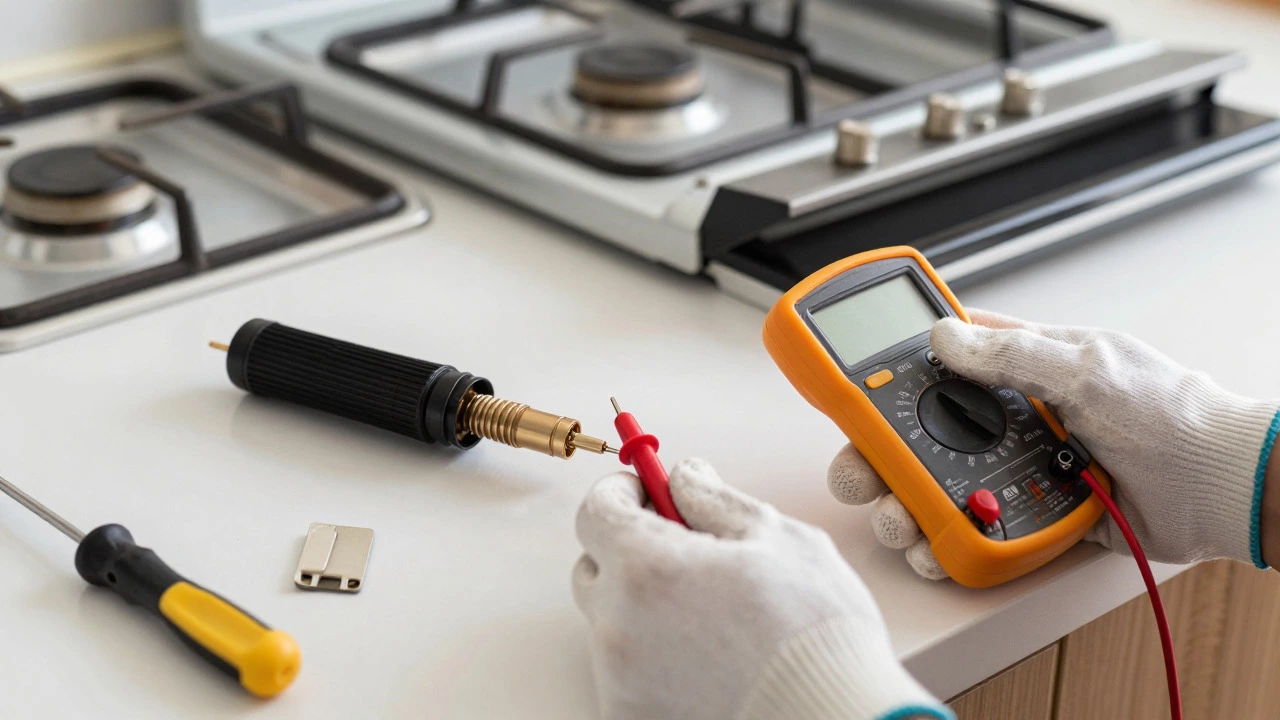
If you have a multimeter, you can test the igniter objectively. Unplug the oven first for safety. Disconnect the wires from the igniter terminals. Set your multimeter to resistance (ohms). Touch the probes to the two ends of the igniter element. A good igniter typically reads between 10 and 200 ohms, depending on the specific model and size. If you read infinite resistance (often displayed as "OL" or "1"), the circuit is open, and the part is dead. If you read zero, there’s a short, though this is rare for ignitors.
It’s worth noting that some modern ovens use electronic ignition systems that send a high-voltage pulse rather than a continuous low-voltage glow. For these, the resistance test still applies to the coil portion, but the logic is different. However, for the vast majority of residential gas ovens, the simple resistance check is definitive. If the reading is outside the normal range, replace the part. They are inexpensive and easy to swap.
Common Misdiagnoses to Avoid
Before you order a new igniter, rule out other issues that mimic its failure. The gas valve solenoid could be stuck closed. If the igniter glows brightly and gets hot, but no gas comes out, the problem is upstream. The thermostat might also be faulty, failing to send power to the igniter in the first place. If the igniter never glows at all, check if the oven even receives power. Look at the display panel. If the numbers are dim or absent, the issue is with the main control board or the house breaker, not the igniter.
Also consider the flame sensor. If the igniter works perfectly, lighting the gas, but the flame goes out after 30 seconds, the flame sensor is dirty or misaligned. It thinks the fire went out, so it shuts off the gas. Cleaning this sensor with fine steel wool often fixes this specific symptom. Don’t confuse a flame-out issue with an ignition-startup issue. One is about starting; the other is about sustaining.
Replacement Process and Safety Tips
Replacing an igniter is one of the easiest gas appliance repairs you can do. You’ll need a screwdriver, possibly a nut driver, and the correct replacement part. Match the shape, size, and mounting bracket style of the old unit. Generic parts rarely fit correctly due to varying housing designs.
- Unplug the oven from the wall outlet. Do not rely on the switch alone.
- Remove the lower rack and any access panels covering the burner area.
- Disconnect the electrical wires from the igniter terminals. Note their positions or take a photo.
- Unscrew the mounting bracket holding the igniter in place.
- Slide the old igniter out and insert the new one.
- Reconnect the wires securely. Ensure no bare copper is exposed.
- Reassemble the panels and plug the oven back in.
- Test the ignition cycle. Watch for the glow and listen for the gas valve click.
Safety note: Always ensure the gas line is secure if you’ve moved the oven. If you smell gas after reassembly, wait 15 minutes before trying to light it again to allow ventilation. If the problem persists after replacing the igniter, the issue is likely the gas valve or the control board, which may require professional attention.
How long does a gas oven igniter last?
On average, a gas oven igniter lasts between 3 to 5 years of regular use. However, this varies based on frequency of use, quality of the part, and environmental factors like humidity. Some cheap units fail in 18 months, while high-quality ceramic ones can last over a decade.
Can I clean a gas oven igniter?
Not really. Unlike a spark plug, a resistive igniter doesn’t have carbon buildup that needs cleaning. If it’s discolored or cracked, cleaning won’t restore its function. Wipe away any grease or debris around the base with a dry cloth, but focus on replacement if performance is poor.
Is it safe to use a gas oven with a slow igniter?
It’s risky. A slow igniter allows unburned gas to accumulate in the oven cavity. While the safety system eventually cuts off the gas, repeated cycles increase the chance of a large pop or flash fire when the gas finally ignites. It’s best to replace the part promptly.
Do all gas ovens use the same type of igniter?
No. There are variations in shape (straight, curved, U-shaped), size, and voltage requirements. Always measure the old part and check the model number of your oven to find the exact compatible replacement. Universal fits are rare and often unreliable.
What if the igniter glows but the oven still doesn’t light?
If the igniter reaches full heat but no gas flows, the gas valve solenoid is likely faulty. The valve requires a specific amount of heat from the igniter (detected by a thermocouple) to stay open. If the thermocouple is weak or misaligned, the valve closes. Check the alignment of the thermocouple relative to the igniter glow.