

Boiler Repair vs. Replacement Cost Calculator
Use this tool to estimate the total cost of fixing your boiler and compare it against the price of a new unit. It helps you apply the "50% Rule" to make the smartest financial choice.
If the repair cost exceeds 50% of the new unit's price, replacement is generally the better long-term investment due to efficiency gains and warranties.
Estimated Repair Cost
New Unit Price
50% Threshold
Your boiler makes a weird noise, the pilot light goes out, or the water stops being hot. Panic sets in immediately. You grab your phone and search for "how much does it cost for a boiler to be fixed?" The answers you find online are often confusing, ranging from $50 to over $1,000. Why such a huge gap? Because boiler repair is not a one-size-fits-all service. The final bill depends on three main factors: the type of fault, the parts needed, and whether you need an engineer at midnight or during office hours.
In this guide, we break down the actual costs you should expect in 2026. We look at labor rates, common part prices, and hidden fees that catch homeowners off guard. By the end, you will know exactly what to ask your technician before they start working.
Quick Summary / Key Takeaways
- Average minor repairs (like replacing a pressure valve or igniter) typically cost between $150 and $400 including labor.
- Major component failures (such as heat exchangers or pumps) can range from $800 to $2,500+ depending on the model.
- Emergency call-out fees add $75 to $150 on top of standard rates if the issue happens outside business hours.
- Combi boilers often cost more to fix than conventional systems due to their compact, integrated design.
- Always request a written quote before work begins to avoid surprise charges for unexpected issues.
Understanding the Base Labor Costs
Labor is usually the biggest chunk of your bill. In most regions, certified boiler engineers charge an hourly rate. As of mid-2026, the standard hourly rate for a qualified technician hovers between $90 and $130 per hour. However, many companies offer a flat-rate diagnostic fee instead. This fee, typically around $80 to $120, covers the initial inspection. If you proceed with the repair, this amount is often deducted from the total job cost. If you decide not to fix it, you pay only the diagnostic fee.
The complexity of the job dictates how long the engineer stays. A simple thermostat replacement might take 30 minutes. Replacing a corroded heat exchanger could take four to six hours. Always ask if the quote includes all labor hours or just the first hour. Some quotes specify "first hour free" or "diagnostic included," which saves you money if the fix is straightforward.
Common Boiler Faults and Their Price Tags
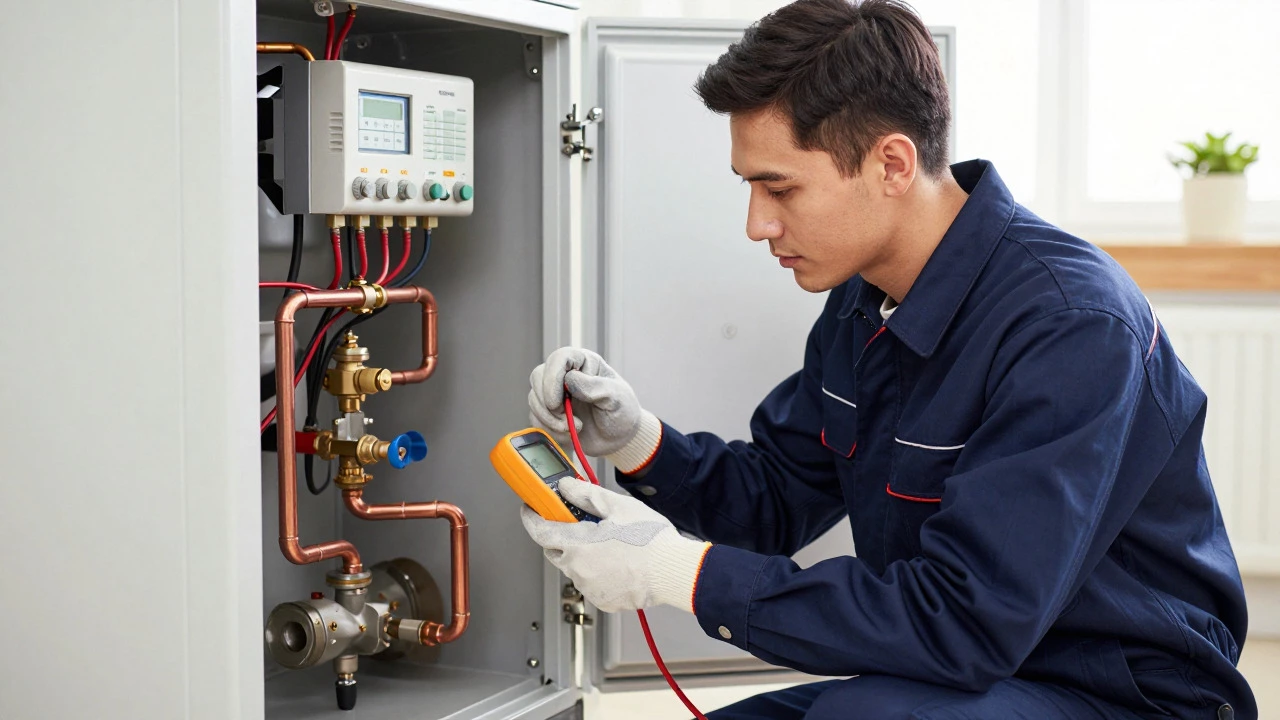
Not all breakdowns are created equal. Here is a realistic look at what specific fixes cost in 2026. These prices include both parts and labor for a standard residential unit.
| Component/Fault | Estimated Cost Range | Typical Labor Time |
|---|---|---|
| Pilot Light Ignition Issue | $150 - $300 | 0.5 - 1 hour |
| Pressure Relief Valve Replacement | $200 - $450 | 1 - 2 hours |
| Circulation Pump Failure | $400 - $800 | 2 - 3 hours |
| Thermostat Replacement | $150 - $350 | 0.5 - 1.5 hours |
| Heat Exchanger Leak | $1,200 - $2,500+ | 4 - 8 hours |
| Gas Valve Malfunction | $500 - $900 | 2 - 4 hours |
Notice the jump in cost for the heat exchanger. This part is the heart of the boiler. When it fails, it is rarely worth repairing unless the boiler is less than five years old. For older units, the cost of fixing the exchanger often exceeds the value of the machine itself.
Factors That Influence Your Final Bill
Beyond the specific part, several variables push the price up or down. Understanding these helps you negotiate better or choose the right service provider.
Boiler Type and Age
Combi boilers are popular for space-saving but have fewer accessible parts. Fixing them requires specialized tools and knowledge, which can increase labor time by 20% compared to standard floor-standing models. Older boilers (over 10 years) often have discontinued parts. Sourcing these can add shipping delays and higher part costs. If your boiler is 15 years old, check if the manufacturer still supports it. If not, you are paying premium prices for third-party alternatives.
Location and Accessibility
If your boiler is tucked behind a washing machine, inside a tight closet, or in the basement, the engineer needs extra time to access it. This adds to the labor hours. Urban areas with high demand also tend to have higher call-out fees. Rural areas might have lower base rates but higher travel surcharges if the nearest technician is far away.
Emergency vs. Scheduled Service
Breaking down at 2 AM in winter is stressful. Emergency services charge a premium. Expect to pay 1.5x to 2x the normal hourly rate for after-hours work. Additionally, there is usually a flat emergency call-out fee of $75 to $150. If your boiler has a backup heating element or you can use portable heaters, consider waiting for business hours to save significant money. Unless the leak is flooding your home, most issues wait until morning without causing permanent damage.
Repair vs. Replace: Making the Smart Financial Decision
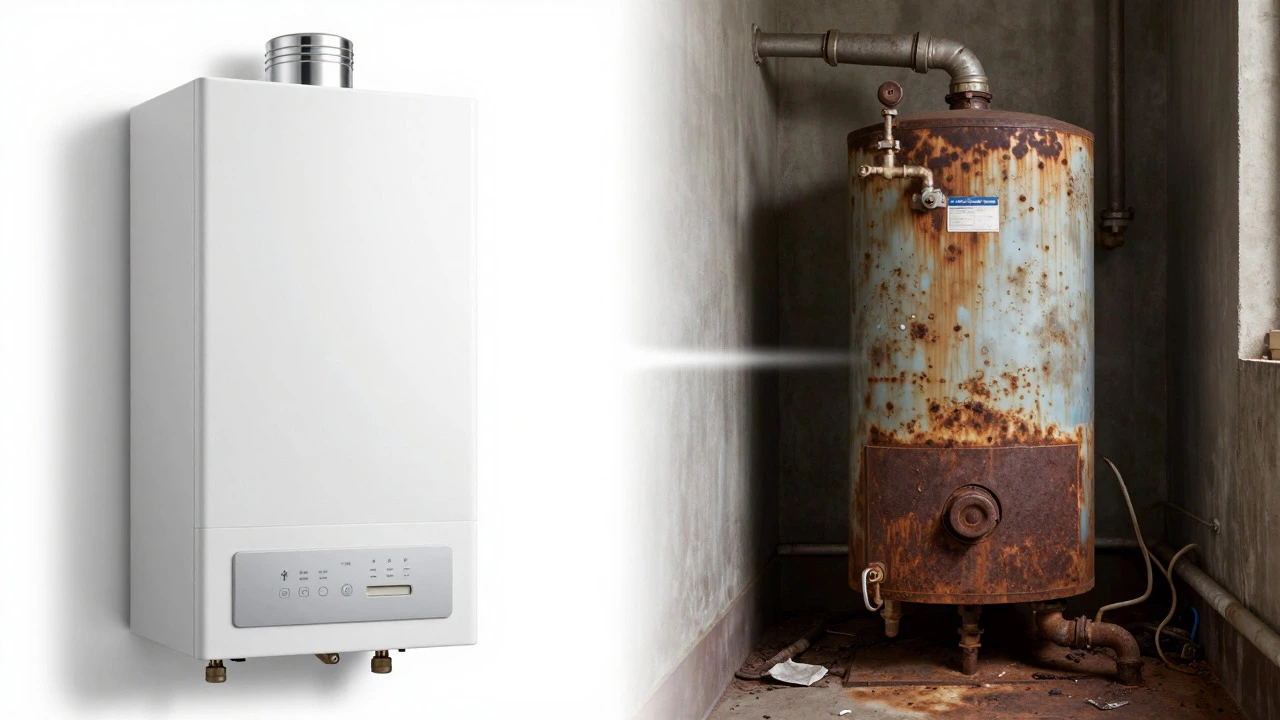
This is the most critical question. You are standing in front of a broken boiler, and the engineer says the repair will cost $1,800. Do you fix it or buy new? Use the "50% Rule." If the repair cost is more than 50% of the price of a new, comparable boiler, replace it. New high-efficiency condensing boilers now cost between $3,000 and $5,000 installed. So, if a repair exceeds $1,500 to $2,500, replacement is usually the smarter long-term investment.
Consider energy efficiency too. Old boilers operate at 60-70% efficiency. Modern units hit 90-95%. Over five years, the savings on gas bills can offset half the cost of a new installation. Plus, new boilers come with warranties, whereas repaired old units do not.
How to Get an Accurate Quote
To avoid being overcharged, follow these steps when calling for help:
- Describe the symptoms clearly. Mention noises, error codes, and when the problem started. This helps the dispatcher give a better estimate.
- Ask about the diagnostic fee. Confirm if it is waived if you accept the repair.
- Request a written estimate. Verbal quotes change. A written document lists parts, labor, and any potential extras.
- Check for membership discounts. Many service companies offer annual plans that cover diagnostics and reduce labor rates by 10-15%.
- Verify certification. Ensure the engineer is licensed for gas appliances. Unlicensed work can void insurance and create safety hazards.
Preventive Maintenance to Avoid Big Bills
The cheapest repair is the one you never need. Annual servicing costs between $100 and $200. It cleans the burner, checks pressure, and tests safety valves. This small expense catches minor issues before they become major failures. For example, a clogged filter might cause a pump failure if ignored. Servicing clears the filter for free, saving you $600 later.
Keep your boiler’s manual handy. Most modern units display error codes. Looking up the code online before calling the technician can sometimes point to a simple reset procedure you can do yourself, saving the entire call-out fee.
Frequently Asked Questions
Is boiler repair covered by home warranty?
Often, yes, but with limits. Most home warranties cover major components like pumps and valves but exclude cosmetic issues or neglect. Check your policy for the deductible amount, which is typically $75 to $150 per claim. Warranties usually require regular maintenance records to remain valid.
How long does a typical boiler repair take?
Simple fixes like thermostat replacements take under an hour. Complex jobs involving internal plumbing or gas lines can take half a day. If parts need to be ordered, the repair might be split into two visits: one for diagnosis and one for installation.
What is the average lifespan of a boiler?
With proper maintenance, a quality boiler lasts 15 to 20 years. Combi boilers may last slightly longer due to fewer moving parts. After 15 years, efficiency drops significantly, and repair frequency increases, making replacement a better financial choice.
Should I keep my old boiler if it breaks once?
If it is under 10 years old and the repair is under $500, keeping it is reasonable. If it is older or the repair is expensive, plan for replacement. One major breakdown is often a sign of systemic wear. Monitor the unit closely for another year before committing to a full replacement.
Do I need a permit for boiler repair?
Minor repairs usually do not require a permit. However, if the repair involves changing the gas line, moving the boiler location, or upgrading the flue system, a local building permit may be required. Your licensed engineer will handle this process and ensure compliance with local codes.