
Dishwasher Repair vs. Replace Calculator
Repair Cost Percentage:
The 50% Rule suggests replacing if repairs exceed 50% of a new unit's price.
Age Factor:
Most dishwashers last 10-15 years.
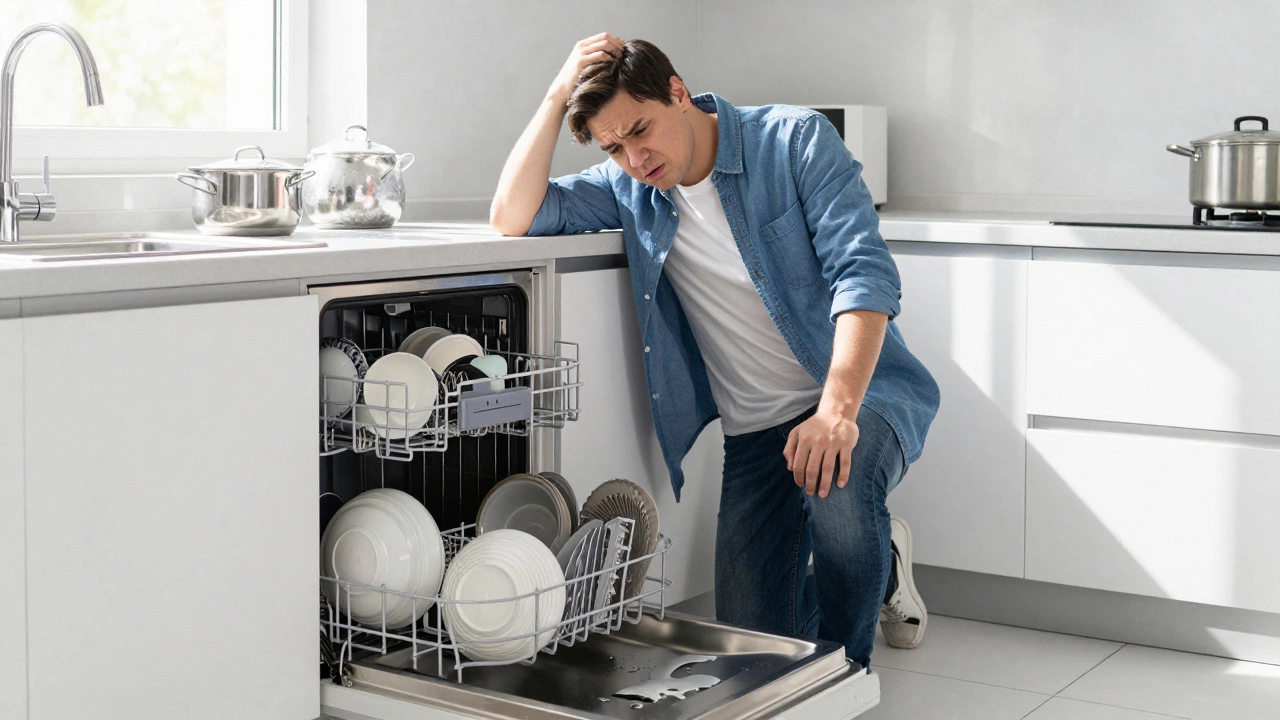
Your dishwasher stops draining halfway through a cycle, or maybe it just refuses to turn on at all. The immediate question isn't just "what is wrong?" but rather, "is this worth fixing?" It’s a frustrating moment that usually happens right after you’ve loaded a sink full of dirty pots. You’re standing there, staring at the humming machine, wondering if you should call a technician or head to the store for a new one.
The short answer is yes, dishwashers can usually be repaired. In fact, most breakdowns are caused by minor issues like clogged filters, worn-out door seals, or faulty control boards-components that are relatively inexpensive and easy to replace. However, the real question is whether repairing your specific unit makes financial sense compared to buying a new model. This depends heavily on the age of your appliance, the cost of parts, and the labor rates in your area.
How Long Do Dishwashers Actually Last?
Before deciding to spend money on repairs, you need to understand the lifespan of your current machine. Most modern dishwashers are designed to last between 10 and 15 years. If your unit is younger than seven years, it’s almost always worth repairing. Manufacturers build these machines with durability in mind, and early failures are often covered under warranty or result from simple user errors.
If your dishwasher is older than ten years, the calculus changes. At this stage, other components besides the broken part may start failing soon. For example, replacing a heating element might fix today’s problem, but the motor could give out next month. When an appliance reaches the end of its expected life cycle, repeated repairs become a money pit. Think of it like maintaining a car: you keep fixing a two-year-old sedan because it has many miles left, but you stop spending thousands on a twenty-year-old rust bucket.
| Age of Dishwasher | Likelihood of Future Issues | Recommendation |
|---|---|---|
| Under 7 Years | Low | Repair immediately |
| 7-10 Years | Moderate | Repair if cost is under $300 |
| Over 10 Years | High | Consider replacement |
The 50% Rule: When to Stop Fixing
To make an objective decision, technicians often use the "50% Rule." This heuristic suggests that if the cost of the repair exceeds 50% of the price of a new, comparable dishwasher, you should replace the old one. Let’s break this down with real numbers.
A mid-range new dishwasher typically costs between $600 and $900, including installation. If a repair quote comes in at $400, you’re hitting that 50% threshold. Is it worth paying $400 to extend the life of an eight-year-old machine? Probably not, especially since a new model will come with a fresh warranty and better energy efficiency. On the other hand, if the repair is $150 for a simple drain pump replacement, that’s well below the threshold, making it a smart investment.
Keep in mind that labor costs vary significantly by location. In cities with high living costs, hourly rates for appliance technicians can range from $80 to $120 per hour. Parts themselves are rarely the expensive component; it’s the time spent diagnosing and accessing the issue that drives up the bill. Always ask for a detailed estimate that separates parts and labor before agreeing to any work.

Common Repairs That Are Worth Doing
Not all repairs are created equal. Some issues are quick fixes that add years to your appliance’s life, while others signal impending doom. Here are the most common dishwasher problems and whether they justify a repair visit.
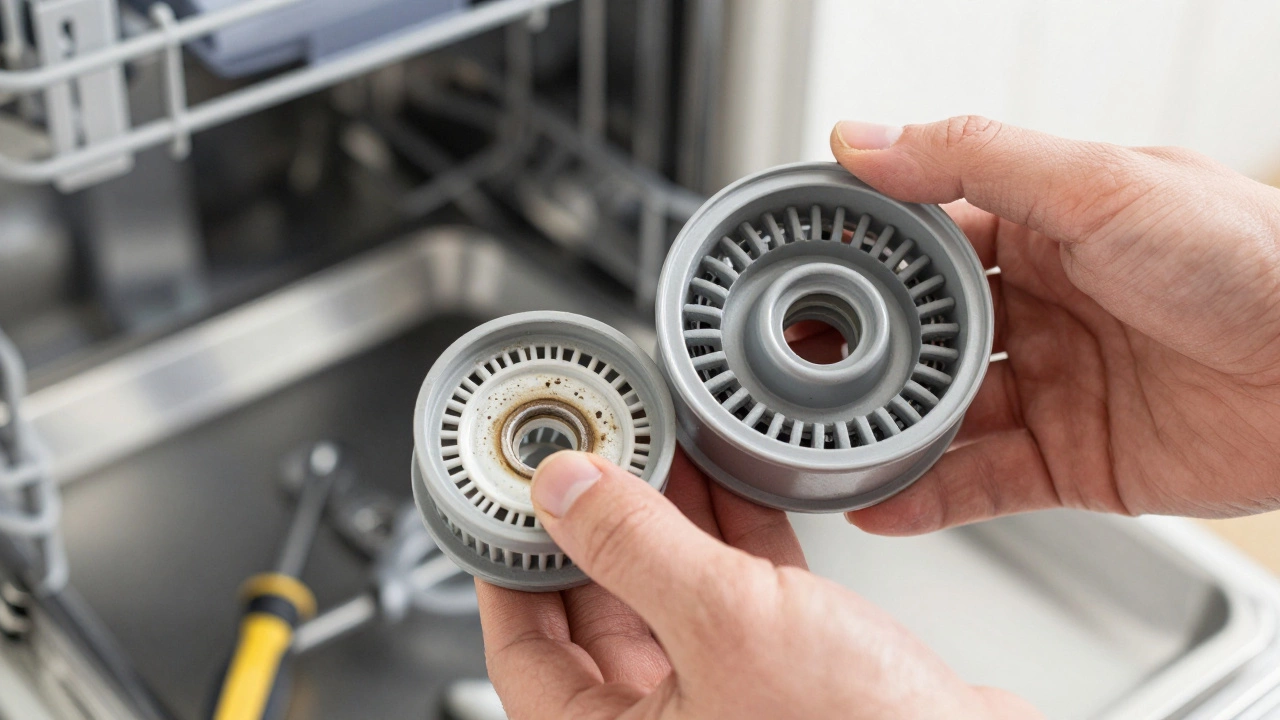
- Clogged Filter or Drain Hose: This is the most frequent cause of poor cleaning or standing water. It’s often a DIY fix. Cleaning the filter takes five minutes and costs nothing. If a technician charges you $100+ for this, you’ve been overcharged.
- Faulty Door Latch or Seal: If your dishwasher won’t start, check the latch. A broken seal causes leaks. Both parts are inexpensive (usually under $50) and easy to replace. These repairs are almost always worth it.
- Broken Heating Element: Dishes come out wet or cold? The heating element might have burned out. Replacement costs around $100-$150 including labor. Since this doesn’t affect the core mechanical function, it’s a good candidate for repair unless the tub is also rusty.
- Malfunctioning Control Board: This is the brain of the dishwasher. If it fails, the whole system goes dark. Control boards are expensive ($200-$400) and difficult to diagnose. If your unit is older than eight years, skip the repair and buy a new machine.
- Leaking Pump or Motor: Water pumps and motors are sealed units. When they fail, they usually need complete replacement. These repairs often exceed $300. Unless you love your specific model, this is a strong signal to upgrade.
DIY Fixes vs. Professional Help
You don’t always need to call a professional. Many dishwasher issues are superficial and can be resolved with basic tools. Before scheduling a service call, try these steps:
- Check the Power Supply: Ensure the dishwasher is plugged in and the circuit breaker hasn’t tripped. Sometimes, a tripped GFCI outlet in the kitchen is the culprit.
- Clean the Filter: Locate the filter at the bottom of the tub. Remove it, rinse off food debris, and reinstall it. This solves 30% of drainage issues.
- Inspect the Spray Arms: Look for clogs in the holes of the rotating spray arms. Use a toothpick to clear any blockages. Poor water circulation leads to dirty dishes.
- Check the Door Seal: Wipe the rubber gasket around the door. Grease and food particles can prevent a tight seal, causing leaks or error codes.
If these steps don’t resolve the issue, and the problem involves electrical components or internal plumbing, it’s time to call a pro. Attempting to replace a control board or pump without experience can void warranties and lead to further damage.
Signs Your Dishwasher Needs Replacement, Not Repair
Sometimes, the machine itself tells you it’s done. Even if a specific part can be fixed, the overall condition of the appliance might warrant a replacement. Watch for these red flags:
- Rust Inside the Tub: Rust indicates corrosion that can spread to other components. It also harbors bacteria and can stain your dishes. There’s no patch for a rusted stainless steel interior.
- Frequent Breakdowns: If you’ve called a technician twice in the last year, the underlying structure of the machine is likely failing. You’re playing whack-a-mole with symptoms.
- Excessive Noise: Loud grinding or screeching sounds often mean the bearings in the motor or pump are wearing out. This is a major mechanical failure.
- Outdated Technology: Older dishwashers use significantly more water and electricity. Newer models are ENERGY STAR certified, using as little as 3.5 gallons per cycle compared to 6-7 gallons in older units. Over three years, the savings on utility bills can offset the cost of a new machine.
Cost Comparison: Repair vs. Replace
To help you visualize the financial impact, let’s look at a typical scenario. Imagine you have a nine-year-old dishwasher that needs a new pump assembly.
Repair Option: Part cost: $120 Labor (2 hours): $160 Total: $280 Remaining Life Expectancy: 2-3 years
Replacement Option: New Mid-Range Dishwasher: $750 Installation Fee: $100 Total: $850 Life Expectancy: 10-12 years Warranty: 1-5 years depending on brand
In this case, the repair is cheaper upfront, but you’re spending $280 to get perhaps two more years of service. That’s $140 per year. The new machine costs $850 but lasts ten years, which is $85 per year. Plus, you get better performance and lower utility bills. The math clearly favors replacement here.
Is it worth repairing a 10-year-old dishwasher?
Generally, no. A 10-year-old dishwasher is at the end of its average lifespan. While minor fixes like cleaning filters or replacing door seals are worthwhile, major repairs involving pumps, motors, or control boards usually cost too much relative to the remaining life of the appliance. Consider replacing it to benefit from improved energy efficiency and a new warranty.
How much does it cost to repair a dishwasher?
Repair costs vary widely based on the issue. Simple fixes like replacing a door latch or cleaning a clog might cost $75-$150 including labor. More complex repairs, such as replacing a heating element or drain pump, typically range from $150-$300. Major electronic failures or motor replacements can exceed $400. Always request a diagnostic fee upfront, which is often credited toward the final repair cost if you proceed.
Can I fix a leaking dishwasher myself?
Yes, many leaks are DIY-friendly. Start by checking the door seal for cracks or debris. Inspect the hose connections for loose fittings. Also, ensure the dishwasher is level; an uneven install can cause water to pool and leak out. If the leak originates from inside the cabinet or the pump area, it’s best to call a professional, as these require disassembly and specialized knowledge.
Why is my dishwasher not draining?
The most common cause is a clogged filter or drain hose. Food particles can accumulate in the filter mesh, blocking water flow. Check the garbage disposal connection if your dishwasher drains into it; a clogged air gap or disposal inlet can also prevent drainage. If these are clear, the drain pump motor may have failed, requiring professional repair.
Do new dishwashers save money on utilities?
Yes, significantly. Modern ENERGY STAR-certified dishwashers use less water and electricity than models from even five years ago. They can use up to 30% less water and 15% less energy. Over the lifetime of the appliance, these savings can amount to hundreds of dollars, helping to offset the initial purchase price.