
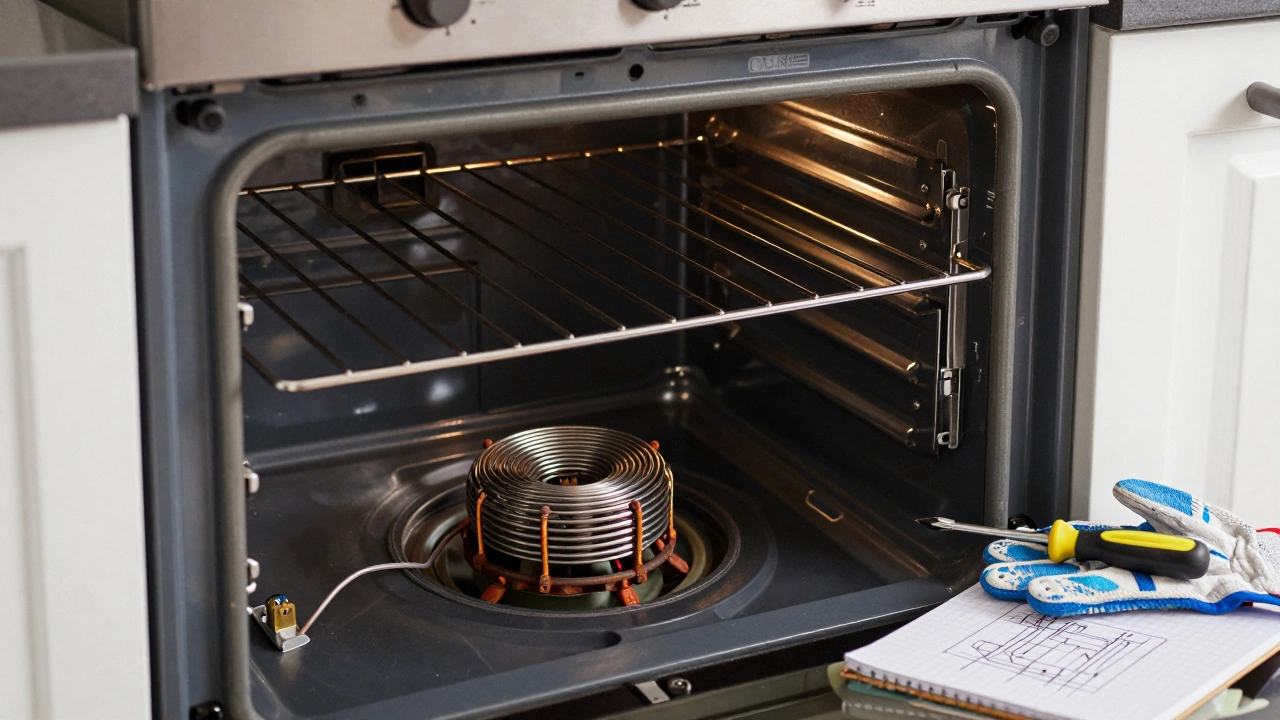
Oven Element Compatibility Checker
Before purchasing a new oven element, verify compatibility to prevent fire hazards and electrical damage. Most oven element failures happen because of using the wrong replacement.
Ever turned on your oven and nothing but cold air comes out? Or maybe the bottom of your roast is raw while the top’s burnt? Chances are, your oven element has died. It’s one of the most common failures in electric ovens-and it’s also one of the easiest fixes you can do yourself. No need to call a technician. No need to buy a new oven. Just a few tools, some patience, and you’ll be baking again in under an hour.
How oven elements work
Every electric oven has at least two heating elements: one on the bottom for baking and roasting, and one on the top for broiling. The bottom element is the one that usually goes first because it’s used more often and takes the most heat. These elements are made of a metal coil, usually nichrome, that glows red-hot when electricity flows through it. Over time, the metal expands and contracts with each heating cycle. That constant stress causes tiny cracks. Eventually, the coil breaks, the circuit stops, and your oven stops heating.
Most oven elements last 5 to 10 years. If yours is older than that and suddenly stopped working, replacement is almost always the fix. New elements cost between $30 and $70, depending on your oven model. Labor from a technician? Usually $150 to $250. Doing it yourself saves you at least $100-and you learn something useful in the process.
What you’ll need
You don’t need fancy tools. Just these basics:
- Replacement oven element (match your model number exactly)
- Phillips screwdriver
- Flathead screwdriver (optional, for prying)
- Work gloves
- Flashlight or phone light
- Notepad and pen (to sketch wiring)
Getting the right replacement element is critical. Open your oven door and look for a sticker inside the oven cavity or on the back wall. It’ll list your oven’s model number. Write it down. Then search online using that number plus "heating element" or "bake element." Sites like eBay, Amazon, or appliance parts retailers (like Appliance Parts Pros or PartSelect) have searchable databases. Don’t guess-using the wrong element can damage your oven or cause a fire.
Step-by-step: Replacing the element
Before you start, unplug the oven or turn off the circuit breaker. Electricity doesn’t wait. Even when the oven is off, the element terminals can still carry live current if the breaker isn’t flipped. This isn’t optional safety-it’s non-negotiable.
- Remove the oven racks. You’ll need space to work.
- Locate the element. It’s the long, coiled metal rod at the bottom of the oven. It’s usually held in place by two metal brackets with screws.
- Use your screwdriver to remove the screws holding the element in place. Some models have one screw on each end; others have two on each side. Take note of how the element sits-some are mounted flush, others stick out slightly.
- Once the screws are out, gently pull the element forward. You’ll see two or three wires connected to terminals at the back. Don’t yank. These wires are fragile.
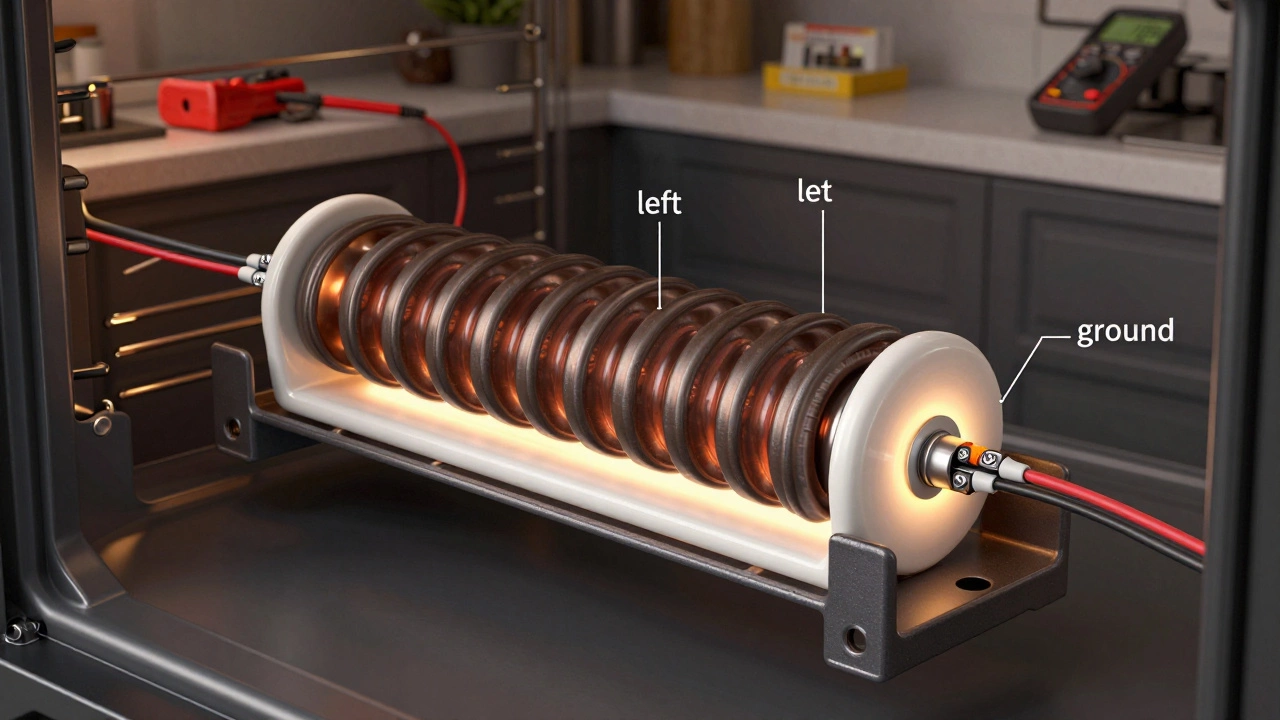
- Take a photo or sketch of how the wires are connected. Label them if needed (e.g., "left," "right," "ground"). This is your insurance against wiring it wrong.
- Unscrew the wire terminals. Use a flathead screwdriver to loosen the screws holding each wire. Pull the wires off carefully. Some are held by push-on connectors-those just slide off.
- Take the old element out. Compare it to the new one. They should look identical. If they don’t, double-check the model number.
- Attach the wires to the new element in the exact same order. Tighten the terminal screws firmly but don’t over-torque. Overtightening can strip the threads or crack the ceramic insulation.
- Push the new element back into place. Reattach the mounting screws. Make sure the element sits evenly and doesn’t touch the oven floor or walls.
- Replace the racks, plug the oven back in, or turn the breaker on.
Test it before you cook
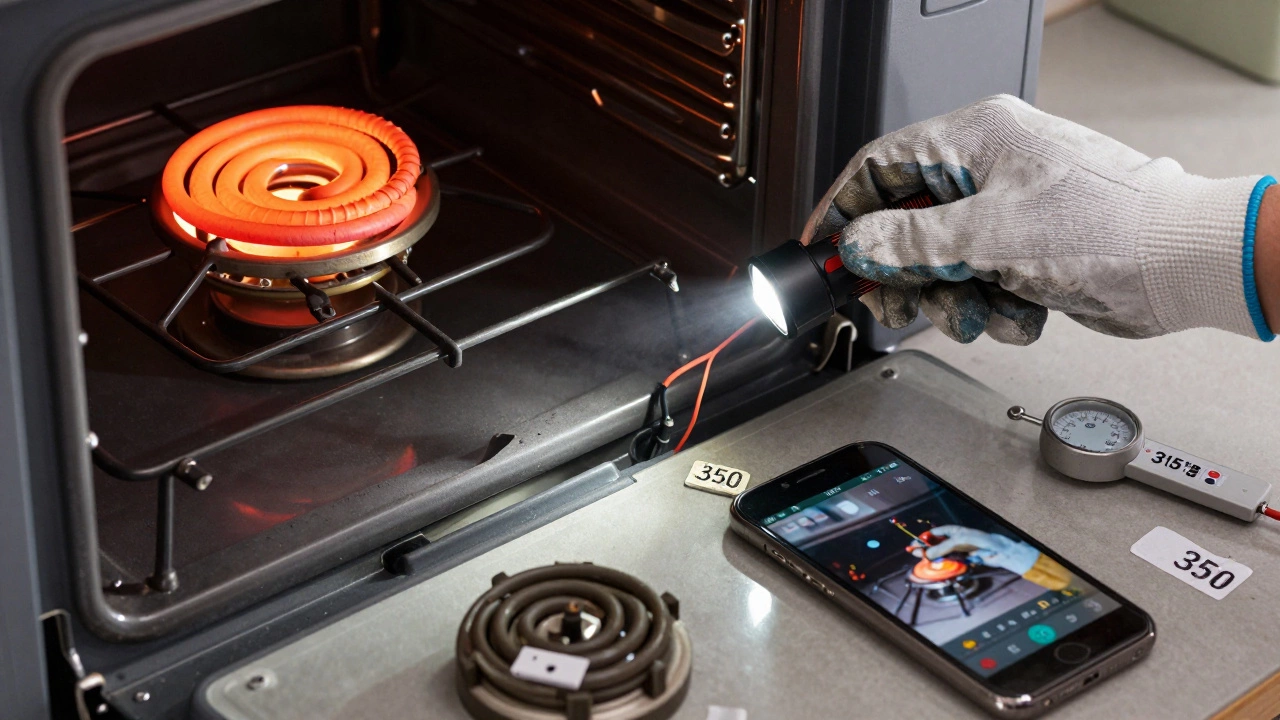
Turn the oven to 350°F and wait five minutes. Look through the window. The element should glow a bright orange-red along its entire length. If it’s dim in spots or doesn’t glow at all, turn it off immediately and check your wiring. A partial glow means a loose connection or a bad element.
If it glows evenly, let it run for 15 minutes. Then use an oven thermometer to check the actual temperature. Most ovens run 15-25°F off the set point-that’s normal. But if it’s way off or doesn’t heat at all, something’s wrong. Recheck your connections. If you’re still unsure, call a pro.
Common mistakes to avoid
People mess this up more often than you’d think. Here are the big ones:
- Not turning off the power. This is the #1 cause of shocks during oven repairs. Always flip the breaker.
- Forgetting to match the model number. Elements look similar but have different wattages and mounting styles. Using the wrong one can overload your circuit or melt the socket.
- Tugging on the wires. The wires are thin and brittle. Pulling them too hard can break the internal strands. Always loosen the terminal screws first.
- Forcing the element into place. If it doesn’t slide in easily, don’t push. Something’s misaligned. Check for bent brackets or debris.
- Ignoring signs of damage. If the wiring insulation is cracked, the terminal block is melted, or the oven cavity is scorched, you’ve got a bigger problem. Don’t just replace the element-get a technician to inspect the whole system.
When to call a professional
You can fix the element yourself in 90% of cases. But there are times when DIY isn’t safe or smart:
- Your oven has a hidden element (some high-end models have elements behind the back panel-you’ll need to remove the whole oven from the cabinet).
- The control board is faulty. If the element is good but still won’t heat, the thermostat or control board might be broken. Those require diagnostic tools.
- You smell burning plastic or see smoke after replacing the element. That’s a wiring or insulation issue.
- You’re uncomfortable working with electricity. There’s no shame in calling someone. Safety always comes first.
Most appliance repair techs charge $80-$120 just to come out. If you’re unsure, spend $50 on a diagnostic call. If they say it’s just the element, you can still buy it yourself and install it later.
Preventing future failures
Once you’ve got your new element in, you can make it last longer:
- Avoid slamming the oven door. The shock can crack the element’s mounting brackets.
- Keep the oven clean. Grease buildup can cause hot spots and shorten the element’s life.
- Don’t use the self-clean cycle too often. The extreme heat (up to 900°F) stresses the element and wiring.
- If your oven takes longer to heat up than it used to, check the element early. A weak element might still glow but not produce full heat.
Replacing the element is one of the few home repairs where you save money, learn a skill, and avoid waste. Most people throw out perfectly good ovens because they assume the repair is too hard. It’s not. You’ve got this.
Can I replace an oven element without turning off the power?
No. Never. Even if the oven is off, the terminals behind the element can still be live if the circuit breaker hasn’t been turned off. Electricity doesn’t care if you think it’s safe. Always flip the breaker at your main panel before touching any wiring. This isn’t a suggestion-it’s a safety rule.
How do I know which oven element to buy?
Find your oven’s model number. It’s usually on a sticker inside the oven door, on the back wall, or on the frame near the hinges. Write it down and search for "[model number] bake element" online. Match the shape, length, wattage, and number of terminals exactly. Even small differences can cause overheating or poor performance.
Why is my new oven element not glowing evenly?
Uneven glowing usually means a loose wire connection or a defective element. Turn off the power and check that each terminal screw is tight. If the wires are secure and it still glows in patches, the element may be faulty. Return it and get a replacement. Don’t use it-uneven heating can damage food or create fire risks.
Can I use a broil element as a bake element replacement?
No. Broil elements are designed for high, direct heat and are usually shorter and thinner. Bake elements are built to handle longer, lower-heat cycles. They have different wattages and mounting systems. Swapping them can overload your circuit or cause the element to fail immediately.
How long should a new oven element last?
A good-quality replacement element should last 5 to 10 years, just like the original. How long it lasts depends on how often you use the oven, whether you use the self-clean function, and how well you maintain it. Avoid slamming the door and keep the oven clean to extend its life.