
Fridge Repair Cost Calculator
Common Fridge Problems
Select the issue you're experiencing to see repair costs, time, and safety recommendations
Dust buildup causing poor cooling performance
Air leaks causing temperature fluctuations
Freezer cooling but fridge not cooling
Fridge completely dead with no power
Repair Details
Estimated Cost
Time Required
Recommendation
Most people panic when their fridge stops cooling. The milk spoils, the ice melts, and suddenly you’re staring at a $2,000 replacement bill. But before you call a technician, ask yourself: can you fix a fridge by yourself? The answer isn’t yes or no-it’s maybe, and here’s how to find out.
Start with the basics-most fridge problems are simple
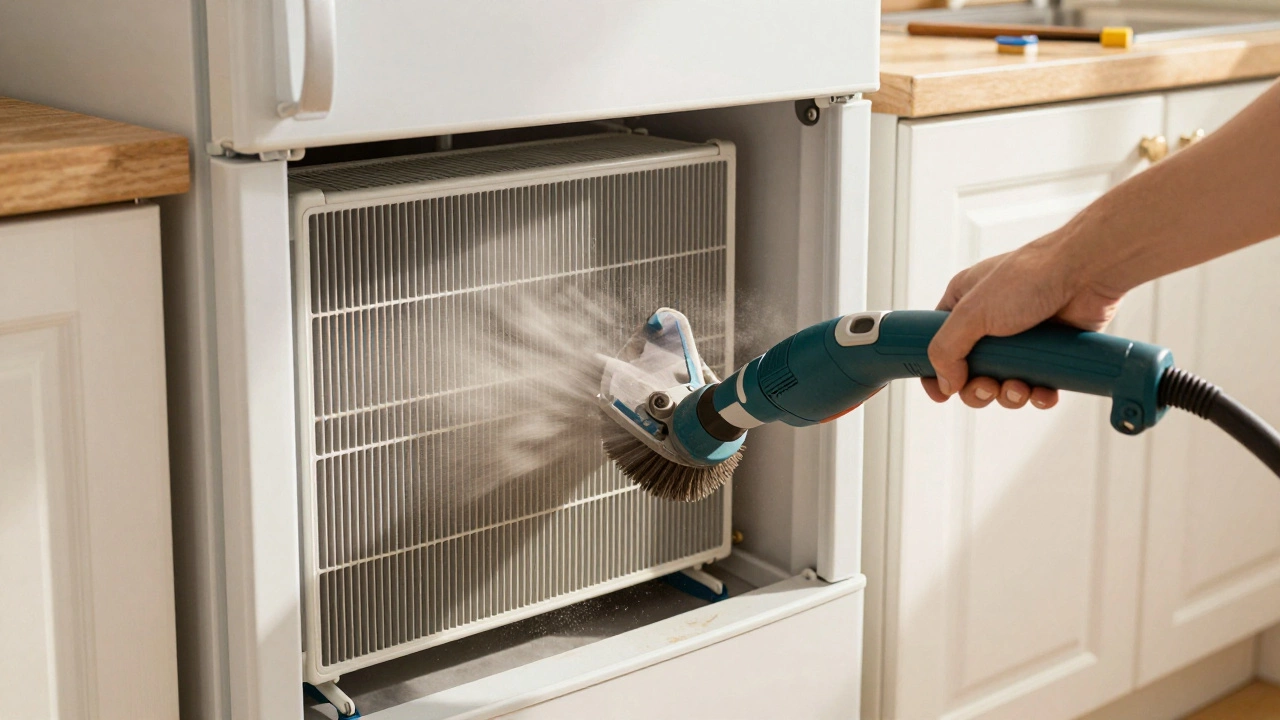
A fridge doesn’t need a PhD to fix. In fact, 7 out of 10 common fridge issues are caused by things you can check in under 10 minutes. The compressor isn’t broken. The coolant isn’t leaking. It’s just dirty.- Check the condenser coils. These are the metal grids at the back or bottom of your fridge. If they’re covered in dust, lint, or pet hair, your fridge works harder than it should. Clean them with a coil brush or vacuum attachment. Done right, this alone can restore cooling in 48 hours.
- Make sure the fridge is level. If it’s tilted forward, the door won’t seal. Try sliding a piece of paper between the door and the frame. If it pulls out too easily, adjust the front legs. Most fridges have screw-adjustable feet-you turn them clockwise to raise the front.
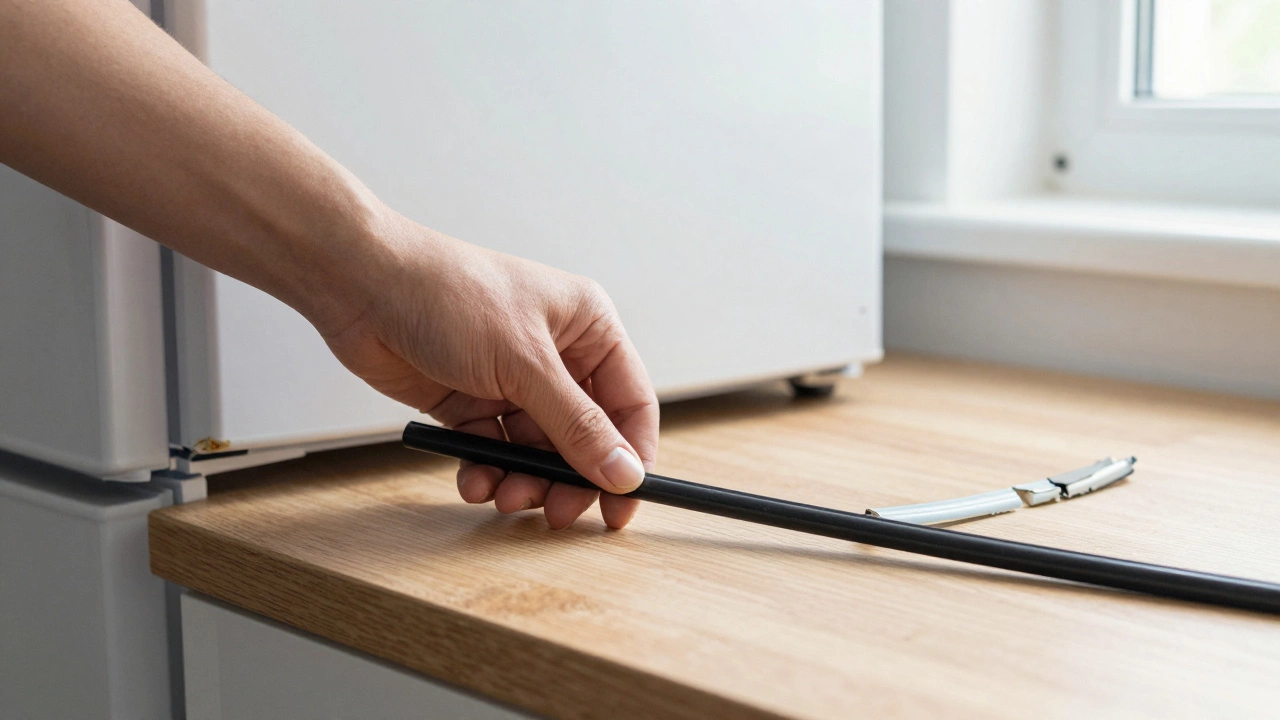
- Test the door seal. Run your hand along the gasket. If you feel cold air leaking, the seal is worn. A quick test: close the door on a dollar bill. If you can pull it out without resistance, replace the gasket. They cost $25 and snap in place in 15 minutes.
These fixes aren’t theory. In Wellington, where humidity and salt air eat away at seals, I’ve seen fridges last 15+ years just by cleaning coils every six months.
Is the fridge cold but not cooling? Check the evaporator fan
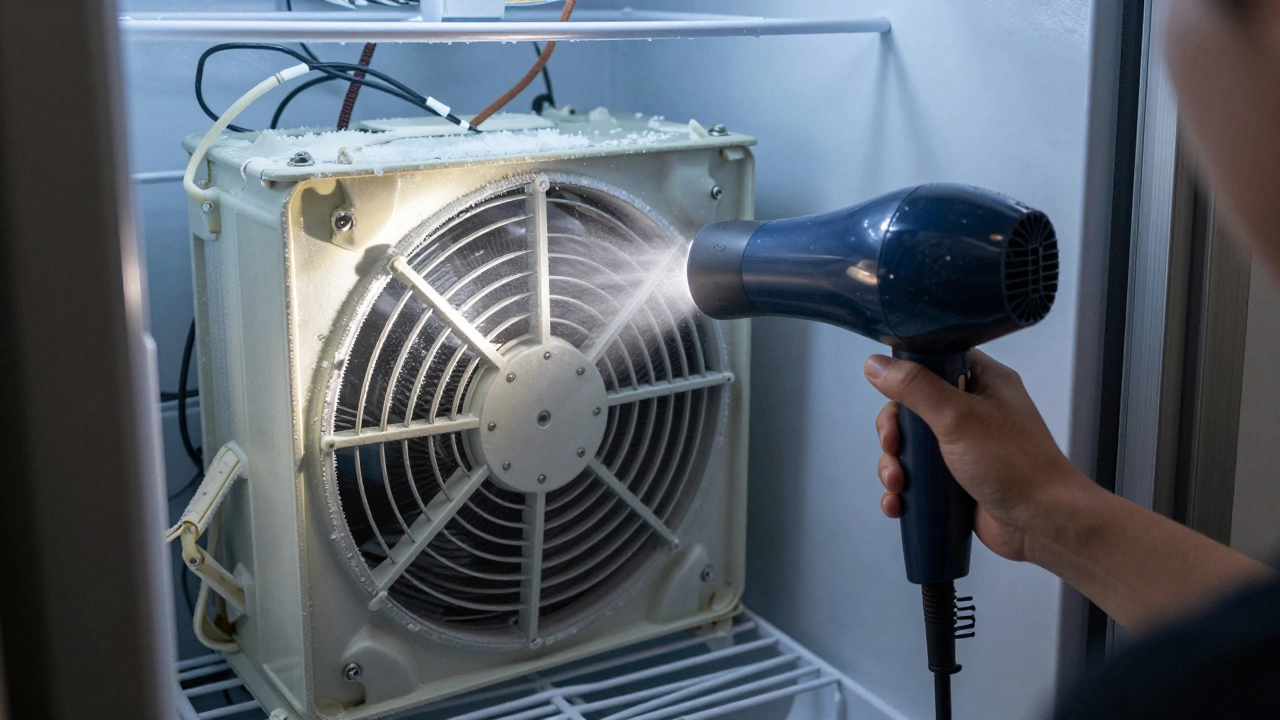
If your freezer is icy but the fridge side is warm, the evaporator fan might be stuck. This small motor sits behind the freezer panel and circulates cold air into the fridge compartment. If it’s covered in frost or jammed with ice, it stops spinning.To check:
- Unplug the fridge.
- Remove the freezer back panel (usually held by 4 screws).
- Look for ice buildup around the fan blades. If you see it, use a hairdryer on low heat to melt it. Don’t use a knife-scratch the coils and you’ll ruin the system.
- Once clear, plug it back in. Listen for the fan to spin. If it’s silent, the motor is dead. Replacement fans cost $40-$70 and plug right into the existing wiring.
This fix works on 80% of fridges made after 2005. Brands like LG, Samsung, and Whirlpool use nearly identical evaporator fan designs. You don’t need the exact model number-just match the size and voltage.
Why won’t my fridge turn on at all?
If your fridge is completely dead-no lights, no hum, no noise-it’s rarely the compressor. More often, it’s the power supply.- Check the outlet. Plug in a lamp or phone charger. If it doesn’t work, the circuit breaker might’ve tripped. Go to your fuse box and reset the kitchen circuit.
- Test the power cord. Some fridges have a detachable cord. Wiggle it at the plug end. If the fridge flickers on and off, the cord is frayed. Replace it for under $15.
- Look for the thermal fuse. This small, white component sits near the compressor. If it’s blown, the fridge won’t start. You can test it with a multimeter (set to continuity). If there’s no beep, replace it. It’s a $12 part and takes 20 minutes to swap.
Most people assume a dead fridge means total failure. But I’ve seen three fridges in the last year that were just waiting for a $12 fuse to be replaced.
When to stop trying and call a pro
There are limits. You can’t fix a refrigerant leak. You can’t recharge the system without certification. And if your compressor is making a loud knocking sound, it’s likely on its way out.Here’s when to stop DIY:
- Ice or water pooling under the fridge. This usually means a cracked drain pan or blocked defrost drain. Easy fix if it’s just dirt. Hard if the pan is cracked-replacement requires removing the entire back panel.
- Strange smells or smoke. That’s electrical. Unplug immediately. Don’t open the back unless you’re trained.
- Compressor humming but no cooling. This could mean the start relay is bad (easy fix) or the compressor itself is failing (expensive fix). If the fridge is over 10 years old, replacing the compressor often costs more than a new unit.
Rule of thumb: if the repair costs more than half the price of a new fridge, walk away. A basic new fridge runs $600-$900. Paying $500 to fix a 12-year-old one? Not worth it.
Tools you actually need (no fancy gear required)
You don’t need a toolbox full of gadgets. Here’s what you really need:- Phillips screwdriver
- Flathead screwdriver
- Coil brush or vacuum with brush attachment
- Flashlight
- Multimeter (optional, but useful for testing fuses and switches)
- Hairdryer (for defrosting)
- Replacement gasket, fan, or fuse (buy online-Amazon, eBay, or appliance parts sites like RepairClinic)
That’s it. No welding, no refrigerant gauges, no special training. Just patience and a little curiosity.
What to do before you start
Before you touch anything:- Unplug the fridge. Always. Even if you think it’s off.
- Empty the fridge. Move food to a cooler or neighbor’s fridge. Don’t leave it open for more than 15 minutes.
- Take a photo of the wiring before disconnecting anything. One wrong plug and you’ll fry the control board.
- Write down the model number. It’s usually inside the door frame or on the back. Search it online with “parts diagram” to see what you’re dealing with.
These steps save hours of frustration. I’ve seen people spend $80 on a new fan-only to realize they’d replaced the wrong part because they didn’t check the diagram.
Real-world example: My neighbor’s fridge
Last month, a neighbor in Miramar called me because her fridge was warm. She thought it was dead. I went over, unplugged it, and cleaned the coils. Dust came out in clumps-like a carpet that hadn’t been vacuumed in five years. I checked the door seal: it was cracked at the bottom. Replaced it with a $28 part from eBay. Plugged it back in. By dinner, it was 4°C again.She paid me $20 for coffee. The total repair cost? $28. The old fridge is still running.
Final advice: Don’t fear the fridge
Fridges are built to last. They’re not computers. They’re mechanical systems with simple parts. Most failures are preventable. Clean the coils. Check the seal. Don’t ignore the little things.Can you fix a fridge by yourself? Yes-if you start small, stay safe, and know when to stop. You don’t need to be an expert. You just need to be willing to look inside.
Is it safe to fix a fridge myself?
Yes, if you follow basic safety rules. Always unplug the fridge before working on it. Avoid touching any wiring unless you know what you’re doing. Don’t try to recharge refrigerant-that requires certification. Most DIY fixes involve cleaning, replacing gaskets, fuses, or fans-all low-risk tasks.
How long does it take to fix a fridge yourself?
It depends on the problem. Cleaning coils or replacing a door seal takes 15-30 minutes. Replacing a fan or thermal fuse takes 45-60 minutes. If you’re new to it, plan for an afternoon. Don’t rush. The most common mistake is skipping steps like unplugging or taking photos of wiring.
What’s the most common fridge problem?
Dirty condenser coils. Dust and pet hair block airflow, forcing the compressor to overwork. This leads to overheating, higher electricity bills, and early failure. Cleaning them every six months is the single best way to extend your fridge’s life.
Can I use any replacement parts?
Not always. Gaskets and fans are often model-specific. But many parts are interchangeable across brands. For example, a 120V evaporator fan from a Whirlpool might fit an LG if the size and plug match. Always check the part number or upload a photo to a repair site like RepairClinic to confirm compatibility.
When should I replace my fridge instead of fixing it?
If the repair costs more than half the price of a new fridge, it’s time to replace it. Also, if your fridge is over 10 years old, newer models are 30-50% more energy efficient. A $700 fridge today will save you $100+ a year in electricity compared to a 15-year-old model.