
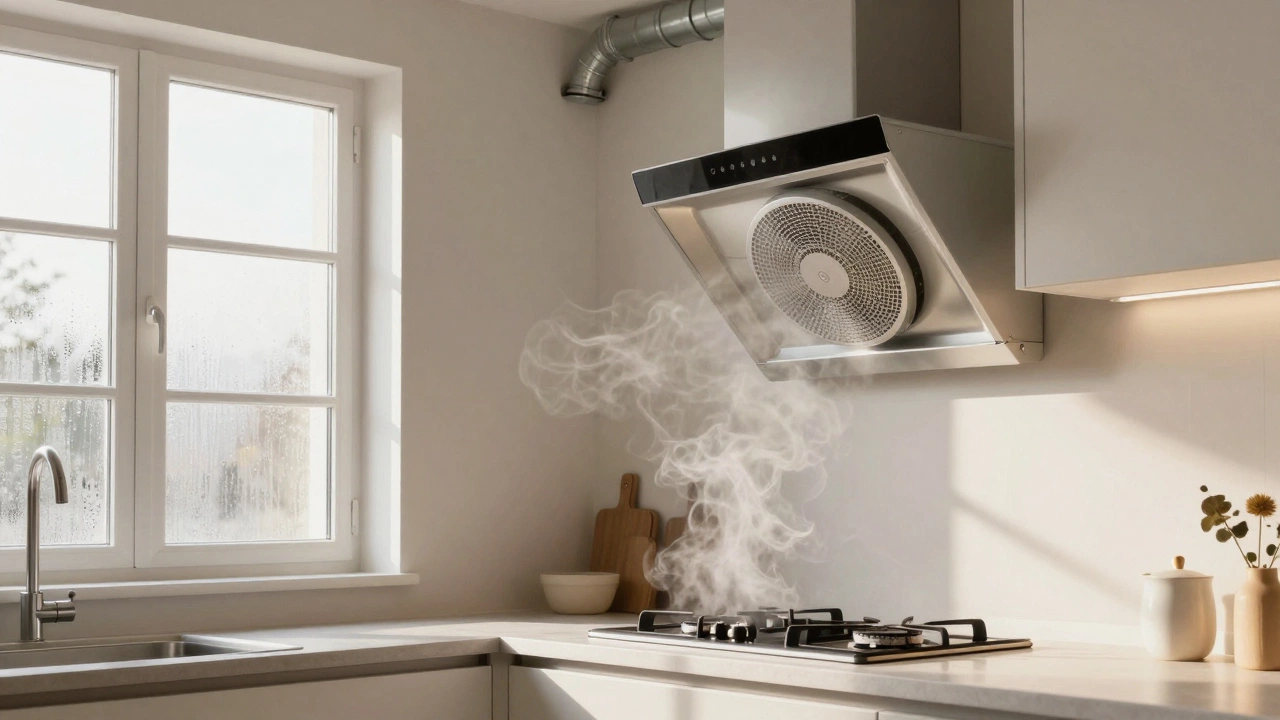
Kitchen Ventilation Calculator
Find Out If Your Kitchen Meets Legal Requirements
Enter your kitchen details to see if you need an extractor fan that meets building codes. Based on UK/EU/US standards, 2024 regulations require specific airflow and venting.
Kitchen Details
Ventilation Guide
Minimum airflow requirements:
- Standard kitchens: 30 L/s (30 liters per second)
- Gas cooktops or larger kitchens: 60 L/s+
- Island hoods (open-plan): 75-120 L/s
Why This Matters
Health risks of poor ventilation
Without proper ventilation, cooking releases: moisture (causes mold), fine particles (triggers asthma), and harmful gases like carbon monoxide (from gas stoves).
Legal consequences
Non-compliance can lead to: denied home insurance claims, failed property inspections, rental property fines, and reduced property value. A 2024 UK study found 73% of homes without extractor fans had elevated particulates.
Common mistakes
Using recirculating hoods (they don't remove moisture/gases), installing fans too far from cooking zone, or relying on windows alone.
Ever stood in your kitchen after cooking a big meal and felt like you’re breathing soup? That sticky air, the fogged-up windows, the lingering smell of fried onions-it’s not just annoying. It’s a health risk. And in many places, you’re not just being tidy if you install an extractor fan. You’re following the law.
Why Extractor Fans Aren’t Just a Nice-to-Have
Kitchens produce more than just delicious smells. They release steam, grease, carbon monoxide, and airborne particles from cooking. Without proper ventilation, that stuff doesn’t just disappear. It settles into your walls, your cabinets, your carpets. Over time, it breeds mold. It triggers asthma. It damages your home’s structure. And in some cases, it violates building codes you didn’t even know existed.Back in 2023, the UK’s Building Regulations Part F was updated to make ventilation in new kitchens mandatory. The same rule applies in most EU countries, Canada, Australia, and many U.S. states. Even if your house was built before these rules, if you’re doing a major renovation-like knocking down a wall or adding a new kitchen-you’ll likely need to comply.
What the Law Actually Says
The rules vary by country and even by city. But here’s what you’ll commonly find:- Minimum airflow: Most codes require at least 30 liters per second (L/s) of extraction capacity for a standard kitchen. For larger kitchens or those with gas cooktops, it’s often 60 L/s or more.
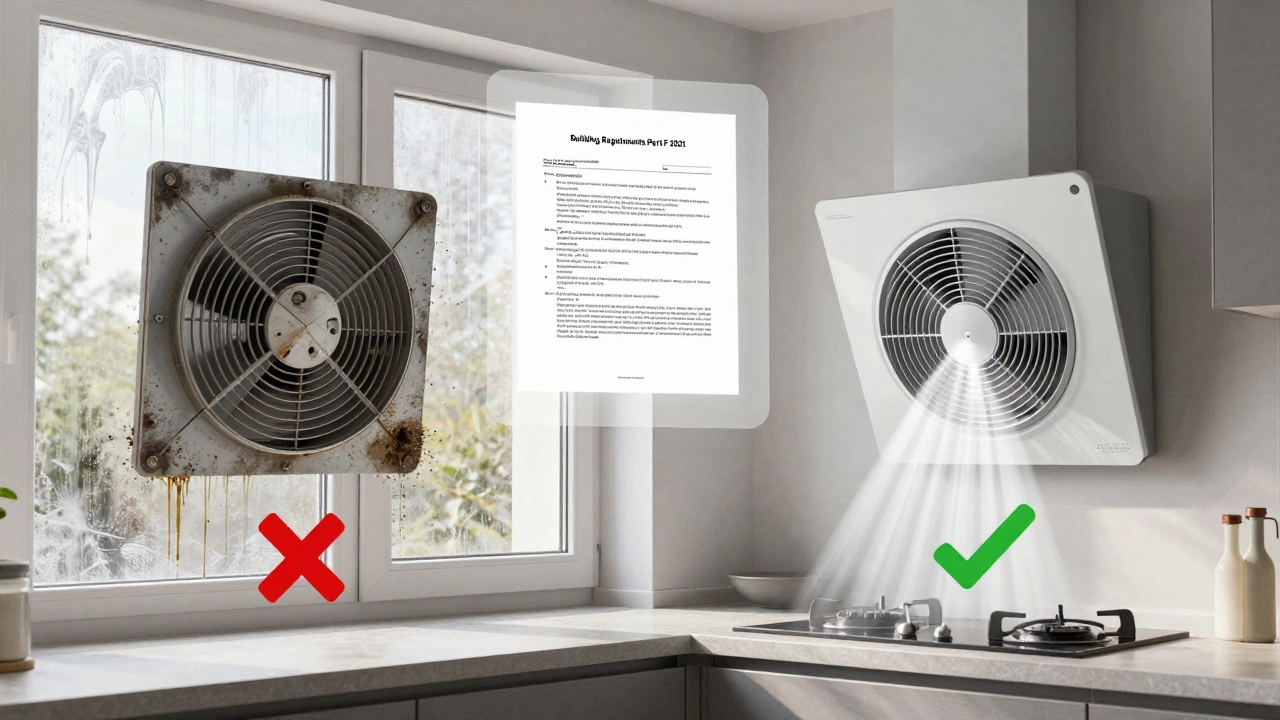
- Direct to outside: Recirculating hoods (the kind that filters air and blows it back into the room) are not enough. The fan must vent outdoors. Filters don’t remove moisture or gases-only grease.
- Automatic operation: In new builds, the fan must activate automatically when the cooker is turned on, or be linked to a humidity sensor.
- Location: The fan must be installed directly above or near the cooking zone. Putting it on the other side of the room doesn’t cut it.
For example, in England and Wales, Approved Document F (2021) says: "Extract ventilation must be provided in kitchens to remove moisture and odours." It doesn’t say "if you feel like it." It says "must."
What Happens If You Don’t Install One?
If you’re just living in an older home and never touched the kitchen, you probably won’t get fined. But here’s where things get risky:- Selling your home: Buyers’ surveys often flag poor ventilation. A lack of extractor fan can lower your property value or even kill a sale.
- Insurance claims: If mold damage occurs and your insurer finds you ignored basic ventilation standards, they might deny your claim.
- Landlord responsibilities: In rental properties, landlords are legally required to provide adequate ventilation. Tenants can report non-compliance to local housing authorities.
- Building permits: If you’re renovating and you skip the fan, your inspector can halt the project until it’s fixed.
One homeowner in Manchester had to pay £4,200 to redo a kitchen after a buyer’s survey flagged missing ventilation. The original owner had removed the old fan during a remodel and never replaced it. The buyer walked away. The house sat on the market for nine months.
Do You Need a Fan if You Don’t Cook Much?
Even if you only make toast and coffee, you’re still producing moisture. Boiling water releases steam. Toasting bread releases fine particles. And if you have a gas stove-even if you rarely use it-you’re releasing nitrogen dioxide and carbon monoxide. These gases build up slowly. They’re silent. And they’re dangerous over time.A 2024 study by the University of Leeds tracked air quality in 120 homes without extractor fans. After six months, 73% showed elevated levels of airborne particulates. 41% had detectable mold spores near cooking areas. The homes with the lowest readings? All had functional extractor fans.
What If You Already Have One But It’s Broken?
A broken fan is worse than no fan. It creates a false sense of security. If the motor’s dead, the duct’s clogged, or the vent flap is stuck shut, you’re not ventilating at all.Here’s what to check:
- Turn it on. Can you feel air moving at the outside vent? If not, the duct is blocked.
- Look for grease buildup. Grease clogs filters and motors. Clean or replace filters every 3 months.
- Listen for strange noises. Grinding, rattling, or humming? That’s a failing motor.
- Check for condensation. If your windows fog up after cooking, your fan isn’t doing its job.
Many extractor fans last 8-12 years. If yours is older than that, replacement is more cost-effective than repair.
What Are Your Options?
You don’t need a giant hood. Here are the most common compliant solutions:| Type | Flow Rate (L/s) | Installation | Compliant? | Best For |
|---|---|---|---|---|
| Wall-mounted extractor | 40-70 | Direct to outside | Yes | Standard kitchens |
| Island hood | 60-120 | Through ceiling or wall | Yes | Large or open-plan kitchens |
| Recirculating hood | Varies | No external duct | No | Only if no ducting possible |
| Inline fan (hidden in ceiling) | 50-90 | Behind ceiling or wall | Yes | Modern renovations |
Recirculating hoods are often sold as "easy installs," but they don’t meet building codes in most jurisdictions. They’re fine for occasional use, but not as a primary ventilation system.
What to Do Next
If you’re unsure whether your kitchen complies:- Check your local building authority’s website. Most have free downloadable guides for kitchen ventilation.
- Look for a vent outside your kitchen wall or roof. If there’s no duct, you’re not ventilated.
- If you’re renting, ask your landlord for proof of ventilation compliance.
- If you’re renovating, hire a certified installer. They’ll know the local rules and install to code.
Don’t wait for mold to grow or a buyer to walk away. A simple extractor fan costs between £100 and £300 installed. That’s less than 1% of your home’s value. It’s also the cheapest insurance policy you’ll ever buy.
Myth: "I have a window. That’s enough." You might think opening a window solves everything. But windows don’t pull air out. They let it in. In winter, you’ll lose heat. In summer, you’ll let in pollen and bugs. And if your kitchen is in the middle of the house? No window means no airflow at all.
Windows help-but they’re not a substitute. Building codes require mechanical extraction because passive ventilation doesn’t work reliably.
Final Thought
You don’t need an extractor fan because it looks good. You need it because it’s required. Because it protects your health. Because it protects your home. And because, in 2026, skipping it isn’t a lifestyle choice-it’s a legal risk.Fix it. Replace it. Install it. Don’t wait until the smell won’t go away-or until someone else has to pay the price.
Is it illegal to not have an extractor fan in my kitchen?
In most countries, yes-if you’re building a new kitchen or doing a major renovation. In older homes without renovations, it’s not always enforced, but it still violates building codes. Local regulations vary, but the trend is clear: ventilation is mandatory for health and safety.
Can I use a recirculating hood instead of venting outside?
No, not legally in most places. Recirculating hoods filter grease but don’t remove moisture, carbon monoxide, or other gases. Building codes require air to be exhausted outdoors. While some people use them as a temporary fix, they won’t pass inspection during renovations or home sales.
Do I need a fan if I only use an electric hob?
Yes. Even electric hobs produce steam, airborne particles, and odors. A 2024 study found that kitchens with electric hobs but no extractor fans still had dangerous levels of moisture and particulates. The issue isn’t combustion-it’s humidity and cooking byproducts.
How do I know if my extractor fan meets code?
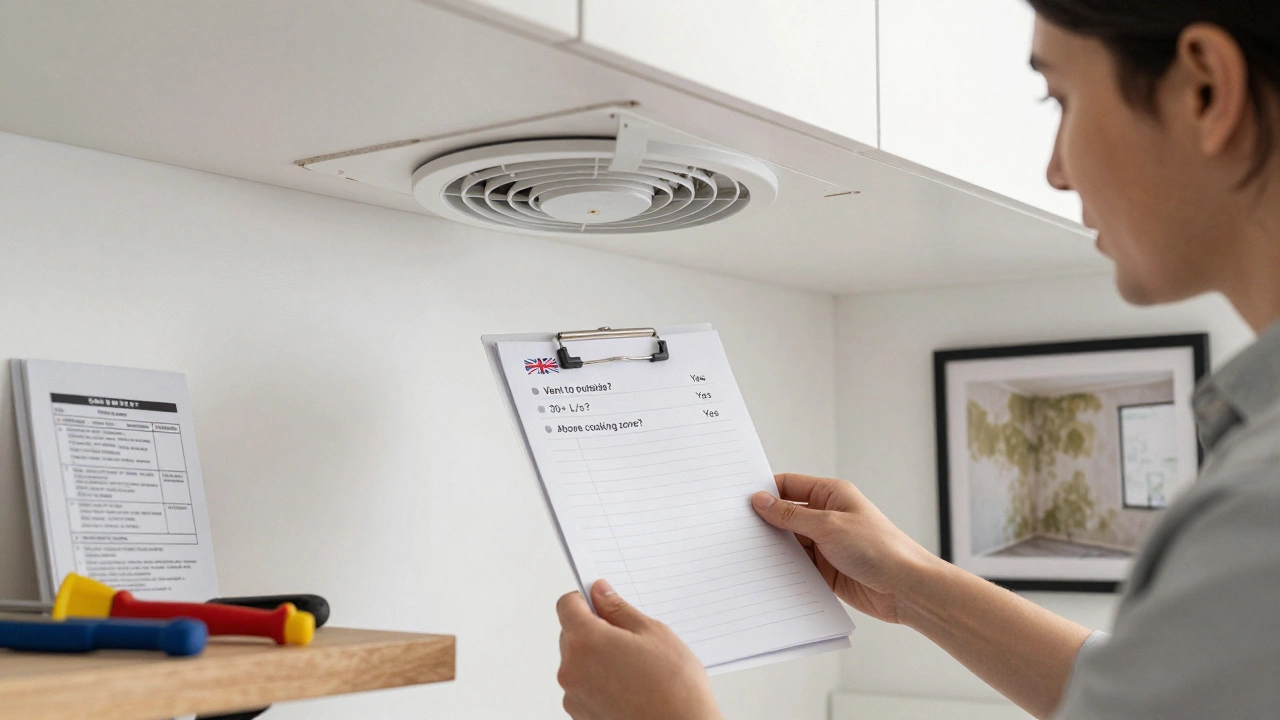
Check three things: 1) Does it vent directly outside? 2) Does it move at least 30 liters per second? 3) Is it installed directly above the cooking zone? If you’re unsure, hire a certified HVAC technician. They can test airflow with a manometer and confirm compliance.
What if my landlord won’t install a fan in my rental?
In most countries, landlords are legally required to provide safe, ventilated kitchens. If your rental lacks proper extraction and you have mold, condensation, or respiratory issues, you can report the issue to your local housing authority. In the UK, this falls under the Homes (Fitness for Human Habitation) Act 2018. Similar laws exist in Canada, Australia, and many U.S. states.