
Water Heater Lifespan & Replacement Estimator
Enter details about your current water heater to get a personalized assessment on its remaining lifespan and recommended action.
Assessment Result
Expected Total Lifespan:
--
Remaining Life Estimate:
--
⚠️ Critical Warning Signs Detected:
You’re standing in the utility closet, staring at that metal cylinder humming in the corner. It’s been there for years, quietly heating your showers and washing your dishes. But how long is "years" supposed to be? Is five years normal? Ten? Fifteen? The truth is, water heaters don’t come with an expiration date stamped on the side, but they do have a typical lifespan range that depends heavily on what you bought and how well you’ve treated it.
Most homeowners expect their unit to last as long as their fridge or dishwasher, but water heaters work harder than most appliances. They are constantly battling pressure, temperature fluctuations, and mineral buildup. If you’re wondering whether to call a plumber now or save up for a replacement next year, this guide breaks down exactly what determines longevity, how to spot the end-of-life signs, and what you can actually do to squeeze more years out of your system.
The Standard Lifespan: Tank vs. Tankless
Let’s cut through the noise. There isn't one single answer because storage tank water heaters and tankless (on-demand) water heaters operate on completely different principles.
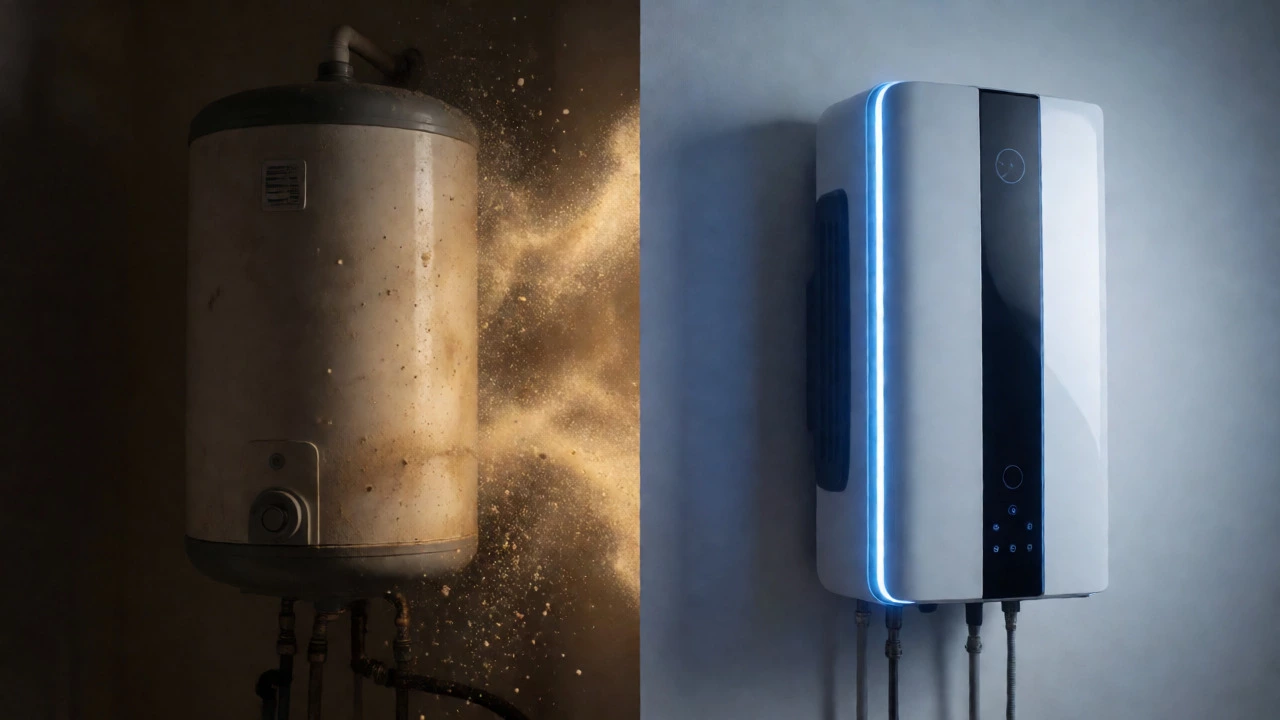
Storage Tank Water Heaters: These are the traditional cylindrical tanks you see in most older homes. They keep a large volume of water hot all day long. Because the water sits inside a steel tank lined with glass, it is susceptible to corrosion and sediment buildup. Generally, you can expect a standard storage tank water heater to last between 8 to 12 years. Some high-end models with better insulation and thicker steel might hit 15, while cheap units in hard water areas might fail in 6.
Tankless Water Heaters: Also known as instantaneous or on-demand heaters, these don’t store water. They heat it directly as it flows through a heat exchanger when you turn on the tap. Since there’s no standing water causing constant corrosion, and fewer moving parts prone to wear from thermal expansion cycles, tankless units typically last significantly longer. Expect 20 years or more. Many manufacturers offer warranties up to 25 years on the heat exchanger. However, they require rigorous maintenance to achieve this lifespan.
| Feature | Storage Tank (Gas/Electric) | Tankless (Gas/Electric) |
|---|---|---|
| Average Lifespan | 8-12 Years | 20+ Years |
| Maintenance Needs | Annual flushing recommended | Annual descaling mandatory |
| Failure Mode | Rust leak / Anode rod depletion | Heat exchanger scale blockage |
| Repairability | High (parts widely available) | Moderate (specialized techs needed) |
Why Do Water Heaters Fail Early?
If your neighbor’s heater lasted 15 years and yours died at 7, it wasn’t just bad luck. Three main culprits shorten the life of any water heater: sediment, anode rod neglect, and incorrect sizing.
Sediment Buildup: This is the silent killer. All municipal water contains minerals like calcium and magnesium. When water is heated, these minerals precipitate out and settle at the bottom of the tank. Over time, this layer of sand-like sludge insulates the water from the burner (in gas units) or the element (in electric units). This causes the heating source to overwork and overheat, leading to cracks in the glass lining and eventual rusting of the steel tank. In New Zealand, where water hardness varies significantly by region, this is a major factor.
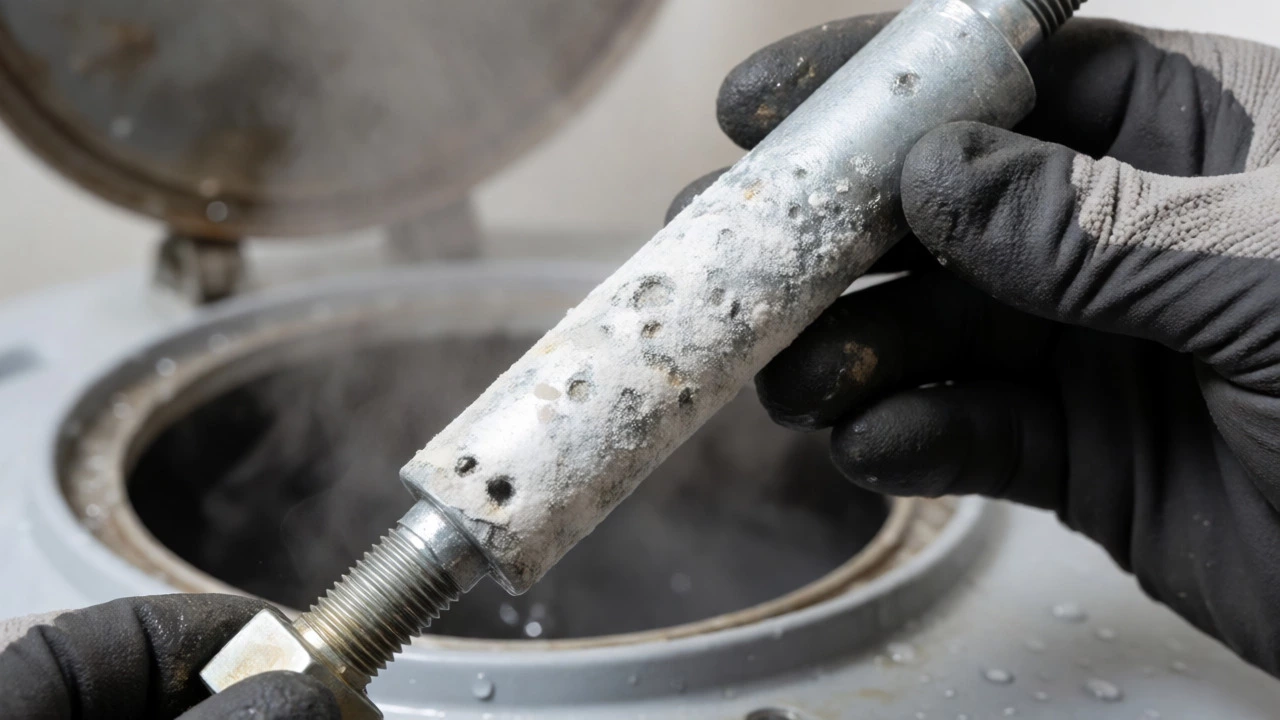
The Sacrificial Anode Rod: Inside every steel tank is a rod made of magnesium or aluminum. Its job is to corrode instead of the tank. It attracts corrosive elements in the water, sacrificing itself to protect the steel walls. Once the rod is fully eaten away, the tank starts to rust from the inside out. Most failures happen right after the anode rod is depleted. Checking and replacing this rod every 3-5 years can double your tank's life.
Oversizing or Undersizing: A tank that’s too small will cycle on and off frequently, stressing the components. A tank that’s too big wastes energy but generally lasts longer unless the thermostat is set too high, accelerating mineral buildup.
Signs Your Water Heater Is Nearing the End
Don’t wait for a flood to realize your heater is dying. Here are the clear warning shots:
- Age: Check the manufacturing date on the label. If it’s past 10 years, start budgeting for a replacement.
- Rusty Water: If your hot water comes out brown or yellow, the internal tank lining may be compromised. Note: If only the cold water is rusty, it’s likely a pipe issue, not the heater.
- Leaking: Even a slow drip from the base means the tank has cracked. You cannot patch a leaking tank; it must be replaced.
- Noisy Operation: Popping, banging, or rumbling sounds indicate heavy sediment buildup. The water trapped under the sediment boils violently, creating these noises.
- Inconsistent Temperature: If showers go lukewarm quickly or fluctuate wildly, the heating elements or dip tube may be failing.
Extending the Life of Your Unit
You can’t stop time, but you can slow down corrosion. Here is the practical checklist for homeowners in Wellington and beyond:
- Flush the Tank Annually: Turn off the power/gas, connect a hose to the drain valve, and let it run until the water runs clear. This removes sediment before it hardens. For tankless units, use a vinegar circulation kit to dissolve scale.
- Check the Anode Rod: Every 3 years, unscrew the top plug and inspect the rod. If less than 6 inches of core wire remains, replace it immediately. This $30 part saves a $1,500 tank.
- Adjust the Thermostat: Keep the temperature at 60°C (140°F). Higher temperatures accelerate mineral scaling and increase pressure stress on the tank.
- Install a Water Softener: If you live in a hard water area, a whole-house softener reduces mineral content drastically, extending both tank and tankless lifespans.
- Add an Expansion Tank: Modern homes are sealed tight. Without an expansion tank, thermal expansion creates excessive pressure spikes that weaken tank welds over time.
When to Repair vs. Replace
This is the financial decision everyone faces. Use this simple rule of thumb:
Repair if: The unit is under 8 years old, the problem is a minor part (thermostat, heating element, valve), and the repair cost is less than 30% of a new unit’s price.
Replace if: The unit is over 10 years old, the tank is leaking, or the repair costs exceed 50% of a new unit. At this stage, you’re throwing good money after bad. Newer models are also significantly more energy-efficient, potentially saving you enough on bills to offset the purchase price over a few years.
Remember, a failed water heater doesn’t just mean cold showers. It means potential water damage to floors, cabinets, and drywall. If your heater is sitting on a wooden floor without a pan underneath, the risk of catastrophic failure increases the stakes for replacement.
Frequently Asked Questions
Can I make my water heater last 20 years?
For a standard storage tank, reaching 20 years is rare but possible with extreme care. You would need pristine water quality, annual flushing, timely anode rod replacements, and a low operating temperature. Tankless water heaters, however, routinely reach 20+ years with proper descaling maintenance.
Does turning off the water heater when away extend its life?
Not necessarily. Turning it off saves energy, but frequent cycling on and off can cause thermal stress on the tank and components. If you are away for a week or less, leave it on. For longer absences, switching to 'vacation mode' or lowering the temperature is safer than a full shut-down and restart cycle.
Why does my new water heater smell like sulfur?
A rotten egg smell usually indicates bacterial growth reacting with the magnesium anode rod. This is common in new heaters or those unused for periods. Flushing the tank and possibly switching to an aluminum-zinc anode rod often resolves this odor.
Is a larger water heater better for longevity?
Size should match demand. An oversized heater cycles less frequently, which can reduce wear, but it costs more upfront and uses more standby energy. An undersized heater works harder and cycles more, leading to faster component fatigue. Correct sizing is key to balanced longevity and efficiency.
What happens if I ignore a leaking T&P valve?
The Temperature and Pressure (T&P) relief valve releases excess pressure to prevent explosion. If it leaks constantly, it’s either faulty or your house pressure is too high. Ignoring it can lead to dangerous pressure buildup or wasted water. It’s a cheap fix that prevents bigger issues.