
Electric Stove Repair vs. Replace Calculator
Recommendation
Why this recommendation?
Next Steps
There is nothing worse than pulling a roast out of the oven only to find it’s barely warm because the heating element died mid-cook. Or worse, you’re making dinner for guests and the burners refuse to heat up at all. When this happens, the first question that pops into your head is usually: "Is this normal wear and tear, or did I buy a lemon?" The truth is, appliances have a finite life. Knowing exactly how long your electric stove should last helps you decide whether to call a technician for a quick fix or start shopping for a new range.
The short answer? Most electric stoves last between 13 and 15 years. However, this number isn’t set in stone. High-end models with solid construction can push past two decades, while budget units might start showing serious issues after just eight years. Understanding what drives this lifespan-and how to extend it-saves you money and prevents unexpected kitchen disasters.
What Determines How Long Your Electric Stove Lasts?
Not all ranges are created equal. The longevity of your appliance depends on three main factors: build quality, usage habits, and maintenance. Think of your stove like a car. A basic sedan driven gently and serviced regularly will outlast a sports car that’s redlined every day and never gets an oil change.
Premium brands typically invest in thicker gauge steel for the interior cavity, better insulation, and more robust control boards. These components resist corrosion and thermal fatigue longer. If you bought a high-end range from a brand known for durability, you can reasonably expect it to hit that 15-to-20-year mark. If it’s a budget model, hitting 10 years is already a victory.
Usage habits play a huge role too. Do you cook five meals a day? Do you leave the oven on self-clean mode weekly? Frequent heavy use accelerates wear on heating elements, door hinges, and the thermostat. Conversely, if you mostly use the microwave or eat out, your stove might last much longer simply because it sits idle most of the time.
Signs Your Electric Stove Is Reaching the End of Its Life
You don’t need a crystal ball to know when your stove is dying. It usually gives you warnings before it quits completely. Pay attention to these red flags:
- Inconsistent Heating: If one burner works perfectly but another takes forever to get hot, or if the oven temperature fluctuates wildly (making your cookies burnt on the bottom and raw in the middle), the heating elements or thermostat are failing.
- Strange Noises: A quiet hum is normal. Loud buzzing, clicking, or popping sounds from the back panel or inside the oven cavity suggest loose wiring or a failing fan motor.
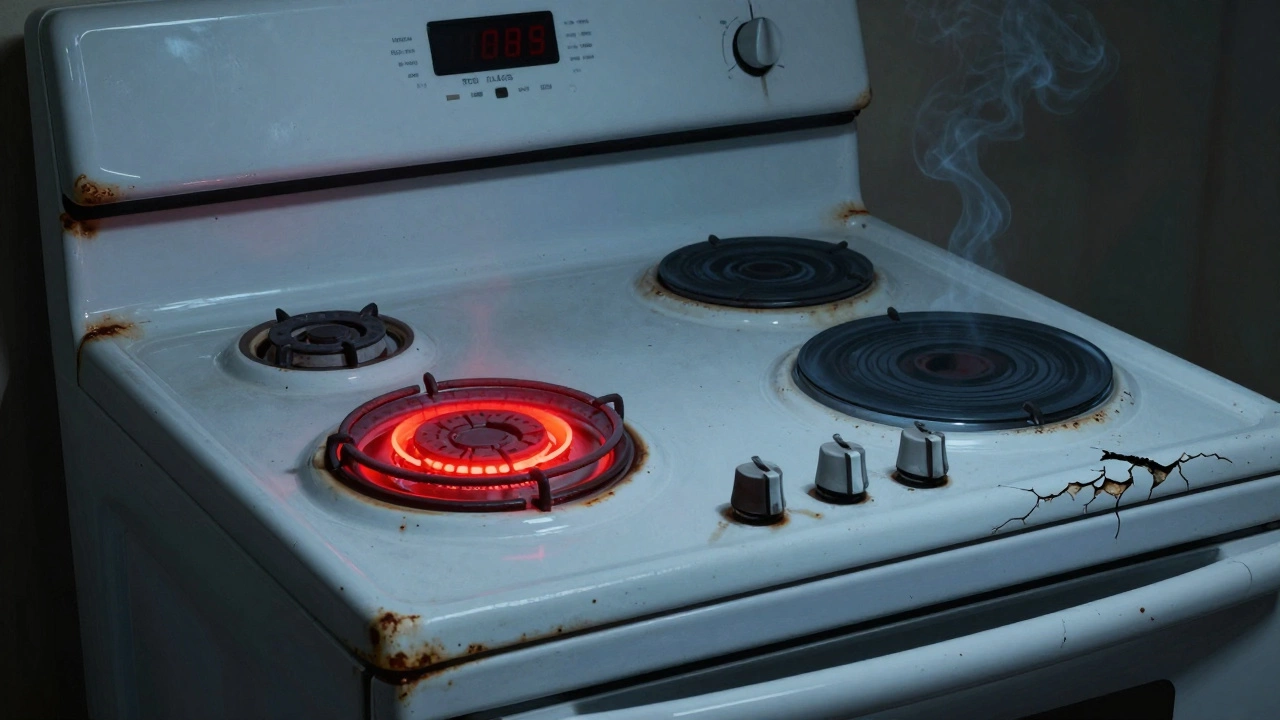
- Burnt Smells or Smoke: Occasional smoke from spilled food is fine. Persistent burning smells, even after cleaning, indicate electrical shorts or melting insulation within the walls or beneath the cooktop.
- Door Seal Issues: Check the gasket around the oven door. If it’s cracked, brittle, or detached, heat escapes rapidly. This forces the heating element to work overtime, wasting energy and wearing out the component faster.
- Control Panel Glitches: Touchscreens that become unresponsive or digital displays that flicker and show error codes repeatedly point to motherboard failure. This is common in older models where moisture and grease eventually seep into the electronics.
If you notice two or more of these signs, especially if your stove is over 10 years old, it’s likely time to consider replacement rather than repair.
To Repair or Replace? Making the Right Decision
This is the biggest dilemma homeowners face. Calling a technician costs money, but buying a new range costs significantly more. Here is a simple rule of thumb: the 50% rule. If the cost of the repair is more than 50% of the price of a new, comparable unit, and your current stove is more than halfway through its expected lifespan, replace it.
| Scenario | Action | Reasoning |
|---|---|---|
| Stove is < 7 years old | Repair | Most parts are still under warranty or have plenty of life left. Fixing a single element or switch is cheap. |
| Stove is 7-12 years old | Evaluate Cost | If repair is under $300, fix it. If over $400, consider replacing since major failures (like control boards) often lead to other issues soon. |
| Stove is > 12 years old | Replace | Older models lack modern energy efficiency. Parts may be discontinued. Risk of multiple simultaneous failures is high. |
| Major Component Failure (e.g., Igniter, Control Board) | Replace if > 10 yrs | These are expensive repairs ($200-$500+). New ovens come with warranties and better tech. |
Also, consider technology upgrades. Modern electric ovens offer features like convection fans, precise temperature controls, and smart connectivity that older models lack. Energy efficiency has improved dramatically, meaning your new stove could lower your electricity bill.
How to Extend the Life of Your Electric Stove
You can easily add several years to your appliance’s life with basic care. You don’t need to be a professional; just adopt a few good habits.
- Clean Spills Immediately: Sugar and starch can caramelize onto heating elements or drip into the oven floor. This creates hot spots and can damage the enamel coating. Wipe up spills as soon as they cool enough to touch.
- Use the Self-Clean Feature Sparingly: While convenient, the self-clean cycle heats the oven to extreme temperatures (around 900°F or 480°C). This intense heat stresses the door seals, hinges, and internal wiring. Use it no more than once or twice a year. For routine cleaning, use a damp cloth and mild detergent.
- Check the Door Gasket Regularly: Inspect the rubber seal around the oven door every few months. If it looks worn, clean it gently. If it’s torn, replace it. A tight seal keeps heat in, reducing strain on the heating elements.
- Avoid Overloading the Oven: Blocking airflow inside the oven prevents even cooking and forces the fan and heater to work harder. Leave space between racks and dishes.
- Protect the Cooktop Surface: If you have a glass-ceramic cooktop, avoid dragging pots across it. Use trivets for hot pans. Scratches weaken the surface and can lead to cracking over time.
Common Misconceptions About Stove Lifespan
Many people believe that if the stove turns on, it’s fine. That’s not true. An appliance can function poorly for years, wasting energy and producing uneven results, without completely breaking down. Another myth is that all electric stoves are the same. There is a vast difference in reliability between coil-burner models, smooth-top radiant models, and induction cooktops. Induction units, for example, tend to last longer because they have fewer moving parts and generate less ambient heat, which reduces stress on surrounding components.
Also, don’t ignore minor issues. A sparking outlet or a dimming light when the oven turns on indicates an electrical problem that could become a fire hazard if left unchecked. Address small problems early to prevent catastrophic failure.
When to Call a Professional
Some tasks are safe for DIY enthusiasts, like replacing a burned-out heating element or swapping out a door handle. However, anything involving the main power supply, gas lines (if applicable), or complex electronic diagnostics should be left to certified technicians. Electricity and high heat are dangerous combinations. If you’re unsure, always err on the side of caution and hire a pro. They can also spot underlying issues you might miss, saving you from future breakdowns.
How do I know if my electric stove needs to be replaced instead of repaired?
If your stove is over 10-12 years old and requires a repair costing more than half the price of a new unit, replacement is usually the smarter financial choice. Additionally, if you experience frequent breakdowns, inconsistent heating, or safety concerns like burning smells, it’s time to upgrade. Older models also lack modern energy efficiency features.
Does using the self-clean feature shorten the life of my oven?
Yes, excessive use of the self-clean cycle can shorten your oven's lifespan. The extreme heat generated during this process puts significant stress on door seals, hinges, and internal wiring. It’s best to limit self-cleaning to once or twice a year and opt for manual cleaning for routine maintenance.
Why does my electric stove take so long to heat up?
Slow heating can be caused by several issues, including a failing heating element, a faulty thermostat, or poor contact between the element and the socket. In smooth-top models, it might also indicate a problem with the radiant heating system. If one burner heats slowly while others don't, the specific element likely needs replacement.
Can I replace a broken heating element myself?
Yes, replacing a standard coil heating element is a relatively easy DIY task. You simply need to turn off the power at the circuit breaker, unscrew the old element, disconnect the wires, and install the new one. However, if you have a glass-ceramic cooktop or are uncomfortable working with electricity, hire a professional to avoid injury or further damage.
What is the average lifespan of an induction cooktop compared to a traditional electric stove?
Induction cooktops generally last longer than traditional electric resistance stoves, often reaching 15-20 years or more. This is because they have fewer moving parts, generate less ambient heat (which reduces wear on surrounding components), and are made with durable glass-ceramic surfaces. Traditional electric stoves typically last 13-15 years.