
If your extractor fan is quiet when it should be roaring, or if steam still lingers after a shower, it’s not just annoying-it’s a sign something’s wrong. Moisture buildup leads to mold, peeling paint, and even structural damage over time. You don’t need a professional to diagnose a failing fan. Most issues can be caught with a few simple checks you can do in under 10 minutes.
Start with the basics: Is it getting power?
Before you assume the motor’s dead, check the simplest thing first: electricity. Flip the switch. If nothing happens, go to your circuit breaker panel. Look for a tripped breaker labeled "bathroom," "kitchen," or "ventilation." Reset it if needed. If it trips again right away, stop. That’s a sign of a short circuit or overload-call an electrician.
If the breaker’s fine, try plugging in a different device-like a phone charger-into the same outlet. If that doesn’t work, the problem is with the wiring or the outlet, not the fan. If the outlet works, move on.
Listen for the motor
Turn the fan on. Don’t just rely on whether you feel air. Listen closely. A working fan makes a steady hum, like a refrigerator running. If you hear nothing at all, the motor might be dead. If you hear a buzzing sound but no rotation, that’s a bad capacitor or seized bearings.
Some older fans have a pull cord or a switch with multiple speeds. Test all settings. Sometimes the fan works on high but not low, which points to a faulty speed control module. If it only works when you jiggle the switch, the contacts are worn out and need replacing.
Check for airflow
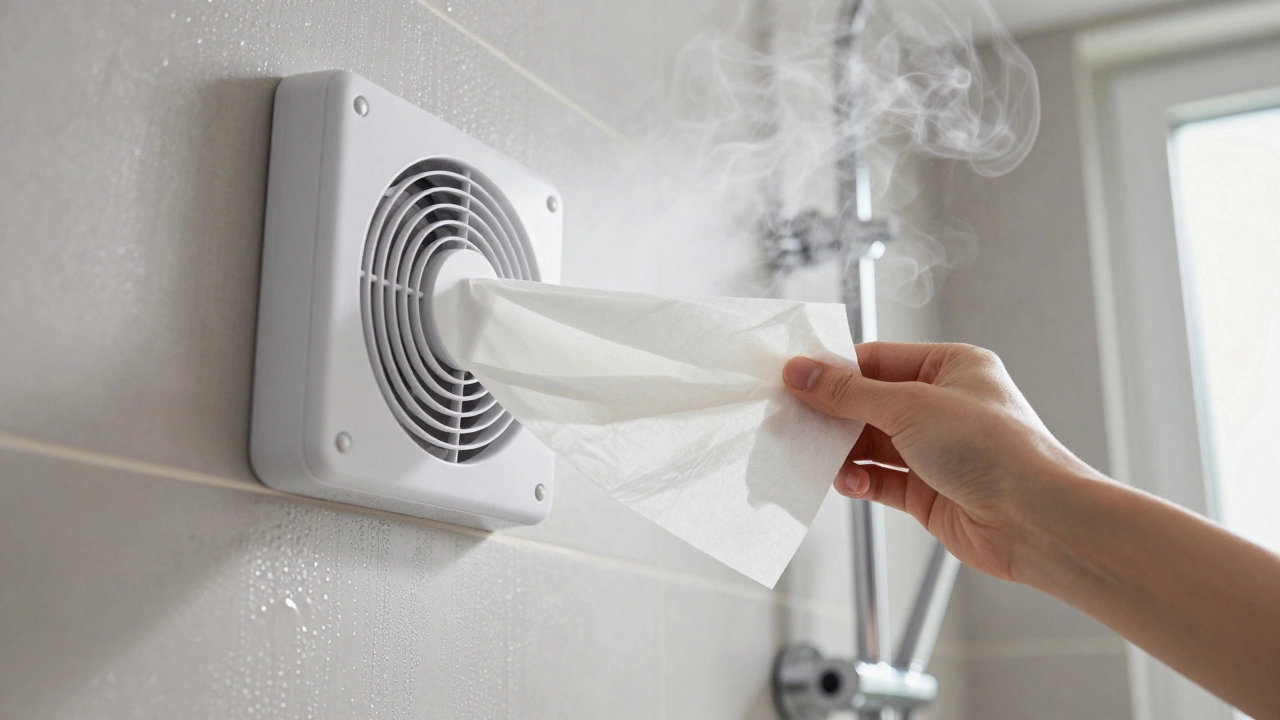
Hold a piece of toilet paper or a thin tissue up to the grille. If the fan is working, the paper should stick to it or flutter hard. If it doesn’t move at all, airflow is blocked-or the fan isn’t spinning.
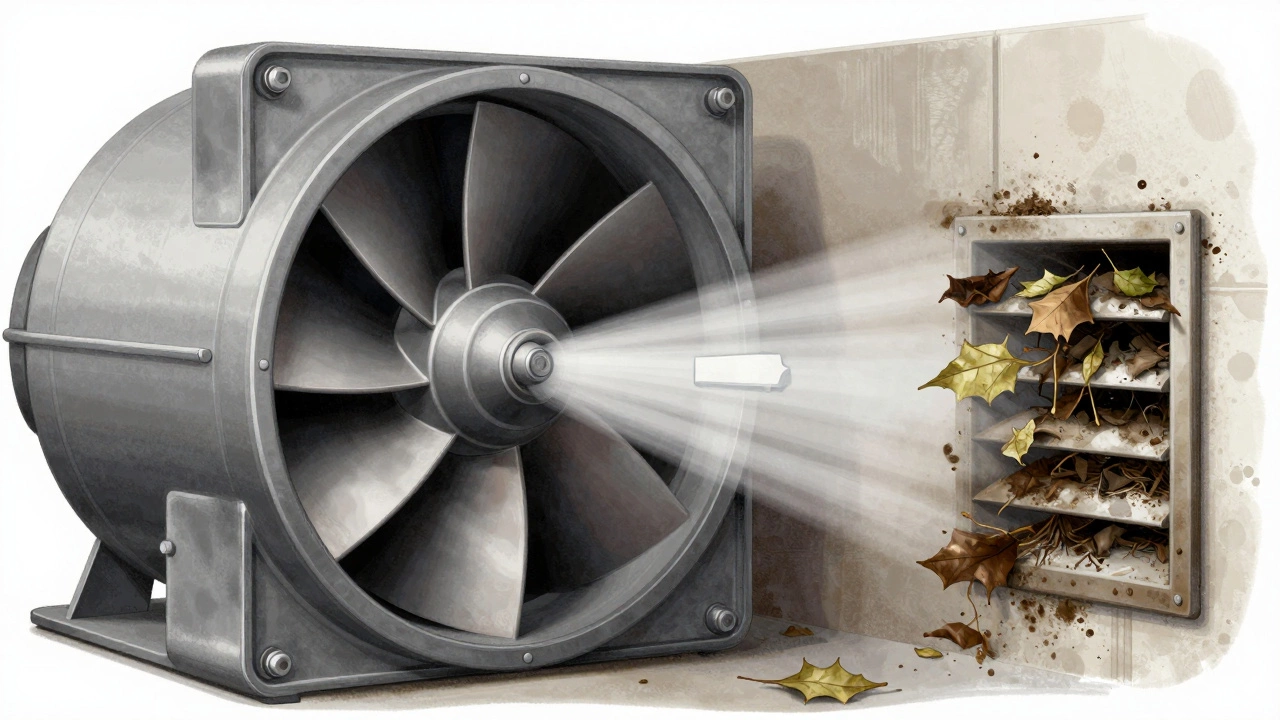
Now go outside or to the roof vent. Look at the exhaust outlet. Is it clear? Birds, leaves, or even a wasp nest can block the duct. A blocked vent stops air from escaping, making the fan seem broken even if the motor’s fine. Clear any debris you can reach. If the duct runs through the attic, check for kinks or crushed flexible ducting. Rigid metal ducts are better and less likely to collapse.
Feel the air movement
Put your hand near the intake grille. You should feel a strong pull of air being sucked in. If it’s weak or nonexistent, the impeller (the fan blade assembly) might be clogged with grease or dust. This is common in kitchen extractors. Over time, cooking oil coats the blades, slowing them down.
Turn off the power. Remove the cover and inspect the blades. If they’re sticky with grease, clean them with warm water and dish soap. Let them dry completely before reassembling. A dirty impeller can reduce airflow by up to 70%-that’s why your fan seems slow even though it’s running.
Test the timer or humidity sensor
Many modern extractor fans have built-in timers or humidity sensors. If the fan turns on automatically when the bathroom gets steamy but shuts off too soon, the sensor might be dirty or faulty. Dust on the sensor can trick it into thinking the air is dry.
Use a soft brush or compressed air to clean the sensor area. If it’s still acting up, bypass the sensor temporarily. Most models have a manual override switch. Turn the fan on manually and leave it running for 20 minutes. If it runs fine that way, the sensor is the problem-not the motor.
Check for vibration or unusual noise
A little hum is normal. A wobbling fan, rattling, or screeching isn’t. Loose mounting screws can cause vibration. Turn off the power and check the mounting bracket. Tighten any loose screws. If the fan still shakes, the motor shaft might be bent or the bearings worn out.
Spin the blades by hand (with power off). They should turn smoothly without grinding. If they feel gritty or stop suddenly, the bearings are failing. This is common in fans over 8 years old. Replacing the motor is cheaper than replacing the whole unit in most cases.
Measure the airflow (optional but accurate)
If you want to know exactly how well your fan is performing, you can measure airflow in cubic feet per minute (CFM). Most bathroom fans should move at least 50 CFM. Kitchen fans need 100-150 CFM.
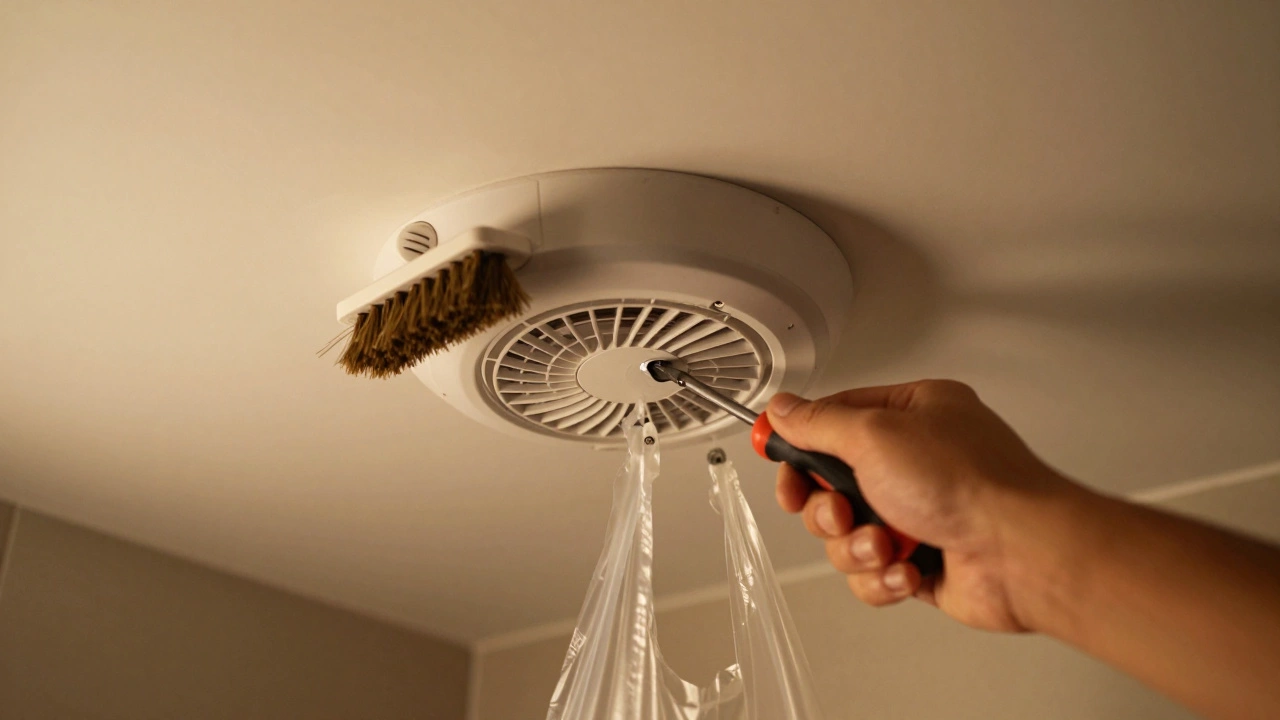
You don’t need a fancy tool. Use a simple method: tape a plastic grocery bag over the grille. Turn the fan on. Time how long it takes to inflate the bag fully. A good 50 CFM fan should fill a standard bag in about 8-10 seconds. If it takes longer than 15 seconds, the fan is underperforming.
When to replace it
Replace the fan if:
- The motor is silent and won’t spin even after cleaning and checking power
- The blades are cracked or warped
- The housing is rusted or cracked
- It’s over 10 years old and constantly needing repairs
Modern fans are quieter, more energy-efficient, and come with better moisture control. A new 80 CFM bathroom fan with a humidity sensor and LED light might cost $60-$100. Installation takes under an hour if you’re handy. Older models often use more electricity and don’t shut off automatically, wasting energy.
Prevent future problems
Keep your extractor fan working longer by doing three things:
- Wipe the grille monthly to stop grease and dust buildup
- Check the outdoor vent twice a year for blockages
- Replace the fan if it’s older than 10 years-even if it still works
A well-maintained fan lasts 15+ years. A neglected one fails in 5. Don’t wait for mold to grow before you act.
Why does my extractor fan turn on but not pull air?
If the fan spins but doesn’t move air, the duct is likely blocked or the impeller is clogged with grease. Check the outdoor vent for nests or debris. Clean the blades with soapy water. If the duct is kinked or crushed, replace it with rigid metal ducting.
Can a dirty filter cause my extractor fan to stop working?
Most extractor fans don’t have filters-they exhaust air directly outside. If yours has a mesh screen, it’s probably just a grease trap. Clean it monthly. A clogged screen reduces airflow but won’t stop the motor. If the fan won’t turn on at all, the issue is electrical or mechanical, not dirty parts.
Is it safe to run an extractor fan without the cover?
No. Running the fan without the cover exposes the motor and blades to dust, moisture, and accidental contact. It can cause overheating or injury. Always reinstall the cover before turning it on. The cover also helps direct airflow properly.
My fan makes a clicking sound when I turn it on. What’s wrong?
A clicking sound usually means the start capacitor is failing. This small component gives the motor the initial jolt to spin. If it’s bad, the motor might buzz but not turn. Replace the capacitor-it’s a $5 part. If you’re not comfortable doing it yourself, hire an electrician.
How often should I clean my extractor fan?
Clean the grille and blades every 3 months in a kitchen, and every 6 months in a bathroom. If you cook heavily or have high humidity, clean it monthly. Buildup slows airflow and forces the motor to work harder, shortening its life.