
Hot Water Troubleshooting Assistant
Follow these steps to identify the cause of your cold shower. Answer honestly for the best diagnosis.
Diagnosis
You turn the tap, expect a rush of warmth, and get nothing but icy cold. It’s frustrating, especially if you have guests coming over or just want a decent shower after a long day. Before you panic and call an emergency plumber, take a breath. Most cases of hot water not turning on aren't catastrophic failures. They are often simple fixes that require basic tools and a bit of logic.
This guide walks you through the most common reasons your water heater stopped working and how to diagnose them yourself. We’ll cover electric and gas units, safety checks, and when it’s actually time to call a pro. You don’t need to be a handyman, but you do need to respect electricity and gas lines.
Safety First: Stop Before You Break Things
Water heaters involve high voltage electricity, combustible gas, and scalding hot water. One wrong move can result in burns or electrical shocks. Before touching anything, follow these non-negotiable rules:
- Turn off the power or gas: For electric heaters, flip the breaker. For gas heaters, switch the control knob to "Pilot" or "Off." Never work on a live unit.
- Check for leaks: If you see standing water around the base, stop immediately. This could indicate a tank rupture, which is a major hazard.
- Wait for cooling: If the tank has been running, the pipes will be hot. Use gloves and wait at least 30 minutes before handling connections.
If you smell gas, leave the house immediately and call your utility provider from outside. Do not flip light switches or use phones indoors.
Is It Just One Faucet? Check Your Plumbing
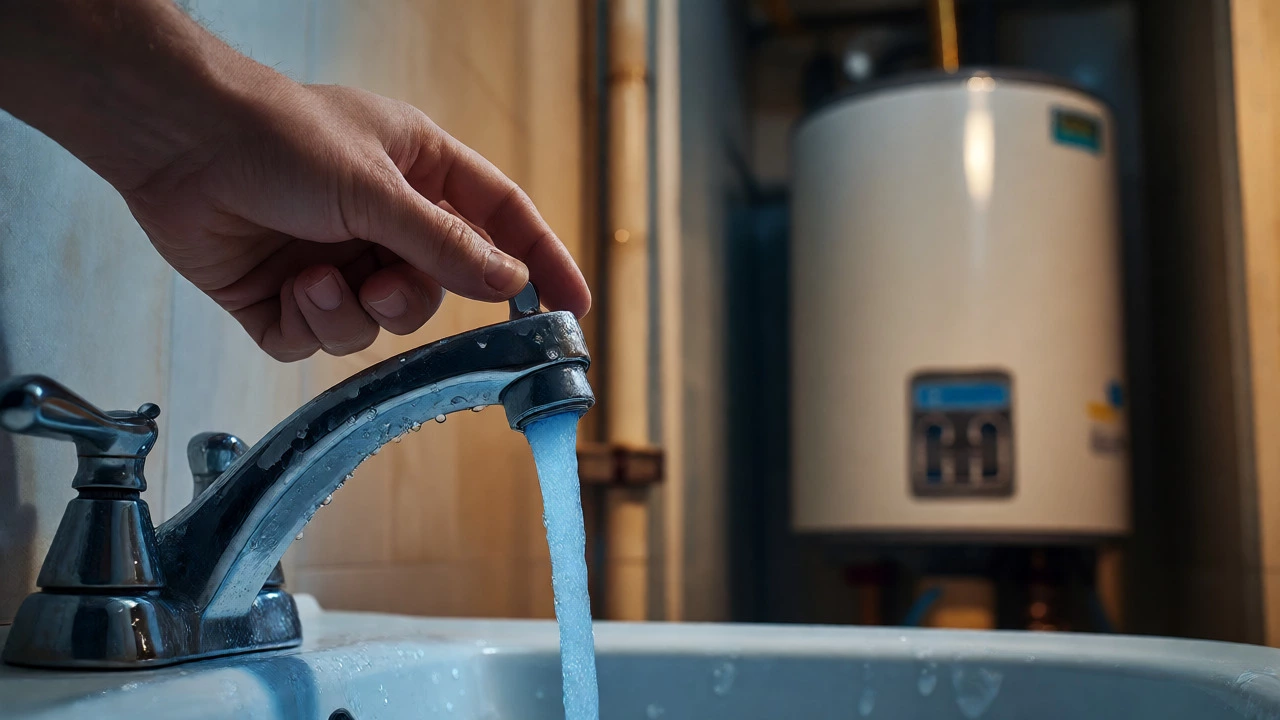
Here’s a quick test that saves hours of unnecessary troubleshooting. Turn on the hot water in the kitchen sink. Then check the bathroom sink and the shower. Is the water cold everywhere? Or is it only cold in one spot?
If only one faucet lacks hot water, your water heater is likely fine. The problem is local. It’s probably a clogged aerator, a broken cartridge in the faucet, or a shut-off valve under the sink that got accidentally closed. Clean the aerator by unscrewing the tip of the faucet spout. Rinse out any debris. If that doesn’t work, you might need to replace the faucet cartridge. This is a minor repair that costs under $20 in parts.
If every hot water tap in the house is cold, the issue lies with the water heater itself or the main supply line. Proceed to the next steps.
Troubleshooting Electric Water Heaters
Electric water heaters are straightforward machines, but they have specific failure points. The most common reason for no hot water is a tripped circuit breaker or a blown fuse.
Go to your electrical panel. Look for the breaker labeled "Water Heater." It’s usually a double-pole breaker (two slots wide). If the handle is centered between ON and OFF, or fully in the OFF position, it has tripped. Reset it by pushing it firmly to OFF, then back to ON. Wait ten minutes and check the water temperature. If it trips again immediately, you have a short circuit or a failed heating element. Don’t keep resetting it; you risk damaging the panel.
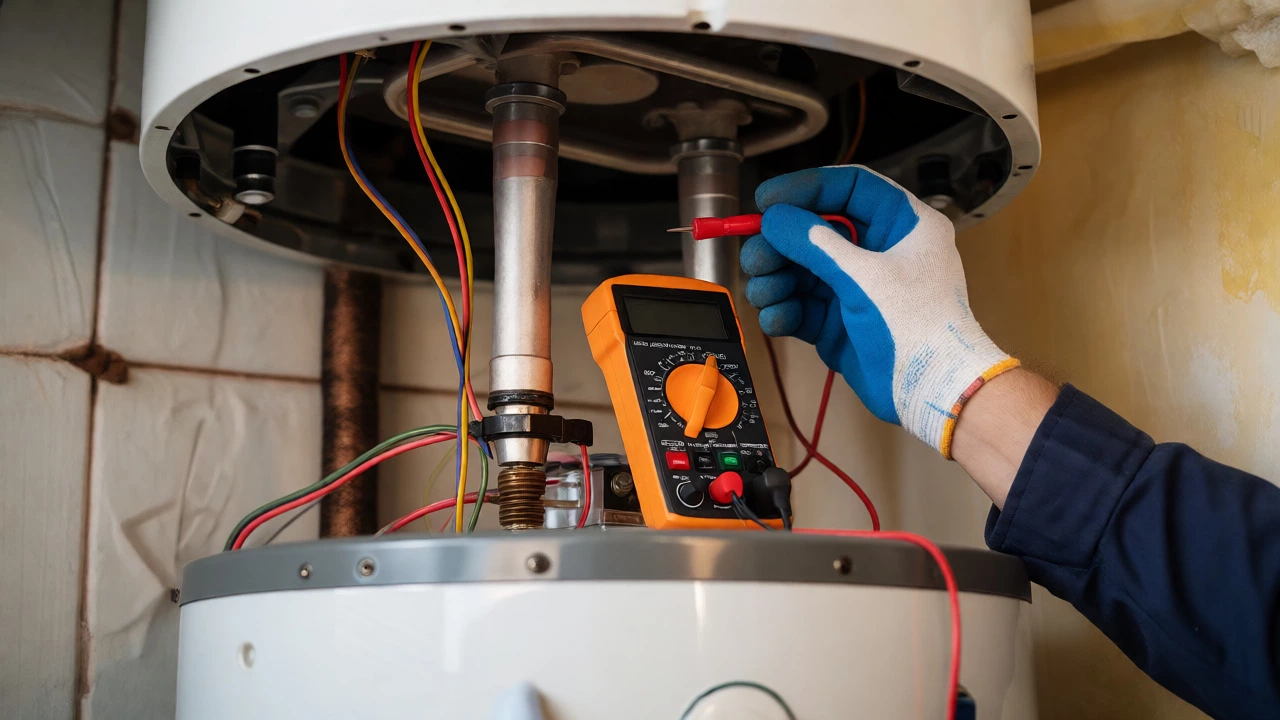
If the breaker is fine, the next suspect is the upper heating element. Electric tanks have two elements-one near the top, one near the bottom. The upper element does most of the work. If it fails, you’ll run out of hot water quickly or get none at all. Testing this requires a multimeter. Set it to continuity mode, disconnect the power, remove the access panel, and touch the probes to the element terminals. No continuity means the element is dead and needs replacement.
| Symptom | Likely Cause | Fix Difficulty |
|---|---|---|
| No hot water anywhere | Tripped breaker or failed upper element | Easy to Moderate |
| Runs out of hot water fast | Failed lower element or thermostat issue | Moderate |
| Hot water but low pressure | Clogged inlet filter or sediment buildup | Moderate |
Troubleshooting Gas Water Heaters
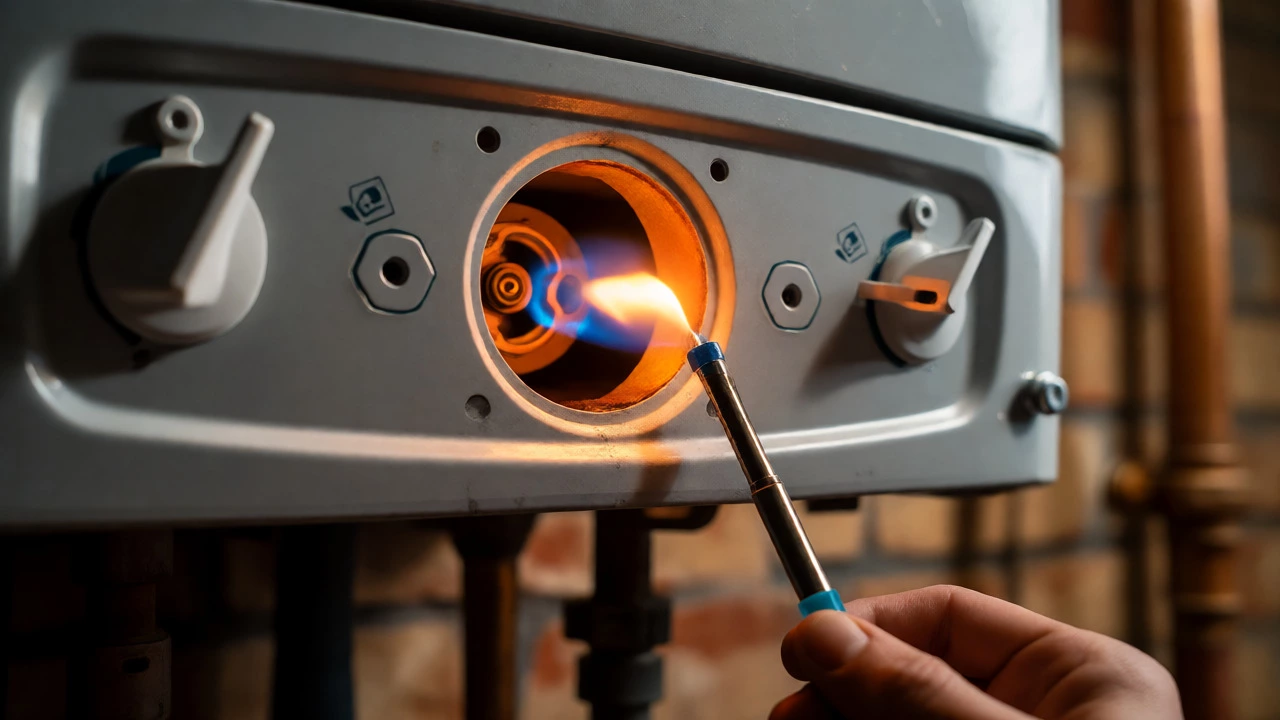
Gas units rely on a pilot light or an electronic ignition system to heat the water. If you have an older model with a standing pilot light, check if it’s lit. Look through the viewing window on the front of the unit. If the flame is out, relight it according to the instructions printed on the control panel. Usually, this involves turning the knob to "Pilot," holding down the reset button, and using a lighter to ignite the burner while pressing the button. Hold the button for a minute after lighting to heat up the thermocouple.
The thermocouple is a small metal rod next to the pilot flame. Its job is to sense heat and tell the gas valve to stay open. If it’s dirty, bent, or broken, the gas valve shuts off for safety. Cleaning it with steel wool often solves the problem. If cleaning doesn’t work, replacing the thermocouple is cheap and easy-just remember to turn off the gas first.
Newer gas heaters use electronic ignition. There’s no pilot light to relight. Instead, you listen for a clicking sound when you turn the tap on. If you hear clicks but no flame, the igniter might be dirty or faulty. If there’s no sound at all, check the power supply. Many modern gas heaters still need electricity to run the control board and fan. A tripped GFCI outlet in the garage or basement can kill the ignition system even though the gas is on.
The Thermostat Trap
Both electric and gas heaters have thermostats that regulate temperature. Sometimes, these settings get bumped or drift out of calibration. If your water is lukewarm rather than completely cold, adjust the thermostat.
For electric heaters, you’ll need to remove the insulation and access panels to reach the dials. Turn them clockwise to increase the temperature. Aim for 120°F (49°C), which is safe and energy-efficient. For gas heaters, the dial is right on the front. Turn it higher and wait an hour to test the results.
Be careful not to set it too high. Temperatures above 130°F (54°C) increase the risk of scalding and accelerate mineral buildup inside the tank. If adjusting the thermostat doesn’t help, the thermostat itself may be faulty and require replacement.
Sediment Buildup: The Silent Killer
Over time, minerals like calcium and magnesium settle at the bottom of the tank. This layer of sediment acts as an insulator, preventing heat from transferring to the water. In severe cases, it blocks the dip tube-the pipe that sends cold water into the bottom of the tank to be heated.
If your hot water runs out faster than usual, or if you hear popping and rumbling noises, sediment is likely the culprit. Flushing the tank can help. Attach a garden hose to the drain valve at the bottom of the unit and direct it to a floor drain or outside. Open the valve slowly. Let the water run until it comes out clear. This process removes loose debris and restores efficiency.
Note: If the tank is more than 10 years old, flushing might dislodge a plug of rust that was holding a small leak together. Be prepared for potential drips after flushing.
When to Call a Professional
Some problems are beyond DIY scope. You should hire a licensed plumber if:
- You smell gas and cannot identify the source.
- The tank is leaking from the body (not just a valve).
- Replacing heating elements or thermostats doesn’t restore hot water.
- The unit is older than 10-12 years and showing signs of corrosion.
Replacing a water heater is a significant investment, typically ranging from $800 to $2,500 installed, depending on capacity and fuel type. But trying to fix a dying tank repeatedly often wastes more money than replacing it upfront.
Quick Checklist for Success
Keep this list handy when troubleshooting. Work through it step-by-step to isolate the variable causing the outage.
- Verify multiple faucets are affected.
- Check the circuit breaker (electric) or gas supply (gas).
- Inspect the pilot light or ignition system.
- Test the thermocouple (gas models).
- Adjust the thermostat settings.
- Flush the tank to remove sediment.
- Inspect for visible leaks or corrosion.
Why is my hot water only working in some rooms?
If hot water works in the kitchen but not the bathroom, the issue is localized. Check the shut-off valves under the sink to ensure they are fully open. Inspect the faucet aerator for clogs. If the shower lacks hot water, the mixing valve or diverter cartridge may be stuck or worn out, requiring a faucet repair rather than a water heater fix.
How long does it take for hot water to return after fixing it?
Once the heater is repaired and turned back on, recovery time depends on the tank size and initial temperature. A standard 40-gallon electric heater takes about 60 to 90 minutes to heat a full tank of cold water. Gas heaters are faster, typically recovering in 30 to 45 minutes. Running the hot tap briefly helps purge air from the lines and speeds up delivery.
Can I replace a water heater element myself?
Yes, if you are comfortable working with electricity and plumbing. You must drain the tank partially so the water level is below the element, cut power, remove the wires, unscrew the old element, and install the new one with a fresh gasket. Ensure the wattage and voltage match exactly. Always test for voltage presence before starting.
What does a bad T&P valve look like?
The Temperature and Pressure Relief (T&P) valve is a safety device on the side or top of the tank. If it’s dripping constantly, it might be faulty or relieving excess pressure. A small drip during heating cycles is normal due to thermal expansion. However, a steady stream indicates a failing valve or excessive pressure, which needs immediate attention to prevent tank damage.
Is it cheaper to repair or replace a water heater?
For units under 8 years old, repairs like element or thermostat replacements are usually cost-effective, costing $150-$300. For units over 10 years old, frequent repairs add up quickly. If the repair cost exceeds 50% of the price of a new unit, or if the tank shows external rust, replacement is generally the better financial decision long-term.