
If your electric oven isn’t heating properly, takes forever to preheat, or shuts off randomly, you’re not alone. These aren’t just inconveniences-they’re signs something inside is failing. Most people assume the oven is broken beyond repair and start shopping for a replacement. But often, it’s just one simple part that’s gone bad. Knowing how to spot the most common electric oven problems can save you hundreds of dollars and get your oven working again fast.
Is the oven not heating at all?
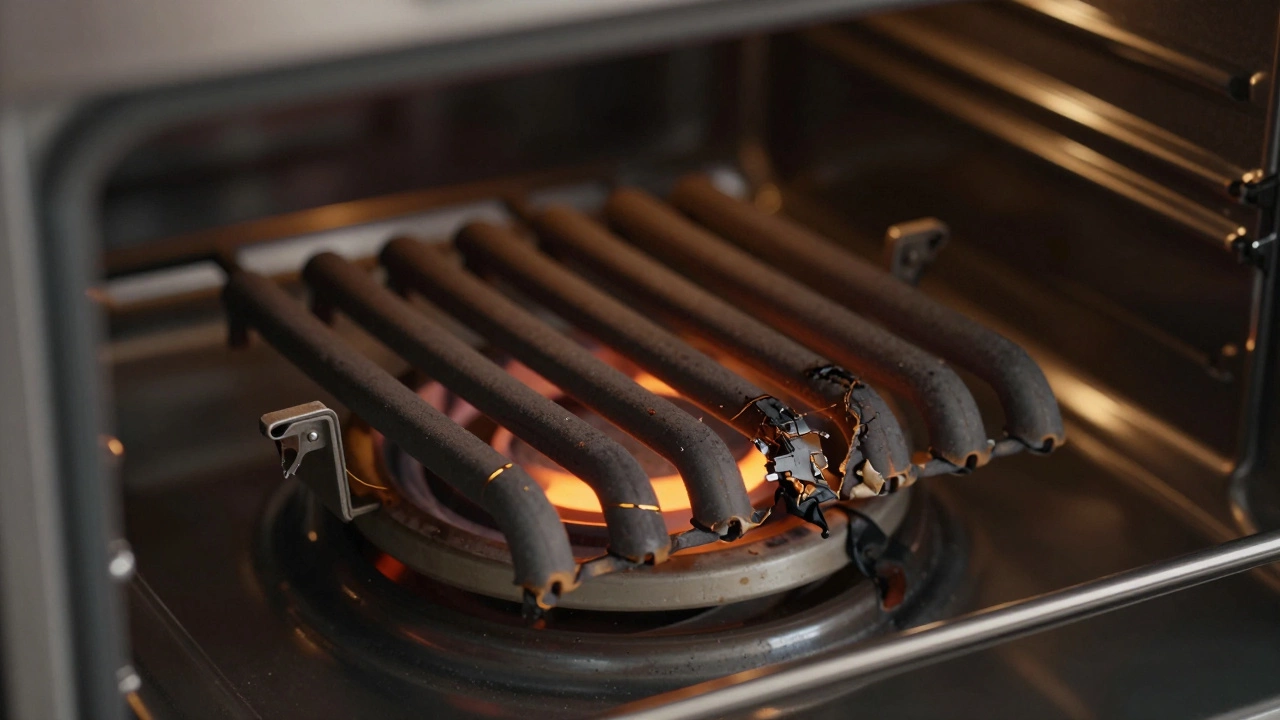
If the oven display lights up and the fan runs but nothing gets hot, the heating element is the first thing to check. Electric ovens usually have two elements: one on the bottom for baking and one on the top for broiling. If the bottom element is burnt out, your oven won’t bake. You’ll see visible signs: dark spots, cracks, or sections that look melted or separated from the mounting brackets. A healthy element should look smooth and evenly glowing when turned on. If it’s not glowing at all, even after waiting five minutes, it’s likely dead.
Test it with a multimeter. Turn off the power at the breaker, remove the element’s mounting screws, and disconnect the wires. Set your multimeter to ohms (Ω). Touch the probes to the two terminals on the element. If it reads zero or infinity, the element has no continuity and needs replacing. Most standard oven elements cost under $50 and take less than 30 minutes to swap out.
Why is the oven not reaching the right temperature?
Maybe your oven heats up, but your cookies burn on the bottom while the center stays raw. Or your roast takes twice as long as the recipe says. This usually points to a faulty thermostat or temperature sensor. The thermostat controls when the heating element turns on and off to maintain the set temperature. Over time, it loses calibration or fails entirely.
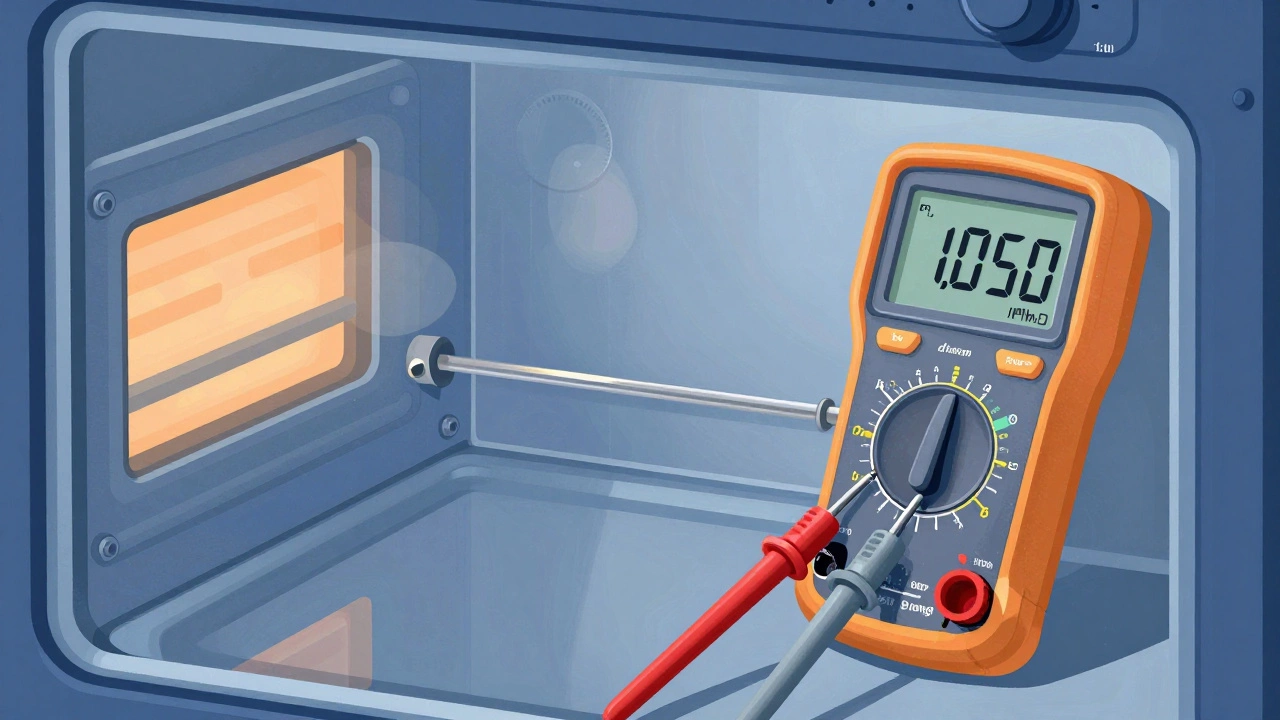
Modern ovens use a temperature probe (sensor) near the back wall, usually a thin metal rod about 4 inches long. If it’s dirty, bent, or damaged, it sends wrong signals to the control board. Wipe it gently with a damp cloth and make sure it’s not touching the oven wall. If cleaning doesn’t help, test it with a multimeter. At room temperature (around 20°C), it should read between 1,000 and 1,100 ohms. If it’s way outside that range, replace it. Sensor replacements cost about $30-$60 and are easy to install.
Is the oven heating unevenly?
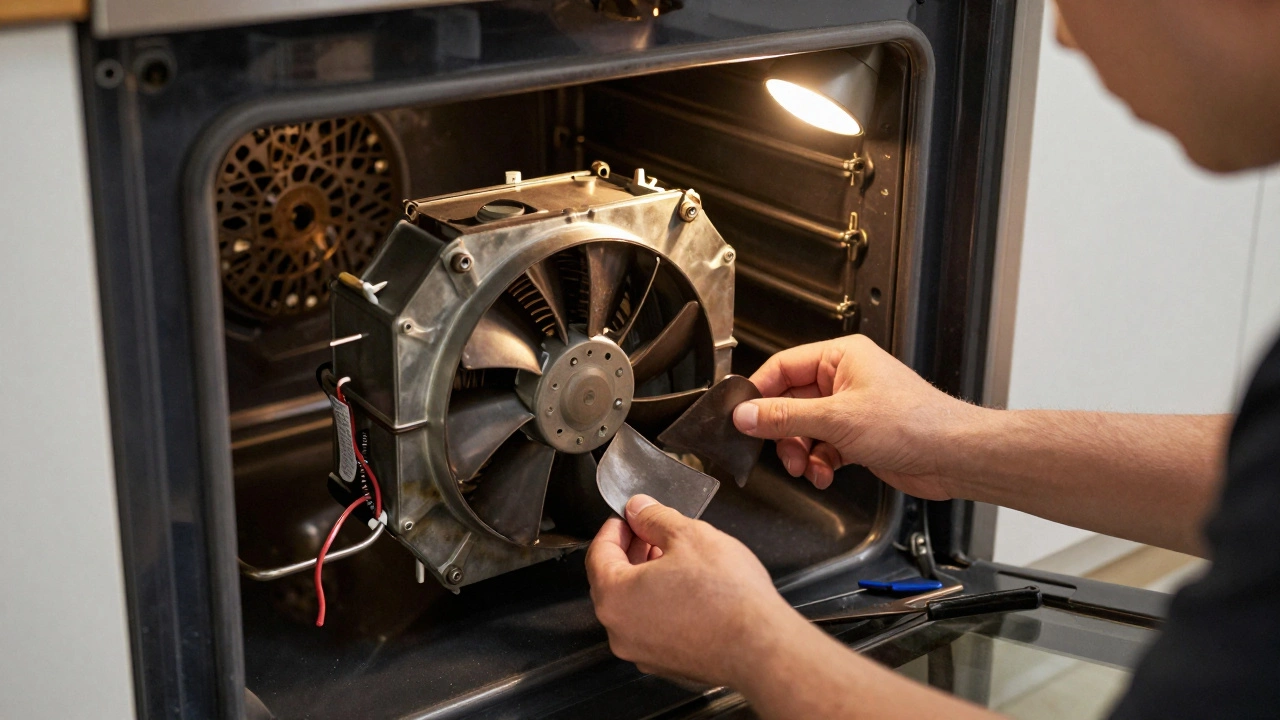
One side of your cake is browned while the other is pale? Or the bottom of your pizza is charred but the top stays doughy? This isn’t always about the heating element. It could be the bake element is weak, but more often, it’s because the convection fan isn’t working. If your oven has a convection setting and the fan doesn’t spin when you turn it on, air isn’t circulating. That means heat pools in one spot instead of spreading evenly.
Check the fan motor. Listen for a hum when you turn on convection mode. If you hear nothing, the motor might be dead. You can also remove the back panel (after turning off power) and look for signs of burnt wires or seized bearings. Fan motors aren’t expensive-usually under $70-but they’re harder to replace than elements. If you’re not comfortable doing it yourself, call a technician.
Why does the oven turn off randomly?
If your oven shuts down mid-bake and the display shows an error code like E1, F3, or H1, the control board might be the issue. But before you assume the worst, check the thermal fuse. This safety device cuts power if the oven overheats. It’s usually located near the broil element or on the back of the oven. If the fuse blows, the oven won’t turn on at all-even if the element and sensor are fine.
Thermal fuses are one-time-use parts. Once they blow, they can’t be reset. You’ll need to replace them. Use a multimeter to test for continuity. If it reads zero, the fuse is blown. The cause? Often it’s a blocked vent, a dirty oven, or a failing thermostat that keeps overheating the cavity. Fix the root problem before installing a new fuse, or it’ll blow again.
What if the oven light works but nothing else does?
This is a classic sign of a tripped circuit breaker or a faulty power supply. Electric ovens need a dedicated 240-volt circuit. If one leg of the circuit fails, the oven’s control panel might still work (because it runs on 120V), but the heating elements won’t get full power. Check your home’s breaker panel. Look for a double-pole breaker labeled "Oven" or "Range." If it’s halfway off, reset it. If it trips again right away, there’s a short in the wiring or a failed component drawing too much current.
Don’t keep resetting it. That’s a fire risk. If resetting doesn’t fix it, you need a qualified electrician to check the outlet, wiring, and oven’s power cord. Faulty wiring in older homes is common, especially in New Zealand where many houses were built before 2000 with outdated electrical systems.
Is the oven making strange noises?
Clicking is normal-it’s the thermostat cycling on and off. But loud buzzing, grinding, or rattling? That’s not. A rattling sound could mean a loose fan blade or a failing motor bearing. A buzzing noise often comes from a failing relay on the control board. If the noise happens only when the oven heats up, it’s likely heat-related expansion in a component. If it’s constant, even when off, it could be a wiring issue.
Never ignore unusual sounds. They’re early warnings. A grinding fan motor might last another month-or it could seize and overheat the control board. Catching it early saves you from a bigger repair bill.
How to avoid false alarms
Before you start replacing parts, rule out simple fixes. Is the oven door closing fully? A warped seal or a hinge that’s out of alignment lets heat escape, making the oven work harder and overheat. Clean the door gasket with soapy water and check for cracks. If it’s brittle or torn, replace it-it’s cheap and improves efficiency.
Also, make sure you’re not using the wrong cookware. Dark, heavy pans absorb more heat and can trigger overheating sensors. Glass or ceramic dishes can cause uneven heating if they’re too thick. Use the same type of pans you used when the oven worked properly.
And don’t forget to clean the oven. Built-up grease and food debris can insulate the heating element, making it overheat and fail faster. Clean it monthly with a non-abrasive oven cleaner. Avoid self-cleaning cycles unless you absolutely need to-they put extreme stress on the element and wiring.
When to call a professional
You can fix most electric oven problems yourself-elements, sensors, fuses, and fans are all DIY-friendly. But if you’re dealing with:
- Control board failure (no display, error codes that don’t match common issues)
- Wiring damage or burnt connectors
- Repeated thermal fuse blowouts
- Gas lines or dual-fuel systems (yes, some electric ovens have gas broilers)
Then stop. These require licensed technicians. Tampering with control boards or wiring can void warranties, create fire hazards, or cause electrocution. In New Zealand, electrical work over 50 volts requires a licensed electrician. Don’t risk it.
What to do next
Start with the simplest fix: check the power, clean the oven, and inspect the heating elements. If those don’t solve it, test the temperature sensor and thermal fuse with a multimeter. Most parts are available online from appliance suppliers like TradeMe, Appliance Parts NZ, or local repair shops. Keep your oven model number handy-it’s usually on a sticker inside the door frame or on the back.
Replacing a faulty element or sensor can bring your oven back to life for another 5-10 years. Waiting too long to fix it might lead to damage in other parts, like the control board, which costs $300-$600 to replace. Don’t let a small problem become a big one.
Why won’t my electric oven turn on at all?
If your oven won’t turn on, first check the circuit breaker-it might have tripped. Electric ovens need a dedicated 240-volt circuit. If the breaker is fine, test the thermal fuse and power cord with a multimeter. A blown fuse or broken wire will stop all power. If those are good, the control board may be faulty.
Can a dirty oven cause heating problems?
Yes. Grease and food debris can insulate the heating element, forcing it to work harder and overheat. This can cause premature failure. Built-up residue can also trigger the oven’s overheating safety system, making it shut off unexpectedly. Clean your oven every month with a non-abrasive cleaner to prevent this.
How do I know if my oven element is bad?
Look for visible damage: cracks, blisters, or sections that are discolored or sagging. When powered on, the element should glow bright orange. If it doesn’t glow at all, or only glows in spots, it’s failed. Test it with a multimeter-if it reads zero or infinity ohms, replace it.
Why does my oven take too long to preheat?
A slow preheat usually means the heating element is weakening or the temperature sensor is inaccurate. A failing sensor sends wrong signals to the control board, making it think the oven is hotter than it is. Test the sensor’s resistance with a multimeter-it should read around 1,000-1,100 ohms at room temperature. Replace it if it’s off by more than 10%.
Is it worth repairing an old electric oven?
If your oven is under 10 years old and the problem is a simple part like an element, sensor, or fuse, yes-it’s almost always cheaper to repair. Replacing a heating element costs $50 and takes 30 minutes. A new oven costs $800-$2,000. Only replace the whole unit if multiple major components are failing or if it’s over 15 years old with outdated energy efficiency.