
Kitchen Extractor Fan Diagnostic Tool
Answer the questions below to identify the likely cause of your extractor fan issue.
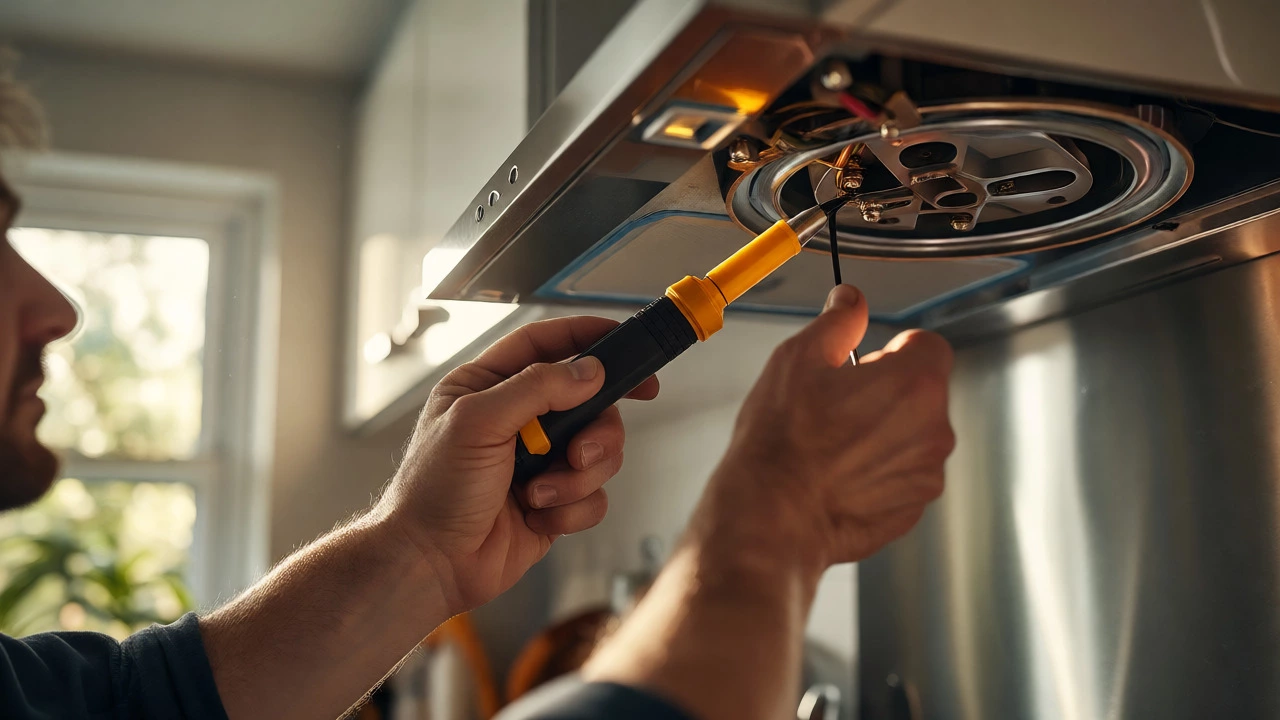
You turn on the switch, and all you get is a hum. Or maybe it’s dead silent. Either way, your extractor fan isn’t doing its job, and that steam from your morning pasta is now condensing on your ceiling instead of escaping outside. Before you call a technician or buy a new unit, you need to figure out if the problem is electrical, mechanical, or just a clogged filter. Testing an extractor fan is straightforward if you know where to look, but safety comes first because we’re dealing with mains electricity.
Safety First: Isolate the Power
Don’t touch anything inside the unit while it’s plugged in or live. Most kitchen fans are hardwired into a fused spur or connected via a plug socket. If it’s hardwired, go to your consumer unit (fuse box) and switch off the circuit breaker labeled "Kitchen" or "Extractors." If you can’t identify which breaker controls the fan, switch off the main supply. Use a non-contact voltage tester on the terminals once you’ve opened the cover to confirm there’s no current flowing. This step isn’t optional; skipping it is how people end up with minor shocks or worse.
Visual Inspection: The Obvious Stuff
Start with what you can see without tools. Remove the grease filters-usually metal mesh or charcoal cartridges-and wash them if they’re greasy. Clogged filters are the number one cause of poor performance. If the filters are clean, look at the impeller (the spinning blades). Are they coated in thick grime? Do they spin freely when you give them a gentle nudge by hand? If the blades are stiff or don’t move smoothly, you have a mechanical issue, likely a seized motor bearing or debris blocking the rotation. Also, check the external vent flap. If it’s stuck shut due to paint or rust, air can’t escape, making the fan sound loud and work poorly.
Electrical Testing: Is It Getting Power?
If the fan is silent, the issue is often electrical. You’ll need a multimeter for this part. Set it to AC voltage. With the power back on and the fan switched to "on," test the voltage at the terminal block where the wires connect to the motor. You should read approximately 230-240V (standard in New Zealand). If you get zero volts, the problem lies upstream: a blown fuse, a faulty wall switch, or a broken cable. If you do get full voltage but the fan doesn’t run, the motor itself is likely dead or the capacitor has failed.
Checking the Capacitor
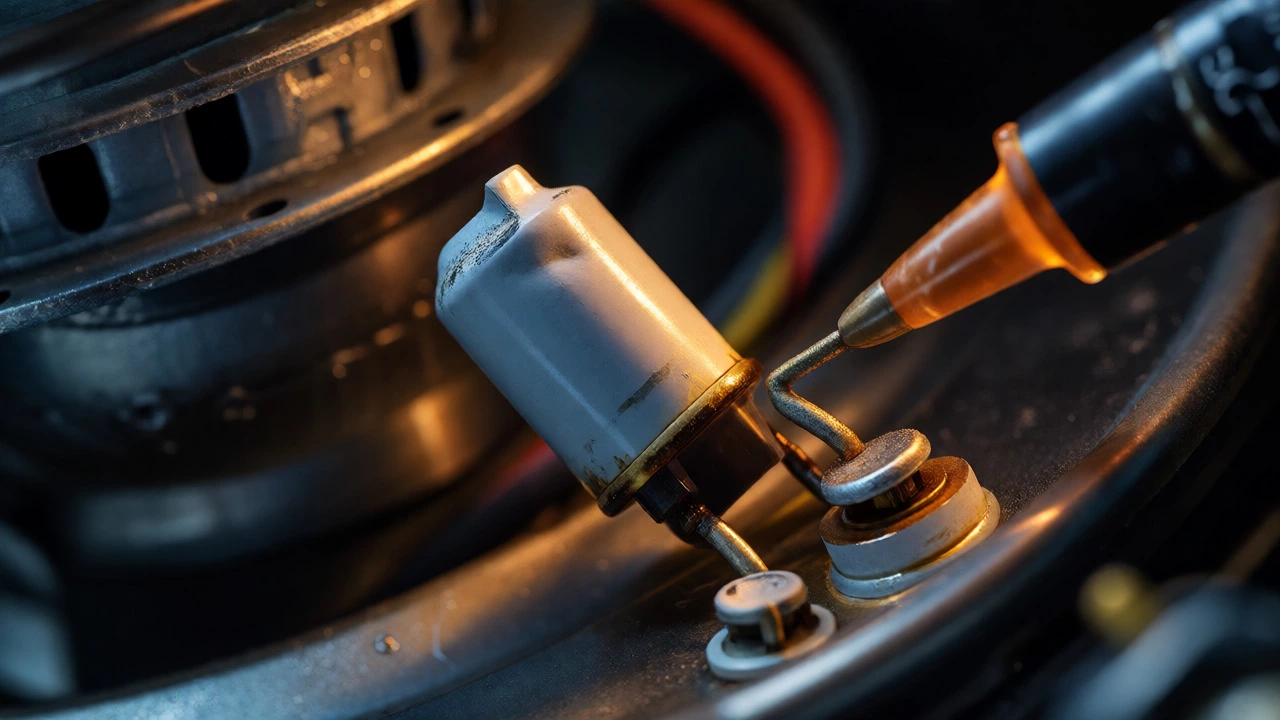
Many extractor fans use a start capacitor to help the motor kick into gear. If your fan hums but doesn’t spin, or spins very slowly, the capacitor is a prime suspect. Locate the small cylindrical component attached to the motor housing. Visually inspect it: is it bulging, leaking oil, or burnt? These are clear signs of failure. To test it properly, disconnect the power, discharge the capacitor by shorting its terminals with an insulated screwdriver, and then set your multimeter to capacitance mode. Compare the reading against the microfarad (µF) rating printed on the casing. If the reading is significantly lower than the rated value, replace it. Capacitors are cheap and easy to swap.
Testing the Motor Windings
If the capacitor checks out and you have power, the motor windings might be open-circuited. Disconnect the capacitor and set your multimeter to resistance (Ohms). Measure the resistance between the common wire and the speed control wires (low/high). You should see a low resistance reading, typically between 50 and 200 Ohms depending on the model. If you see infinite resistance (OL), the winding is broken, and the motor needs replacing. If the resistance is near zero, you have a short circuit. Note that some motors have thermal cut-outs that trip if the fan overheats; let it cool down for 30 minutes and try again before condemning the motor.
Airflow Verification
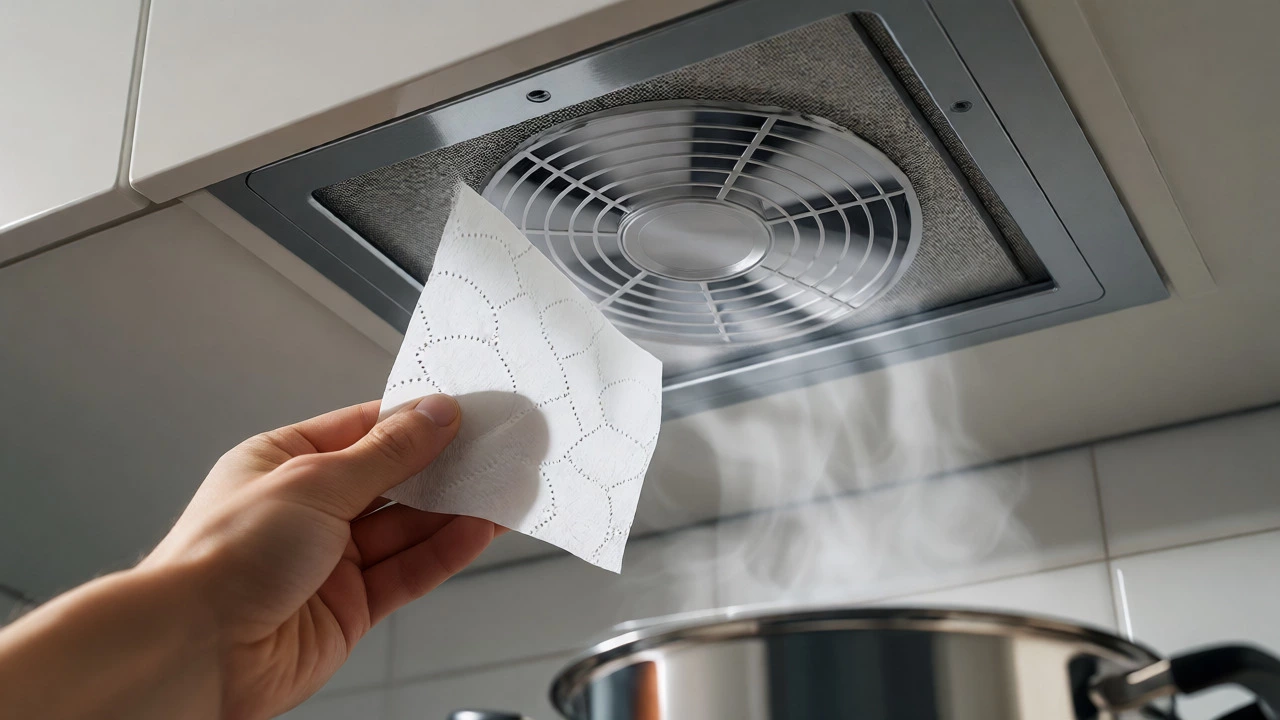
Once you’ve confirmed the electrical components are working, verify airflow. Turn the fan on and hold a piece of toilet paper or tissue against the intake grille. It should stick firmly. If it barely moves, the ducting might be blocked or disconnected. Check the flexible ducting behind the cabinet for kinks or holes. A detached duct pipe will blow air into the cabinet cavity rather than outside, rendering the fan useless despite running perfectly.
| Symptom | Likely Cause | Quick Fix |
|---|---|---|
| Fan is completely silent | No power, blown fuse, or faulty switch | Check breaker and wall switch |
| Fan hums but doesn't spin | Failed start capacitor or seized bearings | Replace capacitor or clean/lubricate motor |
| Fan runs but pulls little air | Clogged filters or blocked ducting | Wash filters and clear duct path |
| Fan makes grinding noise | Debris in impeller or worn bushings | Remove debris or replace motor bushings |
When to Call a Pro
If you’ve tested the power, capacitor, and motor windings, and everything seems fine but the fan still won’t work, you might have an internal thermal fuse failure that requires specialized soldering. Alternatively, if the wiring looks scorched or melted, stop immediately. That indicates a serious fault that could pose a fire risk. In these cases, replacement is often more cost-effective than repair, especially for older units.
Can I test an extractor fan without removing it from the ceiling?
Yes, partially. You can check for power at the switch and listen for the motor. However, to test the capacitor or motor windings, you usually need access to the terminal block, which often requires lowering the unit or removing the cover panel. For most models, accessing the motor compartment is necessary for accurate electrical testing.
Why does my extractor fan only work on high speed?
This usually points to a faulty speed switch or a break in the low-speed wire within the motor windings. If the switch clicks but nothing happens on low, the contact inside the switch may be corroded. If the switch is fine, the low-speed tap on the motor coil may be broken.
How long should an extractor fan last?
With regular cleaning, a quality extractor fan should last 10 to 15 years. Cheaper models may fail sooner due to inferior motor bearings. Regular maintenance, such as cleaning filters monthly and checking for noise changes, can extend lifespan significantly.
Is it safe to run a fan with a humming noise?
It’s not ideal. Humming usually means the motor is struggling to start, which causes it to overheat. Prolonged operation in this state can burn out the motor windings or trigger a thermal cut-out. Turn it off and investigate the capacitor or mechanical obstruction promptly.
Do charcoal filters affect fan performance?
Yes, heavily. Charcoal filters add significant resistance to airflow. If they become saturated with grease and odors, they can restrict air movement dramatically, making the fan seem weak even if the motor is healthy. Replace charcoal filters every 3-6 months depending on usage.