
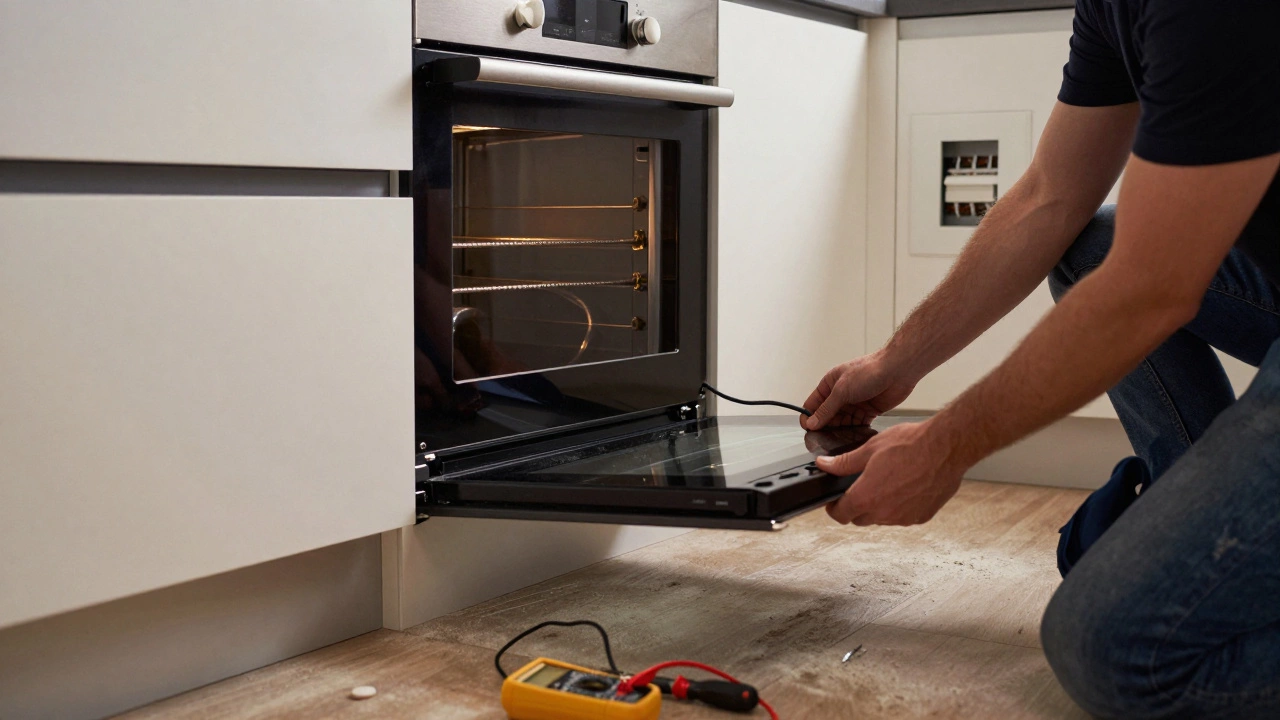
If your oven won’t turn on, heats unevenly, or smells like burning plastic, you’re not alone. Most oven problems aren’t expensive to fix - and you don’t always need a technician. With a few basic checks, you can often get your oven back to normal in under an hour. This guide covers the most common oven issues you’ll face in a New Zealand home, how to diagnose them, and what to do next.
Your oven doesn’t turn on at all
This is one of the most frustrating problems. You press the button, but nothing happens. No light, no sound, no heat. First, check the obvious: is the oven plugged in? Yes, even built-in ovens have a power cord behind them. Pull the oven out slightly and make sure the plug is fully seated. A loose connection is more common than you think.
Next, look at your home’s circuit breaker. Ovens use a lot of power, so they often have their own dedicated circuit. If the breaker tripped, it’ll be in the middle or off position. Flip it back on. If it trips again right away, stop. That’s a sign of a serious electrical fault - call a professional.
Some ovens have a fuse inside the control panel. If you’re comfortable opening the panel (unplug first!), check for a small glass or ceramic fuse. If it’s blackened or the wire inside is broken, replace it. Fuses cost under $10. If you’re unsure, skip this step and move on.
The oven heats up slowly or not at all
If the oven turns on but takes 45 minutes to reach 180°C, or only gets warm on one side, the heating element is likely the culprit. Most ovens have two elements: one on top (broil) and one on the bottom (bake). The bottom element does most of the work during regular baking.
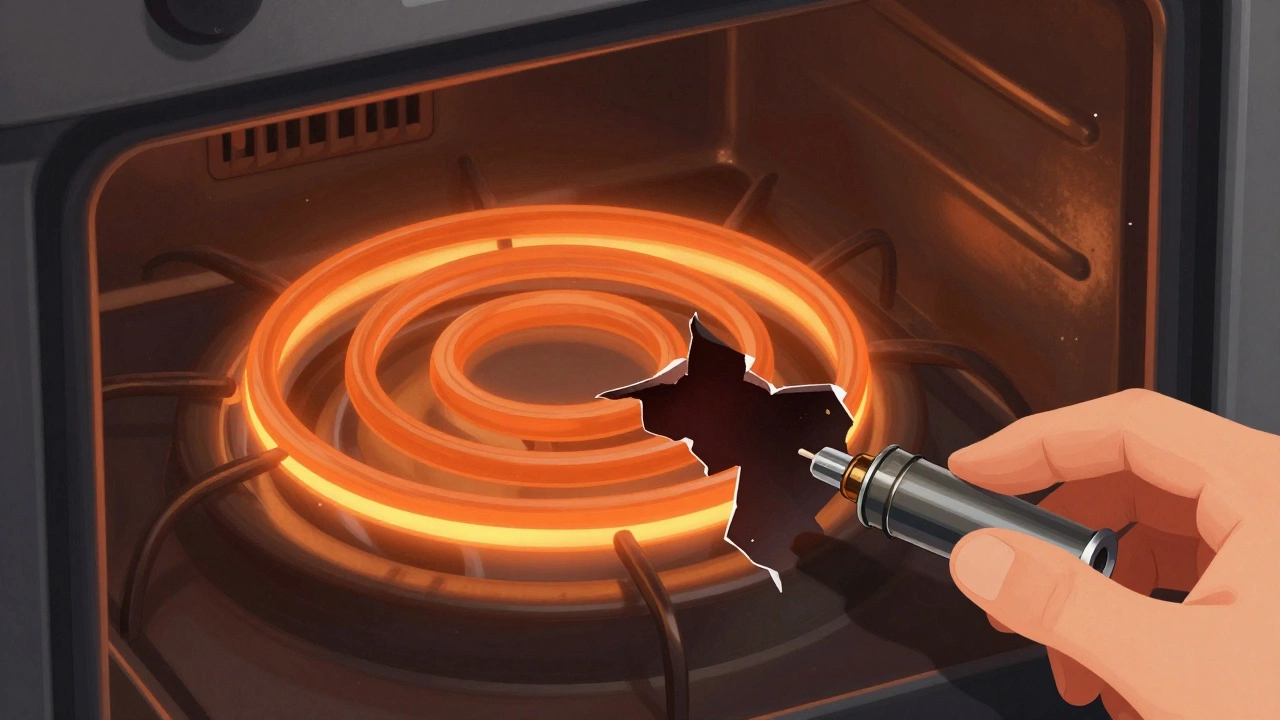
Turn the oven on to 180°C and watch the bottom element. After five minutes, it should glow bright orange. If it’s dark or only partially glowing, it’s burned out. You can test it with a multimeter if you have one - set it to continuity mode and touch the probes to the element’s terminals. No beep? It’s dead.
Replacement elements are easy to find. Just note your oven’s make and model (usually on a sticker inside the door frame) and order the right one. Unplug the oven, remove the old element by unscrewing the mounting screws, disconnect the wires, and swap in the new one. It takes 15 minutes. Make sure the wires are connected tightly - loose connections cause arcing and more damage.
Temperature is off - food is undercooked or burnt
Many ovens run hotter or colder than the dial says. A 20°C difference is common. This isn’t a defect - it’s calibration. You can test it with an oven thermometer. Place it in the center of the middle rack, preheat to 175°C, and wait 20 minutes. If it reads 155°C or 195°C, your oven is out of sync.
Most modern ovens let you calibrate the temperature in the settings menu. Look for something like “Temperature Offset” or “Calibration.” You can adjust it up or down in 5°C increments. If your oven doesn’t have this feature, you’ll need to learn its quirks. If it runs 15°C hot, always set it 15°C lower than the recipe says.
Older ovens rely on a thermostat with a gas-filled bulb. Over time, these can drift. Replacing the thermostat costs $50-$120, depending on the model. If you’re not replacing it yourself, a technician will charge $150-$200 for the part and labor.
Uneven cooking - one side burns, the other stays cold
This usually means the oven’s fan isn’t working right. Convection ovens use a fan to circulate hot air. If the fan motor is weak or the blades are clogged with grease, air doesn’t move evenly. Check for grease buildup around the fan. Use warm soapy water and a soft brush to clean it. Don’t use harsh chemicals - they can damage the motor.
If cleaning doesn’t help, listen for the fan when the oven is running. You should hear a steady hum. If it’s silent or makes a grinding noise, the motor might be failing. Replacement fan motors are $80-$150. Unplug the oven, remove the back panel, disconnect the wires, and swap the motor. It’s a bit more involved than replacing an element, but still doable for a handy person.
The oven smells like burning plastic or rubber
A new oven sometimes smells during its first few uses - that’s normal. But if it happens after years of use, something’s wrong. The most common cause is insulation inside the oven wall melting. This can happen if the oven overheats due to a faulty thermostat or if someone accidentally left the self-cleaning cycle on too long.
Turn off the oven immediately. Let it cool completely. Then remove the racks and clean the interior with baking soda and water. If the smell lingers, the insulation may be damaged. This isn’t something you can fix yourself. Contact a repair technician - continuing to use it could be a fire risk.
Another cause is plastic packaging or oven mitts left inside. Always double-check before turning the oven on. A melted spatula or zip tie can release toxic fumes.
Door doesn’t seal properly
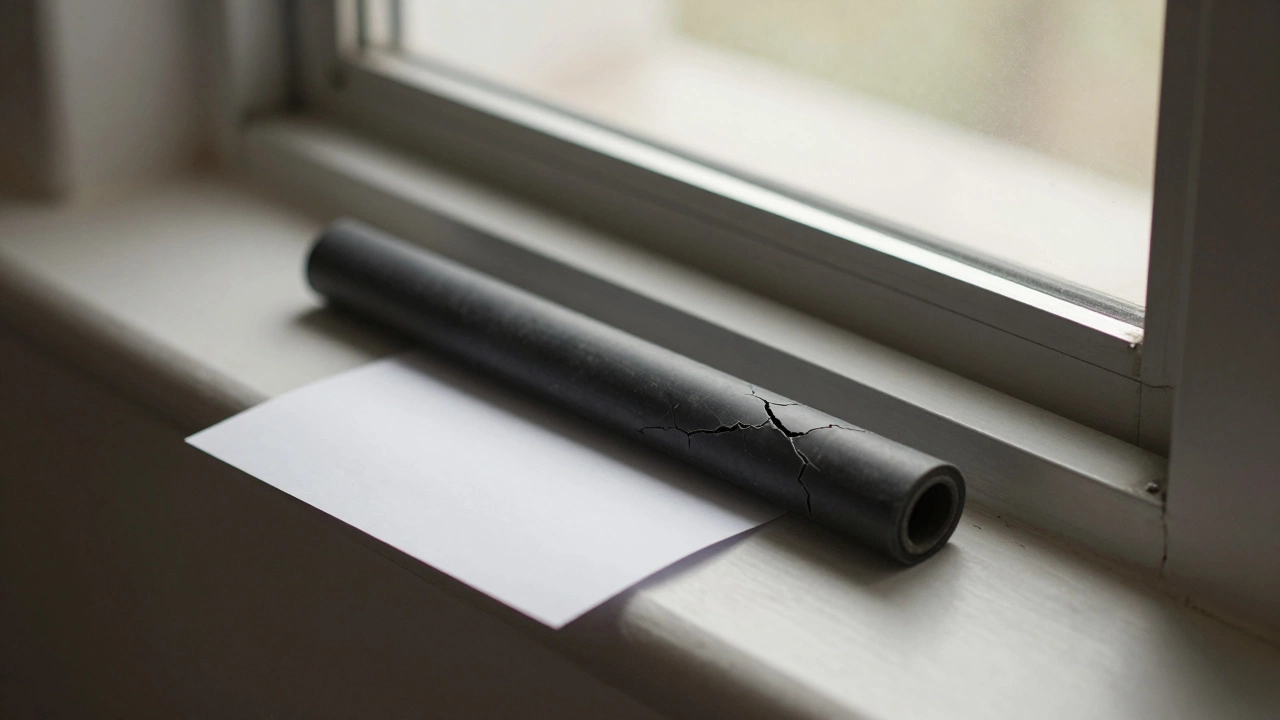
A poorly sealed door lets heat escape. That means longer cook times, higher energy bills, and uneven baking. Check the door gasket - the rubber seal around the edge. If it’s cracked, brittle, or pulled away from the frame, it needs replacing.
Order a replacement gasket using your oven model number. They’re usually under $40. Remove the old one by pulling it out of its groove. Push the new one in snugly. Don’t stretch it - it should lie flat. A good seal should press evenly against the door when closed. Test it by closing a piece of paper in the door. If you can pull it out easily, the seal isn’t tight enough.
Control panel is unresponsive or shows error codes
Modern ovens display error codes like “F1,” “E3,” or “PF.” These aren’t random. Look up your oven’s manual online - most manufacturers have PDFs available. Each code means something specific. For example, “F1” on a Whirlpool oven often means the control board failed. “E3” on a Bosch might mean the temperature sensor is faulty.
If the display is blank, try resetting the oven. Unplug it for 10 minutes, then plug it back in. If that doesn’t fix it, the control board may be damaged. These are expensive to replace ($200-$400), and sometimes it’s cheaper to buy a new oven. If your oven is over 10 years old, consider replacement instead of repair.
When to call a professional
You can fix most oven issues yourself - but not all. Call a technician if:
- The oven smells like gas (rotten egg odor)
- There are sparks or flames inside the oven
- The circuit breaker keeps tripping
- You’re uncomfortable working with electricity or gas lines
- The oven is under warranty (voiding it yourself could cost you more)
Gas ovens require special care. Never try to fix a gas leak or gas valve yourself. Turn off the gas supply at the wall and call a licensed gas fitter immediately.
Preventing future problems
Regular cleaning keeps your oven running longer. Wipe spills as they happen. Clean the interior every 3 months with baking soda and water. Avoid oven cleaners with lye - they eat away at seals and panels.
Don’t use the self-cleaning cycle more than twice a year. It heats the oven to over 500°C, which stresses components. Always remove racks before running it.
Keep the vents clear. Dust buildup around the back or sides can trap heat and damage electronics. Vacuum the area every few months.
And if you’re replacing parts, always use manufacturer-approved ones. Aftermarket parts may fit, but they often fail sooner and can damage other components.
Why does my oven take so long to preheat?
Slow preheating usually means a weak or failing bottom heating element. Test it by turning the oven on and watching if it glows orange. If it doesn’t, or only glows in spots, replace it. Another cause is a dirty oven - grease buildup insulates heat. Clean the interior and check the fan for convection ovens. Also, make sure the door seal is intact - a gap lets heat escape.
Can I use my oven if the light doesn’t work?
Yes. The oven light is just a convenience - it has no effect on heating. If the bulb is out, replace it. Most bulbs are standard incandescent or LED and cost under $15. Unplug the oven, open the light cover (usually twist or pop off), and swap the bulb. If the light still doesn’t work after replacing the bulb, the wiring or switch may be faulty, but the oven will still heat fine.
Is it worth repairing an old oven?
If your oven is over 10 years old and the repair cost is more than half the price of a new one, it’s usually better to replace it. Modern ovens use 20-30% less energy and have better temperature control. Also, older models often use parts that are discontinued, making future repairs harder. If the issue is a simple element or thermostat replacement under $100, repair it. For control boards, fans, or gas valves, replacement is smarter.
Why does my oven smell like burning plastic?
A burning plastic smell usually means something melted inside - like a plastic container, spatula, or insulation. If it’s a one-time smell after cleaning, it’s likely debris. If it keeps happening, the insulation around the oven cavity may be breaking down from overheating. Turn off the oven, let it cool, and inspect the interior. If you see blackened or cracked insulation, stop using it. This is a fire hazard. Contact a technician.
How do I find my oven’s model number?
Look inside the oven door frame, on the side wall, or on the back of the oven near the bottom. The model number is usually a mix of letters and numbers - for example, “WFE515S0ES” or “OvenModel-2023.” Write it down. You’ll need it to order parts, find manuals, or get repair help. If you can’t find it, search online using your oven’s brand and approximate age - many manufacturers list old models in their archives.
Most oven problems are simple to fix with basic tools and a little patience. You don’t need to be an electrician - just careful. Keep your oven clean, check the elements and seals regularly, and don’t ignore strange smells. A few minutes of maintenance now can save you hundreds later.