
Oven Repair vs. Replace Calculator
Enter your details below to get a personalized recommendation based on the article's guidelines.
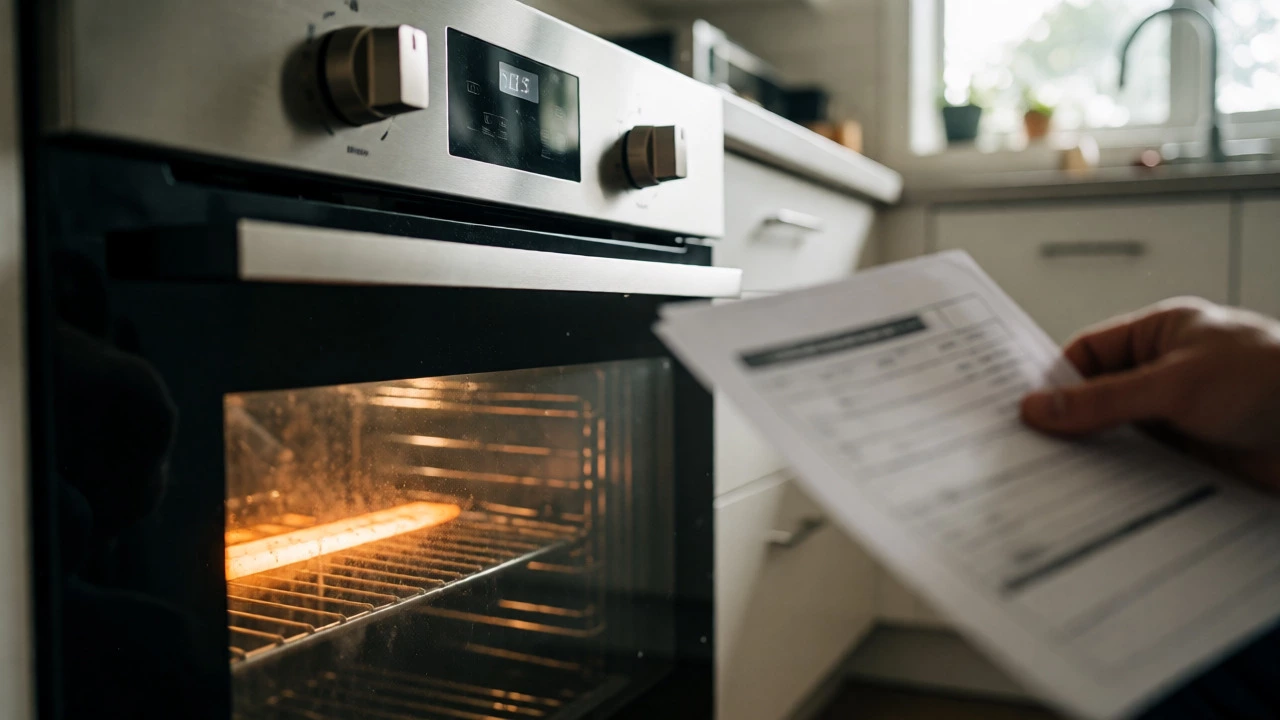
You’re staring at your oven. It’s been seven years since you bought it, and suddenly, the heating element is acting up or the door seal has gone hard. The repair quote comes in at $250. You start wondering: should you just bin it and buy a new one? This is the classic "repair versus replace" dilemma, and for a 7-year-old oven, the answer isn't always obvious. In New Zealand, where energy costs are climbing and appliance prices have surged post-pandemic, making the wrong call can cost you thousands.
| Factor | Repair Likely Worth It | Replace Likely Better |
|---|---|---|
| Repair Cost | Under 30% of new unit price | Over 50% of new unit price |
| Age | < 10 years (standard) | > 15 years or high-end brand |
| Issue Type | Single component failure | Multiple failures / control board |
| Energy Efficiency | Current model is efficient | Older gas/electric inefficient |
The Five-Year Rule and Why Seven Is Different
There’s an old handyman rule: if the repair costs more than half the price of a new machine, don’t do it. But with ovens, age matters just as much. Most standard freestanding cookers in New Zealand last between 10 to 15 years. At seven years, your oven is roughly halfway through its life expectancy. If it’s a mid-range brand like Fisher & Paykel or Whirlpool, parts are still readily available. However, if it’s a budget brand from a big-box retailer, finding specific parts might be harder, and labor costs could outweigh the value of the remaining lifespan.
Consider what actually broke. If it’s a simple thermostat or a heating element, these are cheap fixes-often under $150 including labor. These components wear out naturally. Replacing them resets the clock on those parts. But if the issue is the main control board or multiple elements failing simultaneously, that’s a red flag. Control boards often fail because of power surges or heat stress over time. Once one electronic component goes, others usually follow within months. At that point, you’re paying for repairs repeatedly rather than solving the root problem.
Do the Math: Repair Costs vs Replacement Value
Let’s look at real numbers. A basic new electric cooker in Wellington might cost between $800 and $1,200. A higher-end built-in oven could run $2,000 to $4,000+. Now, check your repair quote. If your technician charges $250 to fix a fan motor, that’s about 20-25% of a new basic cooker. That’s generally worth it. You get another 3-5 years of use for a fraction of the replacement cost. However, if you own a premium built-in oven (say, a Miele or Bosch) costing $3,500, and the repair is $600, that’s only 17%. Still okay. But wait-do you need that same brand? If you’re renovating soon, maybe not. If you plan to stay in the house for another decade, repairing a high-quality unit often makes financial sense because new units depreciate instantly upon installation.
Don’t forget hidden costs. Buying new means delivery fees, potential plumbing or electrical adjustments if sizes differ, and disposal fees for the old unit. In many NZ councils, bulky waste collection isn’t free. Disposing of an old oven can cost $50-$100. Factor that into your "new" column. Sometimes, the repair looks cheaper until you add the hassle of shopping, measuring, and installing.
Energy Efficiency: The Silent Cost Killer
This is where many homeowners miss the boat. A seven-year-old oven isn’t necessarily inefficient. Modern ovens have improved insulation and faster pre-heating, but the jump in efficiency between a 2019 model and a 2026 model isn’t always dramatic enough to justify replacing a working unit solely for savings. Unless your current oven is a very old gas model with poor burner design, you won’t see massive drops in your electricity bill by swapping it out.
Test this yourself. Turn off all other major appliances. Run your oven at 180°C for 30 minutes. Check your smart meter if you have one. Then compare it to online specs for new models. Often, the difference is negligible for average home cooks. Save the upgrade for when you’re actually renovating the kitchen layout or upgrading features like steam cooking or air frying integration.
Brand Reliability and Parts Availability
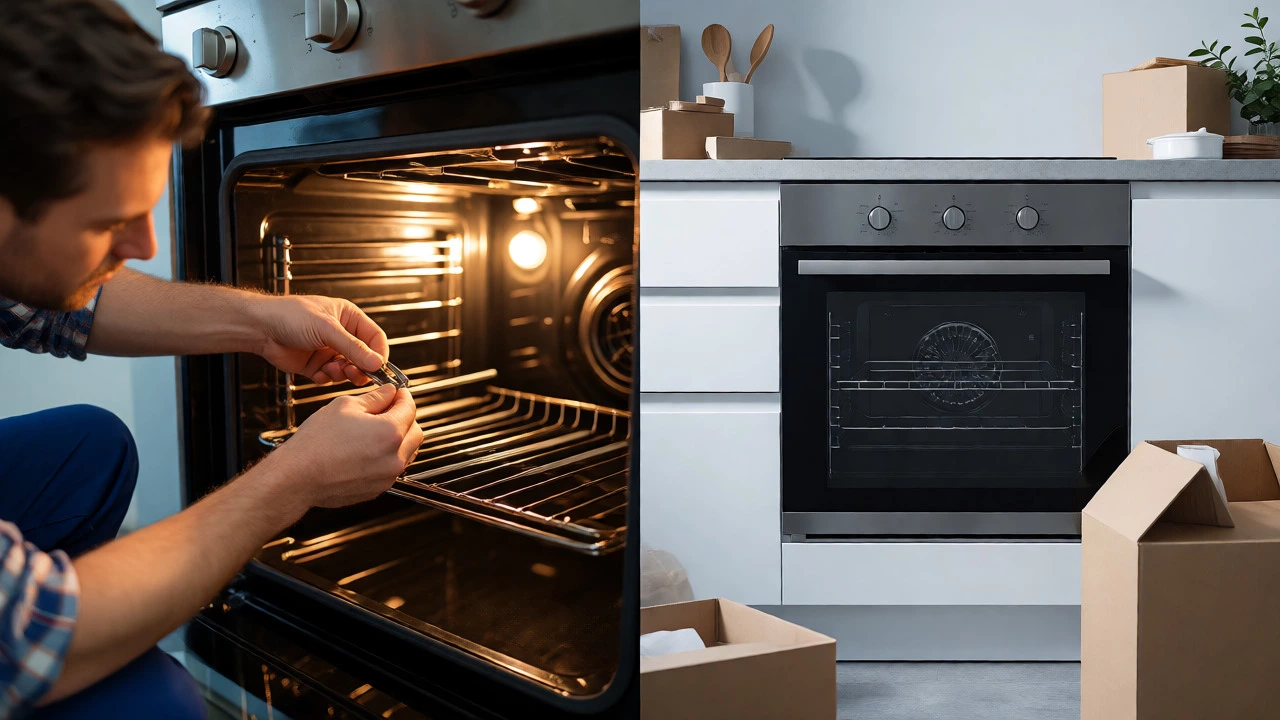
In New Zealand, some brands hold their value and parts availability better than others. Brands like Fisher & Paykel, Smeg, and Electrolux tend to have robust service networks. Even if your oven is seven years old, technicians can likely source a replacement hinge or switch without ordering from overseas. This keeps labor times short and costs down.
Conversely, if you bought a no-name brand or a discontinued line, you might face a "parts obsolete" scenario. Technicians may refuse to touch it, or they’ll charge extra for sourcing generic parts that don’t fit perfectly. Before agreeing to any repair, ask your technician: "Is this part currently in stock locally?" If the answer is no, and lead times are four weeks, you might prefer a new unit you can use immediately.
Safety First: When to Walk Away
Sometimes, money doesn’t matter. Safety does. If your oven has exposed wiring, sparking terminals, or a cracked glass door, stop using it. Cracked doors lose heat rapidly, causing the exterior to get dangerously hot-a burn risk for kids and pets. Also, if there’s a smell of burning plastic or ozone, it could indicate electrical arcing. These aren’t just annoyances; they’re fire hazards.
Gas ovens require extra caution. If you suspect a gas leak or inconsistent flame color (yellow instead of blue), call a registered gas fitter immediately. Do not attempt DIY fixes on gas connections. For gas units, a faulty valve or igniter is common, but repeated issues suggest deeper systemic problems. Given the safety risks, replacing an aging gas oven is often recommended sooner than an electric one.
Environmental Impact: Reduce, Reuse, Recycle
We live in a world obsessed with sustainability, and throwing away a functional appliance feels wasteful. Manufacturing a new oven consumes significant resources-steel, aluminum, plastics, and electronics. Transporting it across the ocean adds carbon emissions too. If your oven is structurally sound and safe, keeping it running reduces your environmental footprint.
Think of it this way: repairing extends the life of existing materials. Recycling an old oven recovers metals, but the process itself uses energy. Unless your oven is truly broken beyond economical repair, fixing it aligns better with sustainable living principles. Plus, you avoid contributing to landfill bulk waste.
How to Make Your Final Decision
Here’s a quick checklist to help you decide right now:
- Check the warranty: Did you buy an extended warranty? Some cover parts for 5-7 years. You might get the repair free.
- Get two quotes: Prices vary wildly between independent technicians and authorized service centers. One might charge $180, another $350 for the same job.
- Inspect the rest of the oven: Are the racks rusty? Is the interior enamel chipped badly? Cosmetic issues don’t affect function, but heavy corrosion suggests overall neglect.
- Plan your timeline: Can you live without an oven for two weeks while waiting for parts? If not, buying new might be faster.
If the repair is under $300 and the oven works well otherwise, fix it. If the repair exceeds $500 or involves complex electronics, consider replacing it. And remember, a new oven is an investment in your daily comfort. Don’t rush it based on a single breakdown.
How long do ovens typically last?
Most residential ovens last between 10 and 15 years. High-end built-in models can last longer with proper maintenance, while budget freestanding units may fail closer to the 10-year mark due to lower-quality components.
Is it cheaper to repair or replace an oven?
Generally, repairing is cheaper if the cost is less than 30-50% of a new unit's price. For a 7-year-old oven, simple fixes like element replacements are almost always more cost-effective than buying new.
What signs mean my oven needs replacing?
Look for uneven heating that persists after calibration, excessive smoke during normal use, cracked glass doors, or frequent electronic glitches. If multiple components fail within a year, replacement is usually smarter.
Can I sell my old oven before replacing it?
Yes, especially if it’s a popular brand like Fisher & Paykel or Smeg. Working ovens sell well on TradeMe or Facebook Marketplace. Even broken ones have value for scrap metal or spare parts buyers.
Does energy efficiency justify replacing a 7-year-old oven?
Rarely. While newer models are slightly more efficient, the savings on your power bill won’t offset the purchase price unless your current oven is severely malfunctioning or extremely old (15+ years).