
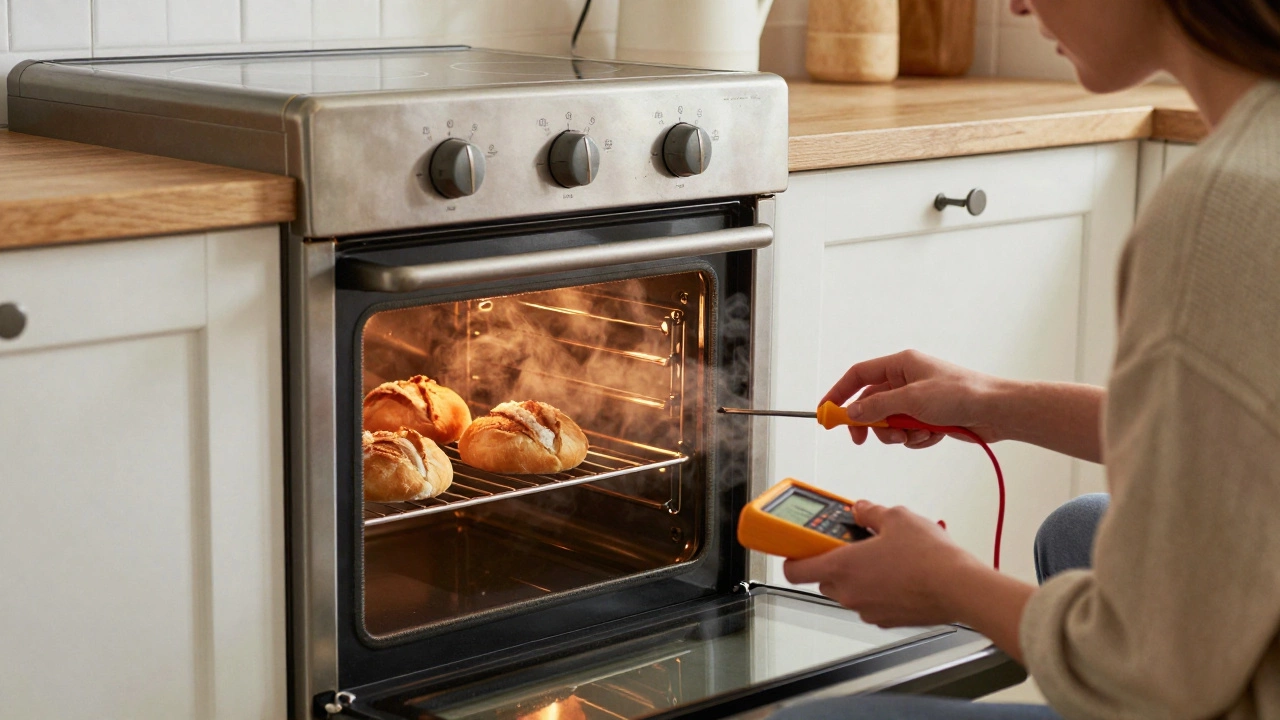
Oven Repair vs Replacement Calculator
Eight years isn’t ancient for an oven. But when it starts acting up-uneven baking, strange noises, or worse, not heating at all-it’s easy to wonder: is it worth repairing an 8-year-old oven? Or should you just replace it? There’s no one-size-fits-all answer. But if you live in Wellington, where power bills climb every winter and repair shops are few but reliable, knowing the real costs can save you hundreds.
How long do electric ovens actually last?
Most manufacturers say 10 to 15 years. That’s the official lifespan. But in real homes? It’s more like 8 to 12. Why? Because ovens don’t just sit there. They get slammed with heat cycles, spills, cleaning chemicals, and power surges. A home that bakes pies every Sunday, broils steak weekly, or uses the self-clean function monthly wears out faster than one that just reheats leftovers.
Here’s what breaks first in an 8-year-old oven:
- Heating elements (top and bottom) - $60 to $120 to replace
- Thermostat or temperature sensor - $80 to $150
- Igniter (for gas ovens) - not your issue, but worth noting
- Control board - $200 to $400
- Door seal or hinge - $30 to $70
Most repairs under $150 are usually worth it. Anything over $250? You’re flirting with replacement territory.
What’s the cost of replacing an oven?
A basic electric oven in New Zealand costs between $800 and $1,500 installed. That includes removal of the old unit, electrical rewiring if needed, and a standard 12-month warranty. Mid-range models with convection, steam cleaning, or smart features? Start at $1,800. High-end built-ins? You’re looking at $3,000+
But here’s what most people forget: the hidden cost of waiting. If your oven dies in July, you’re not just buying a new one-you’re buying takeout for weeks. A family of four eating out three nights a week? That’s $150 to $250 a week. In six weeks? That’s $900 to $1,500. Suddenly, a $300 repair looks like a bargain.
When repair makes sense
Repair your 8-year-old oven if:
- The issue is a simple part: heating element, thermostat, or door switch
- The oven still heats evenly and cooks food properly (even if it’s slow)
- You’ve had no major breakdowns in the last two years
- The brand is still reputable (Bosch, Smeg, LG, or Fisher & Paykel)
- You’re not planning to move in the next 2-3 years
One Wellington homeowner I spoke with replaced her oven’s bottom element in 2024. Cost: $110. The oven had been working fine since 2018. She’s still using it today. No issues. No regrets.
When replacement is smarter
Replace your oven if:
- The control board is failing - it’s expensive, and often signals deeper electrical issues
- Multiple parts have failed in the last year
- The oven doesn’t heat to temperature (you’re constantly adjusting settings)
- The door doesn’t seal - heat leaks out, and your electricity bill spikes
- You’re upgrading your kitchen anyway
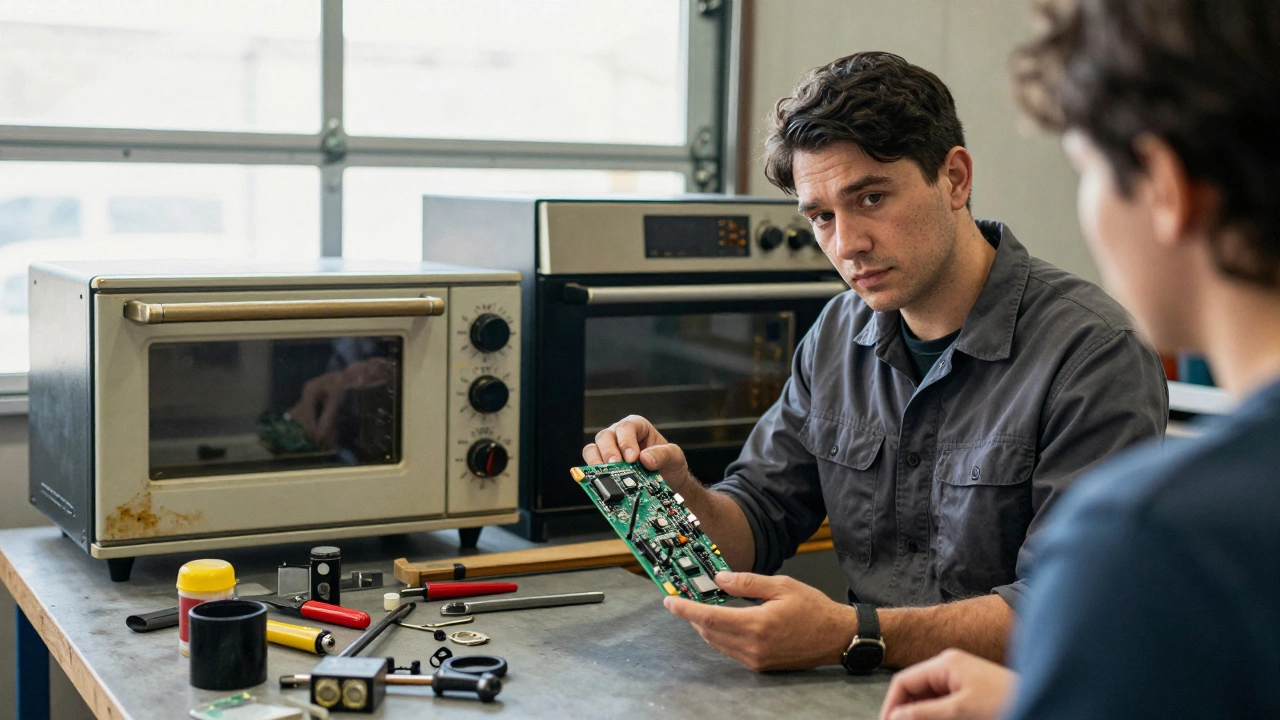
Control boards are the big red flag. If your oven’s display is glitchy, buttons don’t respond, or it shuts off randomly, the board is likely failing. Replacing it costs nearly half as much as a new oven. And it won’t last long. These boards are made with cheaper components now. They’re not built to last.
Energy efficiency matters more than you think
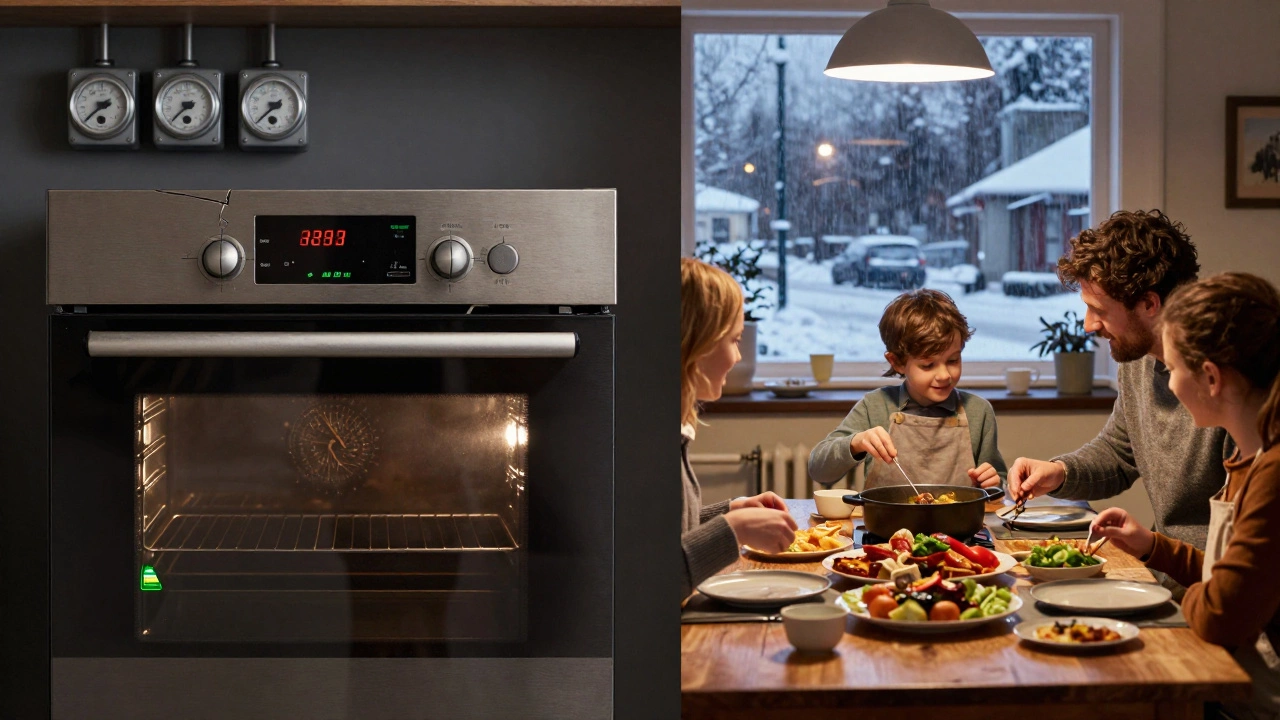
An 8-year-old oven is probably 15% to 25% less efficient than a new one. Why? Better insulation, smarter thermostats, and tighter seals. That might not sound like much, but if you bake twice a week? You’re wasting 10-15 kWh a month. At Wellington’s average rate of 28 cents per kWh? That’s $2.80 to $4.20 a month. $34 to $50 a year.
Over five years? That’s $170 to $250. Add in the cost of repairs and you’re not far off from the price of a new oven. And a new oven? It might come with energy rebates. In New Zealand, some councils offer discounts on energy-efficient appliances. Check your local council website-Wellington City Council sometimes runs winter appliance upgrades.
What about extended warranties?
Most ovens come with a 12-month warranty. After that? You’re on your own. But if you bought an extended warranty (like from Harvey Norman or Noel Leeming), check the terms. Some cover control boards for up to 5 years. If yours is still valid, use it. Don’t pay out of pocket.
But if you didn’t get one? Don’t buy one now. They’re expensive, and they rarely cover the most common failures.
DIY or call a pro?
Replacing a heating element? You can do it. You’ll need a multimeter, a screwdriver, and 90 minutes. YouTube tutorials are clear. But if you’re not comfortable with electricity? Don’t risk it. Faulty wiring can fry your whole kitchen. Or worse.
Most repair technicians charge $80 to $120 per hour. A simple fix takes 1 to 1.5 hours. That’s $100 to $180 total, plus parts. If the total is under $250 and the oven’s otherwise healthy? Go for it.
What to look for in a repair technician
Not all repairers are equal. Look for:
- Technicians who carry spare parts (not just “order them”)
- Companies that offer a 30- to 90-day guarantee on repairs
- Clear pricing upfront - no surprise charges
- Positive reviews mentioning oven repairs specifically (not just fridges)
Ask: “Do you have the part in stock?” If they say yes, they’ve likely done this repair before. That’s a good sign.
Final decision checklist
Before you decide, ask yourself:
- How much will the repair cost? (Get a quote)
- How much would a new oven cost? (Include installation)
- How often do you use the oven? (Daily? Weekly?)
- Is the oven still heating evenly?
- Are there other signs of wear? (Rust, warped racks, loose door)
- Do you plan to stay in this home for more than 2 years?
- Could you afford to go without it for 1-2 weeks?
If you answered yes to 4 or more of these, repair it. If you answered yes to 2 or fewer? Replace it.
What if you just can’t decide?
Here’s a trick: call a repair technician for a quote. Ask them: “If this were your oven, would you fix it?” Most honest techs will tell you. And if they say, “I’d replace it,” listen. They’ve seen hundreds of these. They know what fails next.
One technician in Miramar told me: “I fix ovens for a living. I’d rather see someone replace an 8-year-old oven than spend $300 on a repair that’ll break again in six months.”
Is it worth repairing an 8-year-old oven?
It depends. If the repair cost is under $250 and the oven still heats evenly, yes. If the control board is failing, multiple parts have broken, or you’re already spending more on electricity, replacement is smarter. An 8-year-old oven is near the end of its average lifespan, so consider long-term value, not just the immediate fix.
How long should an electric oven last?
Most electric ovens last 10 to 15 years under normal use. But heavy use, poor ventilation, or frequent self-cleaning can shorten that to 8 years. In Wellington, where homes are older and power costs are high, efficiency drops noticeably after 8 years.
What’s the most common repair for an 8-year-old oven?
The bottom heating element is the most common failure. It’s cheap to replace ($60-$120) and often the only issue. The next most common is a faulty thermostat or temperature sensor, which causes uneven cooking. Control board failures are rarer but cost more than half the price of a new oven.
Should I replace my oven if it’s still working?
Only if you’re upgrading your kitchen, want better energy efficiency, or are tired of the slow heating. If it heats evenly and you’re not spending extra on electricity, there’s no need to replace a working oven. But if you’re planning to sell your home, a modern oven can add value.
Can I save money by repairing my oven myself?
Yes-if you’re comfortable with basic electrical work. Replacing a heating element or thermostat is doable with a multimeter and online guides. But if you’re unsure, don’t risk it. Faulty wiring can cause fires or damage your home’s electrical system. Hiring a pro for $120 is cheaper than a repair bill gone wrong.