
Dishwasher Repair vs. Replace Decision Tool
Enter the details below to get a recommendation based on the industry-standard 50% threshold rule.
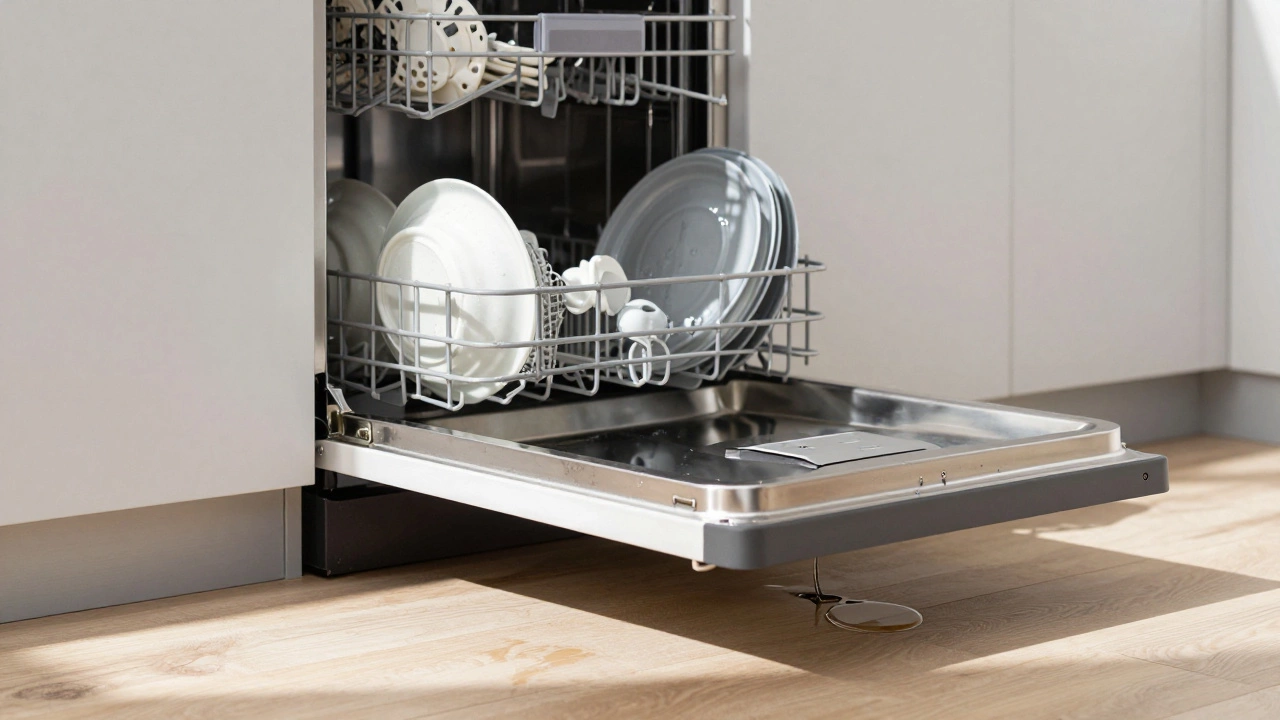
You press the start button, but your dishwasher is a kitchen appliance that cleans dishes using water and detergent. Instead of a satisfying hum, you hear nothing. Or worse, you hear a loud grinding noise that sounds like a blender full of rocks. The next morning, your plates are still covered in food particles, or worse, there’s standing water on your kitchen floor.
This is the moment every homeowner dreads. Do you call a technician for a dishwasher repair, or do you bite the bullet and buy a new machine? It’s not just about the immediate bill; it’s about avoiding a situation where you spend $400 on a fix only to have the unit die three months later.
The short answer? It depends entirely on the age of your machine, the specific part that failed, and the total cost of ownership. Let’s break down exactly how to make this decision without wasting money.
The Golden Rule: The 50% Threshold
In the world of appliance repair is the service of fixing broken home machines, there is a widely accepted rule of thumb among technicians. If the cost of the repair exceeds 50% of the price of a new, comparable model, you should generally replace the appliance.
Why does this rule exist? Because appliances degrade over time. Even if you fix one part today, another component is likely close to failing. A ten-year-old machine has worn-out seals, corroded internal wiring, and fatigued motors. Spending half the cost of a new unit on an old one is rarely a smart financial move.
However, this rule isn't absolute. You need to look at the numbers first. In 2026, a mid-range built-in dishwasher typically costs between $800 and $1,200 including installation. If a technician quotes you $600 for a control board replacement, you’re right at that tipping point. But if they quote you $300 for a door latch or a spray arm, that’s a no-brainer repair.
Age Matters More Than You Think
The lifespan of a modern dishwasher is typically between 7 and 10 years. Some high-end models from brands like Bosch or Miele can last up to 15 years, but budget models often struggle past the five-year mark. Where does your machine fall?
- Under 5 years old: Almost always worth repairing. You are likely still under warranty, or the machine has plenty of life left. Major components like the motor and pump should be good for many more years.
- 5 to 9 years old: This is the gray area. If the repair is minor (under $300), go ahead and fix it. If it’s major (motor, heating element, or control board), consider replacing it, especially if the model is inefficient.
- Over 10 years old: Replacement is usually the better option. Older dishwashers use significantly more water and electricity than modern units. You’ll save money on your utility bills by upgrading.
Think about it this way: if your dishwasher is 12 years old, it was likely manufactured before current energy efficiency standards were implemented. Newer models use as little as 3.5 gallons of water per cycle, whereas older ones might use 6 or even 10 gallons. Over two years, those savings can add up to hundreds of dollars, effectively subsidizing the cost of the new machine.
Common Repairs: What’s Cheap and What’s Expensive?
Not all breakdowns are created equal. Understanding which parts fail and what they cost will help you negotiate with repair technicians and avoid being upsold on unnecessary services.
| Component | Typical Issue | Average Repair Cost (Parts + Labor) | Verdict |
|---|---|---|---|
| Door Latch/Hinge | Won't stay closed | $150 - $250 | Repair |
| Spray Arm | Poor cleaning coverage | $100 - $150 | Repair |
| Circulation Pump | No water flow | $300 - $450 | Consider Replace |
| Heating Element | Dishes come out cold/wet | $200 - $350 | Repair (if under 7 yrs) |
| Control Board | Won't start/error codes | $400 - $600+ | Replace Appliance |
| Motor | Loud noise/no spin | $450 - $700+ | Replace Appliance |
Notice the pattern? Mechanical failures like latches and spray arms are cheap because they are simple plastic or metal parts. Electronic and major mechanical failures like control boards and motors are expensive because they require significant labor to access and replace. If your technician tells you the motor is shot, don’t panic. Ask them to check the belt and bearings first, as those are cheaper fixes that can mimic motor failure.
Hidden Costs of Keeping an Old Dishwasher
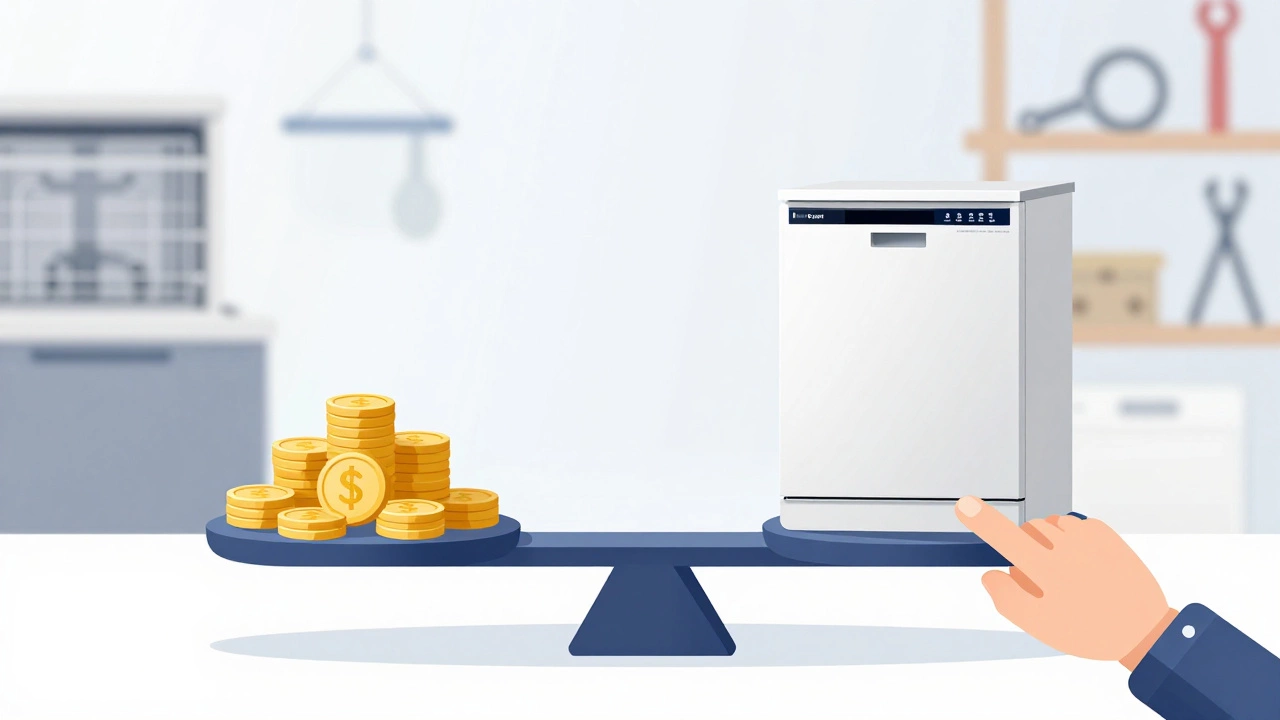
When calculating whether to repair or replace, most people only look at the repair invoice. They miss the hidden costs that keep adding up.
Energy Efficiency: As mentioned, newer dishwashers are far more efficient. The U.S. Department of Energy estimates that upgrading from an old model to a WaterSense-certified one can save you around $40 per year in water and energy costs. Over five years, that’s $200 back in your pocket.
Performance: Have you noticed your dishes aren’t getting as clean? Older racks warp, jets clog, and filters get permanently stained. A new dishwasher often comes with better drying technology (like condensation drying or Zeolite) and quieter operation. If your current machine sounds like a jet engine, a new one might operate at 40 decibels, allowing you to run it while watching TV.
Resale Value: If you plan to sell your home in Wellington or anywhere else soon, a functioning, modern appliance adds value. A broken or ancient dishwasher is a red flag for buyers who may demand a price reduction or insist on a professional inspection.
When You Should Definitely Repair
There are scenarios where repairing is the clear winner, even for older machines. First, if you have a high-end premium model. Brands like Miele, Asko, or high-tier Bosch units are built to last decades. Their parts are expensive, but so are the replacements. Replacing a $2,500 dishwasher because of a $400 repair is financially illogical.
Second, if the issue is external to the main mechanism. For example, if your dishwasher isn’t draining because the garbage disposal knockout plug wasn’t removed during installation, or if the air gap is clogged, these are DIY fixes that cost almost nothing. Similarly, if the problem is simply hard water buildup causing poor cleaning, a vinegar rinse cycle or installing a water softener might solve the issue without any professional help.
Third, consider environmental impact. Manufacturing a new dishwasher requires significant resources. If your current unit is structurally sound and only needs a minor fix, extending its life by two or three years reduces electronic waste. Just ensure that the repair doesn’t compromise safety or lead to water damage.
Signs It’s Time to Say Goodbye
Sometimes, the signs are obvious. If your dishwasher leaks constantly despite multiple seal replacements, the tub itself may be cracked. Plastic tubs can develop hairline fractures over time due to thermal stress. Once the tub cracks, the unit is trash. There is no repair for a cracked stainless steel or plastic basin.
Another sign is frequent breakdowns. If you’ve had to call a technician twice in the last year, the machine is telling you it’s done. Each repair is a band-aid on a wound that keeps reopening. At this point, the cumulative cost of repairs plus the frustration factor outweighs the benefit of keeping the old unit.
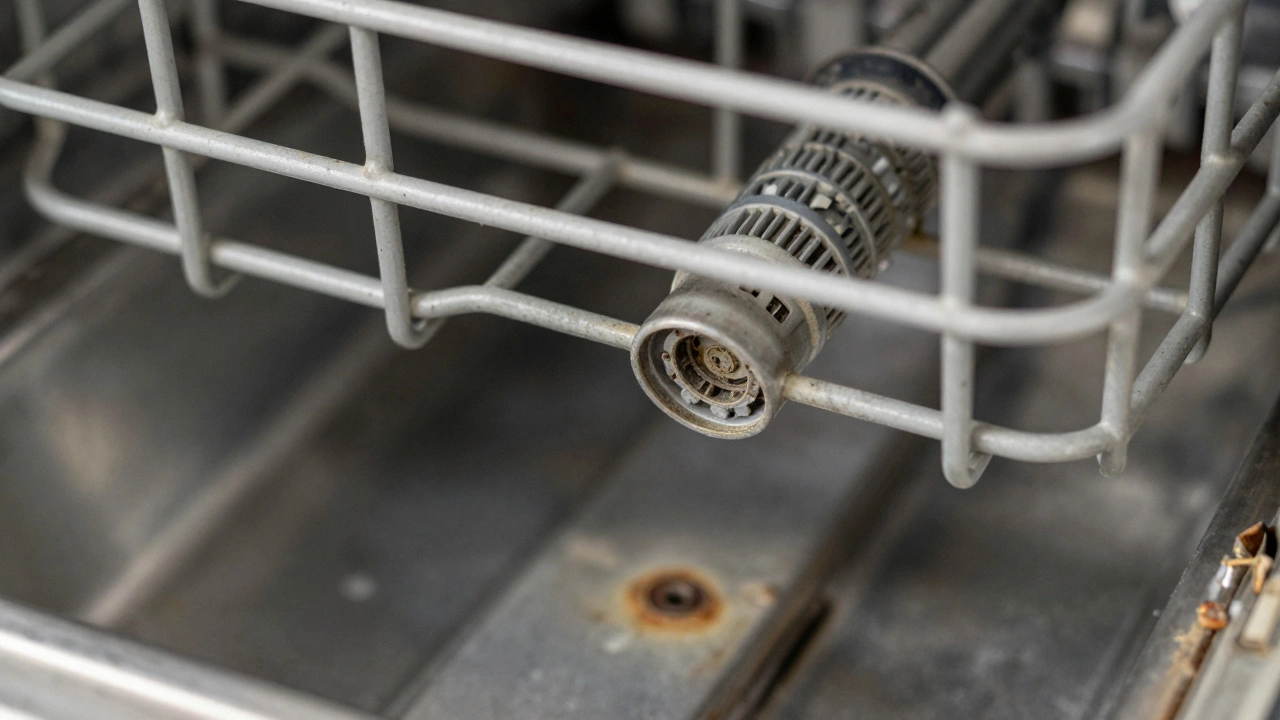
Also, check for rust. If you see rust spots inside the tub, especially on the bottom, corrosion has set in. Rust weakens the structure and can eventually lead to leaks. Unlike surface rust on the exterior, internal rust is a death sentence for the appliance.
How to Get an Accurate Quote
Before making a final decision, get at least two quotes from reputable local technicians. Be wary of companies that offer flat-rate pricing without seeing the machine. A honest technician will perform a diagnostic test, identify the faulty part, and provide a written estimate that includes both parts and labor.
Ask specific questions:
- What is the exact part number?
- How long will the part last?
- Do you offer a warranty on the repair?
- Are there any other components that show signs of wear?
If a technician cannot answer these questions clearly, find someone else. Transparency is key. Also, ask if they recommend repair or replacement based on their experience with that specific model. Technicians see hundreds of these machines; their opinion is valuable data.
Next Steps: Making the Call
If you decide to repair, schedule the appointment quickly. Water damage from a leaking dishwasher can ruin your cabinetry and flooring, leading to costs far exceeding the repair bill. If you choose to replace, measure your space carefully. Standard dishwashers are 24 inches wide, but some slim models are 18 inches. Check your electrical outlet and water supply line compatibility before buying.
Remember, this isn't just about fixing a machine. It's about optimizing your kitchen workflow, reducing utility bills, and ensuring peace of mind. Whether you repair or replace, make the decision based on facts, not fear.
How much does it cost to repair a dishwasher in 2026?
The average cost for a dishwasher repair ranges from $150 to $400. Minor issues like door latches or spray arms cost less, while major components like motors or control boards can push the cost above $500. Always get a written estimate before authorizing work.
Is it cheaper to repair or replace a dishwasher?
If the repair cost is less than 50% of the price of a new unit and the dishwasher is under 7 years old, repairing is usually cheaper. For older models or expensive repairs, replacing is more cost-effective due to energy savings and reliability.
How long do dishwashers last?
Most dishwashers last between 7 and 10 years. High-end models can last up to 15 years with proper maintenance. Factors like water hardness, usage frequency, and brand quality affect longevity.
What are common signs my dishwasher needs repair?
Common signs include dishes coming out dirty, water pooling at the bottom, unusual noises during cycles, failure to drain, or error codes on the display panel. Leaks and rust are also critical indicators.
Can I fix a dishwasher myself?
Yes, simple issues like clogged filters, blocked spray arms, or faulty door latches can often be fixed by homeowners. However, electrical issues, pump failures, and complex control board problems should be left to professionals to avoid safety risks and further damage.