
Microwave Repair vs. Replace Calculator
Enter Your Costs
Analysis Results
Enter your details and click "Analyze Decision" to see if you should repair or replace.
Quick Summary / Key Takeaways
- Replacing a microwave magnetron is rarely worth it for standard countertop models under $150.
- The labor and parts cost often exceeds 60-70% of the price of a brand-new microwave.
- Consider repair only if you own a high-end built-in unit (over $800) or a specialized commercial model.
- If your microwave sparks, makes loud humming noises without heating, or has visible damage to the waveguide cover, stop using it immediately.
- Safety is critical: microwaves store lethal electrical charges even when unplugged.
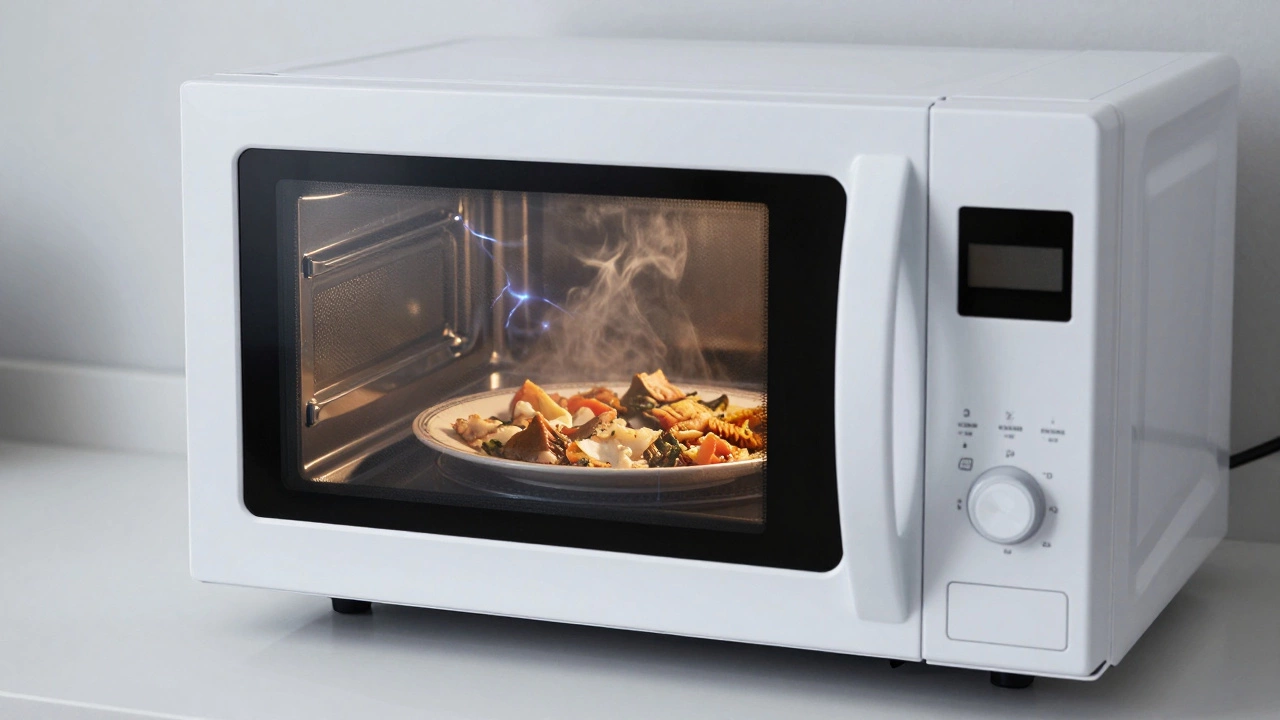
You put a plate of leftovers in the microwave, hit start, and wait. Thirty seconds later, the light is on, the turntable is spinning, but your dinner is still cold. Or worse, you hear a loud buzzing sound accompanied by sparks inside the cavity. This is the classic symptom of a failing microwave magnetron, which is the vacuum tube component responsible for generating the electromagnetic waves that heat your food. The immediate question that pops into your head is simple: should I pay someone to fix this, or just buy a new one?
For most households, the answer is harsh but practical: don't bother repairing it. However, before you toss that perfectly good-looking appliance into the recycling bin, we need to look at the numbers, the safety risks, and the few specific scenarios where a repair actually makes financial sense.
The Economics of Microwave Repair
To understand why magnetron replacements are often discouraged, you have to look at the cost structure of modern appliances. A standard countertop microwave oven retails between $80 and $200. These units are designed with planned obsolescence in mind; they are built to last about 7 to 10 years, after which components begin to fail.
A genuine replacement magnetron costs anywhere from $40 to $80 depending on the wattage and brand compatibility. That’s just the part. If you hire a professional technician, you’re looking at an hourly labor rate plus a service call fee. In many regions, including places like Wellington, a basic service call can run $80-$120, with labor adding another $50-$100 per hour. Removing and installing a magnetron requires disassembling the entire chassis, handling high-voltage capacitors, and ensuring proper grounding.
Let’s do the math. If the part is $60 and the labor is $150, your total repair bill is $210. You now have a repaired microwave that likely has other aging components-the door switch, the turntable motor, or the control board-that could fail next year. Compare that to buying a brand-new, energy-efficient model with a full manufacturer warranty for $130. The new unit offers better performance, lower electricity consumption, and peace of mind.
| Scenario | Estimated Cost | Warranty Status | Risk Level |
|---|---|---|---|
| Professional Magnetron Replacement | $190 - $250 | Limited (parts/labor only) | High (if DIY attempted) |
| New Countertop Microwave | $80 - $200 | Full Manufacturer Warranty | Low |
| New Built-In/Oven Combo | $800 - $2,000+ | Full Manufacturer Warranty | Low |
The exception here is high-end built-in microwaves or microwave-convection combos. If you have a unit installed above your range that cost $1,200 originally, spending $200 to replace the magnetron extends the life of a much more expensive asset. In these cases, repair is financially logical.
Why Your Magnetron Failed
Magnetrons don’t usually die randomly. They are robust components capable of lasting decades if treated correctly. When they fail, it’s often due to user error or a cascading failure from another component. Understanding the cause helps you decide if fixing it will prevent future issues.
The most common killer of magnetrons is running the microwave empty. Without food to absorb the microwaves, the energy reflects back into the tube, overheating it rapidly. Another frequent culprit is arcing caused by metal objects, aluminum foil, or damaged interior enamel. When sparks fly, they can pit the magnetron's output window or damage the internal antenna.
However, sometimes the magnetron is innocent. The high-voltage capacitor is a component that stores electrical energy to power the magnetron in short bursts. If the capacitor fails, the magnetron won’t receive enough voltage to generate heat, mimicking a magnetron failure. Similarly, a faulty diode is a semiconductor device that converts alternating current to direct current within the microwave circuit. can cause similar symptoms. These parts are cheaper ($10-$20) and easier to replace than the magnetron itself. If you’re technically inclined, checking these first might save you money-but only if you know how to safely discharge the capacitor.

The Safety Reality Check
This is the most critical section. If you are considering replacing the magnetron yourself, you need to respect the danger involved. Microwaves are not like toasters or blenders. They contain a high-voltage transformer that steps up household voltage (240V in NZ, 120V in US) to over 2,000 volts.
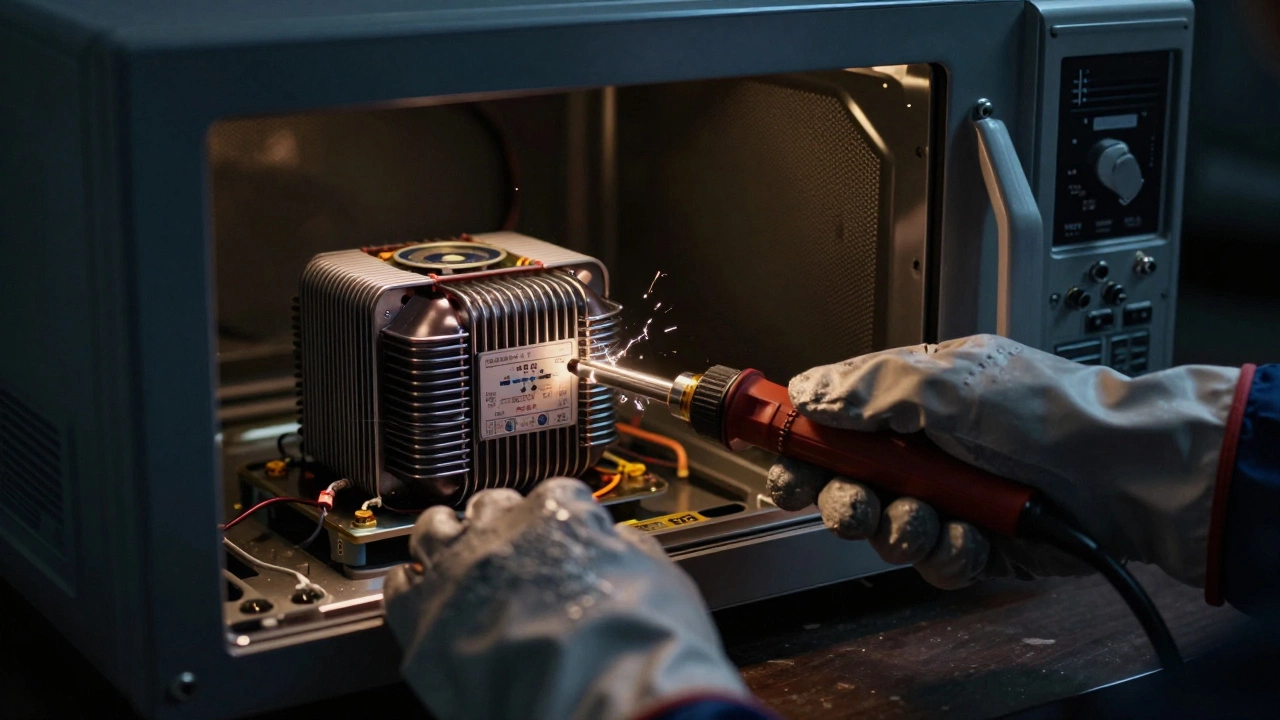
The high-voltage capacitor can hold a lethal charge for days, weeks, or even months after the unit is unplugged. Touching the terminals with a screwdriver-or worse, your fingers-can result in severe burns, cardiac arrest, or death. Even experienced electricians use insulated tools and discharge probes specifically rated for this purpose.
Furthermore, microwaves rely on multiple interlock switches in the door mechanism to ensure radiation doesn’t leak out. If you disassemble the casing and don’t reassemble the door latch perfectly, you risk creating a radiation hazard. While modern microwaves have safety features, tampering with them voids certifications and puts your family at risk.
If you see any of these signs, unplug the unit immediately:
- Sparking inside: Usually indicates arcing from a dirty waveguide cover or a cracked magnetron antenna.
- Loud humming but no heat: Classic magnetron or diode failure.
- Burning smell: Could be melted insulation or a failing transformer.
- Door doesn’t seal properly: Never operate a microwave with a compromised door seal.
When Is Repair Actually Worth It?
Despite the general rule to "replace, don’t repair," there are three specific scenarios where pulling out the wallet for a magnetron replacement makes sense.
1. High-End Built-In Units If you have a microwave drawer (like a Sharp DrawWave) or a built-in combo oven that was part of your kitchen renovation, the replacement cost is prohibitive. These units often cost $1,500 to $3,000. Paying $200 for a magnetron is a fraction of the cost and preserves your kitchen’s aesthetic integrity.
2. Commercial or Industrial Models Restaurants use heavy-duty microwaves (brands like Panasonic Commercial or LG ProChef) that are built like tanks. These units cost $500-$1,000+ and are designed for continuous use. A magnetron failure here is a normal maintenance issue, not an end-of-life signal. Repairs are standard practice in hospitality.
3. Environmental & Ethical Concerns If you are committed to reducing e-waste, repairing extends the lifecycle of the product. While the economic argument is weak for cheap units, the environmental impact of manufacturing, shipping, and disposing of a new appliance is real. If you have the skills to do it safely, or know a trusted local technician who supports right-to-repair initiatives, this is a valid choice.
DIY vs. Professional: What Should You Do?
If you’ve decided the repair is worth it (perhaps because it’s a high-end model), you face another decision: do it yourself or hire a pro?
Hire a Professional If:
- You are not comfortable working with high-voltage electronics.
- The unit is under warranty (DIY voids it).
- You don’t have the correct multimeter and discharge tools.
- The door interlock switches need adjustment (critical for safety).
Attempt DIY Only If:
- You have experience with electrical repairs.
- You can source an exact OEM replacement part (generic magnets may have mismatched frequencies).
- You follow strict safety protocols: unplug, discharge capacitor with a resistor probe, test for zero voltage before touching anything.
- You are willing to accept the risk of injury or further damage.
Even if you’re handy, remember that microwaves require precise alignment. The magnetron must be seated correctly to avoid arcing against the cavity walls. A millimeter off can cause immediate failure or fire hazards.
Preventing Future Magnetron Failures
Whether you repair or replace, you want your next microwave to last as long as possible. Here are practical tips to extend the life of the magnetron and other components:
- Never Run Empty: Always place something inside, even a cup of water, if you’re testing the unit. Empty runs reflect energy back into the magnetron.
- Clean the Waveguide Cover: The small plastic or mica sheet inside the cavity protects the magnetron. Food splatter on this cover can burn and cause arcing. Clean it gently with a damp cloth when the unit is cool.
- Avoid Metal: No aluminum foil, metal rims on plates, or twist ties. They cause arcs that damage the interior and the magnetron.
- Use Lower Power Settings: Instead of max power for long periods, use medium-high power. This cycles the magnetron on and off, reducing thermal stress.
- Ventilation Matters: Ensure the vents on the sides or back are not blocked. Overheating kills electronic components faster than almost anything else.
Final Verdict: Buy New or Fix Old?
For 90% of homeowners with a standard countertop microwave, the answer is clear: buy a new one. The cost of labor and parts outweighs the benefit, and the risk of improper repair is too high. Modern microwaves are affordable, efficient, and come with warranties that protect your investment.
Save the repair option for expensive built-ins, commercial units, or situations where you have the technical expertise and safety equipment to handle high-voltage components responsibly. Your safety-and your wallet-are best served by making a pragmatic choice based on the value of the appliance, not just sentimentality.
How much does it cost to replace a microwave magnetron?
The magnetron part itself typically costs between $40 and $80. However, when you add professional labor rates (usually $80-$150 per hour) and a service call fee, the total repair cost often ranges from $190 to $250. For a standard microwave priced under $200, this makes repair economically unviable compared to buying a new unit.
Can I replace the magnetron myself?
Technically yes, but it is extremely dangerous. Microwaves contain high-voltage capacitors that store lethal electrical charges even when unplugged. Unless you have experience with high-voltage electronics, proper discharge tools, and knowledge of microwave safety interlocks, you should not attempt this repair. Improper handling can result in severe injury or death.
What are the signs that my microwave magnetron is failing?
Common signs include: food not heating despite the microwave running, loud humming or buzzing noises during operation, sparking inside the cavity (especially near the side walls), and a burning smell. If the light turns on and the turntable spins but there’s no heat, the magnetron, diode, or capacitor is likely faulty.
Is it cheaper to repair or replace a microwave?
For standard countertop microwaves costing less than $200, replacement is almost always cheaper. Repair costs often exceed 70% of the price of a new unit. However, for high-end built-in models or commercial units costing $800+, repairing the magnetron is significantly more economical than replacing the entire appliance.
Why does my microwave spark inside?
Sparking is usually caused by metal objects (foil, utensils, twist ties) inside the cavity, or by food debris burning on the waveguide cover (the mica sheet). In rare cases, it can indicate a cracked magnetron antenna or damaged interior enamel. Stop using the microwave immediately if sparking occurs to prevent fire or further damage.
How long do microwave magnetrons typically last?
A well-maintained microwave magnetron can last 10 to 20 years. However, the average lifespan of a consumer microwave is 7 to 10 years due to wear on other components like door switches and control boards. Proper care, such as avoiding empty runs and keeping the interior clean, can significantly extend the magnetron’s life.