

Oven Repair vs Replace Calculator
Calculate Your Best Option
Cost Breakdown
There is nothing worse than pulling a roast out of the oven only to find it raw in the middle because the temperature gauge lied to you. Or worse, the display goes black halfway through baking a cake. You are standing in your kitchen, hungry and frustrated, facing a choice that feels heavier than it should: call a technician or buy a new one?
The answer isn't just about how much cash you have in the bank right now. It depends on the age of your unit, the specific part that failed, and whether you want to keep your current kitchen aesthetic or upgrade your cooking game. In 2026, with energy efficiency standards tightening and smart features becoming standard, the math has shifted slightly from what it was five years ago.
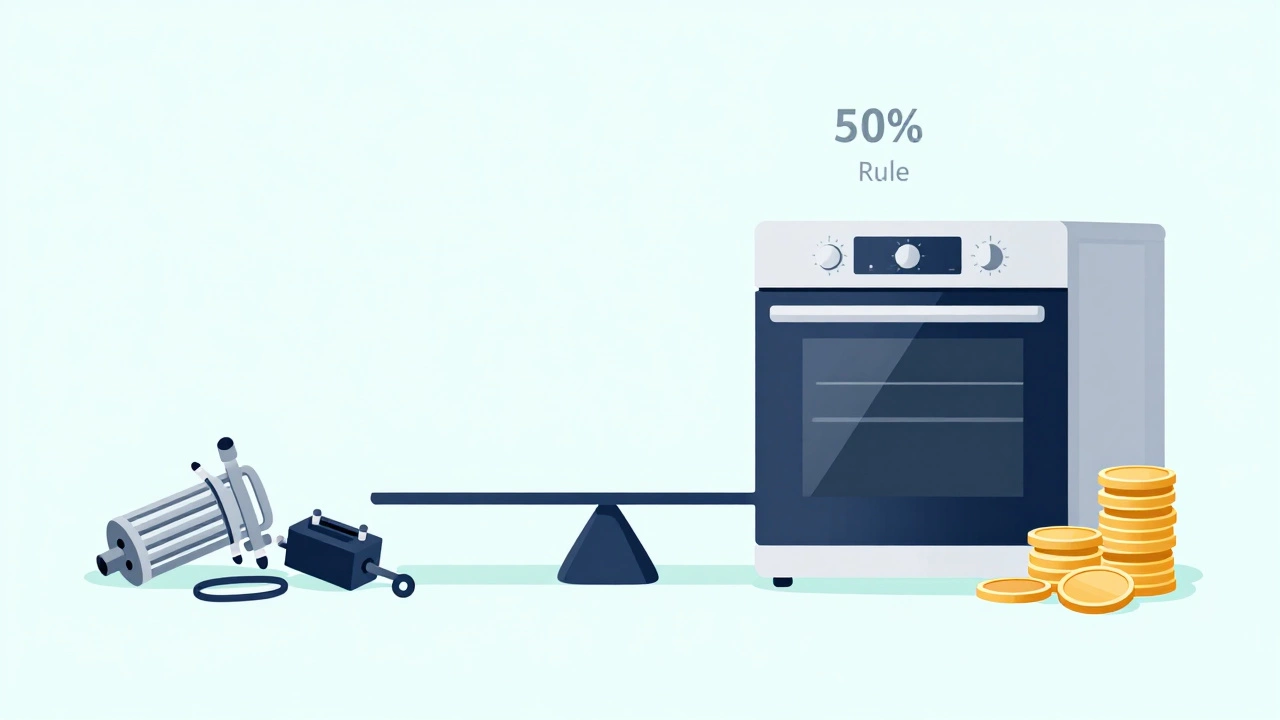
The Golden Rule: The 50% Threshold
If you want a quick rule of thumb without digging into spreadsheets, use the 50% rule. This is the industry standard used by most appliance technicians. If the cost to repair your oven is more than 50% of the price of a comparable new model, you should replace it. Period.
Why 50%? Because appliances degrade over time. Fixing one major component today doesn't mean the next one won't fail six months later. If you spend $400 to fix an oven that costs $800 new, you are left with a half-new machine that still has old wiring, worn seals, and outdated heating elements. That money is better spent on a brand-new unit with a full warranty.
However, this rule needs context. A basic electric range might cost $600, while a high-end gas cooktop with a double wall oven can exceed $3,000. The 'comparable' part is key. You aren't comparing your broken budget model to a luxury pro-range; you are comparing it to its direct replacement.
When Repair Makes Sense
Not every breakdown means death for your appliance. Some issues are minor, inexpensive, and common across all ages of ovens. If your oven is less than seven years old and the problem falls into one of these categories, repair is usually the smarter financial move.
- Thermal Fuse or Circuit Breaker: These are safety devices. If they blow, it’s often due to a temporary power surge or a momentary overheating event. Replacing them is cheap (parts under $30) and quick.
- Door Seals (Gaskets): Over time, the rubber seal around the door gets brittle or torn. Heat escapes, leading to uneven cooking and higher energy bills. A new gasket costs between $20 and $60 and can be installed in minutes.
- Igniter (Gas Ovens): If your burners light but the oven itself doesn’t heat up, the igniter is likely weak. It glows red but not hot enough to open the gas valve. Replacement parts are affordable, typically under $50.
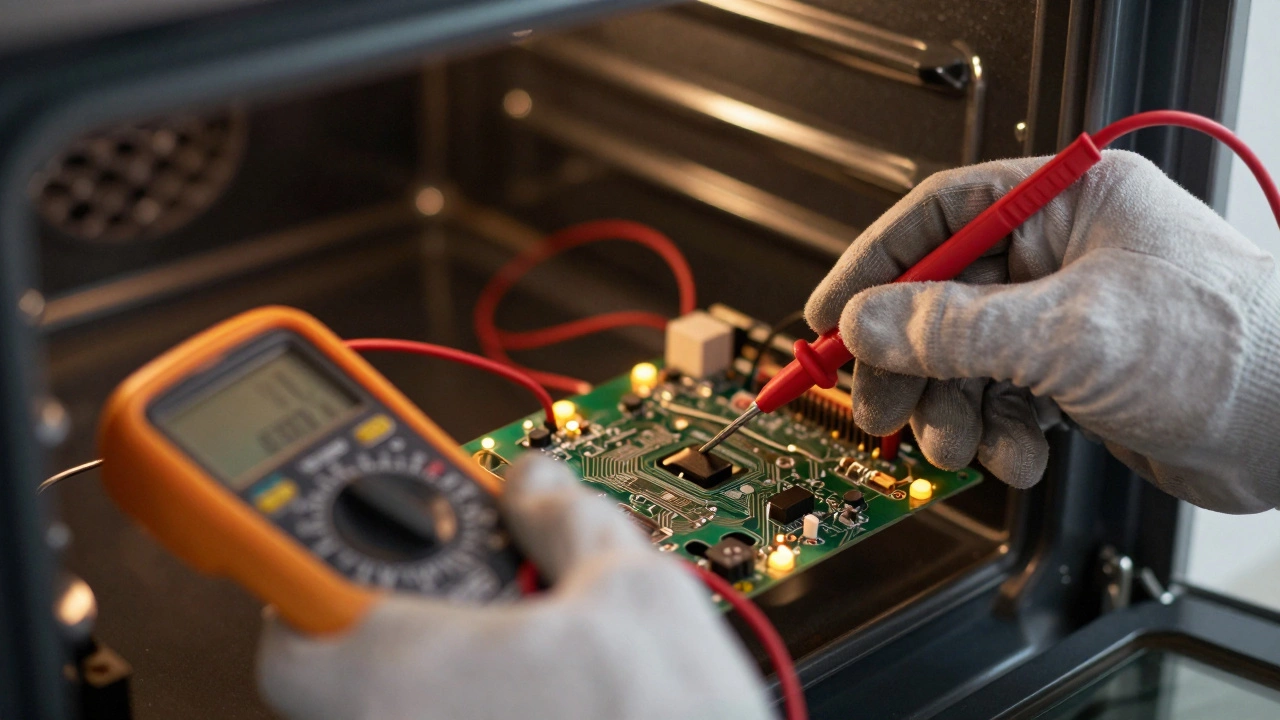
- Control Board Glitches: Sometimes the main brain of the oven just needs a reset or a minor solder repair. If the board isn't physically fried, a technician might fix it for a fraction of the cost of a new control panel.
In these scenarios, you are extending the life of a relatively young machine for a small investment. You get reliability back without the hassle of measuring cutouts and waiting for delivery.
When Replacement Is the Only Logical Choice
Conversely, some problems signal that your oven has reached the end of its road. Ignoring these signs leads to wasted money and potential safety hazards.
| Symptom | Underlying Issue | Estimated Repair Cost | Verdict |
|---|---|---|---|
| Uneven Heating Zones | Failing heating elements + aging insulation | $150 - $300 | Replace if >7 years old |
| Burnt Smell / Smoke | Deteriorated internal wiring or insulation | $200+ (Safety Risk) | Replace Immediately |
| Display Errors Persist | Main Control Board Failure | $250 - $450 | Replace (High Cost Part) |
| Gas Odor When Off | Valve or Line Leak | $150 - $300 | Replace (Critical Safety) |
Control boards are the most expensive single part in an oven. If yours fails, you are looking at paying $300 to $500 just for the part, plus labor. Unless you have a premium built-in oven worth thousands, spending half that amount on a circuit board is hard to justify. New ovens come with updated electronics that are more reliable and energy-efficient.
Also consider the 'cumulative repair' trap. Did you fix the door latch last year? What about the timer two years ago? If you have already invested significant money in keeping this oven alive, the next failure is likely to be the final straw. At that point, sinking more funds into a sinking ship is poor economics.
Hidden Costs: Energy Efficiency and Features
We often forget that an oven is an energy consumer. Older models, especially those manufactured before 2015, lack modern insulation technology and precise temperature controls. They waste electricity or gas trying to maintain set temperatures.
Newer ovens, particularly convection models, circulate air to cook food faster and at lower temperatures. This can reduce your energy bill by 10-20% depending on usage. In Wellington, where winter nights are long and damp, having an efficient oven helps manage household energy loads. While the savings won't pay off the oven overnight, they add up over the appliance's lifespan.
Furthermore, modern ovens offer features that improve daily life:
- Self-Cleaning Cycles: High-heat cycles that turn grease to ash, saving hours of scrubbing.
- Smart Connectivity: Preheating via smartphone app so the oven is ready when you walk in the door.
- Air Fry Functions: Many new ovens include air fry modes, potentially eliminating the need for a separate countertop appliance.
If your current oven lacks these conveniences, replacement isn't just about fixing a break; it's about upgrading your kitchen workflow.
Calculating the True Cost
To make the final decision, you need accurate numbers. Don't guess. Here is how to get them.
- Get a Diagnostic Quote: Call a local technician. Ask for a diagnostic fee (usually $80-$120). Explain that this fee will be waived if you proceed with the repair. This gives you a firm number for the fix.
- Price a Direct Replacement: Go to a retailer like Harvey Norman, Mitre 10, or Fisher & Paykel stores. Find an oven with the same fuel type (gas/electric), similar capacity, and comparable finish (stainless steel/black glass).
- Add Installation Costs: If you are replacing a freestanding range, installation is easy. But if you have a built-in wall oven, you may need an electrician or gasfitter to handle connections. Add $150-$300 for professional installation if you aren't handy.
- Compare the Totals: If (Diagnostic + Parts + Labor) < 50% of (New Oven + Installation), repair it. Otherwise, replace.
Remember, warranties matter. A new oven comes with a 2-year warranty minimum. A repaired oven usually only has a 90-day warranty on the part and labor. If the same issue returns after four months, you pay again. With a new unit, you simply call the manufacturer.
Environmental Impact
It is worth noting the environmental angle. Manufacturing a new oven requires significant resources-steel, glass, electronics, and shipping. Repairing extends the product's life, reducing e-waste. However, if your old oven is highly inefficient, keeping it running increases your carbon footprint through higher energy consumption.
The sweet spot is repairing until the efficiency gap becomes too wide. If your oven is 15 years old, the energy waste likely outweighs the manufacturing impact of a new, efficient model. For ovens under 10 years old, repair is generally the greener choice.
How much does it cost to repair an oven in New Zealand?
In New Zealand, typical oven repair costs range from $150 to $450 including labor and parts. Simple fixes like replacing a thermostat or element are on the lower end ($150-$250), while complex electronic board repairs or gas valve replacements can reach $400-$500. Always ask for a written quote before authorizing work.
Is it worth repairing a 10-year-old oven?
It depends on the repair cost. If the fix is under $200, it might be worth it to squeeze out a few more years. However, at 10 years old, your oven is approaching the end of its average lifespan (10-13 years). Major repairs over $300 are rarely justified at this age, as other components are likely to fail soon.
Can I replace an oven myself?
For freestanding electric ranges, yes, if you are comfortable unplugging units and sliding heavy appliances. For built-in ovens or any gas appliances, professional installation is strongly recommended and often required by insurance policies. Gas connections must be tested for leaks by a licensed gasfitter in New Zealand.
What is the average lifespan of an oven?
The average lifespan of a residential oven is between 10 and 13 years. Electric ovens tend to last slightly longer than gas ovens due to fewer moving parts in the ignition system. Regular maintenance, such as cleaning spills immediately and checking door seals, can extend this life.
Should I repair my oven if it's under warranty?
Absolutely. If your oven is under manufacturer warranty, repair is free or low-cost. Contact the brand's support line first. Unauthorized repairs by third-party technicians may void the remaining warranty, so always check your terms before calling a general appliance repair service.