
When your oven stops heating or shows error codes, you don’t just need a fix—you need a skilled oven repair technician, a trained professional who diagnoses and fixes household ovens using real tools and tested methods. Also known as an appliance technician, this person doesn’t guess—they test voltage, check connections, and replace parts like the oven heating element or oven control board with precision.
A good oven repair technician knows the difference between a simple fix and a money pit. If your oven won’t heat, it could be a blown heating element—something you can replace yourself for under $50. But if the control board is fried, that’s a $300+ job, and the technician will tell you if it’s smarter to replace the whole oven instead. They’ve seen ovens from 1995 and 2023, so they know what parts still hold up and what’s just a waiting room for failure. They don’t push repairs—they give you options. And they show up on time, bring the right tools, and clean up after.
You don’t need to call one for every little glitch. If your oven takes too long to preheat or the light flickers, those are usually harmless. But if it doesn’t heat at all, smells like burning plastic, or shows an error code like F1 or E0, that’s when you need a pro. These aren’t just annoyances—they’re signs of deeper problems. A failing control board can even cause the oven to turn on by itself. That’s not just inconvenient—it’s dangerous. A certified oven repair technician knows these risks and how to handle them safely.
Most people think replacing an oven is the only answer, especially if it’s older than 10 years. But that’s not always true. Many ovens last 15+ years, and a $150 repair can add another 5 years. The technician will check the door seal, test the thermostat, and inspect the wiring before suggesting a replacement. They’ll tell you if the cost of repair is more than half the price of a new unit—because that’s the rule of thumb. They don’t upsell. They advise.
What you’ll find below are real stories and fixes from people who’ve been there. Whether it’s a 20-year-old oven that still works fine with a new element, or a control board that failed after a power surge, these posts cover the exact problems technicians see every day. You’ll learn how to spot a blown heating element before calling someone, what the control board actually does, and why some repairs just aren’t worth it. No fluff. No sales pitch. Just what actually happens when your oven breaks down—and how to handle it right.
Posted by
Orin Trask
0 Comments
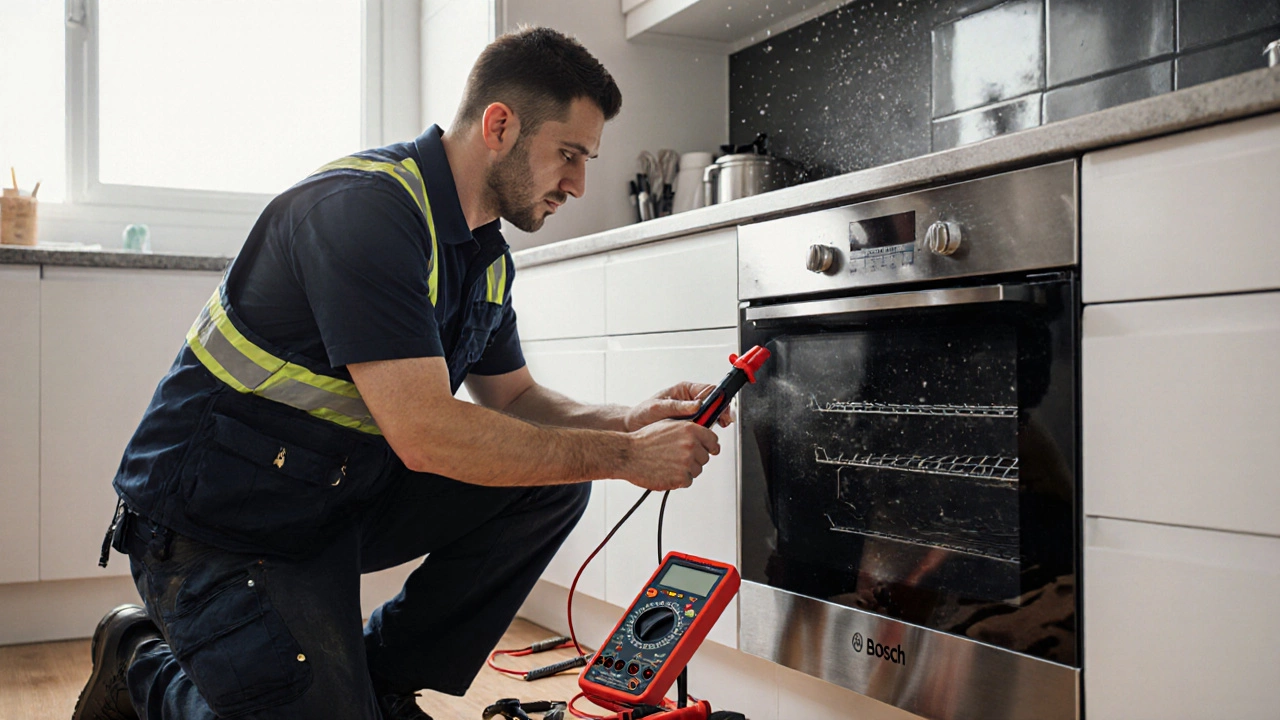
Learn what to call a professional who fixes ovens, how to find a qualified technician, common repair costs in New Zealand, and when it's better to replace than repair your oven.
read more