
Quick Warning Signs Checklist
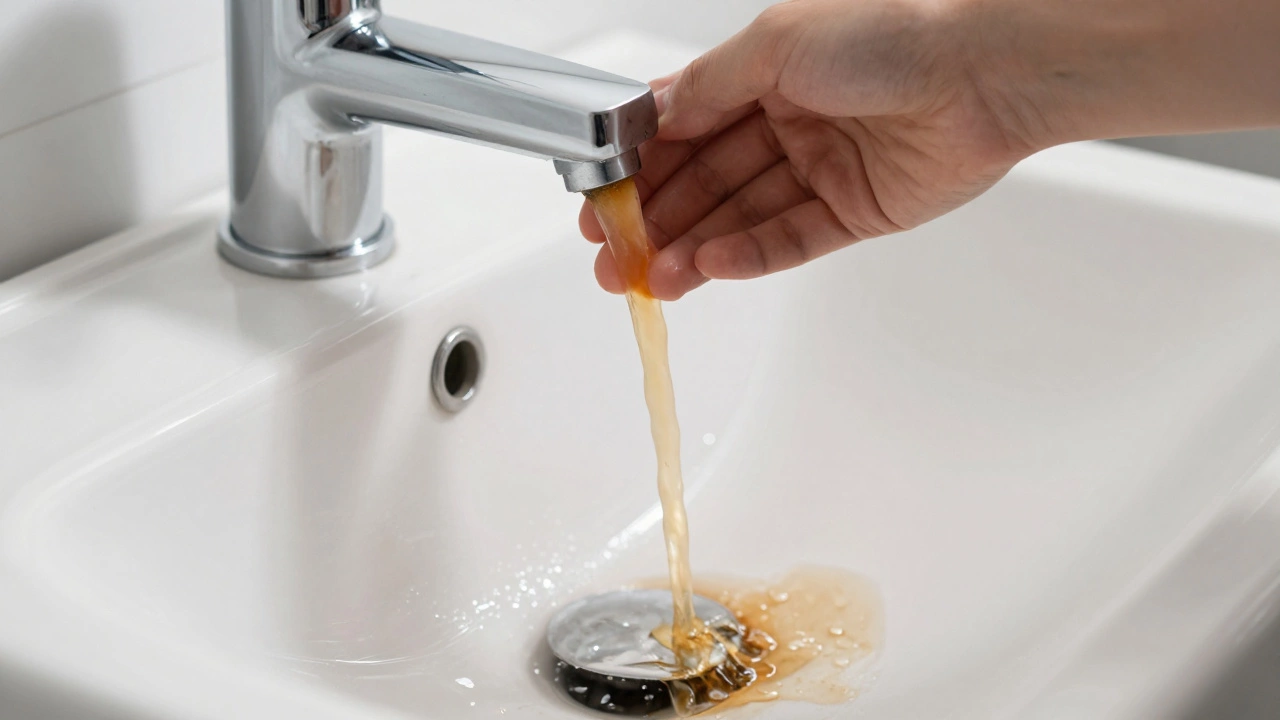
- Rusty or brown water: A sign of internal tank corrosion.
- Strange popping or rumbling noises: Usually caused by sediment buildup.
- Pooling water around the base: Could be a simple leak or a catastrophic tank failure.
- Sudden temperature drops: Indicates a failing heating element or thermostat.
- Slow recovery time: The heater takes hours to warm up after a few showers.
The Color of Trouble: Rusty Water and Discoloration
If you turn on the hot tap and the water looks like weak tea, you've hit a major red flag. Rusty water is a clear indicator that the interior of your steel tank is oxidizing and breaking down. This usually happens when the Anode Rod is a sacrificial magnesium or aluminum rod designed to attract corrosive elements to protect the tank wall has completely dissolved. Once that rod is gone, the water starts eating the tank itself.
Think of the anode rod as a bodyguard. When the bodyguard is gone, the tank takes the hits. While you can replace a rod, if you're seeing brown water, the damage might already be deep. If your water heater is over 10 years old, this is often the sign that you're moving from a simple repair to a full replacement. You don't want to ignore this, as rusted-through tanks eventually burst, sending hundreds of gallons of water into your garage or basement in minutes.
Listening to the Noise: Popping, Banging, and Rumbling
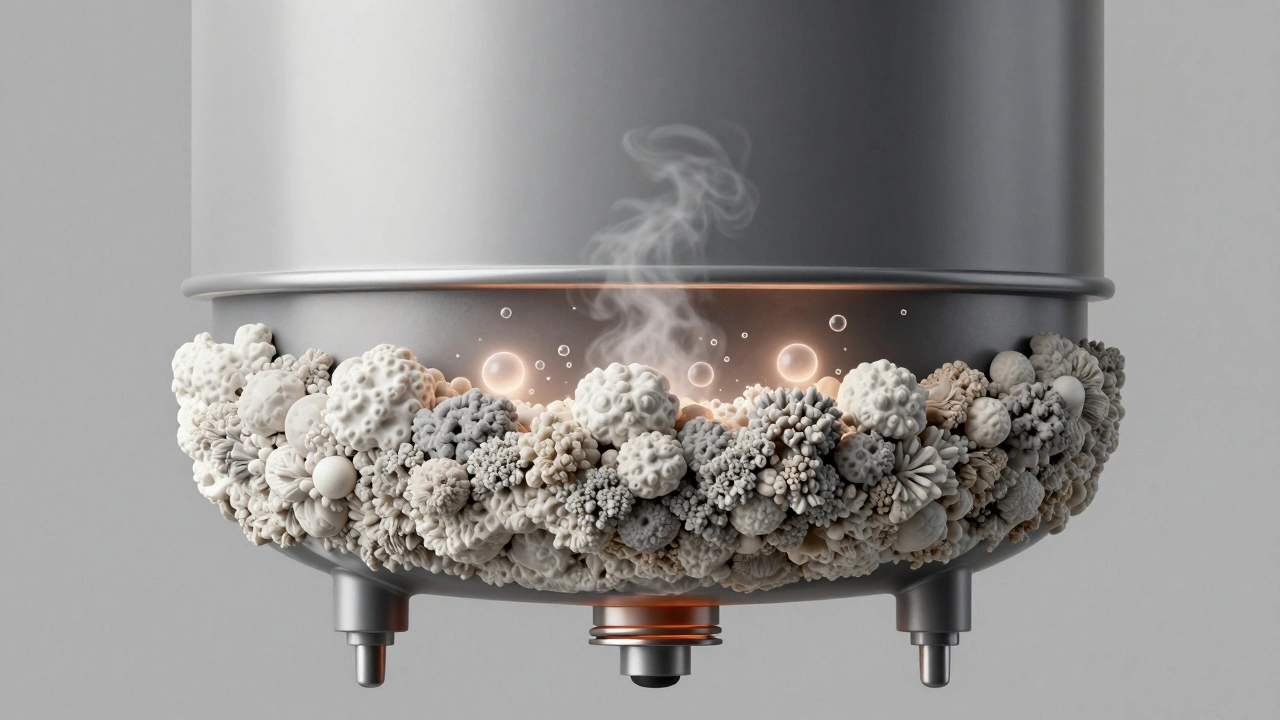
Does your water heater sound like a popcorn machine or a distant thunderstorm? That's not normal. Those noises are caused by Sediment Build-up, which is the accumulation of calcium and magnesium minerals that settle at the bottom of the tank over time . In areas with Hard Water (water with high mineral content), this happens much faster.
Here is what's actually happening: as the water heats, bubbles of steam form underneath the layer of sediment. When those bubbles finally break through the crust of minerals, they create that popping sound. This isn't just an annoying noise; the sediment acts as an insulator, forcing the Heating Element (in electric models) or the burner (in gas models) to work harder to heat the water. This spikes your energy bills and puts immense stress on the metal of the tank, leading to premature cracking. If you hear this, you're overdue for a flush.
The Puddle Problem: Leaks and Moisture
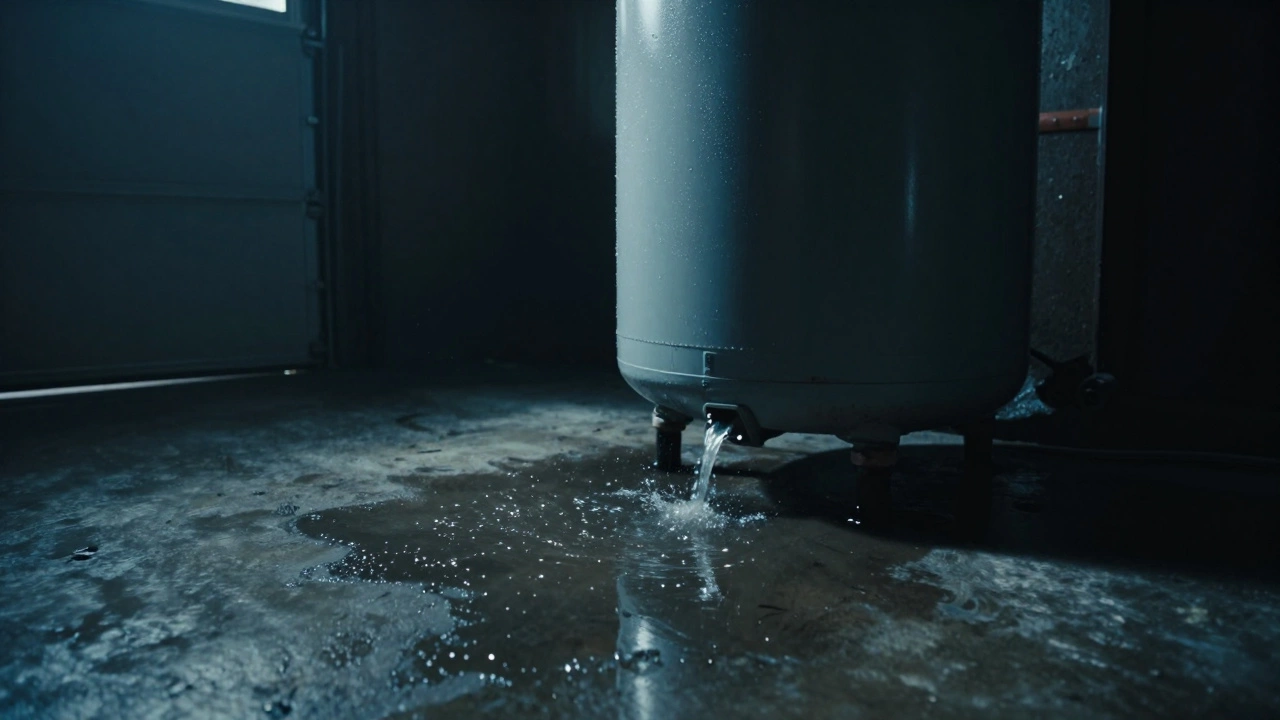
Not all leaks are created equal. You need to determine if the water is coming from a connection point or the tank itself. Check the valves and pipes at the top. If a joint is dripping, a simple wrench adjustment or a new gasket can fix it. However, if you see water seeping from the bottom of the jacket or pooling underneath the unit, you have a critical failure.
| Leak Location | Likely Cause | Urgency | Typical Fix |
|---|---|---|---|
| Top Valve/Pipe | Loose connection or worn washer | Low/Medium | Tighten fitting or replace valve |
| Temperature & Pressure Valve | Faulty T&P valve or high pressure | High | Replace T&P Valve |
| Bottom of Tank | Internal corrosion/Tank breach | Critical | Full Unit Replacement |
| Drain Valve (Bottom) | Worn seal or debris in valve | Medium | Replace drain valve |
A leak at the bottom is usually the "point of no return." Because the tank is a sealed vessel, once the inner lining is breached, you can't just patch it with epoxy or sealant. The pressure from the water will simply push any patch out. If you see a puddle at the base, shut off the water supply and the power/gas immediately to prevent a flood.
The Temperature Rollercoaster: Inconsistent Heat
Do you start your shower with steaming water, only for it to turn ice-cold three minutes later? Or perhaps you've noticed the water simply isn't as hot as it used to be. This is a red flag for Thermostat Failure or a burnt-out Heating Element .
In electric heaters, there are usually two elements: an upper and a lower. If the bottom one dies, your heater will only provide a small amount of hot water before it runs out. If the top one goes, you get no hot water at all. In gas heaters, this often points to a failing Thermocouple, which is a sensor that monitors the pilot light and shuts off the gas if the flame goes out . When the thermocouple fails, the burner won't ignite, leaving you with a tank of cold water. If you're constantly adjusting the dial to get a decent temperature, your unit is struggling and likely nearing the end of its lifespan.
The Silent Danger: The T&P Valve
Most people don't even know the T&P Valve (Temperature and Pressure Relief Valve) exists, but it's the most important safety feature on your unit. This valve is designed to open and release water if the internal pressure or temperature gets too high. If it doesn't work, your water heater can effectively become a rocket-or a bomb-inside your home.
A red flag here is a valve that drips constantly or, conversely, one that is completely seized up with corrosion. If you see water constantly trickling from the discharge pipe, your tank might be overheating, or the valve itself has failed. Never plug this valve or cap the discharge pipe. If the valve is leaking, it's telling you that something is wrong with the internal pressure. Replacing a $20 valve is a lot cheaper than replacing a destroyed ceiling after a tank explosion.
When to Stop Repairing and Start Replacing
There is a tipping point where water heater repair costs more than the value of the unit. A general rule of thumb: if the repair cost is more than 50% of a new unit, or if the unit is over 12 years old, replace it. Modern units are significantly more energy-efficient, and newer Tankless Water Heaters offer an endless supply of hot water without the risk of a 50-gallon flood.
Consider your current energy bills. If you've noticed a steady climb in the cost to heat your water despite no change in usage, your unit is likely inefficient due to sediment or failing components. At that point, the 'repair' is just a band-aid on a dying machine.
How long does a typical water heater last?
Most traditional tank-style water heaters last between 8 and 12 years. Gas models often lean toward the longer end of that spectrum, while electric models may wear out slightly faster depending on the water quality and how often they are flushed.
Can I fix a leaking tank myself?
No. If the actual steel tank is leaking, it cannot be repaired. Any attempt to seal the leak from the outside will fail because of the high internal pressure. Your only safe option is to replace the unit.
What is the best way to prevent sediment buildup?
The most effective method is to flush your water heater once a year. This involves draining the tank from the bottom valve to push out the settled minerals. If you have extremely hard water, installing a water softener can prevent the minerals from ever entering the tank.
Is brown water always a sign of a bad tank?
Not necessarily, but it's a strong indicator. Brown water can occasionally come from old galvanized pipes in the rest of the house. To check, run the cold water in another room; if it's clear and only the hot water is brown, the issue is almost certainly inside your water heater tank.
Why does my water heater make a knocking sound?
Knocking or banging is usually "water hammer" or sediment buildup. Water hammer occurs when water stops abruptly in the pipes, while banging from the tank itself is usually caused by steam bubbles trapped under mineral deposits.
Next Steps for Homeowners
If you've spotted one of these red flags, your next move depends on the severity. For noises or slight temperature drops, schedule a maintenance visit to flush the tank and check the anode rod. This can often add 2-3 years to the life of your unit.
However, if you see pooling water at the base or experience a total loss of heat, shut off the power (breaker) or gas (valve) and the main water intake. Call a certified technician immediately. Trying to "limp along" with a leaking tank is a recipe for an expensive insurance claim and a lot of ruined drywall.