
Water Heater Troubleshooting Tool
Troubleshoot Your Water Heater Reset Button
Answer a few questions to identify why your water heater keeps tripping the reset button and what to do about it.
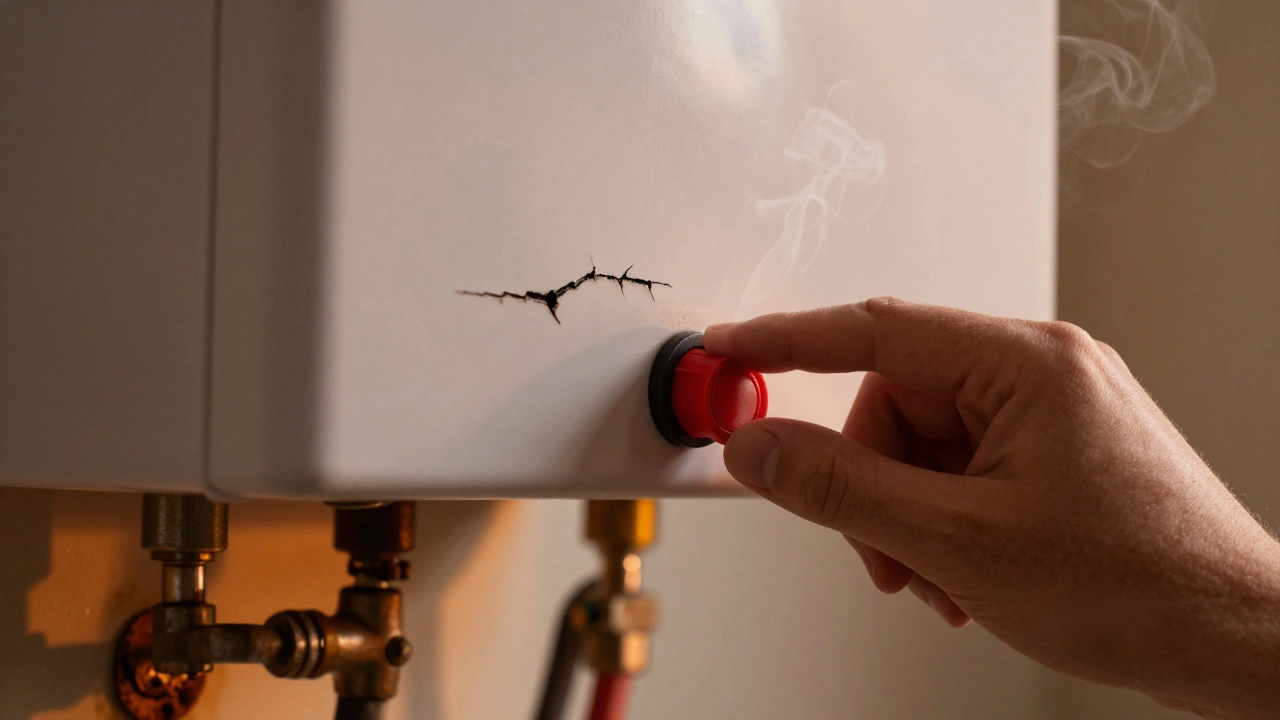
Every time your water heater shuts off and you hit that little red reset button, it feels like a quick fix. You press it, wait a few minutes, and suddenly hot water flows again. But what if you’re doing this every week? Or every day? You’re not solving the problem-you’re just delaying it. And each reset makes things worse.
The Reset Button Isn’t a Power Switch
The reset button on your water heater isn’t meant to be pressed regularly. It’s a safety feature. When the temperature inside the tank climbs past 180°F (82°C), the high-limit switch cuts power to prevent the tank from rupturing or causing a scalding accident. That’s why it trips. It’s not broken. It’s doing its job.
Pressing the reset button manually bypasses that safety. You’re telling the system: "Ignore the danger and keep running." Over time, this wears out the switch. The contacts inside get pitted from repeated arcing. The spring weakens. Eventually, the switch sticks open-or worse, it doesn’t trip at all when it should.
Why Is It Tripping in the First Place?
Resetting doesn’t fix the root cause. You need to ask: Why is the temperature spiking? Here are the most common reasons, in order of likelihood:
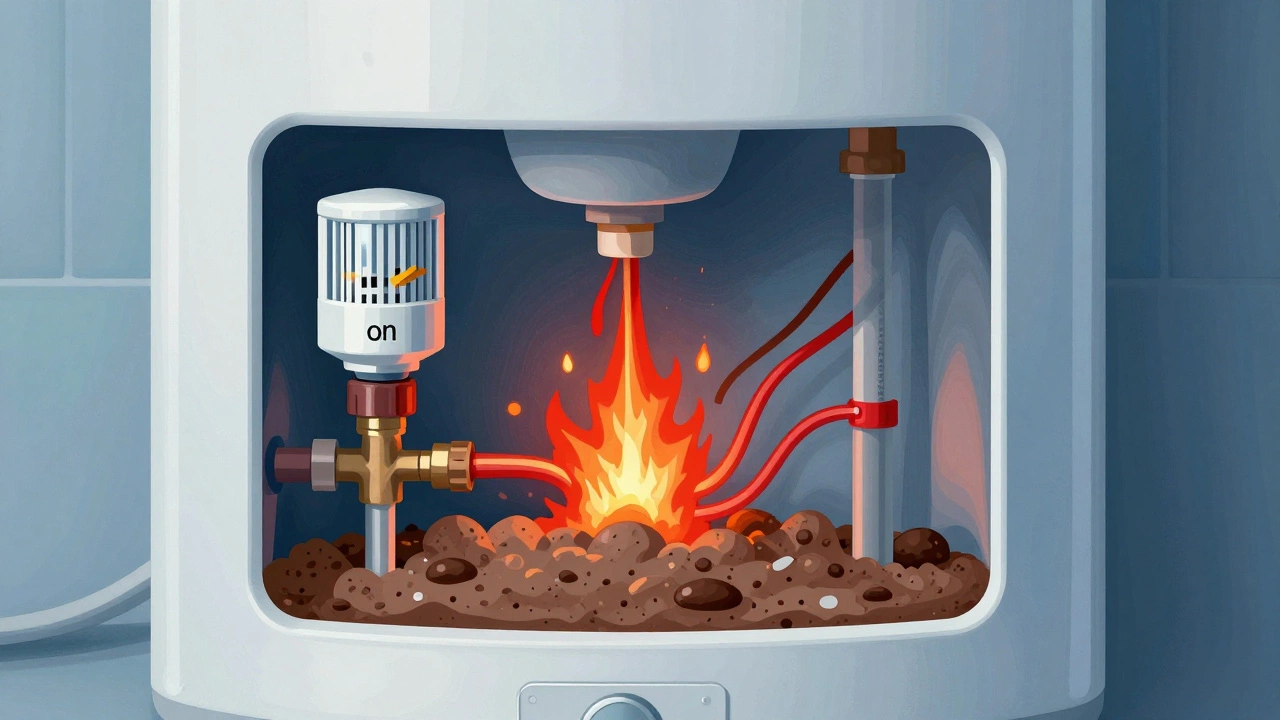
- Thermostat failure - The upper thermostat gets stuck in "on" mode. It keeps heating even when the water’s already hot. This is the #1 reason for frequent resets. A faulty thermostat can push the water past 190°F without triggering the lower thermostat to shut off.
- Shorted heating element - If the insulation inside the element breaks down, electricity can bypass the normal path and dump heat directly into the water. This causes runaway heating. You might not even notice the element is bad until the reset button starts popping.
- Thermostat calibration drift - Older units (over 8 years) often have thermostats that lose accuracy. What was set to 120°F might now be running at 140°F. That’s enough to trip the high-limit switch, especially if the tank is insulated well.
- Thermal expansion - If you have a check valve or pressure-reducing valve installed, heat can’t escape from the tank as water expands. Pressure builds, and so does temperature. This is common in newer homes with closed-loop plumbing.
- Mineral buildup - Sediment at the bottom of the tank acts like insulation. The heating element keeps working harder to heat the water, and the top gets hotter than it should. This is especially true if you haven’t flushed the tank in 2+ years.
None of these issues get better with repeated resets. They get worse.
What Happens When You Ignore the Problem
Every time you reset the water heater, you’re increasing the risk of something serious:
- Pressure relief valve failure - The valve that’s supposed to release excess pressure may get clogged with rust or minerals. If the reset button stops working, the pressure could rise until the tank bursts. That’s not a myth. In 2023, a Wellington home had a water heater explode after years of ignored resets. No one was hurt, but the basement took $18,000 in damage.
- Electrical fire risk - A constantly cycling reset switch can overheat the wiring behind the panel. I’ve seen melted insulation and charred terminals in units that were reset 50+ times in six months.
- Wasted energy - Each time the heater runs hot and then shuts off, it cycles back on to reheat. That’s 30-40% more electricity than normal. Your bill climbs, and the system wears out faster.
- Shortened lifespan - A water heater that’s reset often rarely lasts beyond 8 years. A properly maintained one can hit 12-15. You’re cutting its life in half.
What You Should Do Instead
Don’t just reset. Diagnose.
- Check the temperature - Turn on the hottest tap and let it run for 2 minutes. Use a thermometer. If it’s over 130°F, your thermostat is set too high or failing.
- Flush the tank - Drain 2 gallons from the bottom valve. If the water looks muddy or smells like rotten eggs, sediment is the culprit. Do this yearly.
- Test the pressure relief valve - Lift the lever on the valve. Water should gush out. If it doesn’t, or it leaks afterward, replace it immediately.
- Inspect the elements - Turn off power, drain the tank, and use a multimeter to test resistance. If one element reads 0 or infinity, it’s dead. Replace both at once-they wear out together.
- Replace the thermostats - If the above steps don’t fix it, replace the upper thermostat. It’s cheap ($25) and easy. Do it before you call a pro.
Most of these fixes take under an hour and cost less than $50. If you’re not comfortable doing it yourself, call a licensed plumber. Don’t wait until the tank leaks.
When to Replace the Whole Unit
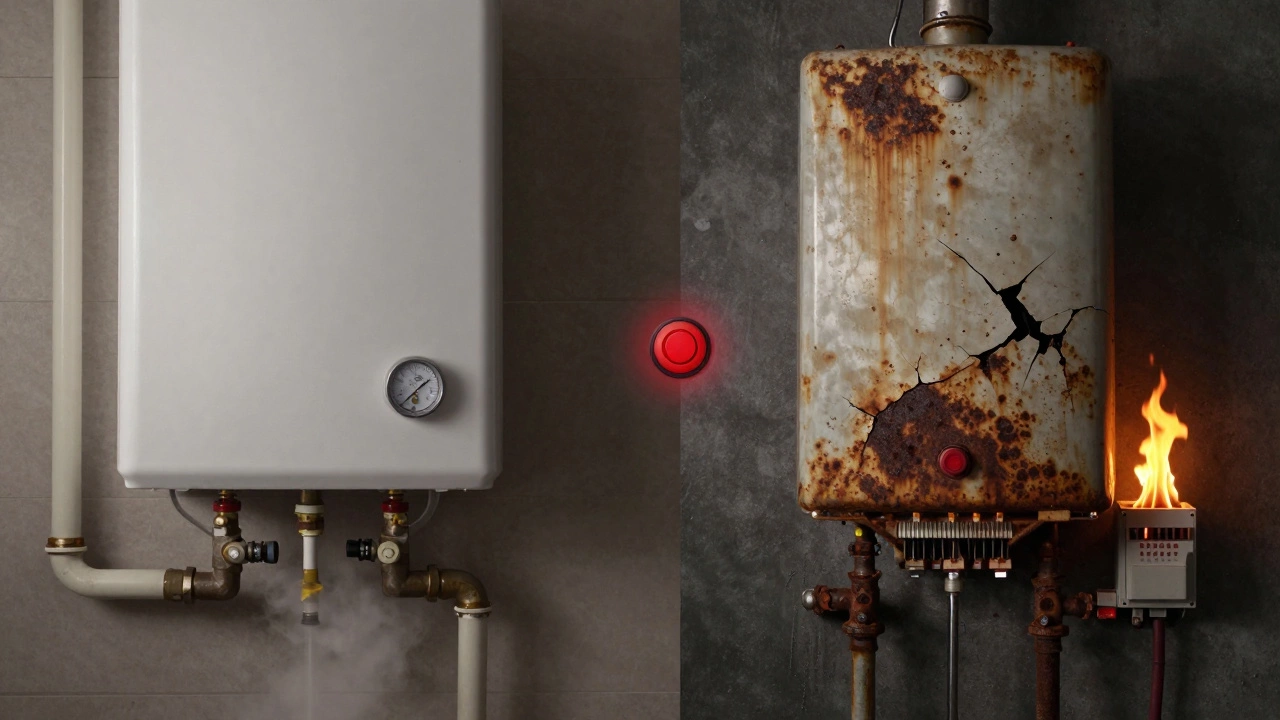
Some problems can’t be fixed. If your water heater is:
- Over 10 years old
- Showing rust on the tank or valves
- Still tripping after replacing the thermostat and flushing
- Making popping or banging noises
Then it’s time to replace it. A new 50-gallon electric water heater costs between $800-$1,200 installed in New Zealand. But it’ll save you money on energy bills and prevent a catastrophic failure. Modern units have better safety sensors, better insulation, and digital diagnostics that tell you exactly what’s wrong-no guessing, no reset button needed.
Prevention Is the Best Reset
The best way to avoid the reset button entirely is to maintain your water heater like you maintain your car. Once a year:
- Flush the tank
- Check the pressure relief valve
- Set the thermostat to 120°F
- Inspect for leaks or corrosion
That’s it. No magic. No tools needed beyond a bucket and a wrench. If you do this, you’ll never have to press that red button again. And your water heater will last longer, use less power, and never surprise you with a leak in the middle of the night.
Resetting isn’t a solution. It’s a warning. Listen to it.
Why does my water heater keep tripping the reset button?
The reset button trips because the water temperature exceeds 180°F. This is usually caused by a faulty upper thermostat, a shorted heating element, heavy mineral buildup, or a closed-loop plumbing system that traps expanding hot water. Resetting doesn’t fix the underlying issue-it just lets the heater run until it overheats again.
Is it dangerous to keep resetting the water heater?
Yes. Repeated resetting can cause the high-limit switch to fail, leading to overheating that may rupture the tank or cause an electrical fire. It also increases pressure buildup, which can disable the safety valve. In extreme cases, this has led to water heater explosions, especially in older units.
How often should I flush my water heater?
You should flush your water heater at least once a year. In areas with hard water, like parts of New Zealand, doing it every 6 months is better. Flushing removes sediment that insulates the heating element, causing it to overwork and overheat the water.
Can a bad thermostat cause the reset button to trip?
Absolutely. A stuck or mis-calibrated upper thermostat is the most common cause of repeated reset trips. If it stays on after the water reaches the right temperature, it keeps heating until the high-limit switch cuts power. Replacing the thermostat is one of the cheapest and most effective fixes.
Should I replace my water heater if it keeps tripping?
If your unit is over 8-10 years old and you’ve replaced the thermostat and flushed the tank but it still trips, replacement is the safest choice. Older tanks develop internal corrosion, and their safety systems aren’t as reliable. A new unit will be more efficient, safer, and last longer.