
Electric Oven Troubleshooter
Does your oven have power?
Check if the digital display lights up or if buttons respond when you touch them.
Is the oven getting hot?
Set it to Bake at 350°F (175°C). Wait 10 minutes. Does the bottom coil glow red? Does heat build up inside?
Is the temperature accurate?
If you used an oven thermometer, did it match the dial? Or does food burn/stay raw unexpectedly?
Inspect the Heating Element
Look closely at the bottom bake coil. Do you see blisters, black spots, holes, or breaks in the wire?
Diagnosis Complete
Estimated Cost
Difficulty Level
You open the door to check on your dinner, and the food is still cold. Or worse, it’s burnt to a crisp because the temperature went rogue. An electric oven is a kitchen appliance that uses electricity to generate heat for baking, roasting, and broiling food. When it works, it’s reliable. When it doesn’t, it ruins your meal and your evening. The most common problem people face isn't usually a catastrophic failure; it's often something small that stops working entirely.
The single most frequent issue with electric ovens is failure to heat properly. This can mean the oven stays cold, heats unevenly, or runs too hot. While there are many parts inside an oven, the root cause usually traces back to one of three components: the heating elements, the thermostat, or the power supply. Understanding which part is failing saves you from calling a technician for a simple fix.
The Heating Elements: The Heart of the Oven
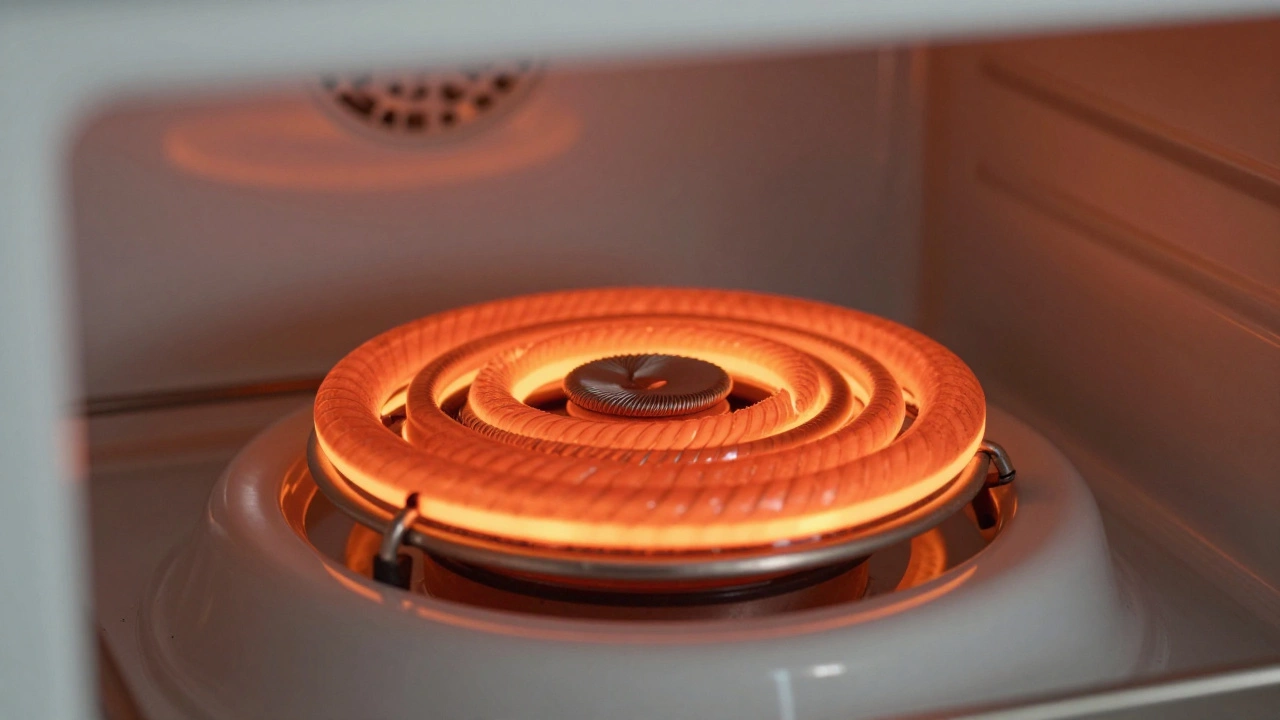
If your oven isn't getting hot, the first suspects are the heating elements. An electric oven typically has two main elements: the bake element at the bottom and the broil element at the top. These are coiled wires made of nickel-chromium alloy that glow red when electricity passes through them.
A bake element failure is the most visible sign of trouble. If you turn the oven on and the bottom coil doesn't glow within five minutes, the element is likely broken. You might see blisters, black spots, or physical breaks in the coil. Sometimes, the damage isn't obvious. The element might glow but fail to reach the set temperature because internal resistance has increased due to wear.
- Visual Inspection: Look for cracks, holes, or discoloration on the coils.
- The Glow Test: Turn the oven to 'Bake' at 350°F (175°C). Watch the bottom element. It should glow orange-red within a few minutes.
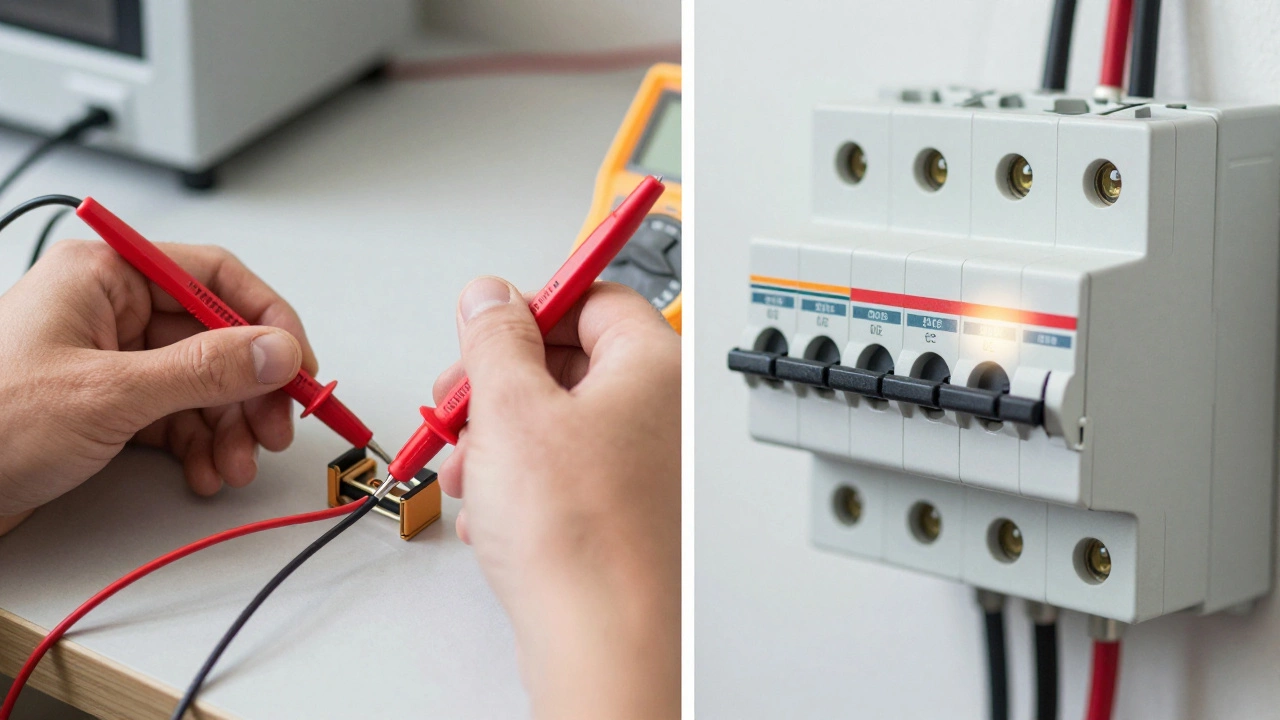
- Continuity Check: If you have a multimeter, you can test for continuity. A reading of infinity means the circuit is open, and the element needs replacement.
Replacing a heating element is one of the easiest DIY repairs. You simply unscrew the old one, disconnect the wires, and install the new one. It costs between $20 and $50 depending on the brand.
Thermostat Failure: The Brain Goes Rogue
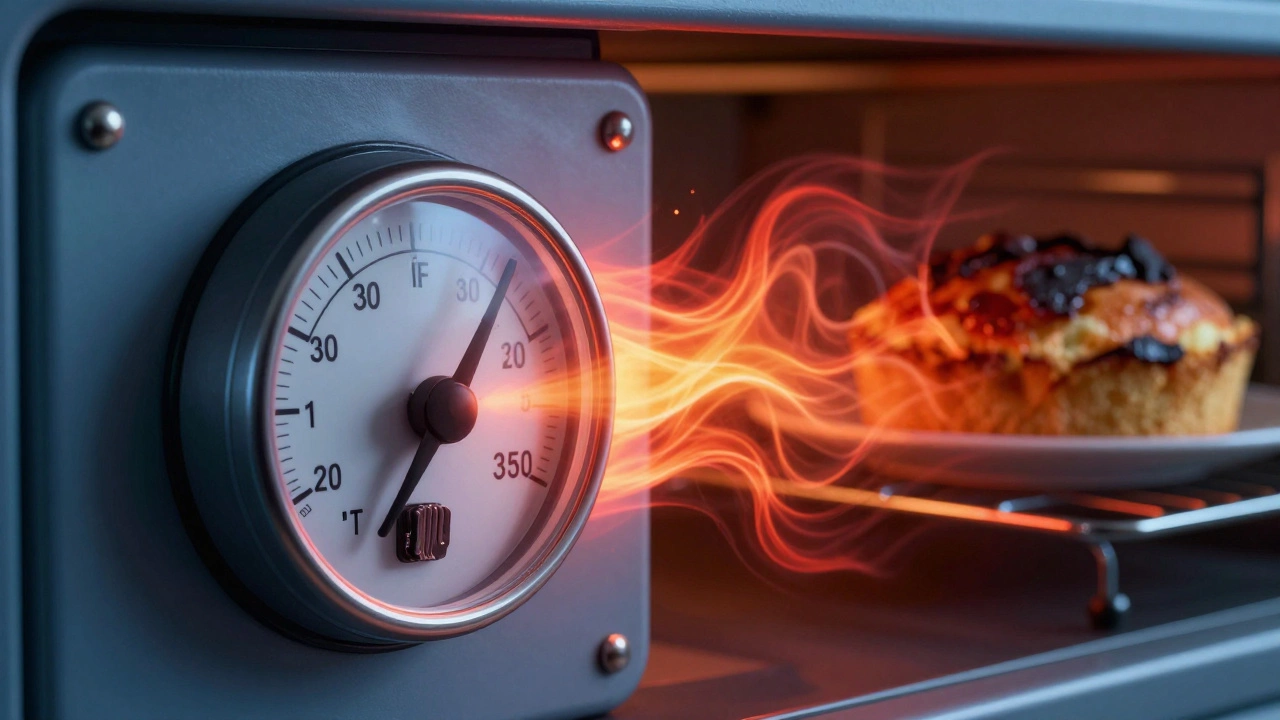
If the heating elements look fine and glow brightly, but your food is burning or staying raw, the problem is likely the thermostat. The thermostat controls when the heating elements turn on and off to maintain the set temperature. Think of it as the brain of the oven.
A faulty thermostat can cause several issues:
- Overheating: The oven gets much hotter than the dial setting, burning food.
- Underheating: The oven never reaches the desired temperature, leaving food undercooked.
- Inconsistent Temperatures: The oven fluctuates wildly, making it impossible to bake delicate items like cakes.
To test this, use an independent oven thermometer. Place it in the center of the oven and set the oven to 350°F (175°C). Let it preheat fully. If the thermometer reads significantly higher or lower than 350°F after 15 minutes, the thermostat is out of calibration or broken. Some modern ovens allow you to recalibrate the temperature via the control panel settings. Older models require replacing the entire thermostat assembly, which is more complex and may need a professional.
Power Supply Issues: No Juice, No Heat
Sometimes the problem isn't inside the oven at all. It’s in how electricity gets to it. Electric ovens require a dedicated 240-volt circuit. If the oven displays lights and buttons work but the oven won't heat, check the power source.
| Check Point | What to Look For | Action Required |
|---|---|---|
| Circuit Breaker | Tripped switch in your electrical panel | Reset the breaker. If it trips again, call an electrician. |
| Fuses | Blown fuses in the fuse box (older homes) | Replace with correct amperage fuses. |
| Terminal Block | Burnt marks or loose wires at the back of the oven | Tighten connections or replace terminal block. |
A tripped breaker is the simplest fix. Flip the switch off and then back on. If the oven starts working, you’re good. If it trips immediately, there’s a short circuit inside the oven, and you should stop using it until a professional inspects it. Working with 240 volts is dangerous and should be left to licensed electricians if you are unsure.
Door Seal Leaks: Losing the Heat
An oven relies on insulation to keep heat inside. The door gasket (seal) is a rubber or fiberglass strip around the door edge. If this seal is damaged, heat escapes, and the oven struggles to maintain temperature. You’ll notice the oven takes longer to preheat, and the exterior of the oven door becomes very hot.
Inspect the gasket for tears, gaps, or hardening. Press the door closed and try to pull a piece of paper out from the edge. If the paper slides out easily, the seal isn't tight enough. Replacing a door gasket is inexpensive and straightforward. You just peel off the old one and stick or screw on the new one.
Control Board Malfunctions: The Digital Glitch
Newer ovens with digital displays rely on an electronic control board. This board sends signals to the heating elements and thermostat. If the display is blank, buttons don’t respond, or the oven acts erratically (like turning on by itself), the control board might be fried.
This is often caused by power surges. A simple reset sometimes helps: unplug the oven or turn off the breaker for 30 seconds, then restore power. If the problem persists, the control board needs replacement. This is a costly repair, often running $100-$300 for parts alone, plus labor. In some cases, if the oven is older than 10 years, it might be more cost-effective to replace the entire unit rather than fixing the board.
When to Call a Professional vs. DIY
Not every oven problem requires a technician. Here is a quick guide to help you decide:
- DIY Safe: Replacing heating elements, cleaning the interior, replacing door seals, resetting breakers.
- Professional Needed: Thermostat calibration/replacement, control board issues, gas line checks (if dual fuel), electrical wiring repairs.
Always prioritize safety. If you smell burning plastic or see smoke, unplug the oven immediately and call a pro. Never attempt to repair internal wiring if you are not comfortable with electrical systems.
Why is my electric oven not heating at all?
The most common reasons are a blown thermal fuse, a tripped circuit breaker, or a failed bake element. Check the breaker first. If power is on, inspect the bake element for visible damage or test it with a multimeter for continuity.
How do I know if my oven thermostat is bad?
Use an independent oven thermometer. Set the oven to 350°F (175°C) and let it preheat. If the thermometer shows a significant difference (more than 25°F) from the set temperature, the thermostat is likely faulty or out of calibration.
Is it expensive to fix an electric oven?
Costs vary widely. Replacing a heating element costs $20-$50 for parts. Labor adds $75-$150 per hour. Control board replacements can cost $150-$400 total. Simple fixes like resetting breakers or cleaning seals are free or very cheap.
Can I use my oven if the door seal is broken?
You can, but it will be inefficient. Heat will escape, causing longer cook times and higher energy bills. The oven may also struggle to reach high temperatures, affecting cooking results. Replace the seal as soon as possible.
Why does my oven make a buzzing noise?
A slight hum is normal as heating elements expand. However, loud buzzing or clicking could indicate a failing relay on the control board, a loose component, or an issue with the fan motor. If the noise is new or loud, have it inspected.