
Cooker Repair vs. Replace Calculator
Enter Appliance Details
Enter details to see if you should fix it or buy a new one.
There is no single number that answers how long your kitchen workhorse will last. A cheap portable hot plate might die in three years, while a heavy-duty gas range can keep chugging for twenty-five. The real question isn't just about time; it is about cost, safety, and performance. If you are staring at a flickering oven light or a burner that won't stay lit, knowing the expected lifespan helps you decide whether to call a technician or start shopping for a new model.
Understanding the average life of a cooker depends heavily on the fuel type, the build quality, and how hard you push it. We break down the numbers for every major type so you can plan your budget and avoid unexpected breakdowns during the holidays.
Key Takeaways
- Gas cookers generally last longer than electric ones, averaging 15 to 20 years due to simpler mechanics.
- Electric coil stoves typically survive 10 to 15 years, while smooth-top glass models often fail sooner (10-13 years) because the heating elements are harder to replace.
- Induction cooktops have an electronic lifespan of 10 to 15 years but require compatible magnetic cookware to function.
- The "repair threshold" rule: If the repair cost exceeds 50% of a new unit's price and the appliance is over halfway through its expected life, replace it.
- Daily usage habits, such as boiling dry pans or using abrasive cleaners, can cut the lifespan by 3 to 5 years.
Gas Cookers: The Long-Haul Champions
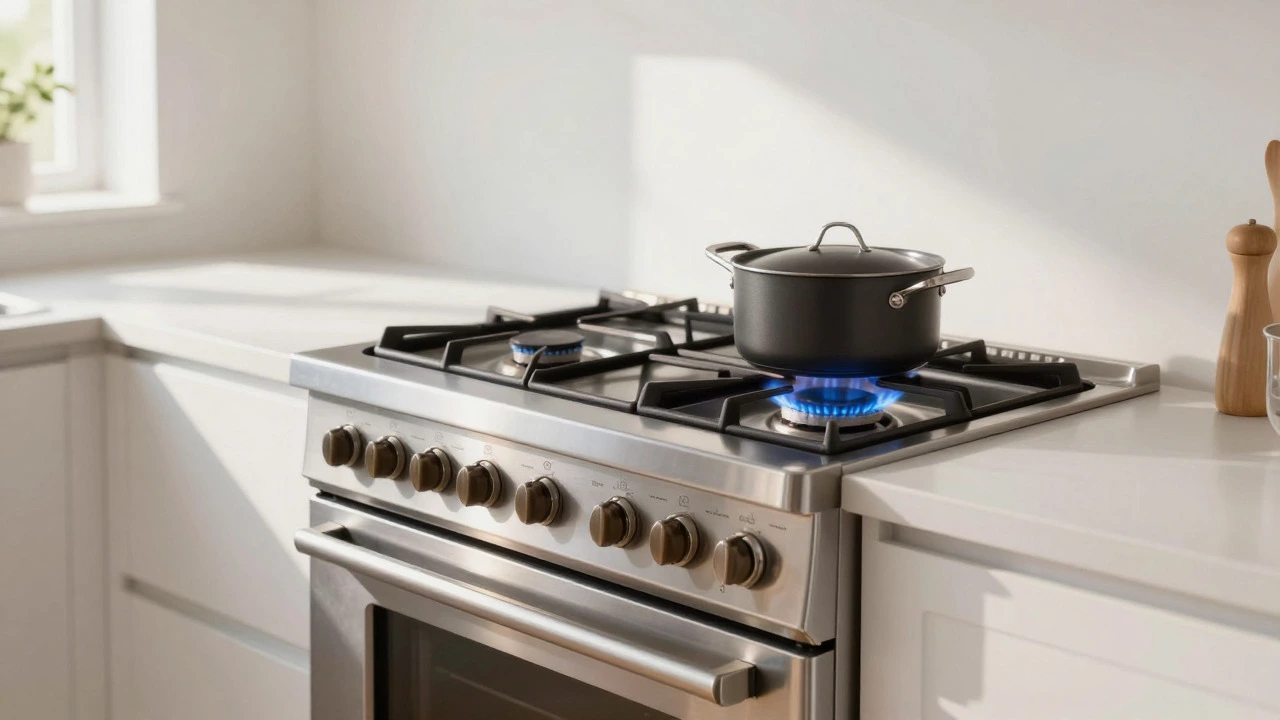
If you want durability, gas cookers are appliances that burn natural gas or propane to generate heat via open flames usually win. Why? Because they are mechanically simple. There are fewer complex circuits and no fragile glass surfaces covering the burners. A standard freestanding gas range has an average lifespan of 15 to 20 years. High-end commercial-style residential ranges can even hit 25 years if the seals and valves are maintained.
The main wear points on a gas stove are the igniters and the oven door gasket. Spark igniters, which create the blue click before the flame catches, tend to fail after 8 to 10 years. This is a cheap fix, costing around $50 to $100 in parts and labor. However, if the gas valve itself corrodes or leaks, the entire control module may need replacement, which pushes the cost up significantly.
You should also watch out for carbon buildup. Over time, grease and food particles clog the burner ports. This doesn't kill the stove immediately, but it causes uneven heating, which makes you cook longer and stress the appliance more. Cleaning the burner heads annually extends the life considerably.
Electric Coil Stoves: The Reliable Workhorses
The classic electric coil stove is a traditional electric range with exposed spiral heating elements that glow red when hot is the most common appliance in American homes. Its average lifespan sits between 10 and 15 years. These units are robust because the coils are exposed. If one burns out, you can pop it off and screw in a new one for under $20. No technician needed.
The weakness here is the oven cavity and the thermostat. Electric ovens rely on precise temperature sensors. After a decade, these sensors drift, meaning your "350 degrees" might actually be 370 or 330. This leads to burnt cookies or undercooked roasts. While the stove top keeps working fine, the oven becomes unreliable. At this stage, many homeowners replace the whole unit rather than hunting for specific thermostat parts.
Maintenance is key for electric coils. Spills that drip into the center of the coil can cause short circuits or fire hazards. Always wipe spills immediately. Also, never force a stuck coil; if it doesn't lift easily, the socket underneath might be damaged, requiring a professional fix.
Smooth-Top Glass Electric Ranges: Beauty vs. Durability
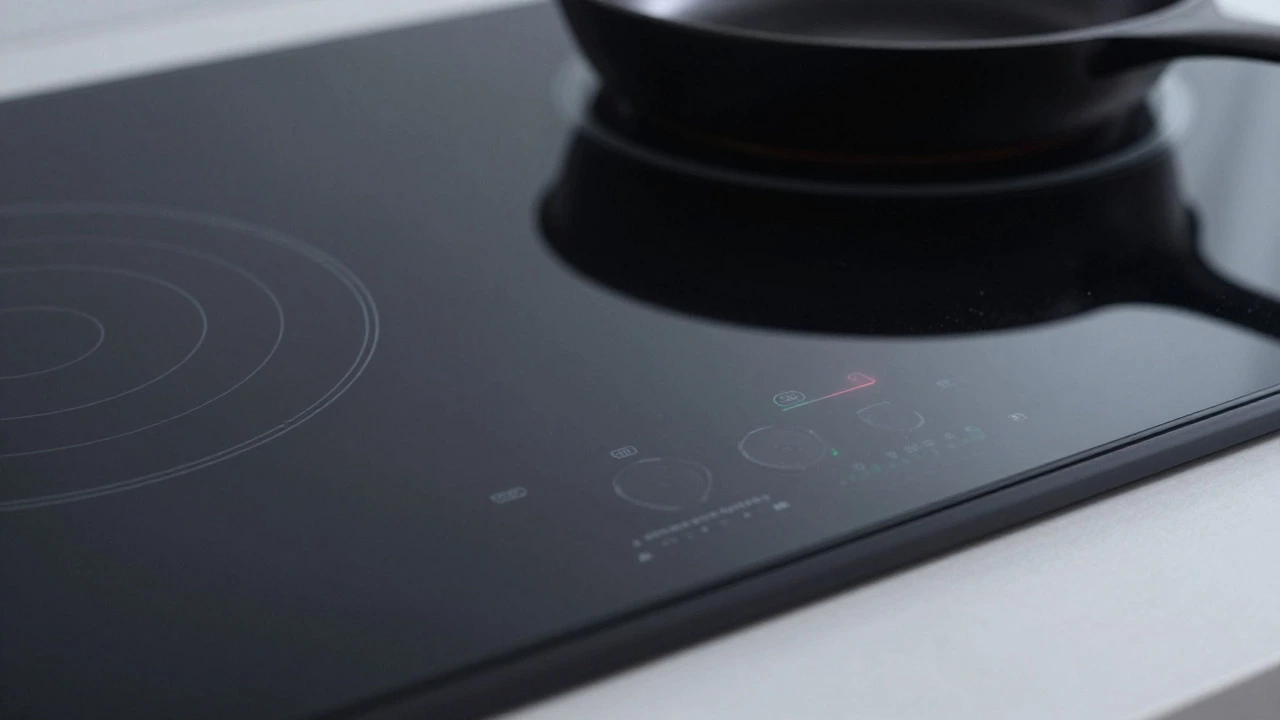
smooth-top electric ranges are modern electric stoves featuring a flat ceramic or glass surface with hidden radiant heating elements beneath look sleek and are easy to wipe clean, but they are not as forgiving as coil stoves. Their average lifespan is slightly lower, typically 10 to 13 years. The issue is accessibility. The heating elements are sealed under thick glass. If one element fails, you cannot just swap it out. You often have to replace the entire glass top assembly, which can cost $400 to $800 including labor.
Glass tops are also prone to cracking from thermal shock. Placing a cold cast-iron skillet on a hot zone, or dropping a pot, can shatter the surface. Once cracked, the stove is unsafe and must be replaced entirely. Unlike gas stoves where a cracked burner cap is a minor annoyance, a cracked glass top is a total loss.
To extend the life of a smooth-top, use non-abrasive cleaners only. Avoid steel wool or harsh scouring powders, which create micro-scratches that weaken the glass structure over time. Also, ensure your pots have flat bottoms; warped pans reduce heating efficiency and cause hot spots that stress the glass.
Induction Cooktops: The Tech-Heavy Contender
induction cooktops are appliances that use electromagnetic fields to heat ferromagnetic cookware directly, leaving the surface relatively cool are becoming popular for their speed and energy efficiency. Their lifespan is estimated at 10 to 15 years, similar to electric coils. However, the failure mode is different. Induction relies on complex electronics, including inverters and fans. Electronics degrade faster than simple mechanical switches.
If an induction stove breaks after eight years, the repair bill is often high because the control board is proprietary. Manufacturers rarely sell individual components for older models. Furthermore, induction requires magnetic cookware. If you bring old aluminum or copper pots into the kitchen, the stove simply won't work, leading users to believe the appliance is broken when it is actually a compatibility issue.
One advantage of induction is that the surface stays cooler, reducing the risk of burning yourself or melting plastic handles. This also means less baked-on grime, which reduces cleaning effort. But remember, the fans inside run constantly to cool the electronics. Dust buildup in the ventilation slots can cause overheating and premature failure. Vacuum the vents every six months.
Factors That Shorten Your Cooker's Life
Even the best-built cooker will die early if abused. Here are the biggest lifespan killers:
- Thermal Shock: Moving pans from freezer to hot burner, or ice water onto a hot glass top, causes expansion and contraction cracks.
- Sugar Burns: Dropped sugar melts into a sticky resin that bonds to the heating element or glass. Scrubbing it off aggressively damages the surface coating.
- Oven Door Misalignment: If the hinge springs weaken, the door sags. Heat escapes, forcing the heating element to run longer and hotter to maintain temperature. This wears out the element twice as fast.
- Power Surges: Electric and induction stoves are sensitive to voltage spikes. A surge protector for your kitchen circuit can save the control board.
- Neglected Seals: In gas ovens, a torn door gasket lets heat escape. The oven works overtime, burning out the heating element or gas valve prematurely.
Repair vs. Replace: The Decision Matrix
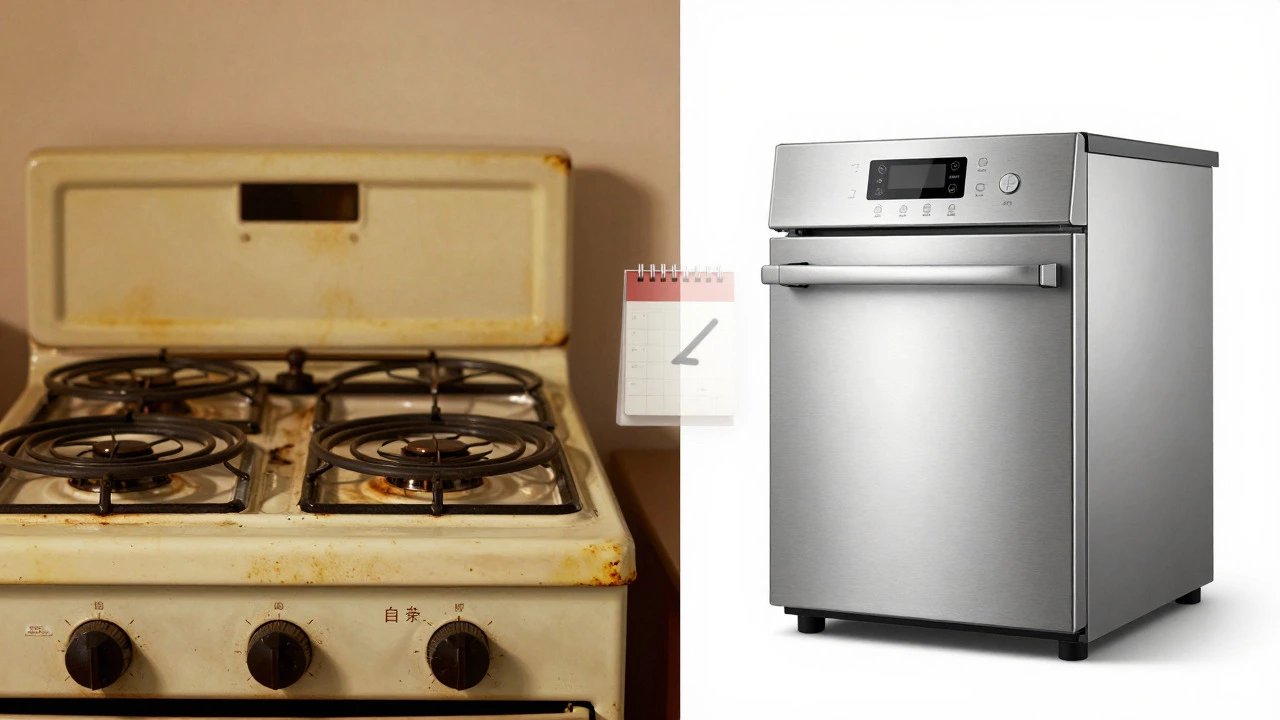
When your cooker acts up, do you fix it or toss it? Use this simple logic based on the average life of a cooker data:
| Scenario | Action | Reasoning |
|---|---|---|
| Appliance is < 5 years old | Repair | Still within warranty or early life cycle. Parts are likely covered. |
| Repair cost > 50% of new unit | Replace | Not financially wise. New models are more efficient and safer. |
| Gas leak or electrical spark | Replace (or urgent pro repair) | Safety hazard. Do not risk fire or carbon monoxide poisoning. |
| Minor issue (igniter, knob) | Repair | Cheap fixes ($50-$100) extend life by years. |
| Appliance is > 15 years old | Replace | Past average lifespan. More failures are imminent. Efficiency has dropped. |
Also consider energy costs. An electric stove from 2005 uses significantly more electricity than a 2026 model. If you cook daily, the savings on your utility bill can offset the cost of a new, efficient unit within two to three years.
Extending the Life of Your Current Cooker
You don't have to wait for it to break. Proactive maintenance adds years to the clock.
- Clean the Oven Monthly: Use the self-clean cycle sparingly (once or twice a year) as the extreme heat stresses the insulation. Instead, wipe down crumbs weekly to prevent them from burning and sticking.
- Check Gas Lines: For gas stoves, smell for rotten eggs regularly. If you suspect a leak, turn off the gas and call a professional. Never test with a match.
- Lubricate Hinges: A drop of silicone spray on oven door hinges prevents sagging and keeps the seal tight.
- Use Correct Cookware: Match pan size to burner size. A small pan on a large burner wastes heat and scorches the surrounding area.
- Avoid Abrasives: Use soft cloths and mild detergents. Harsh chemicals strip protective coatings on knobs and surfaces.
Frequently Asked Questions
How long does a Whirlpool electric stove last?
Whirlpool electric stoves typically last between 10 and 15 years. As a mass-market brand, they prioritize affordability over extreme longevity, but their parts are widely available, making repairs easier and cheaper than luxury brands.
Is it worth repairing a 15-year-old gas stove?
Generally, no. A 15-year-old gas stove is at the end of its average lifespan. While a minor fix like replacing an igniter is worthwhile, major repairs like fixing a gas valve or control board are not recommended. The risk of future failures and reduced energy efficiency makes replacement the smarter financial choice.
Why did my new induction stove stop working after 2 years?
Induction stoves rely on sensitive electronics. Early failure is often caused by power surges, dust buildup in the cooling fans, or incompatible cookware causing error codes. Check if your cookware is magnetic. If not, the stove may be shutting down to protect itself. If it is magnetic, check for dust in the vents or consult a technician for potential control board issues.
Do built-in wall ovens last longer than slide-in ranges?
Built-in wall ovens often have a slightly longer lifespan (15-20 years) because they are designed for dedicated baking tasks and have better insulation. Slide-in ranges combine cooking and baking, subjecting the oven to more frequent temperature fluctuations and grease exposure from the stovetop above.
Can I replace just the glass top on my electric stove?
Yes, but it is expensive. The glass top assembly includes the heating elements and wiring. Replacing it alone can cost $400 to $800 plus labor. If the rest of the stove is over 10 years old, it is usually more cost-effective to replace the entire unit.
What signs indicate my cooker needs immediate replacement?
Immediate replacement is needed if you detect gas smells, see sparks from the outlet or controls, notice the oven door seal is completely torn, or if the glass top is cracked. These are serious safety hazards that pose risks of fire, explosion, or carbon monoxide poisoning.