
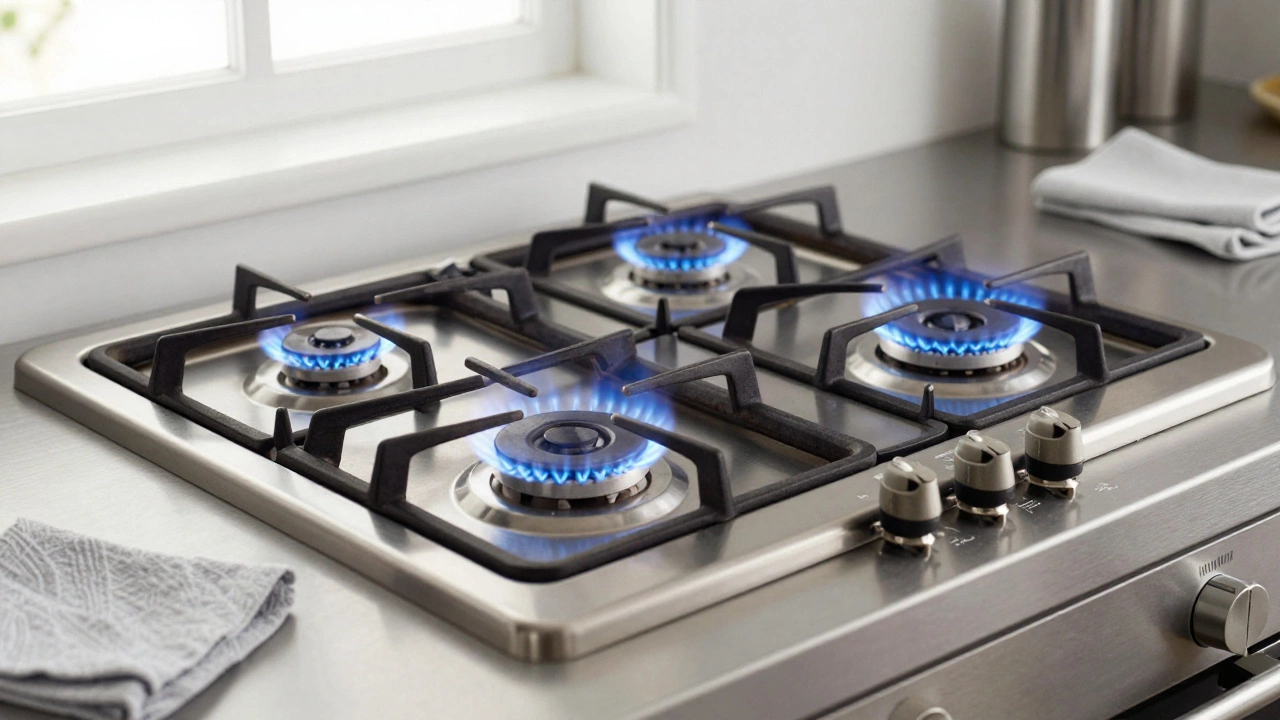
Gas Hob Lifespan Estimator
How long will your gas hob last?
Most people don’t think about their gas hob until it stops working. But if you’ve had the same one since you moved into your home, you might be wondering: how long should a gas hob last? The short answer? With normal use and basic care, a gas hob typically lasts between 10 and 15 years. But that’s not the whole story.
Why Some Gas Hobs Die Early
Not all gas hobs are built the same. A cheap model from a discount retailer might only last 6 or 7 years, especially if it’s been used daily for cooking three meals a day. On the other hand, a well-maintained hob from a trusted brand like Bosh, Smeg, or Zephyr can easily hit 20 years. What makes the difference? It’s not magic-it’s materials and care.
Cast iron burners and brass gas valves last longer than stamped steel and plastic parts. If your hob has a stainless steel top with sealed burners, it’s going to hold up better than one with open grates and cheap enamel coatings that chip and rust. I’ve seen hobs in Wellington kitchens that were installed in the early 2000s still working fine, but I’ve also pulled out ones from 2015 that had corroded gas lines because the owner never cleaned spills.
Signs Your Gas Hob Is Wearing Out
You don’t need to wait for it to die completely to know it’s time to replace. Here are the real red flags:
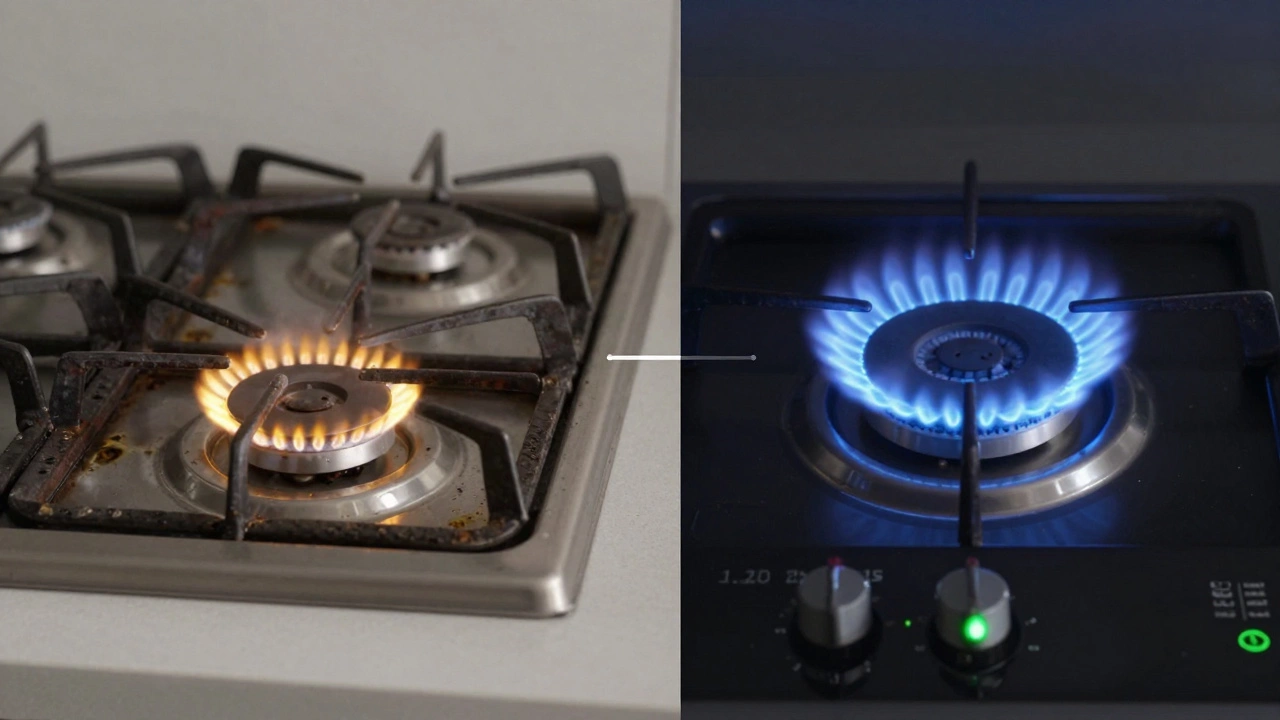
- Uneven or weak flames - If one burner lights with a lazy yellow flame while others roar blue, the gas ports are clogged or the valve is failing. Cleaning won’t fix this forever.
- Delayed ignition - When you turn the knob and hear a long hiss before the gas catches, that’s a sign the spark igniter or gas flow is off. This isn’t just annoying-it’s a safety risk.
- Gas smell when off - A faint odor after cooking might be residue. A persistent smell? That’s a leak. No amount of repair fixes a cracked manifold or worn valve stem.
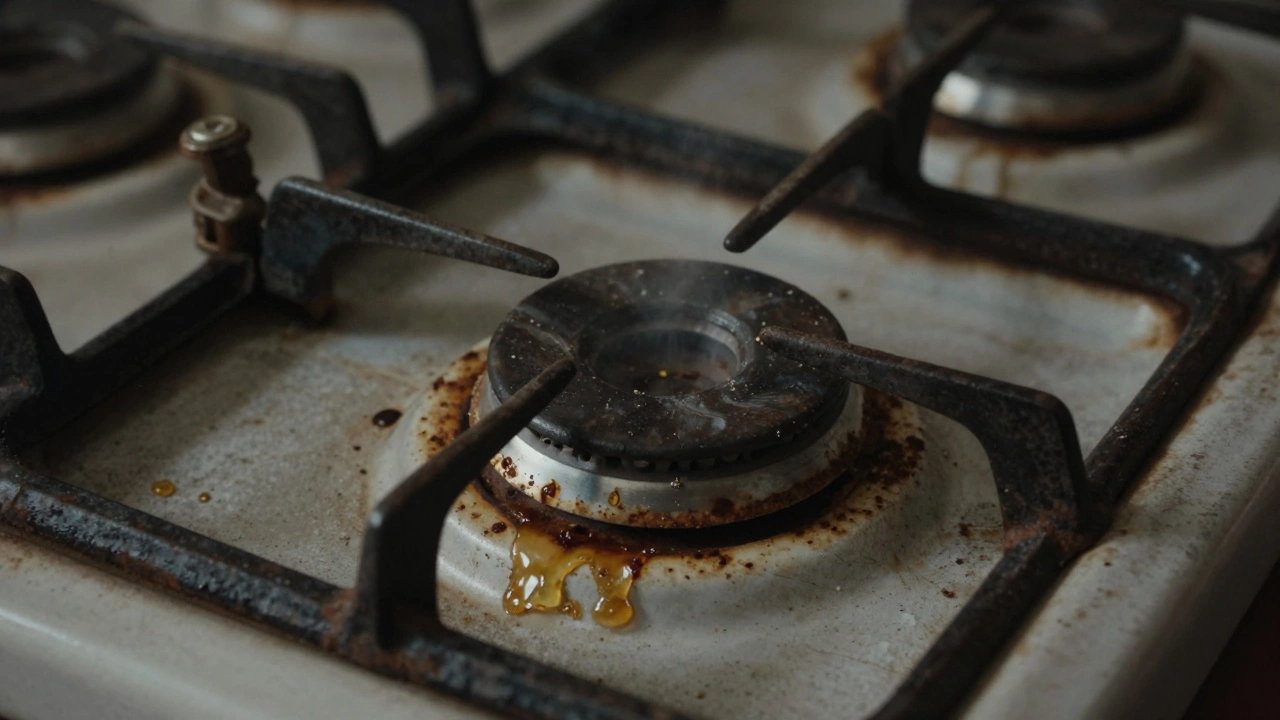
- Corrosion under the burners - Rust on the base plate or around the gas inlet means moisture has been getting in. Once metal starts eating away, it won’t stop.
- Frequent repairs - If you’ve replaced the igniter twice in three years, or the control knob keeps sticking, you’re throwing money at a sinking ship.
What Actually Drives Lifespan
It’s not just age. It’s how you treat it. I’ve worked on gas hobs in homes where people wiped spills right after cooking, used gentle cleaners, and never let water sit under the burners. Those hobs look like new after 18 years.
Then there are the ones where someone boils over a pot of pasta, leaves the mess for days, and then sprays harsh oven cleaner on the metal. That’s a fast track to rusted valves, warped burners, and corroded gas lines. Salt from seawater in coastal areas like Wellington accelerates corrosion too. If you live near the ocean, your hob might need extra attention.
Regular cleaning isn’t optional. Every month, remove the grates and burners, soak them in warm soapy water, and wipe the surface with a damp cloth. Never use abrasive pads or steel wool on enamel or stainless steel. A soft brush and vinegar solution works wonders for grease buildup.
Repair vs. Replace: The Real Math
Many people think, “I’ll just get it fixed.” But here’s the truth: repairing a gas hob older than 10 years rarely makes financial sense.
Replacing a spark igniter? $120-$180. Fixing a faulty gas valve? $250-$400. That’s close to the cost of a new entry-level hob. And even if you fix it, you’re still stuck with worn-out burners, outdated safety features, and a design that’s probably less efficient than today’s models.
New gas hobs come with better flame control, automatic shut-off if the flame goes out, and sealed burners that stop spills from getting inside. A $600 hob today will save you more in gas bills and safety than a $300 repair on a 12-year-old unit.
When to Start Thinking About Replacement
Don’t wait for disaster. If your hob is over 10 years old and you notice any of the signs above, start looking at replacements. You don’t need to rush, but you should be shopping before it fails completely.
Why? Because when it breaks, you’re stuck without a stove. And if it’s during winter or a busy workweek, you’ll be scrambling for a temporary solution. A new hob takes 1-3 days to install. A last-minute emergency repair? That could take a week.
Also, newer models are more energy-efficient. A hob from 2010 might use 15% more gas than one from 2024. That adds up over time-especially if you cook daily.
What to Look for in a New Gas Hob
If you’re replacing, here’s what matters:
- Sealed burners - Stops spills from seeping into the gas lines.
- Automatic flame failure device - Shuts off gas if the flame goes out.
- Stainless steel or ceramic top - Easier to clean and more durable than enamel.
- Brass gas valves - More reliable than plastic or aluminum.
- At least three burners with different outputs - A powerful simmer burner and a high-output burner for boiling water fast.
Brands like Electrolux, Fisher & Paykel, and Miele have models that last 15+ years with proper care. Avoid no-name brands sold online with no local service support. If it breaks, you’re stuck.
What Happens to Old Hobs?
When you replace your hob, don’t just throw it out. Most councils in New Zealand, including Wellington City Council, accept gas appliances for recycling. Gas lines are drained, metals are separated, and hazardous parts are handled safely. Some repair shops even take old units for parts. Don’t leave it on the curb-it’s illegal in many areas and a safety hazard.
Final Thought: It’s Not Just About Years
Life expectancy isn’t a countdown. It’s a combination of quality, care, and use. A gas hob that’s treated like a tool lasts longer than one treated like a disposable item. Clean it. Check it. Don’t ignore small problems. And when the time comes, replace it-not because it’s old, but because it’s no longer safe or efficient.
Most people wait too long. By the time they call a technician, the hob’s already on its last legs-and the repair cost is almost the same as a new one. Don’t be one of them. Keep an eye on your hob. It’s one of the most used appliances in your home. Treat it right, and it’ll serve you for more than a decade.
How long does a gas hob usually last?
Most gas hobs last between 10 and 15 years with normal use and regular cleaning. High-quality models, properly maintained, can last up to 20 years. Cheaper units or those exposed to moisture and neglect may fail in as little as 6 to 8 years.
Can I repair a 15-year-old gas hob instead of replacing it?
Technically, yes-but it’s rarely worth it. Parts for older models are hard to find, and repairs like replacing valves or gas lines can cost $250-$400. That’s close to the price of a new entry-level hob. Plus, newer models are safer, more efficient, and easier to clean. If your hob is over 10 years old and needs major repairs, replacement is the smarter choice.
What causes gas hobs to fail early?
The biggest causes are spills left uncleaned, especially sugary or salty liquids that corrode metal parts over time. Moisture under burners, lack of maintenance, and using harsh cleaners also damage seals and valves. In coastal areas like Wellington, salt air accelerates rust on gas lines and burner bases.
Is it safe to keep using a gas hob that smells faintly of gas?
No. A faint smell after cooking might be residue, but a persistent gas odor-even when the hob is off-is a sign of a leak. Gas leaks can lead to fire or explosion. Turn off the gas supply at the main valve and call a licensed gas fitter immediately. Don’t try to fix it yourself.
How often should I clean my gas hob?
Clean the surface weekly with a damp cloth and mild detergent. Remove the burners and grates every month and soak them in warm soapy water. Use a soft brush to clear debris from the gas ports. Never use steel wool or abrasive cleaners-they scratch surfaces and damage seals.