
Hob Lifespan Assessment Tool
How Long Does Your Hob Last?
Signs of Trouble
Maintenance Habits
" id="resultBadge">Recommendation
Ever wondered how long your hob actually lasts? You turn it on every day-boil water, sear steak, simmer sauces-and never think twice until it starts acting up. That flickering burner, the uneven heat, the strange smell when you light it. You might think, "Is this normal?" Or worse, "Should I just replace it?" The truth is, most hobs don’t die suddenly. They fade. And knowing when that fade turns into failure can save you money, hassle, and even a kitchen fire.
How Long Do Hobs Usually Last?
A typical gas hob, if properly maintained, lasts between 10 and 15 years. Electric and induction hobs follow a similar timeline. That’s not a guess-it’s based on industry data from appliance manufacturers like Bosh, Siemens, and Smeg, who design their cooktops to handle about 20,000 hours of use. For an average household that cooks 3-4 times a week, that’s roughly 12-15 years.
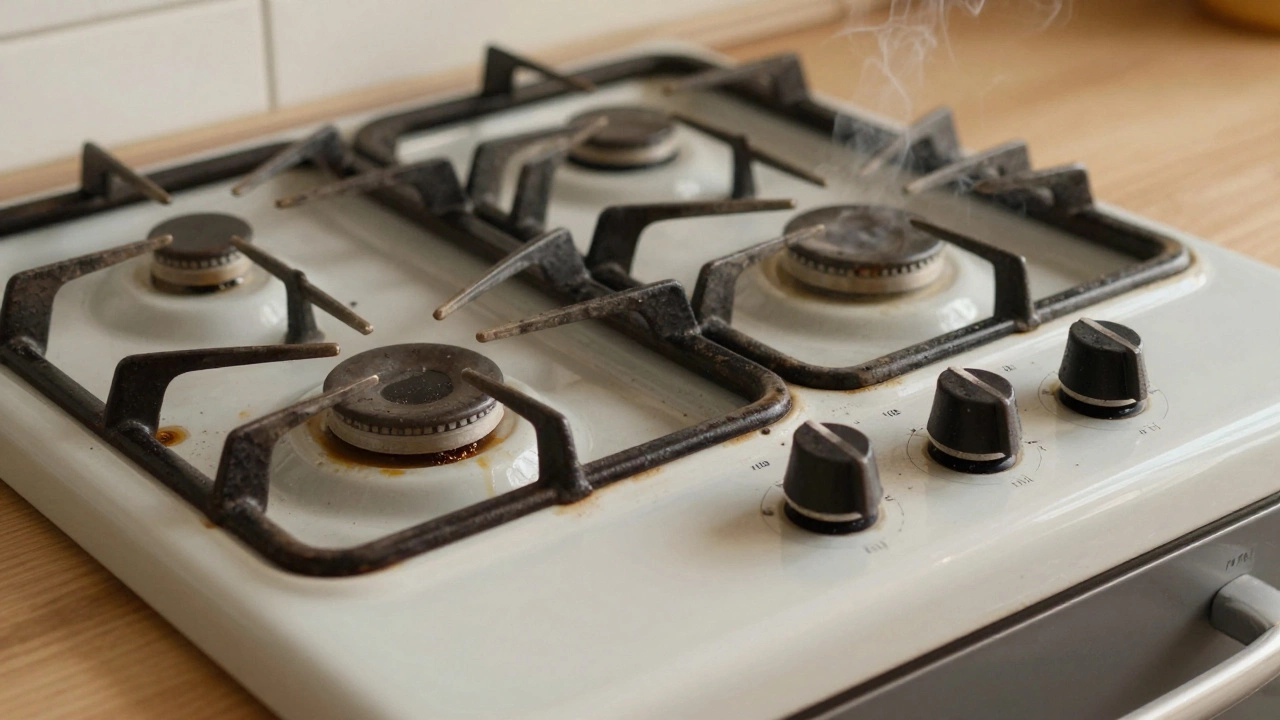
But here’s the catch: a hob that’s 12 years old isn’t necessarily broken. It’s just getting tired. Think of it like a car with 200,000 kilometers. It still runs, but you notice things: slower starts, odd noises, maybe a little smoke. Same with hobs.
Signs Your Hob Is Reaching the End of Its Life
You don’t need to wait for it to stop working entirely. Watch for these red flags:
- Slow or uneven heating - One burner takes forever to boil water while another overheats the pan. This usually means the gas valve or heating element is failing.
- Ignition problems - You have to turn the knob 5-10 times before it lights. Or it lights, then goes out. This isn’t just a dirty spark module-it’s often worn-out internal wiring or a cracked igniter.
- Gas smell when off - A faint odor near the burners, even when the hob’s not in use? That’s a gas leak. Not a "maybe." That’s a safety issue. Shut it off and call a professional.
- Cracked or warped cooktop surface - Especially on ceramic or glass hobs. Cracks let moisture in, which can short out the electronics. And yes, that can start a fire.
- Excessive rust or corrosion - Around the burners, control knobs, or under the grates. Rust on gas hobs often means water has been seeping in for years, usually from poor cleaning habits.
One homeowner in Wellington replaced her hob after 14 years because the control panel started randomly turning burners on. She didn’t realize it was a fault until her daughter walked into the kitchen and found the stove glowing on its own. That’s not a glitch. That’s a hazard.
What Kills a Hob Faster?
Not all hobs die of old age. Many are killed by neglect.
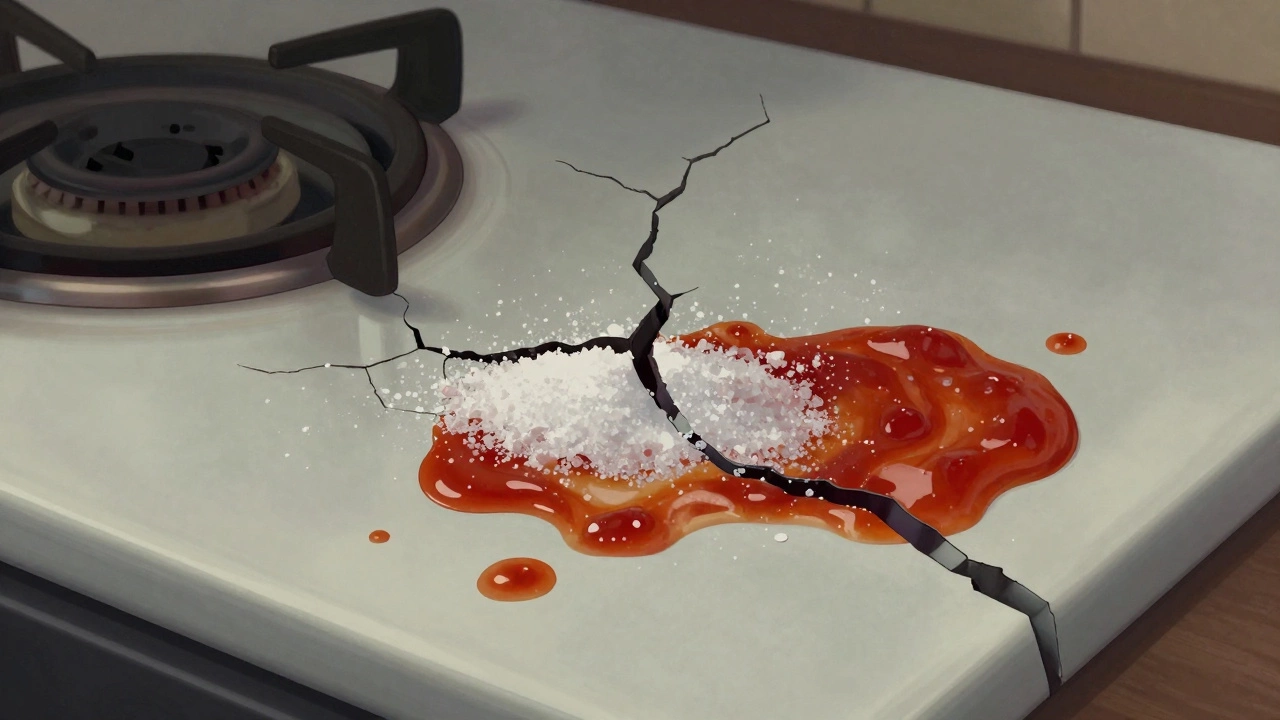
- Spills left to bake on - Sugar, tomato sauce, or butter that hardens over time eats away at the surface and seeps into the seals. This is the #1 reason ceramic hobs crack.
- Using abrasive cleaners - Steel wool, oven cleaners, or harsh scrubbers scratch the surface, damage the heating elements, and strip protective coatings.
- Ignoring the drip trays - Grease buildup under the burners can ignite. Yes, it’s that simple. Clean them monthly.
- Overloading burners - Using a 5-liter pot on a small burner doesn’t just slow cooking-it strains the gas valve and can warp the burner head.
- Water damage - Leaky sinks, steam from nearby kettles, or even a poorly sealed backsplash can soak into the hob’s electronics. Induction hobs are especially sensitive.
One repair technician in Christchurch told me he sees 3-4 hobs a week that died because someone used a pressure washer to clean the kitchen. That’s not cleaning. That’s sabotage.
When Should You Repair vs. Replace?
Let’s be real: most people wait too long. Then they panic when it breaks. But here’s a rule of thumb:
- Repair if: The hob is under 10 years old, the issue is isolated (one burner, one control), and the cost to fix is under $200.
- Replace if: It’s over 12 years old, multiple burners are failing, the surface is cracked, or repairs cost more than half the price of a new unit.
Why? Because older hobs are less efficient. A 15-year-old gas hob uses 20-30% more gas than a new model. That adds up. And newer hobs have safety features like automatic shut-off, child locks, and flame failure devices that older ones simply don’t have.
Also, replacement parts for older models are hard to find. You might spend $180 on a new igniter… only to find out the gas valve is also shot. That’s not a repair. That’s a money pit.
How to Extend Your Hob’s Life
Simple habits make a huge difference:
- Wipe spills immediately - Even if it’s just a drop of oil. Let it sit, and it becomes a problem.
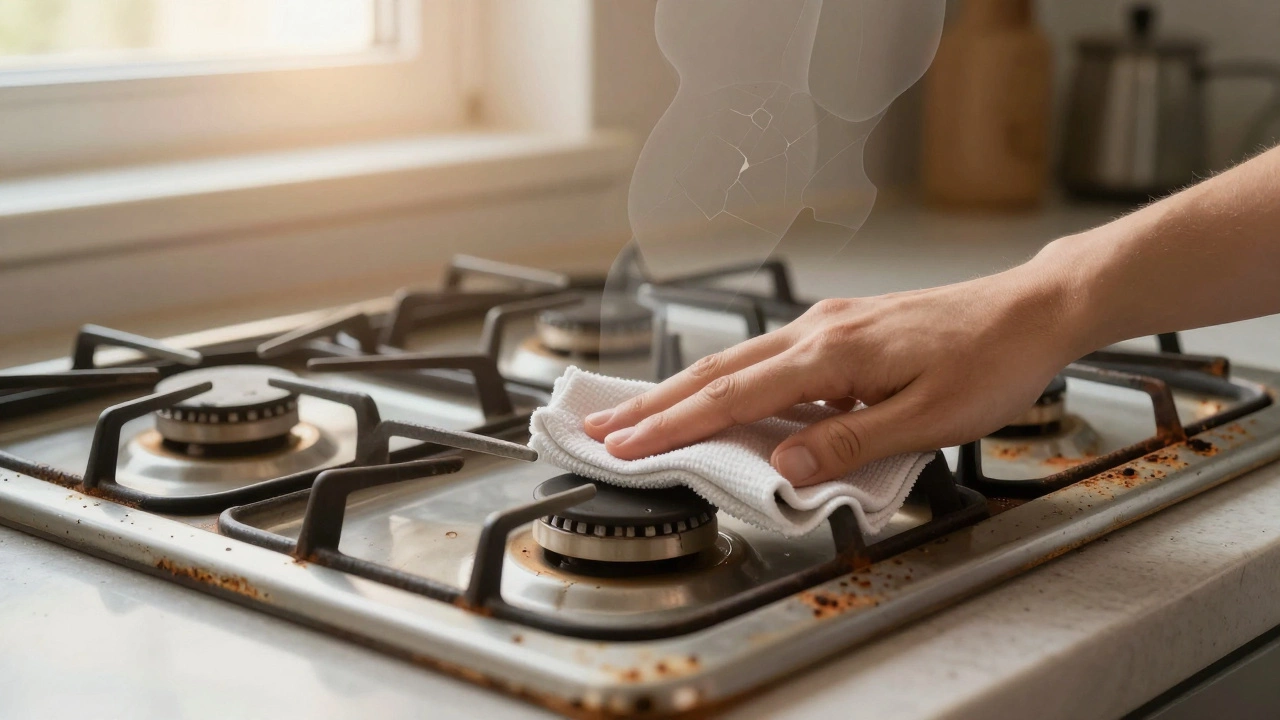
- Clean burners monthly - Remove the grates and burner caps. Soak them in warm soapy water. Use a toothbrush to clear the gas ports. Don’t poke them with metal.
- Check the drip trays - Remove and clean every 2-4 weeks. Grease buildup is a fire waiting to happen.
- Use the right cookware - Flat-bottomed pots for electric and induction. Avoid warped or oversized pans.
- Don’t slam the door - The heat from the hob can warp the underside of cabinets if the door slams shut too hard. It’s not just about the hob-it’s about the whole zone.
One woman in Dunedin cleaned her hob every week for 18 years. Her gas hob still works fine. She didn’t replace it because she didn’t have to.
What Happens When a Hob Dies?
Most people assume they need a full kitchen overhaul. But you don’t. A hob is a standalone unit. You can replace just the cooktop without touching the cabinetry, sink, or backsplash.
Modern hobs are easier to install than ever. Most fit into standard cutouts. You just need to match the power supply (gas or electric), the size, and the number of burners. A professional can swap it out in under two hours.
But if you wait until it stops working completely, you risk:
- Being without a stove during a busy week
- Spending more on emergency repairs
- Accidentally damaging the gas line or electrical wiring
Plan ahead. If your hob is 10+ years old, start looking at replacements now. You don’t need to buy right away-but know what’s out there.
Final Thought: It’s Not About Age. It’s About Condition.
A 5-year-old hob with rusted burners and cracked glass is more dangerous than a 15-year-old one that’s been cared for. Your hob doesn’t have a calendar. It has a condition.
Check it. Clean it. Listen to it. If it’s acting strange, don’t ignore it. A little attention now can save you hundreds-or worse, your home.
How long does a gas hob typically last?
A gas hob typically lasts between 10 and 15 years with regular maintenance. Factors like usage frequency, cleaning habits, and exposure to moisture can shorten its lifespan. Hobs that are cleaned monthly and kept dry often exceed 15 years.
Can I repair my hob myself?
You can clean the burners, replace grates, and wipe surfaces safely. But anything involving gas lines, electrical components, or internal valves should be handled by a licensed technician. Gas leaks and electrical faults are serious risks that shouldn’t be DIY.
Is it worth repairing a 12-year-old hob?
Generally, no. By 12 years, most hobs have worn-out components, and replacement parts are harder to find. If repairs cost more than half the price of a new unit, replacement is the smarter choice. Newer models are also more energy-efficient and safer.
What’s the most common cause of hob failure?
The most common cause is neglect-specifically, spills left to bake on, grease buildup under burners, and water damage from poor cleaning. These issues lead to cracked surfaces, corroded wiring, and blocked gas ports. Regular cleaning prevents 90% of failures.
Should I replace my hob before it breaks?
Yes, if it’s over 10 years old and you’re noticing signs of wear. Replacing it before it fails gives you time to choose the right model, avoid emergency costs, and prevent safety hazards like gas leaks or electrical fires.