
Washing Machine Lifespan Estimator
How Long Will Your Washer Last?
Estimate your washing machine's potential lifespan based on your maintenance habits and usage patterns.
Estimated Lifespan
Most people buy a washing machine thinking it’ll last forever. But when it starts rattling, leaking, or just stops spinning, you wonder: how long should a washing machine really last? The answer isn’t simple. Some machines die after five years. Others still spin clean clothes after 15. What’s the real maximum? And more importantly - how do you make yours one of the long-haulers?
What’s the actual longest average lifespan?
According to data from appliance repair technicians across North America and Europe, the average washing machine lasts about 10 to 12 years. But that’s just the average. The longest-lasting machines - the ones that still work after 15, 18, even 20 years - aren’t rare. They’re the result of smart buying, careful use, and basic maintenance.
Brands like Speed Queen, LG, and Whirlpool have models consistently reported to hit 15+ years with minimal issues. In fact, a 2024 survey of 3,200 homeowners in the U.S. and Canada found that 23% of machines older than 15 years were still in regular use. That’s not a fluke. It’s repeatable.
What makes a washing machine last longer?
It’s not magic. It’s mechanics. Machines built with steel drums, direct-drive motors, and fewer plastic parts last longer. Cheaper models use thin metal, belt-driven systems, and plastic tubs that crack under stress. You can spot the difference before you buy:
- Steel drum? Yes. Plastic drum? Skip it.
- Direct-drive motor? Better. Belt-driven? Prone to wear.
- Weight over 150 lbs? Usually means more metal, less plastic.
Speed Queen’s commercial-grade machines, for example, are built for laundromats. They weigh over 200 lbs, use steel drums, and have motors rated for 10,000+ cycles. Homeowners who buy these models often get 20+ years of use. They cost more upfront - $1,200 to $1,800 - but if you run 4-5 loads a week, they pay for themselves in repairs avoided.
How usage habits shorten lifespan
Even the best machine can die early if you treat it like a trash compactor.
Overloading is the #1 killer. Stuffing 15 towels into a machine rated for 12? That stresses the motor, drum bearings, and suspension system. Every time you do it, you’re wearing out parts faster.
Using too much detergent is just as bad. Excess suds don’t rinse out. They build up in the drum, hoses, and pump. That gunk clogs the drain, makes the motor work harder, and can rot rubber seals in as little as two years.
Washing in cold water only? Great for clothes. But if you never run a hot cycle (60°C or higher) every few months, soap scum and mildew take over. That leads to smells, mold, and eventually, pump failure.
Simple maintenance that adds years
You don’t need a toolbox to extend your machine’s life. Just do these three things regularly:
- Run a cleaning cycle with vinegar or a dedicated washer cleaner every month. No detergent. Just hot water and 2 cups of white vinegar.
- Leave the door and detergent drawer open after each use. Let it dry out. Mold grows in damp, dark spaces.
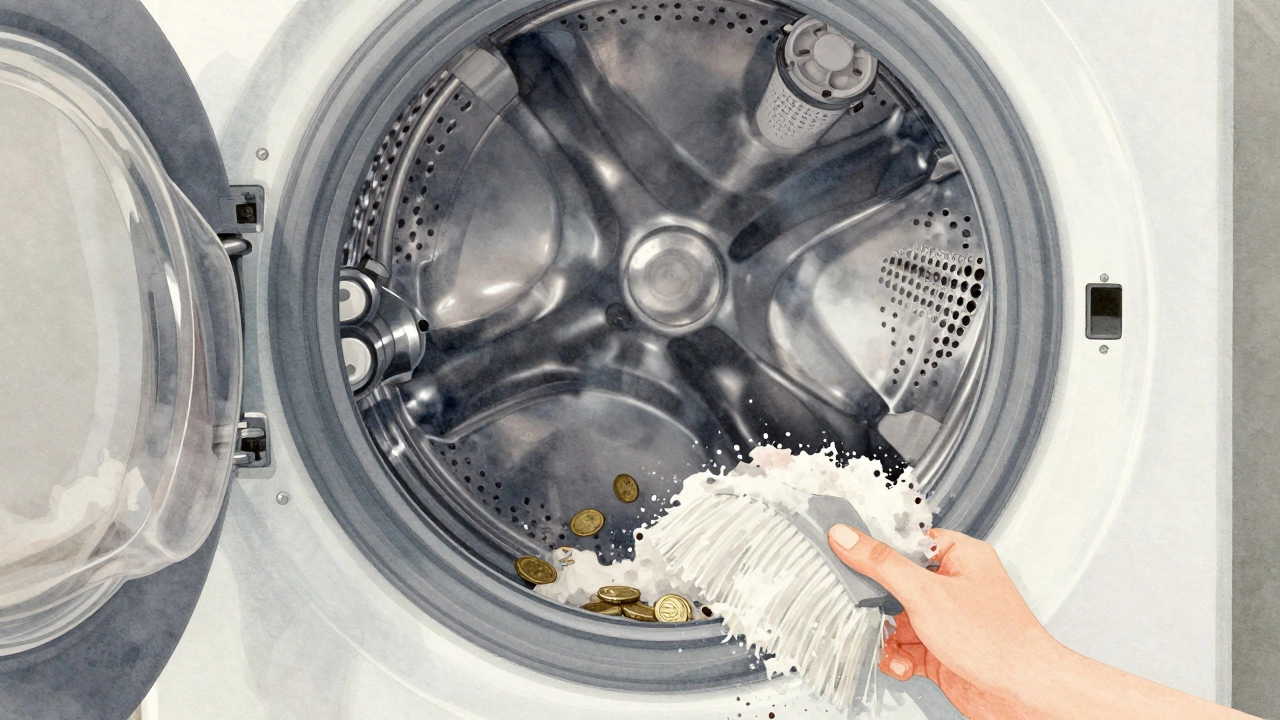
- Check the drain pump filter every 3 months. Most machines have a small access panel near the bottom. Remove lint, coins, socks - whatever’s stuck. Clogs cause overheating and motor strain.
These steps take 10 minutes a month. They’re the difference between a 12-year machine and a 20-year machine.
When to repair vs. replace
Here’s the rule of thumb: if the repair cost is more than half the price of a new machine, walk away.
But here’s the catch - if your machine is over 10 years old and the motor or drum is failing, it’s probably not worth fixing. Those parts cost $300-$500 to replace. A new mid-range machine? Around $700.
But if it’s an 8-year-old machine with a broken door latch or a clogged pump? Fix it. Those repairs cost $80-$150. You’re getting 3-5 more years out of a machine that still works fine otherwise.
And don’t forget: if your machine is still under warranty, or if it’s a high-end model you’ve maintained well, repair first. The value isn’t just in the machine - it’s in the years you’ve already invested in it.
What’s the absolute longest anyone’s had one?
There are real stories. In Ohio, a woman kept her 1989 Whirlpool washer running until 2021 - 32 years. She replaced the belt once, cleaned the filter religiously, and never overloaded it. In New Zealand, a Wellington homeowner still uses a 1993 Samsung model. It’s loud, but it spins. He replaced the water inlet valve in 2018 for $45.
These aren’t outliers. They’re the result of consistency. Not perfection. Just showing up.
What to look for when buying a new one
If you’re replacing your machine, don’t just go for the cheapest. Look for:
- Steel drum (check specs - not just marketing)
- Direct-drive motor (no belt)
- At least a 10-year warranty on the motor
- Energy Star rating (more efficient, less strain)
- Positive reviews mentioning longevity - not just “quiet” or “fast”
Brands like Maytag, LG, and Speed Queen consistently rank highest in long-term reliability. Avoid no-name brands on Amazon with 3-star reviews that say “worked for 2 years then died.”
Final thought: It’s not about the machine. It’s about you.
The longest-lasting washing machines aren’t the most expensive. They’re the ones treated with basic respect. Cleaned. Not overloaded. Not ignored.
Most people treat appliances like disposable items. But a washing machine isn’t a coffee pod. It’s a tool that can serve you for decades - if you let it.
Ask yourself: Do you want to replace your machine every 8 years? Or do you want to be the person whose neighbor says, “Wait - you still have that thing from 2008?”
What is the average lifespan of a washing machine?
The average washing machine lasts between 10 and 12 years. But with proper care - regular cleaning, not overloading, and timely filter checks - many machines last 15 to 20 years. Some even reach 25+ years with minimal repairs.
Can a washing machine last 20 years?
Yes. Machines built with steel drums, direct-drive motors, and durable components - like Speed Queen, Whirlpool, and some LG models - commonly last 20 years when maintained well. Regular cleaning, avoiding overloading, and clearing the pump filter every 3 months are the key habits that make this possible.
Is it worth repairing a 10-year-old washing machine?
If the repair cost is less than half the price of a new machine, and the machine has been well maintained, then yes. Common fixes like replacing a door latch, pump, or water valve cost under $150 and can add 3-5 more years. But if the motor or drum is failing, replacement is usually the smarter choice.
What brand of washing machine lasts the longest?
Speed Queen is the most reliable for long-term use, especially in commercial-grade models. Whirlpool, Maytag, and LG also have strong track records. Look for models with steel drums, direct-drive motors, and 10-year motor warranties. Avoid budget brands with plastic drums and belt-driven systems.
How do I make my washing machine last longer?
Do three things: 1) Run a monthly cleaning cycle with vinegar and hot water. 2) Leave the door and detergent drawer open after each use to dry out. 3) Clean the pump filter every 3 months to remove lint and debris. Avoid overloading and use the right amount of detergent. These simple steps add years to your machine’s life.