
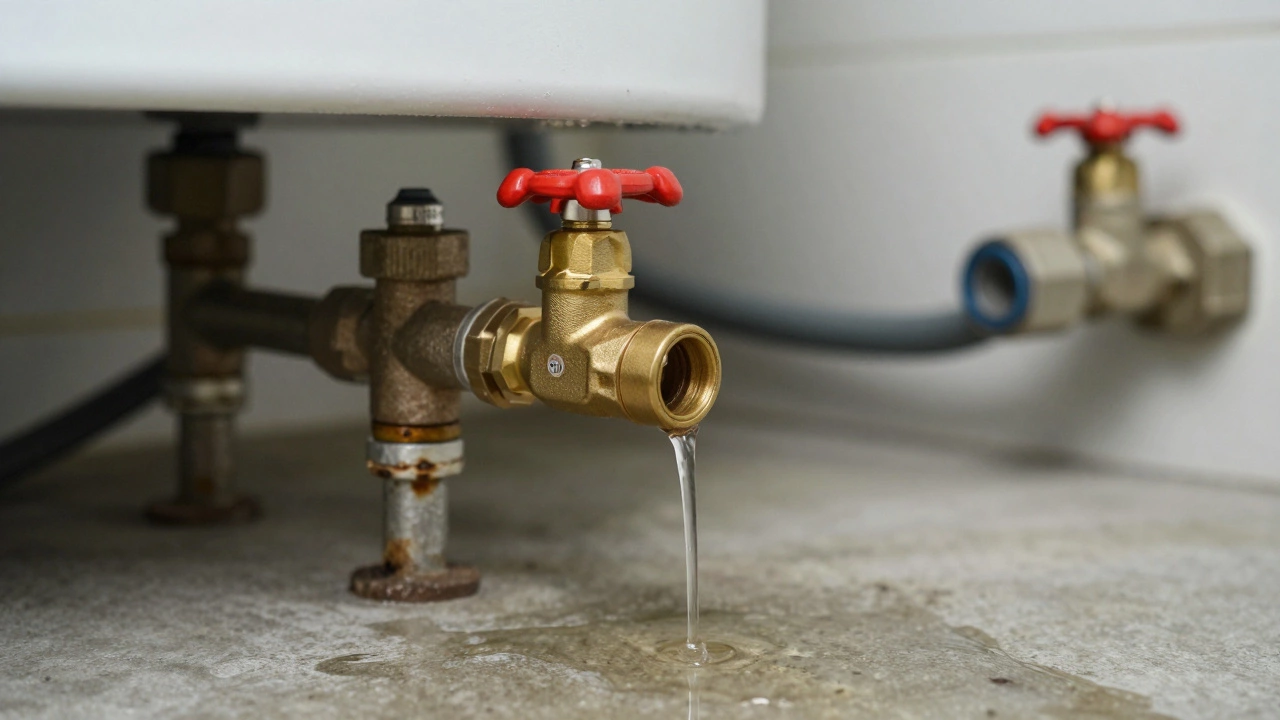
Water Heater Leak Finder
Identify Your Leak Source
Select all symptoms you're experiencing to find the most likely leak point. This tool is based on the article's diagnostic guidelines.
Likely Leak Source
If your water heater is leaking, you don’t need to panic-but you do need to act fast. A small drip can turn into a flooded basement in hours, especially if it’s happening while you’re away from home. Most people assume a leak means the whole unit is done for, but that’s not always true. In fact, water heater leak sources are usually predictable, and knowing where to look can save you hundreds-or even thousands-of dollars in repairs or replacements.
Top 5 Places a Water Heater Leaks
Water heaters, whether gas or electric, are built to last 8 to 12 years. But even the best units have weak spots that wear out over time. Here’s where you’re most likely to find a leak:
- The pressure relief valve - This safety feature opens automatically when pressure gets too high. If it’s leaking constantly, it’s either clogged, faulty, or the water pressure in your home is too high.
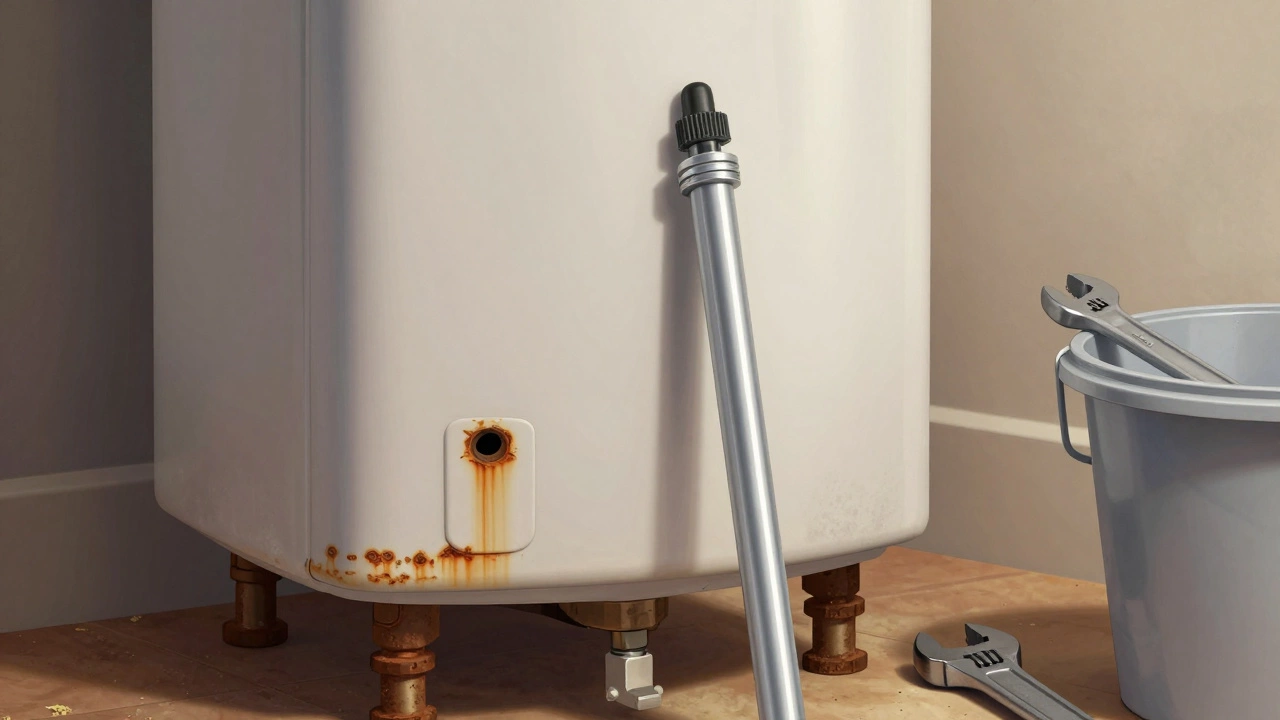
- The drain valve at the bottom - This valve is used to flush out sediment. Over time, the rubber washer inside wears out, or the valve itself corrodes. A slow drip here is common in older units.
- The tank itself - If water is pooling around the base and you can’t trace it to a valve, the tank may be corroded. This is often caused by a failed anode rod, which normally protects the tank from rust.
- Connections at the top - The hot and cold water pipes connect to fittings on top of the tank. If those fittings are loose or the threads are corroded, they can leak, especially after temperature changes.
- The heating elements (electric models only) - The gaskets around electric heating elements can dry out and crack, letting water seep into the insulation or out the bottom.
Why the Tank Itself Leaks (And Why It’s Serious)
A leak from the tank isn’t a simple fix. Unlike a valve or fitting, a corroded tank can’t be patched. Once the metal thins from rust, water gets through, and the damage spreads. This usually happens because the anode rod-sacrificial metal inside the tank-ran out of life. It’s supposed to attract rust to itself, protecting the tank. But if it wasn’t replaced every 3-5 years, the tank starts eating itself.
Most homeowners never check their anode rod. In Wellington, where water is hard and mineral-heavy, the rod can go bad in as little as two years. If your water heater is over 7 years old and you’ve never replaced it, your tank is at high risk.
Pressure Relief Valve Leaks: More Than Just a Drip
This valve is your heater’s safety net. It’s supposed to release water only if pressure hits 150 psi or temperature hits 99°C. If it’s leaking constantly, something’s wrong. The valve itself might be defective-but more often, the problem is your home’s water pressure.
Most homes run at 40-60 psi. If yours is above 80 psi, you need a pressure-reducing valve installed on your main water line. High pressure stresses every fitting in your plumbing system, not just the water heater. In older homes with no pressure regulator, this is a common cause of repeated leaks.
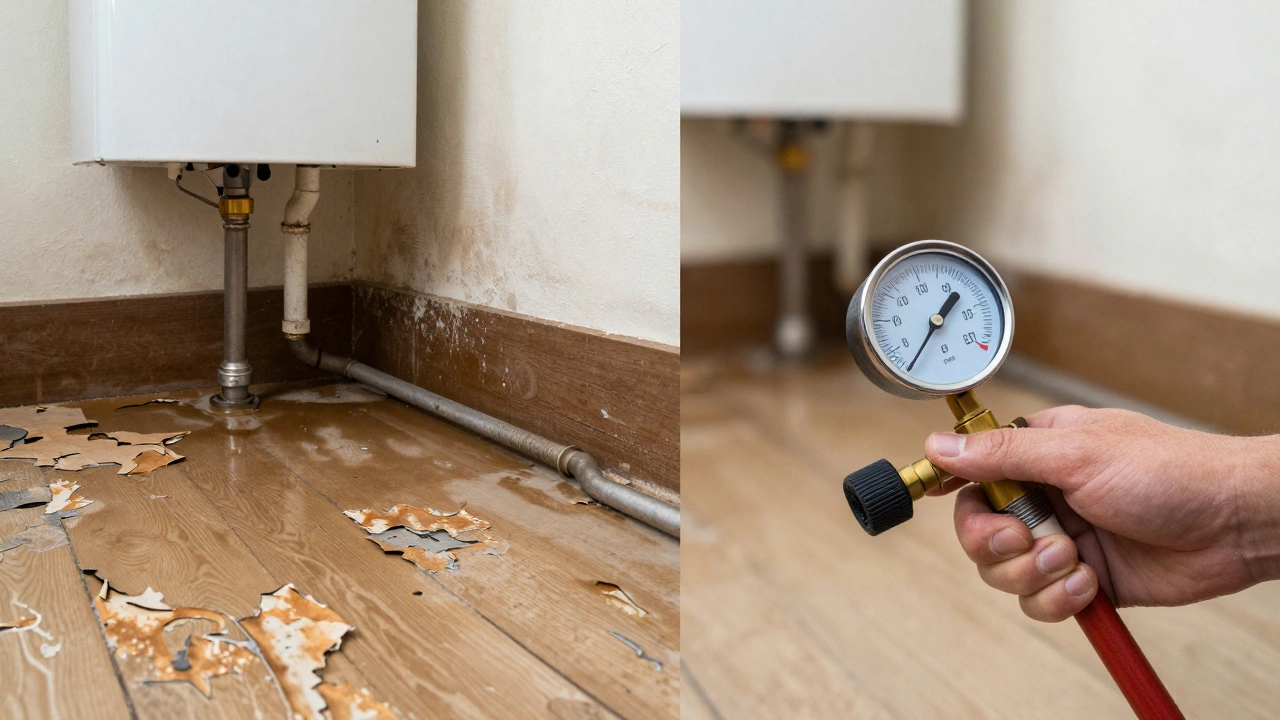
Test your pressure with a simple gauge you can buy at any hardware store. Screw it onto an outdoor spigot or washing machine valve. If it reads over 80 psi, don’t just replace the relief valve-fix the root cause.
Drain Valve Leaks: Easy to Fix, Often Ignored
This is the most common leak you can fix yourself. The drain valve is a simple brass fitting with a rubber washer inside. After years of sediment buildup and temperature changes, the washer hardens and cracks.
Here’s how to fix it: turn off the power and water supply, open a hot water tap to relieve pressure, then unscrew the old valve. Replace it with a new one-$10 at any hardware store. Make sure to wrap the threads with Teflon tape before installing the new valve. If water still drips after replacement, the threads on the tank may be damaged. That’s a sign the tank is aging and should be replaced soon.
What to Do When You Spot a Leak
Don’t wait. Even a slow drip can rot floorboards, warp drywall, or trigger mold growth. Here’s what to do immediately:
- Turn off the water supply to the heater. Look for the shutoff valve on the cold water line. If you can’t find it, turn off the main water valve.
- Turn off the power. For electric, flip the breaker. For gas, turn the knob on the unit to “Off.”
- Place a bucket under the leak to catch water and prevent floor damage.
- Identify the source. Use a flashlight and paper towel to trace where water is coming from.
- Call a plumber if you can’t fix it yourself or if the tank is the source.
How to Prevent Future Leaks
Prevention is cheaper than repair. Here’s what actually works:
- Replace the anode rod every 3-5 years. This is the single most effective way to extend tank life.
- Flush the tank annually. Sediment buildup reduces efficiency and accelerates corrosion.
- Install a pressure-reducing valve if your water pressure is over 80 psi.
- Set your water heater temperature to 50°C. Higher temps speed up corrosion and waste energy.
- Upgrade to a tankless heater if your current unit is over 10 years old. They last 20+ years and don’t have tanks to leak.
When to Replace vs. Repair
Not every leak means a new heater. Here’s the rule of thumb:
- Repair if the leak is from a valve, fitting, or element, and the heater is under 8 years old.
- Replace if the tank is rusting, the heater is over 10 years old, or you’re spending more than $300 on repairs.
Most insurance policies won’t cover water damage from a leaking heater older than 10 years. So if yours is approaching that age, replacement isn’t just smart-it’s protective.
Final Tip: Check the Floor
Many leaks start small. A damp spot on the floor, a musty smell, or peeling paint near the heater are early signs. Don’t ignore them. By the time water pools visibly, damage is already done. Check your heater’s base every few months. A quick wipe with a dry cloth can catch a problem before it becomes a disaster.
Can a water heater leak without you noticing?
Yes. Small leaks, especially from the top connections or pressure valve, can drip slowly into insulation or onto the floor without forming a visible puddle. Over time, this causes hidden damage like rotting wood, mold, or warped flooring. Look for dampness, discoloration, or a musty smell near the heater.
Is it safe to keep using a water heater that’s leaking?
It depends on where it’s leaking. If it’s the drain valve or a fitting, you can use it temporarily while you plan a fix. But if the tank itself is leaking, or if water is near electrical components, turn it off immediately. Water and electricity don’t mix-and a rusted tank can burst without warning.
How often should I flush my water heater?
Once a year. In hard water areas like Wellington, sediment builds up faster. Flushing removes minerals that reduce efficiency and corrode the tank. If you’ve never done it, do it now-even if your heater isn’t leaking.
Do electric water heaters leak more than gas ones?
No. Both types leak from similar places: valves, fittings, and the tank. Electric models have an extra risk around the heating elements, where gaskets can fail. Gas models have more complex venting and gas lines, but those rarely leak water. The fuel type doesn’t affect water leakage rates.
Should I replace my water heater before it leaks?
If your heater is over 10 years old, yes. Even if it’s working fine, the risk of a sudden leak increases dramatically after that point. Replacing it before it fails avoids water damage, emergency repair costs, and the stress of being without hot water. Many homeowners replace theirs at 8-9 years as a precaution.