
Boiler Troubleshooting & Professional Finder
Select your boiler symptom below to find out who to call and what to do next.
Before calling anyone, check these common easy fixes:
It’s 6 AM on a cold Tuesday. You step out of bed expecting warmth, but instead, you’re greeted by a shiver and the eerie silence of a dead boiler. No hum, no ticking, just cold pipes and colder feet. Panic sets in. Who do you actually call? Is it your local plumber? A gas specialist? The electrician? Or should you wait until morning?
The answer isn’t always straightforward because "boiler trouble" is a vague term. It could be a simple power glitch, a pressure drop, or a critical component failure like a cracked heat exchanger. Calling the wrong person wastes time and money. This guide cuts through the confusion so you know exactly who to contact, when to call them, and what to check before picking up the phone.
Quick Summary / Key Takeaways
- Check the basics first: Power supply, thermostat settings, and water pressure. Many "breakdowns" are user-fixable errors.
- Gas issues require a licensed Gasfitter: Never attempt DIY repairs on gas lines or burners yourself. Safety is non-negotiable.
- Water leaks usually need a Plumber: If the issue involves pipes, valves, or radiators leaking water, a general plumber is often sufficient.
- Electrical faults need an Electrician: If the boiler won’t turn on due to wiring or control board issues, call a qualified electrician.
- Emergency services cost more: Weekend or after-hours calls often incur premium rates. Check if your home insurance covers emergency plumbing/heating.
Step 1: Perform the Basic Troubleshooting Checks
Before you dial any number, spend five minutes checking the obvious. Service providers hate getting called for things that take thirty seconds to fix, and they might charge you a call-out fee even if they don't touch a tool. Here is what to look for:
- Power Supply: Check if the display panel is lit. If it’s completely dark, check your fuse box or circuit breaker. Did a recent storm trip the breaker? Reset it and see if the boiler wakes up.
- Thermostat Settings: Ensure your room thermostat is set high enough to trigger a demand for heat. Sometimes batteries die in wireless thermostats, sending a false "no heat needed" signal to the boiler.
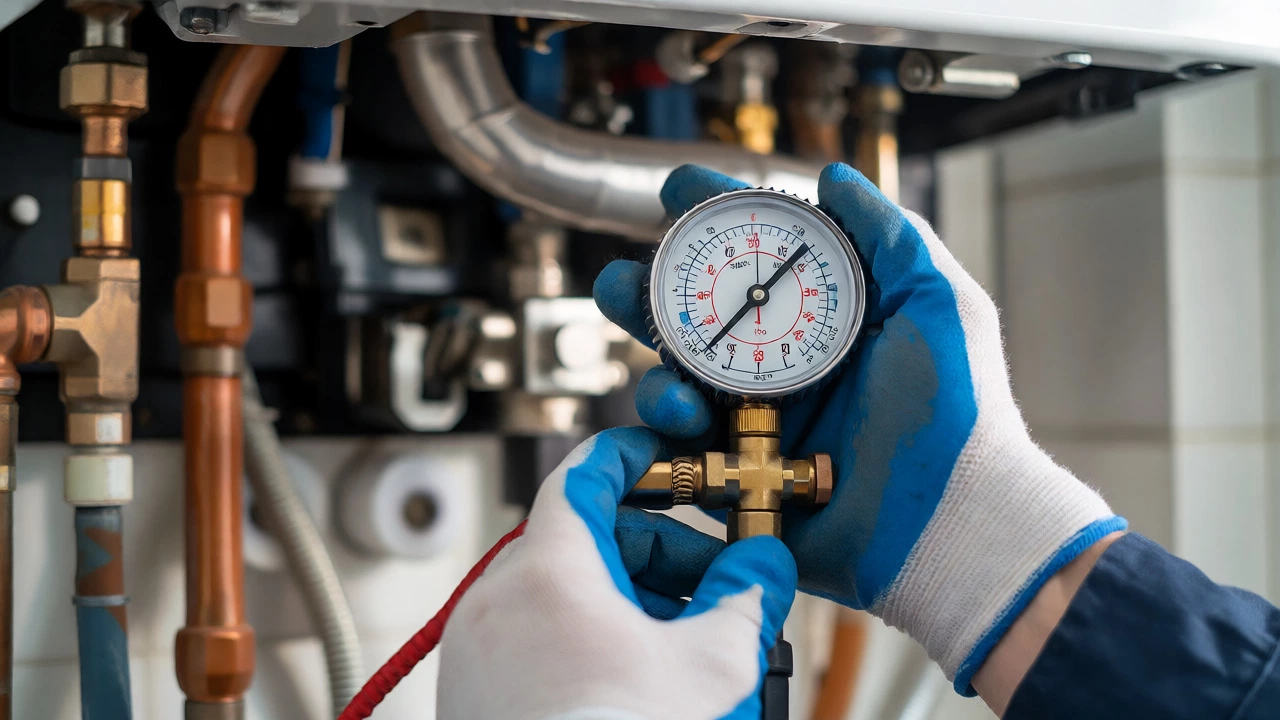
- Water Pressure: Look at the pressure gauge. Most boilers operate between 1 and 1.5 bar when cold. If it’s below 0.5 bar, the system is under-pressurized. You can often repressurize it using a filling loop (consult your manual), which might solve the problem instantly.
- Error Codes: Modern boilers display error codes (e.g., F1, E4). Write these down. When you call a professional, quoting the specific code saves them diagnostic time and helps them bring the right parts.
If you’ve checked all these and the boiler still refuses to fire up, or if you smell gas, stop immediately. Do not try to force it. Move to the next step.
Identifying the Problem: Who Does What?
This is where most people get stuck. Should you call a plumber or a heating engineer? In many regions, including New Zealand and the UK, the lines blur, but legal requirements differ based on the fuel type.
When to Call a Licensed Gasfitter
If you have a gas boiler, this is your primary point of contact for anything related to combustion, gas supply, or safety components. Gasfitters are legally required to hold a license to work on natural gas or LPG systems. They handle:
- Burner issues: If the boiler tries to ignite but fails, or makes a loud banging noise (kettling) during ignition.
- Flue problems: Blocked flues or condensation leaks from the exhaust pipe.
- Gas valve failures: Internal components that regulate gas flow.
- Safety cut-offs: If the boiler locks out due to overheating or flame detection errors.
Crucial Rule: If you smell gas, leave the house, open windows, and call your gas emergency line or a 24-hour gasfitter immediately. Do not use light switches or phones inside the property.
When to Call a Plumber
A standard plumber specializes in water systems. While many plumbers are also registered gasfitters, some only handle water. Call a plumber if the issue is strictly hydraulic:
- Leaks: Water dripping from underneath the boiler, usually from the pump seal or pressure relief valve discharge pipe.
- Radiator issues: Cold spots in radiators caused by sludge buildup (power flushing might be needed).
- Pressure loss: If the boiler constantly loses pressure and you can’t find an external leak, the internal diverter valve might be faulty. This is a hybrid job, but often starts with a plumber’s diagnosis.
When to Call an Electrician
Modern boilers are essentially computers attached to a heater. If the mechanical parts seem fine but the electronics are acting up, you might need an electrician. Common signs include:
- The boiler trips the main household circuit breaker every time it tries to start.
- The digital display flickers or resets randomly.
- Wiring connections near the boiler show signs of scorching or burning smells.
Note: Some heating engineers are dual-qualified (gas and electrical). Always ask if they can handle electrical diagnostics before booking.
Comparison: Choosing the Right Professional
To make your decision easier, here is a breakdown of who to call based on symptoms. Remember, hiring a specialist who is also registered as a gasfitter (if applicable) is usually the safest bet for whole-system health.
| Symptom | Likely Cause | Professional to Call | Urgency Level |
|---|---|---|---|
| No heat/hot water, display off | Power outage, tripped breaker, faulty PCB | Electrician or Heating Engineer | Medium |
| Loud banging/kettling noises | Scale buildup, air lock, failing pump | Heating Engineer/Gasfitter | Low/Medium |
| Water pooling under boiler | Leaking seal, cracked heat exchanger, PRV discharge | Plumber or Heating Engineer | High (risk of damage) |
| Smell of gas | Gas leak, faulty connection | Emergency Gasfitter | Critical (Evacuate) |
| Pilot light keeps going out | Draft, thermocouple fault, dirty sensor | Gasfitter | Medium |
| Boiler locks out (Error Code) | Sensor failure, low pressure, fan fault | Heating Engineer | Medium |
Finding a Reliable Contractor
Once you know who you need, finding someone trustworthy is the next hurdle. In New Zealand, for example, you must ensure your gasfitter is registered with the Engineers Registration Board (ERB) and holds a current Practising Certificate. For plumbers, check registration with the Plumbers, Gasfitters and Drainlayers Board (PGDB).
Here is how to vet them quickly:
- Ask for their registration number: Legitimate professionals will provide this without hesitation. You can verify it online via the relevant national board.
- Check reviews: Look for consistent feedback on platforms like TradeMe Services or local community Facebook groups. Beware of companies with only five-star reviews written on the same day.
- Inquire about warranty: Any reputable contractor should offer a minimum 90-day warranty on labor. Parts usually carry the manufacturer’s warranty (often 1-2 years).
- Get a quote upfront: Ask for a fixed price or an hourly rate plus estimated hours. Avoid contractors who refuse to give a ballpark figure over the phone.
If you are renting, your landlord is typically responsible for boiler maintenance unless the lease states otherwise. Contact your property manager first. They often have pre-approved contractors, which speeds up the process and ensures the bill doesn’t land on you unexpectedly.
What to Expect During the Call-Out
When the professional arrives, be prepared. Have your boiler manual handy if possible. Know the age of the unit (the serial plate usually has a manufacture date). Older boilers (over 15 years) might not be worth repairing if the heat exchanger cracks, as replacement costs approach the price of a new unit.
Expect the technician to:
- Inspect the exterior for leaks and corrosion.
- Check the gas pressure (for gas boilers) using a manometer.
- Test the electrical continuity of sensors and pumps.
- Run the boiler while monitoring flue emissions.
If they recommend replacing a major part, ask for a second opinion if the quote seems excessive. However, trust their expertise on safety-critical components like the gas valve or heat exchanger. Cutting corners there can lead to carbon monoxide leaks, which are silent killers.
Preventing Future Breakdowns
You don’t want to be Googling "who to call for boiler repair" again next winter. Prevention is cheaper than cure.
- Annual Servicing: Book a professional service once a year, ideally in late summer. This clears dust, checks seals, and tests safety devices.
- Magnetic Filters: Install a magnetic filter on the return pipe to catch iron oxide sludge. This protects the pump and heat exchanger from clogging.
- Pressure Monitoring: Check your pressure gauge monthly. Top it up if it drops below 1 bar.
- Radiator Bleeding: If radiators make gurgling noises, bleed them to release trapped air. This improves efficiency and reduces strain on the pump.
Keeping a small toolkit with a radiator key and a basic multimeter can also help you diagnose minor issues before calling a pro, potentially saving you a call-out fee.
Can I replace my boiler myself?
No, not legally in most jurisdictions for gas boilers. Installing or servicing a gas appliance requires a licensed gasfitter to ensure compliance with safety standards. Doing it yourself voids warranties and can invalidate your home insurance if a fire or leak occurs.
How much does a boiler call-out cost?
Costs vary widely by region and provider. In New Zealand, expect to pay between $80 and $150 NZD for a standard weekday call-out and diagnostic. After-hours or weekend emergencies can double this rate. Repairs are charged separately, either hourly ($70-$120/hr) or as a fixed job price.
Why is my boiler making a banging noise?
This is often called "kettling." It’s usually caused by limescale or sludge buildup on the heat exchanger, causing water to boil locally rather than flow smoothly. It can also be due to a blocked condensate pipe. A power flush or professional cleaning usually resolves it.
Should I repair or replace my old boiler?
If your boiler is over 15 years old and the repair cost exceeds 50% of the price of a new, efficient model, replacement is often smarter. New condensing boilers are significantly more energy-efficient, lowering long-term utility bills.
What if I can’t find a gasfitter on a Sunday?
Many large plumbing and heating companies offer 24/7 emergency services. Alternatively, contact your local council’s environmental health department; they sometimes maintain a list of emergency registered tradespeople. Always confirm they are available before traveling to their location.