
Extractor Fan Professional Finder
Who Should Replace Your Extractor Fan?
Where is your extractor fan located?
What's the main issue with your extractor fan?
How old is your extractor fan?
Recommended Professionals
This recommendation is based on your answers and the article's expert guidance on proper extractor fan replacement.
Why This Recommendation?
When your extractor fan stops working, it’s not just about bad smells or foggy mirrors. Mold builds up fast in damp bathrooms. Grease coats your kitchen walls. And if you’re breathing in that stuff every day, it’s not just annoying-it’s a health risk. So who do you call to fix it? And more importantly, who should actually replace it?
It’s Not Just a Handyman Job
A lot of people think replacing an extractor fan is something any handyman can do. You unscrew the old one, plug in the new one, and boom-done. But that’s not always true. Extractor fans aren’t like changing a lightbulb. They’re wired into your home’s electrical system, often connected to ventilation ducts that run through walls or ceilings, and sometimes tied into timers or humidity sensors. If you mess this up, you could end up with a fire hazard, water damage, or a fan that just hums and doesn’t move air.
That’s why you need someone who understands both electricity and airflow. A general handyman might be able to mount the new unit, but if they don’t know how to check duct integrity or wire a switch correctly, you’re asking for trouble.
Who Actually Replaces Extractor Fans?
There are three main types of professionals who regularly replace extractor fans-and each has a different skill set.
- Electricians - They handle the wiring. If your fan is connected to a dedicated circuit, a timer, or a humidity sensor, you need an electrician. They’ll make sure the voltage matches, the grounding is secure, and the circuit breaker won’t trip. They’re also the ones who’ll spot if your wiring is outdated or corroded.
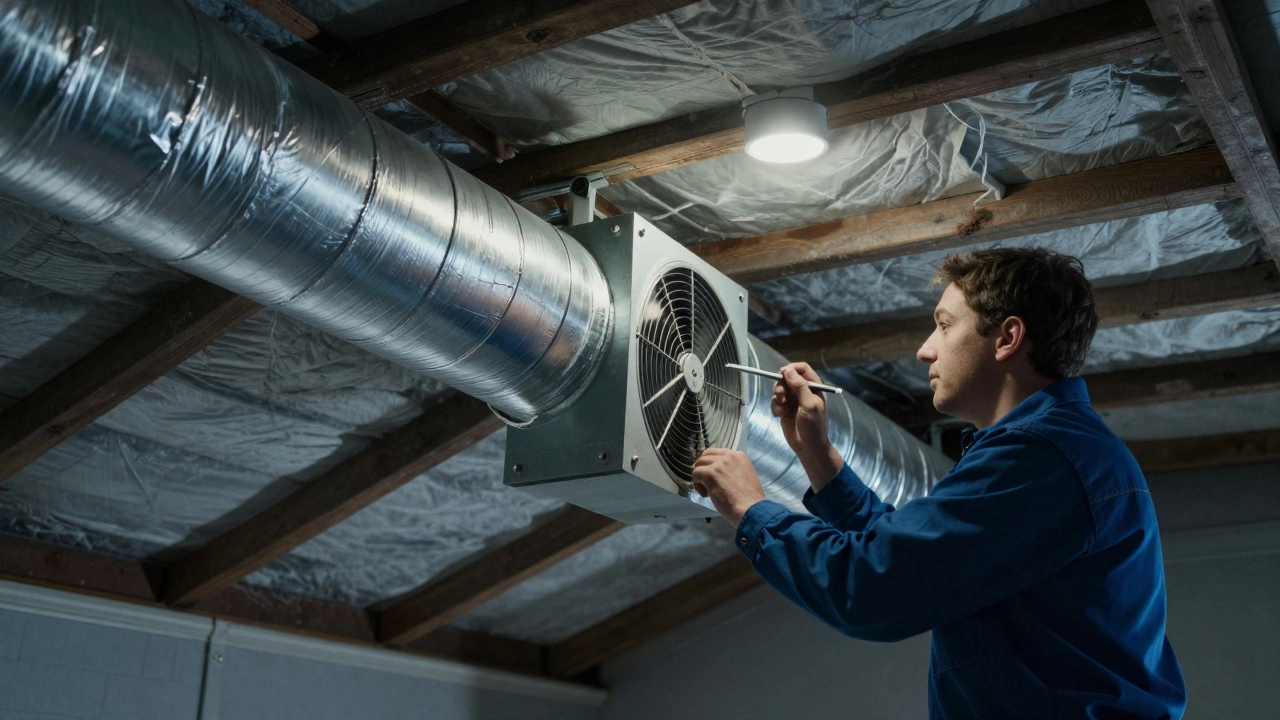
- HVAC Technicians - These are the airflow experts. If your fan vents into a duct that runs through the attic or roof, they’ll check for blockages, leaks, or improper slope. A poorly installed duct can cause condensation, which leads to mold. HVAC techs know how to seal joints with aluminum tape, not duct tape, and how to size a fan to match the room’s cubic footage.
- Plumbers (sometimes) - In bathrooms, extractor fans are often installed near showers or tubs. If the fan is mounted above the shower, water intrusion is a risk. A plumber might be called in to check for leaks around the vent pipe or to ensure the roof flashing is intact. They’re not replacing the fan itself, but they’ll make sure the surrounding structure won’t fail.
Most of the time, you’ll need at least two of these people. An electrician to handle the power, and an HVAC tech to handle the ducts. Some companies offer both services, which is ideal.
What About DIY?
You can replace an extractor fan yourself-if you know what you’re doing. But here’s the catch: 68% of DIY extractor fan replacements done without electrical training result in improper wiring, according to a 2025 study by the National Home Safety Institute. That’s not just a statistic-it’s a fire waiting to happen.
If you’re considering DIY, ask yourself:
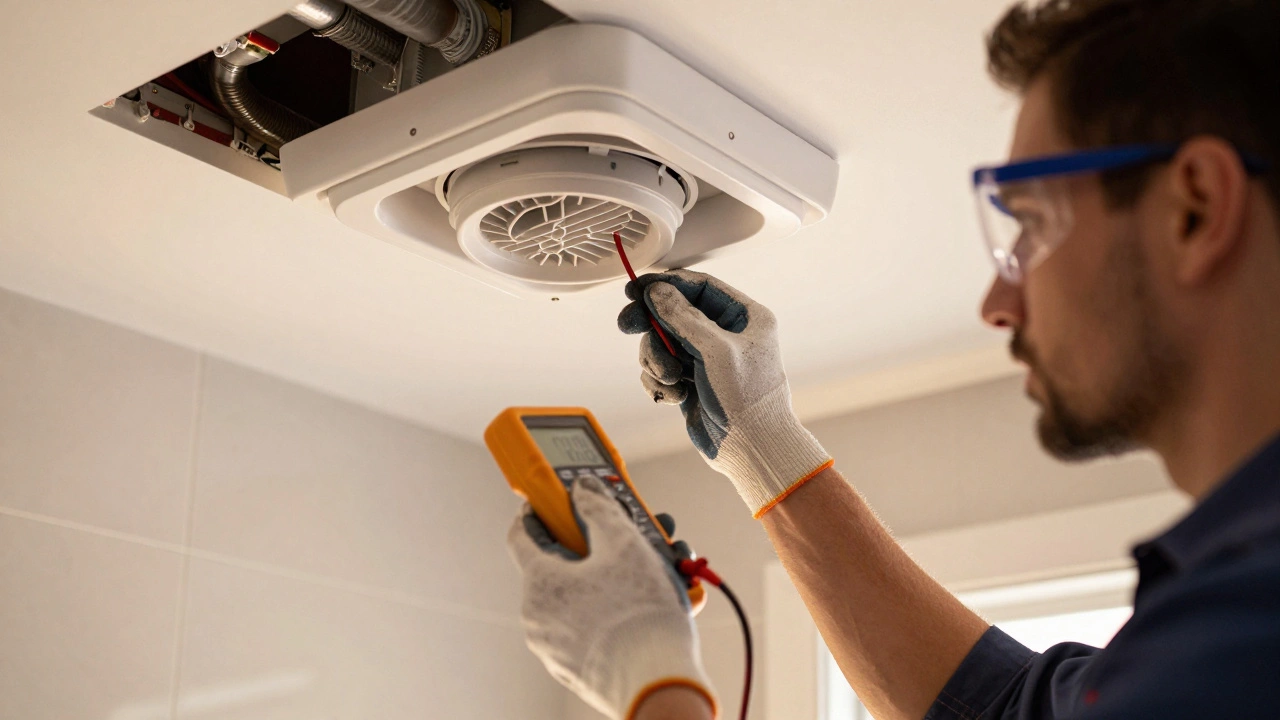
- Do you know how to turn off the right circuit breaker and test for live wires with a multimeter?
- Have you checked if your fan is on a GFCI circuit? (It should be, especially in bathrooms.)
- Do you know how to measure the duct size and match it to the new fan’s output?
- Have you ever sealed a duct joint with mastic or aluminum tape?
If you answered "no" to any of those, don’t do it. Save the money you’d spend on a professional and use it to avoid a $5,000 mold remediation bill later.
Costs You Should Expect
Replacing an extractor fan isn’t expensive, but the labor can add up fast if you hire the wrong person.
Here’s what you’ll likely pay in early 2026:
| Service Type | Labor Cost | Fan Unit Cost | Total Estimated Cost |
|---|---|---|---|
| Electrician Only (simple replacement) | $120-$180 | $50-$150 | $170-$330 |
| HVAC Technician Only (duct work) | $150-$250 | $60-$200 | $210-$450 |
| Combined Electrician + HVAC Tech | $250-$400 | $80-$250 | $330-$650 |
| DIY (fan only) | $0 | $40-$200 | $40-$200 |
Notice how the combined service is more expensive-but it’s also the only one that ensures the job is done right the first time. Many homeowners save $100 by hiring just an electrician, then end up paying $800 later to fix a leaky duct.
What to Look for in a Pro
Not all technicians are created equal. Here’s what to ask before you sign anything:
- "Do you test the duct for airflow after installation?" - They should use an anemometer or smoke pencil to confirm air is moving properly.
- "Will you check for condensation risk in the duct?" - Cold ducts in attics can sweat and rot wood. A pro should insulate them.
- "Do you install a backdraft damper?" - This stops cold air from blowing back in when the fan turns off. It’s required by code in most states.
- "Are you licensed and insured?" - If they say "I’m just a handyman," walk away. You need someone who can be held accountable.
Also, ask for a written quote. A reputable company will give you a detailed breakdown: labor, materials, disposal fee, and warranty. If they say "I’ll charge you $200 when I’m done," that’s a red flag.
Common Mistakes People Make
Even smart homeowners mess this up. Here are the top three errors:
- Buying the wrong size fan. - A fan that’s too small won’t remove moisture. One that’s too loud or too powerful can create negative pressure and pull in carbon monoxide from gas appliances. Match the CFM (cubic feet per minute) to your room size. For a bathroom, it’s usually 1 CFM per square foot. For a kitchen, aim for 100 CFM minimum.
- Using duct tape. - It dries out in months. Aluminum tape or mastic sealant lasts decades. If the installer uses duct tape, they don’t know what they’re doing.
- Not replacing the vent cap. - Old vent caps get clogged with lint, leaves, or bird nests. A new fan with an old cap is like putting a new engine in a car with a blocked exhaust pipe.
When You Should Replace, Not Repair
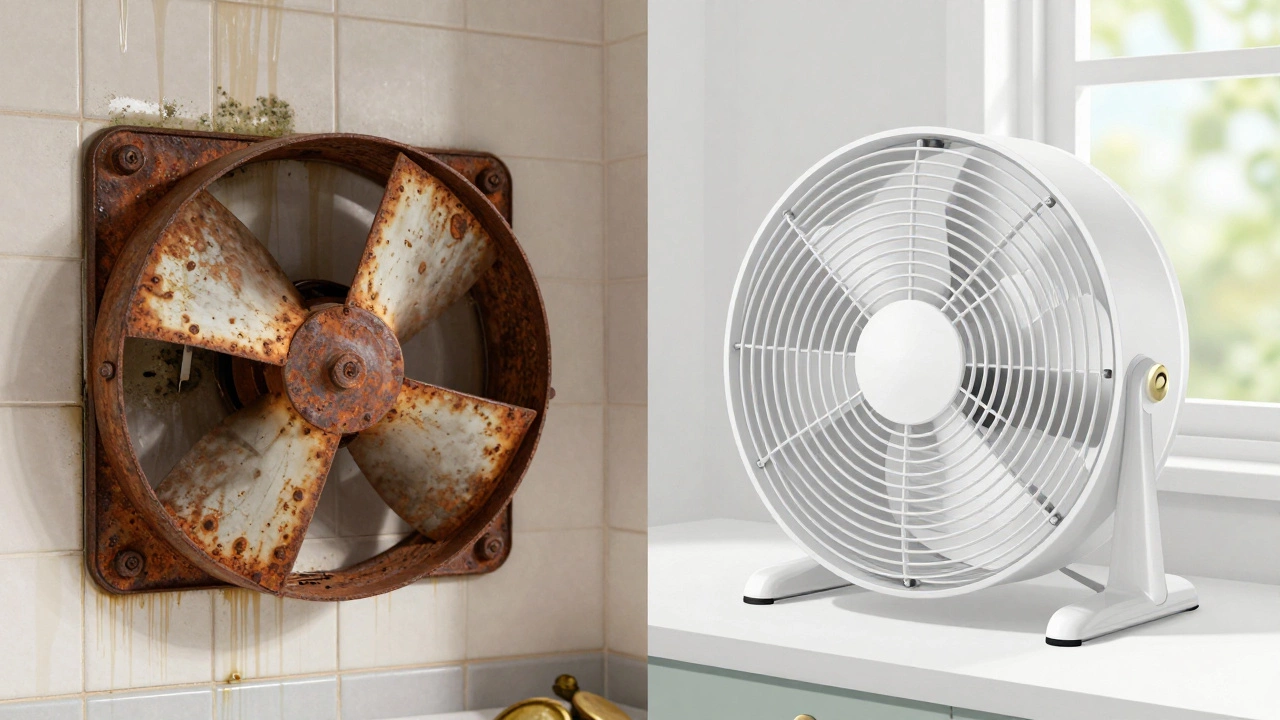
Some people try to fix a noisy or slow fan instead of replacing it. But here’s the truth: extractor fans don’t repair well. The motors wear out. The bearings seize. The blades get coated in grease. Cleaning it won’t help.
If your fan is:
- More than 8 years old
- Louder than a vacuum cleaner
- Still running after you turn it off (due to faulty wiring)
- Showing signs of rust or water damage
Then it’s time to replace it. No amount of lubricant or cleaning will bring it back.
What Happens If You Ignore It?
Ignoring a broken extractor fan isn’t just about bad smells. In humid climates, mold can grow in 48 hours. In 2024, the CDC reported over 12,000 cases of mold-related respiratory illness linked to poorly ventilated bathrooms. Insurance companies now routinely deny claims for mold damage if they find you ignored a known ventilation issue.
And if you sell your home? Buyers are now asking for ventilation inspection reports. A non-working fan can drop your home’s value by 3-7%.
Final Advice
Don’t wait until the wall starts peeling or the ceiling turns black. If your extractor fan is acting up, act fast. Hire someone who knows electricity and airflow. Don’t go for the cheapest quote. Go for the one that explains the job clearly, shows you their license, and gives you a warranty.
And if you’re still unsure? Call a local HVAC company that specializes in residential ventilation. They’ll often do a free inspection. That’s your best first step.
Can I replace an extractor fan myself?
You can, but only if you’re comfortable working with live electrical wiring, understand how duct systems work, and have the right tools. Most people aren’t. If you’ve never used a multimeter or sealed a duct joint, don’t risk it. A mistake can lead to fire, mold, or carbon monoxide buildup.
Do I need an electrician or an HVAC technician?
You need both, ideally. An electrician handles the wiring and power supply. An HVAC technician handles the ductwork and airflow. Some companies offer both services under one roof. If you only hire one, you risk missing a critical part of the job-like a leaky duct or a miswired switch.
How long does an extractor fan replacement take?
A simple replacement in a bathroom takes 1.5 to 2 hours. If ductwork needs repair, sealing, or rerouting, it can take 3 to 5 hours. Most professionals will complete the job in one visit if they have the right parts on hand.
What’s the best type of extractor fan to buy?
Look for a fan with a humidity sensor and a quiet motor (under 1.0 sone). For bathrooms, choose one with a CFM rating equal to your bathroom’s square footage. For kitchens, go with at least 100 CFM. Brands like Broan, Panasonic, and Vent-A-Hood are known for reliability. Avoid no-name models from big-box stores-they often fail within 2 years.
Should I replace the vent cap outside?
Yes. Old vent caps collect debris, block airflow, and let rain or pests in. A new fan with an old cap won’t work properly. Always replace the external vent with a new, weather-resistant model that includes a backdraft damper. It’s a small cost but critical for performance.