
Gas Hob Troubleshooter
What's happening?
Next steps
Check these first:
- Is the main gas valve open? (Should be parallel to pipe)
- Do other gas appliances work?
- Do you smell gas? Leave immediately if yes
Check if:
- The igniter is dirty (clean with toothbrush and rubbing alcohol)
- The burner ports are blocked (use a needle to clear)
Check if:
- The thermocouple is dirty or bent (clean with sandpaper)
- The control knob is broken (test by turning with pliers)
Important:
Yellow/orange flames indicate incomplete combustion and carbon monoxide risk. Stop using the hob immediately and call a professional.
Try these solutions:
- Remove burner caps and clean ports with a needle
- Wipe igniter with rubbing alcohol
- Use hairdryer to dry moisture
Your solution
If your gas hob suddenly refuses to light, it’s not magic-it’s usually something simple. You turn the knob, hear a click, but no flame. No smoke. No smell of gas. Just silence. That’s frustrating, especially when you’re hungry and the clock is ticking. Gas hobs are built to last, but they don’t ignore wear and tear. Over time, grease, moisture, and everyday use can cause parts to fail. The good news? Most of the time, you don’t need to call a technician. You can fix it yourself in under 15 minutes.
Gas doesn’t flow? Check the gas supply first
Before you dive into cleaning or replacing parts, make sure the gas is actually reaching the hob. It sounds obvious, but people often overlook the basics. Is the main gas valve behind or under the stove turned on? Some people shut it off after cleaning and forget to turn it back on. Check the valve-it should be parallel to the pipe when open. If you have a gas meter, look for a small lever or knob. If it’s perpendicular to the pipe, it’s closed.
Also, check if other gas appliances in your home are working. If your gas oven or heater won’t turn on either, the issue isn’t the hob-it’s the supply. Call your gas provider. Don’t try to fix a main line leak yourself. Gas leaks are serious. If you smell rotten eggs (that’s the added odorant), leave the house immediately and call emergency services.
Igniter problems are the #1 cause
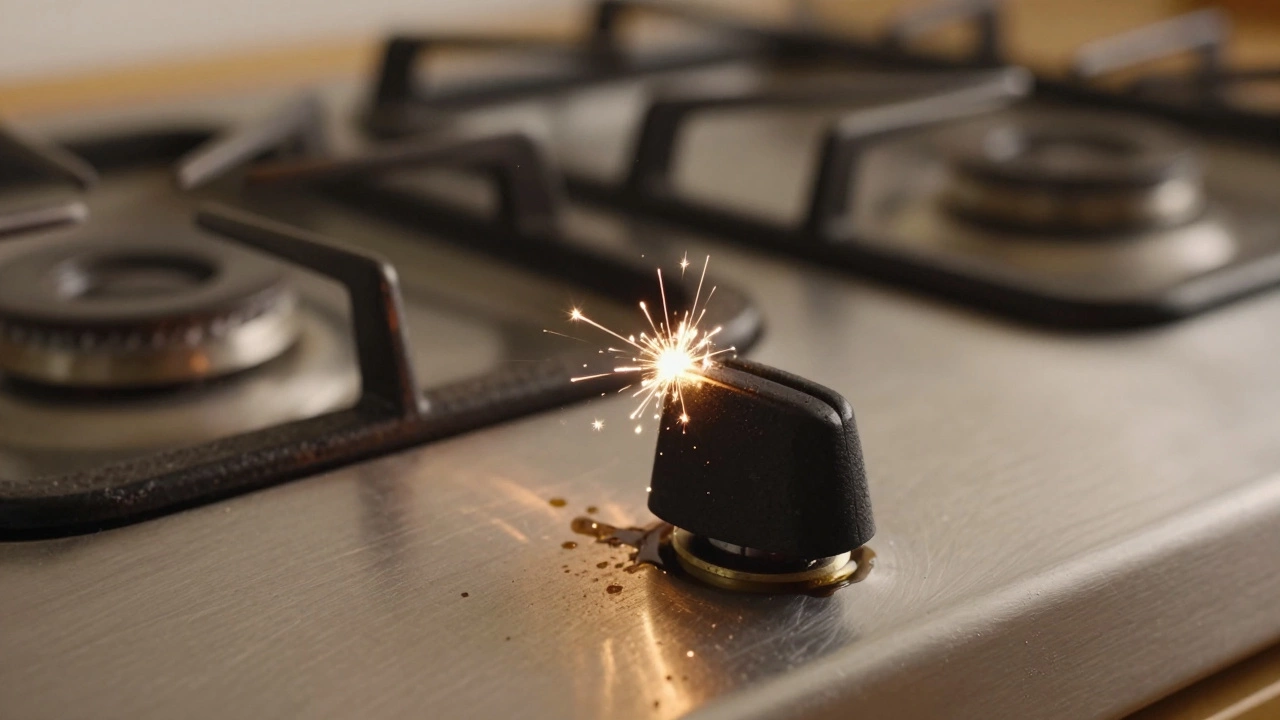
Most modern gas hobs use an electric spark igniter. When you turn the knob, it should spark like a miniature lightning show. If you hear clicking but no flame, the igniter is likely dirty or worn out.
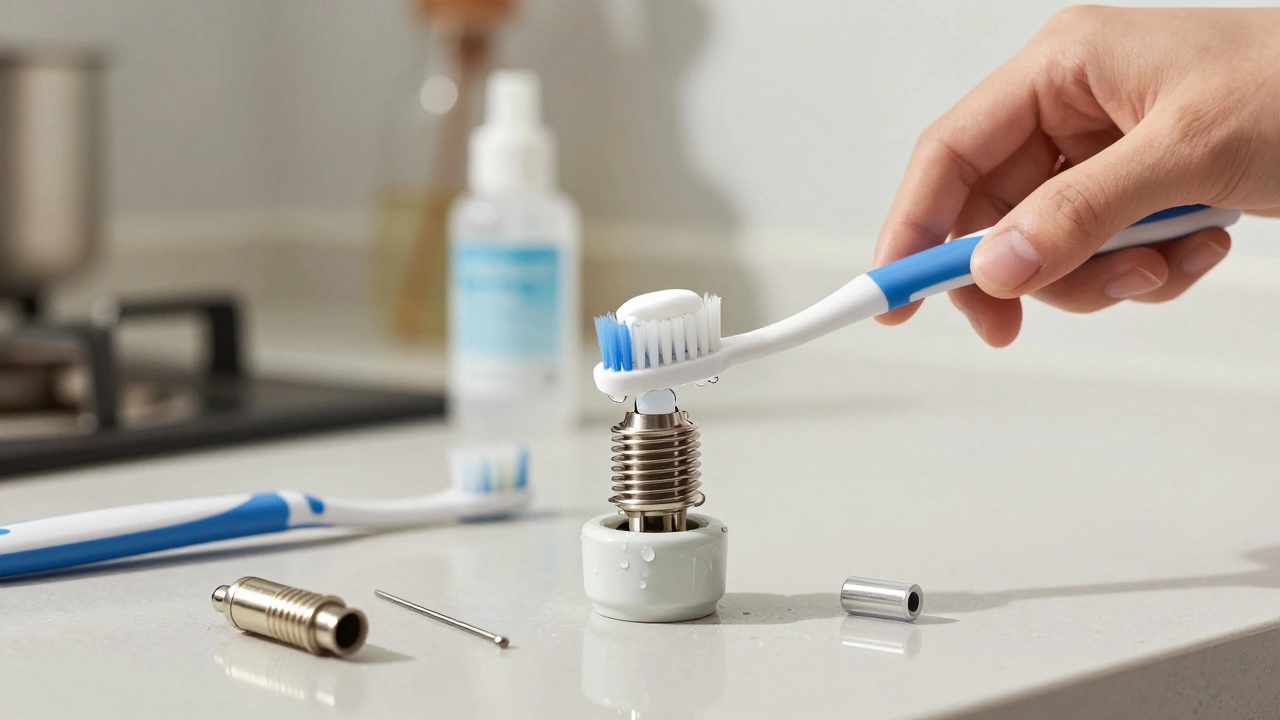
Grease and food splatter build up over time. That gunk coats the igniter tip and blocks the spark. Clean it with a soft toothbrush and rubbing alcohol. Gently scrub the ceramic part and the metal electrode. Dry it completely before turning the gas back on. Don’t use steel wool or abrasive cleaners-they damage the surface.
If cleaning doesn’t help, the igniter itself might be broken. It’s a small part, usually under $20. You can order a replacement by searching your hob’s model number online. Most brands like Belling, Smeg, or Zanussi use standard igniters. Replacing it takes 10 minutes: unscrew the old one, unplug the wire, plug in the new one, screw it back in. No tools beyond a screwdriver needed.
Blocked burner ports stop gas from reaching the flame
Even if the igniter works, gas might not reach the burner. That’s because the tiny holes around the burner rim get clogged. These are called ports. They’re smaller than a pinhead. Cooked-on grease, sugar spills, or even hard water residue can block them.
Remove the burner cap and grates. Soak them in hot, soapy water for 20 minutes. Use a needle or a pin to gently clear each port. Don’t force it. If a port won’t clear, don’t break the burner-replace it. A new burner head costs $15-$40 depending on the brand. You can find exact matches by searching your model number + “burner head.”
Pro tip: Clean your burners every month. It takes five minutes and prevents most failures. Wipe them down after each use. Don’t let spills sit.
Thermocouple failure-safety feature gone wrong
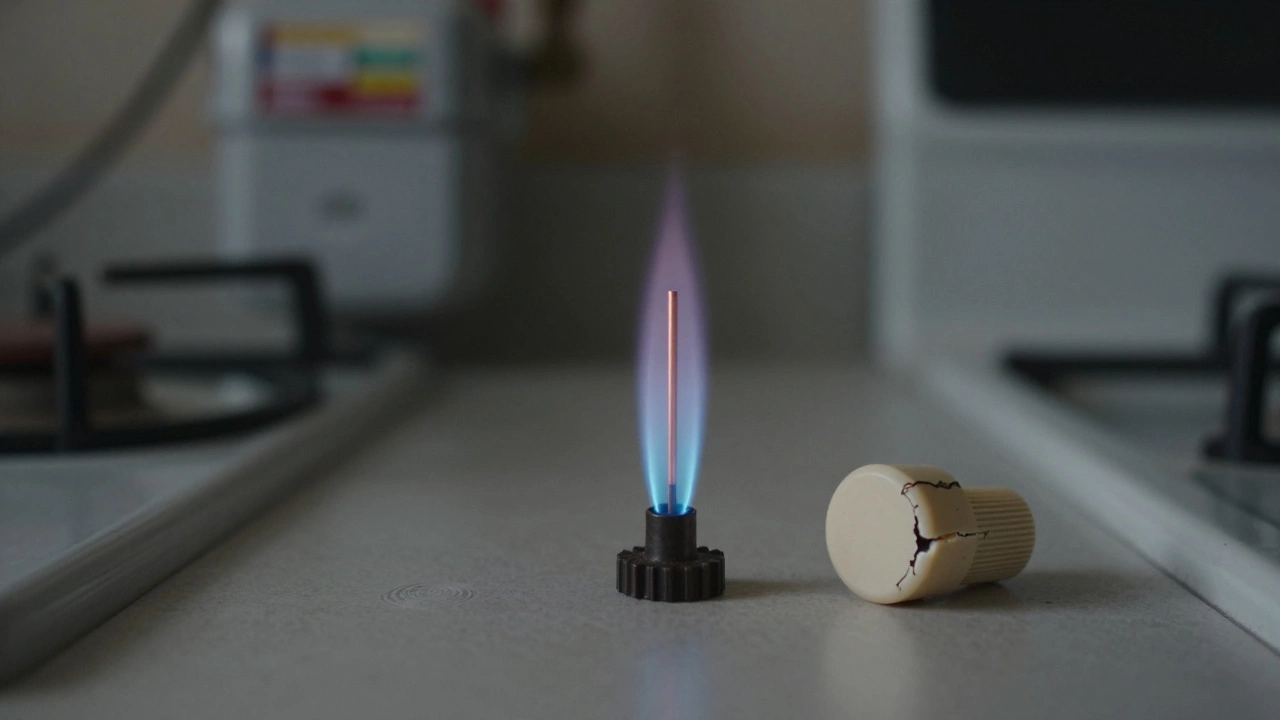
Some older gas hobs have a thermocouple. It’s a metal rod next to the burner that senses heat. If the flame goes out, the thermocouple tells the gas valve to shut off. If it’s dirty, bent, or broken, the hob won’t stay lit-even if you hold the knob down.
Look for a thin copper-colored rod near the burner. Clean it with fine sandpaper or steel wool. Wipe off any dust. Make sure it’s positioned so the tip sits directly in the flame when lit. If it’s bent too far away, gently bend it back into place with pliers. If cleaning doesn’t fix it, replace the thermocouple. They’re cheap-under $30-and easy to swap. Just unclip the old one, plug in the new one, and reattach.
Gas valve or control knob issues
If the igniter sparks and the burner ports are clean, but gas still won’t flow, the problem might be the control valve. This is the internal mechanism that opens when you turn the knob. Over time, it can get sticky from grease or corroded from moisture.
You can test it: Turn the knob to the light position and listen. If you hear a faint hiss but no flame, gas is leaking but not igniting. That’s a bad igniter or blocked port. If you hear nothing-not even a click-then the valve isn’t opening. That’s harder to fix. Most home users can’t service the valve safely. In this case, call a certified gas technician. Don’t try to disassemble it yourself.
Also check the knob. Sometimes the plastic stem inside breaks. The knob turns, but the shaft doesn’t turn the valve. Try removing the knob (usually pulls off) and turning the shaft with pliers. If the hob lights up, you just need a new knob. They’re inexpensive and sold by model number.
Moisture and humidity can fool your hob
Especially in coastal areas like Wellington, humidity plays a bigger role than you think. Moisture gets into the ignition system, especially after steam from boiling pots. That can cause the spark to misfire or not spark at all.
If your hob worked fine yesterday but won’t light today after heavy steaming, try drying it out. Turn off the gas. Remove the burner caps. Use a hairdryer on low heat for 5 minutes to dry the igniter and surrounding area. Wait 10 minutes, then try again. Many people fix this issue without even realizing what caused it.
When to call a professional
You can fix 90% of gas hob problems yourself. But some things need a licensed gas fitter:
- You smell gas when the hob is off
- The flame is yellow or orange instead of blue
- There’s soot around the burner
- You’ve tried everything and nothing works
Yellow flames mean incomplete combustion. That produces carbon monoxide-a silent killer. If you see this, turn off the gas, open windows, and call a technician immediately. Don’t use the hob again until it’s checked.
Also, if your hob is over 15 years old, consider replacement. Older models are less efficient and harder to find parts for. New hobs use better ignition systems and have safety shutoffs built in. A basic new gas hob costs $400-$700. That’s cheaper than repeated repairs over time.
Quick checklist: What to try first
- Check the main gas valve is open
- Test if other gas appliances work
- Listen for clicking-no click? Check igniter
- Smell gas? Leave the house and call emergency services
- Clean burner ports with a pin or needle
- Wipe and dry the igniter with rubbing alcohol
- Use a hairdryer to dry out moisture
- Replace the igniter or burner head if cleaning fails
Most gas hob failures are fixable without tools or experience. You don’t need to be an engineer. Just be patient, stay safe, and start with the basics. A clean hob lasts longer. A dry igniter works better. And a clear port means a steady flame.