
Laundry Survival Calculator
Your boiler is broken? Don't panic. Tell us about your laundry load to see if you can proceed or need alternative methods.
You’re standing in the kitchen, staring at a pile of laundry that’s been growing for three days. You press start on your washing machine, but then you remember: the boiler is dead. No heat, no hot water, just cold silence from the utility room. Does this mean your laundry day is ruined? Not necessarily. But whether your clothes actually get clean depends entirely on how your machine gets its water and what kind of detergent you use.
The short answer is yes, your washing machine will still run. It doesn’t care if the water coming out of the tap is 10°C or 60°C; it just pumps whatever arrives into the drum. However, running a wash cycle with only cold water changes the physics of cleaning. You need to know which settings to use, what risks you might face, and when you can safely ignore the broken boiler versus when you should call a plumber immediately.
How Your Washing Machine Gets Its Water
To understand why your machine keeps working, you have to look at how it connects to your home’s plumbing. Most modern washing machines have two inlet hoses: one for cold water and one for hot. These connect directly to your household supply lines. When you select a "Cold" cycle, the machine opens the valve on the cold line only. When you select "Hot," it tries to open the hot line.
If your boiler is broken, the hot water pipe usually still delivers water-it’s just not heated. In many systems, especially those with a combi boiler, the hot tap might drip lukewarm water initially before going completely cold, or it might deliver nothing if the system is locked down due to a fault code. Crucially, the washing machine does not check the temperature. It assumes the water arriving is correct. So, if you set the machine to "40°C Wash," it will fill the drum with cold water and spin anyway. You won’t get an error code unless the water pressure is so low that the machine times out waiting to fill.
The Cold Water Reality Check
Just because the machine runs doesn’t mean it cleans effectively. Hot water plays a critical role in breaking down oils, activating enzymes in detergents, and killing bacteria. If you rely solely on the broken boiler’s output (which is likely cold), you are essentially performing a cold-water wash every time.
This creates a few problems you need to manage:
- Detergent Dissolution: Powdered detergents often fail to dissolve properly in cold water, leaving white clumps on dark clothes. Liquid detergents are far more forgiving in these conditions.
- Grease Removal: Body oils, cooking grease, and pet hair bind tighter to fabrics without heat. A standard cold cycle might leave shirts feeling slightly stiff or smelling "off" even after drying.
- Sanitization: If you’re washing towels, bedding, or baby clothes, cold water won’t kill dust mites or bacteria. For hygiene-critical loads, a broken boiler is a genuine inconvenience.
However, for everyday t-shirts, jeans, and synthetic athletic wear, modern high-efficiency detergents are designed to work well at lower temperatures. If you switch to a liquid formula labeled "cold water effective," you’ll notice little difference in cleanliness for lightly soiled items.
Which Settings Should You Use?
If you decide to proceed with laundry while the boiler is out of commission, you need to adjust your habits. Don’t just hit "Normal" and hope for the best. Here is a practical guide to surviving laundry week without hot water.
Select the "Cold" or "Eco" Cycle: Stop trying to force the machine to heat water internally if it doesn’t have a built-in heater (most do not). By selecting the cold setting, you prevent the machine from wasting energy trying to draw from a non-functional hot line. This also reduces wear on the inlet valves.
Pre-Treat Stains: Since you lack the thermal energy to lift stains, apply stain remover directly to collars, cuffs, and armpits before loading the drum. Let it sit for ten minutes. This mechanical action replaces the chemical action that heat usually provides.
Add Vinegar to the Rinse: Cold water can sometimes leave detergent residue, making clothes feel crunchy. Adding half a cup of white vinegar to the fabric softener dispenser helps break down soap scum and softens fabrics naturally.
| Load Type | Recommended Action | Risk Level |
|---|---|---|
| Lightly Soiled Clothes | Cold cycle + Liquid Detergent | Low |
| Towels & Bedding | Soak in basin with warm kettle water first | Medium |
| Heavily Soiled Workwear | Pre-treat + Long Cold Cycle | High |
| Baby Clothes | Post-wash ironing (heat sterilizes) | Medium |
Is There a Risk of Damage?
A common fear is that running a hot cycle with cold input will burn out the heating element or confuse the electronics. In most front-loaders and top-loaders sold in New Zealand and Australia, the primary heating element is inside the washing machine itself, not supplied by the boiler. Wait-let’s clarify that.
Many modern washing machines do have their own internal electric heaters. They take cold water and heat it up independently. If your machine has an internal heater, a broken boiler doesn’t stop it from producing hot water for the wash. It simply means you aren’t using the house’s hot water supply. In this scenario, your laundry results remain unchanged, though your electricity bill might tick up slightly because the machine is doing all the heating work.
Older machines, however, often rely on mixing hot and cold water from the taps to reach the desired temperature. If yours is older, it might struggle to reach 60°C if the hot tap is dead. It won’t damage the machine, but it will result in a lukewarm wash. Always check your user manual. Look for terms like "internal heater" or "water heating element." If present, you’re safe to run any cycle.
When to Call a Professional
While you can survive a few days of cold laundry, a broken boiler affects more than just your washing machine. You lose hot showers, dishwashing capability, and central heating (if you have wet radiators). In Wellington, where November nights can still be chilly, losing heating is a significant comfort issue.
You should call a licensed plumber or gas fitter if:
- The boiler displays an error code (e.g., F28, E1) that resets don’t clear.
- You hear banging or knocking noises from the pipes when the machine fills.
- There is visible water leakage around the boiler unit.
- The pressure gauge reads zero or stays red.
Attempting DIY repairs on gas boilers is dangerous and often illegal depending on local regulations. Gas work must be performed by a certified professional. If it’s an electric instantaneous water heater, ensure you cut power before inspecting anything, but replacement is usually a job for a qualified technician too.
Alternative Solutions for Clean Laundry
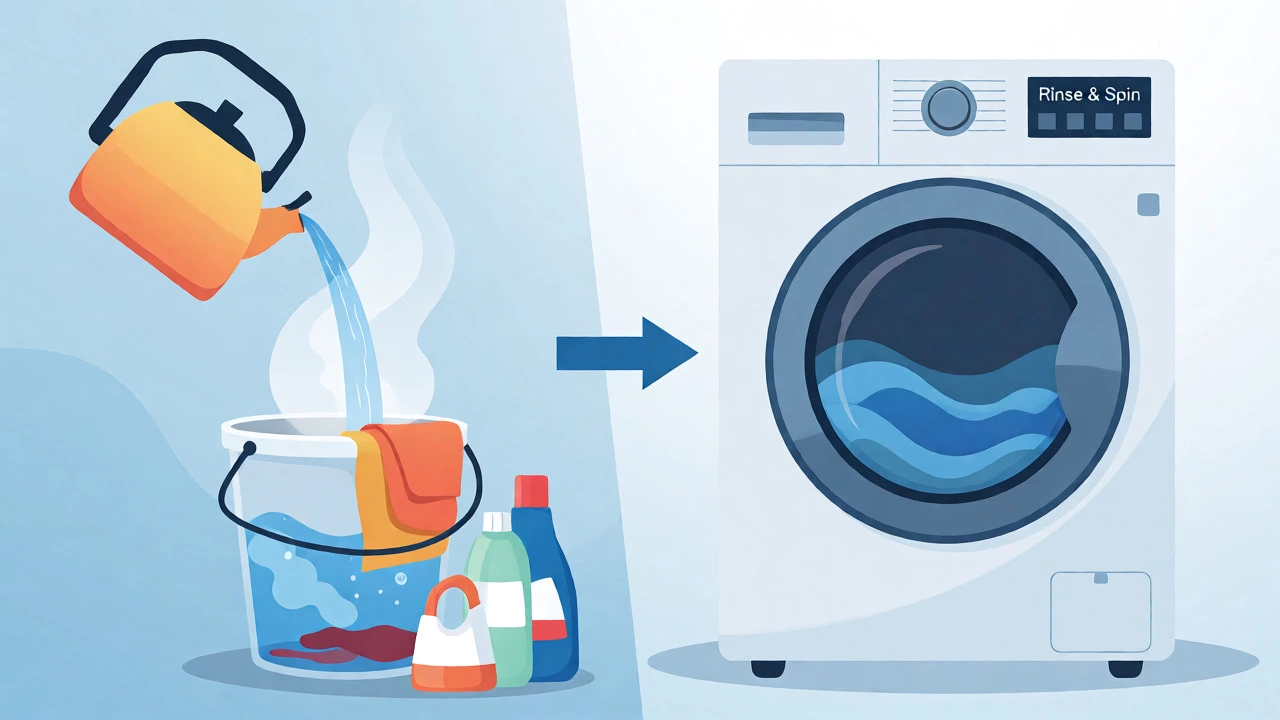
If you absolutely need hot water for a specific load and can’t wait for the repair, you can hack the process. Boil water in a kettle or on the stove. Pour the boiling water into a bucket, add your detergent, and submerge the clothes. Let them soak for twenty minutes. Then, transfer them to the washing machine on a rinse-and-spin cycle. This mimics a pre-soak at 90°C, effectively sanitizing and degreasing the fabrics without needing the boiler.
Another option is to hand-wash delicate items in a sink using the hottest water you can tolerate from the cold tap mixed with boiled water. It’s labor-intensive but saves your favorite silk blouses from being damaged by improper cleaning methods.
Can I use my washing machine if the hot water tap is dry?
Yes, provided you select a cold water cycle. If you select a hot cycle, the machine may attempt to fill from the hot line. If no water comes through, the machine will eventually display a "fill error" or timeout after several minutes. It won’t break, but it will waste time. Always switch to cold mode if the hot tap yields nothing.
Does a broken boiler affect the washing machine’s internal heater?
No. The washing machine’s internal electric heater operates independently of your home’s boiler. It draws cold water from the mains and heats it using electricity. Therefore, if your machine has an internal heater, it will still produce hot water for the wash cycle regardless of the boiler’s status.
Why are my clothes smelly after washing with cold water?
Cold water does not kill bacteria or mold spores as effectively as hot water. Residual moisture in the drum combined with body oils left behind can create a musty odor. To fix this, run an empty hot cycle (using the machine’s internal heater if available) with a washing machine cleaner tablet once a month to sanitize the drum and seals.
Should I disconnect the hot water hose?
You generally don’t need to disconnect it. Simply turning off the hot water isolation valve under the sink or near the machine prevents the machine from trying to pull water from the faulty line. This avoids potential leaks if the boiler pressure fluctuates weirdly during a fault.
Will powder detergent work in cold water?
Powder detergent struggles to dissolve below 30°C. It often leaves residues that attract dirt later. If you are stuck with powder, dissolve it in a cup of boiling water from the kettle before pouring it into the drawer. Better yet, switch to a liquid detergent specifically formulated for cold washes.
Final Thoughts on Managing the Wait
A broken boiler is stressful, but it shouldn’t halt your life completely. Your washing machine is a robust piece of equipment that adapts well to cold inputs. By switching to liquid detergents, utilizing pre-soaks, and understanding your machine’s internal heating capabilities, you can keep your wardrobe fresh until the plumber arrives. Just remember: if the machine starts making strange noises or failing to fill, check the water pressure valves first. It’s usually a simple fix that saves you a service call.