
Extractor Fan Motor Replacement Calculator
See if replacing your motor saves you money
Input your fan's details to compare costs and lifespan of motor replacement vs new fan.
Your estimated costs
Based on your fan's 5-year age and condition:
Motor replacement is more cost-effective for your current fan.
Why this matters
- Motor replacement costs $40-80 (we used $55 as average)
- New fans cost $150-300 (we used $225 as average)
- Replacing motors is safe if you follow proper electrical safety procedures
- Older fans (over 10 years) may benefit more from a new unit
Important safety note
Always turn off power at the circuit breaker before working on any electrical device.
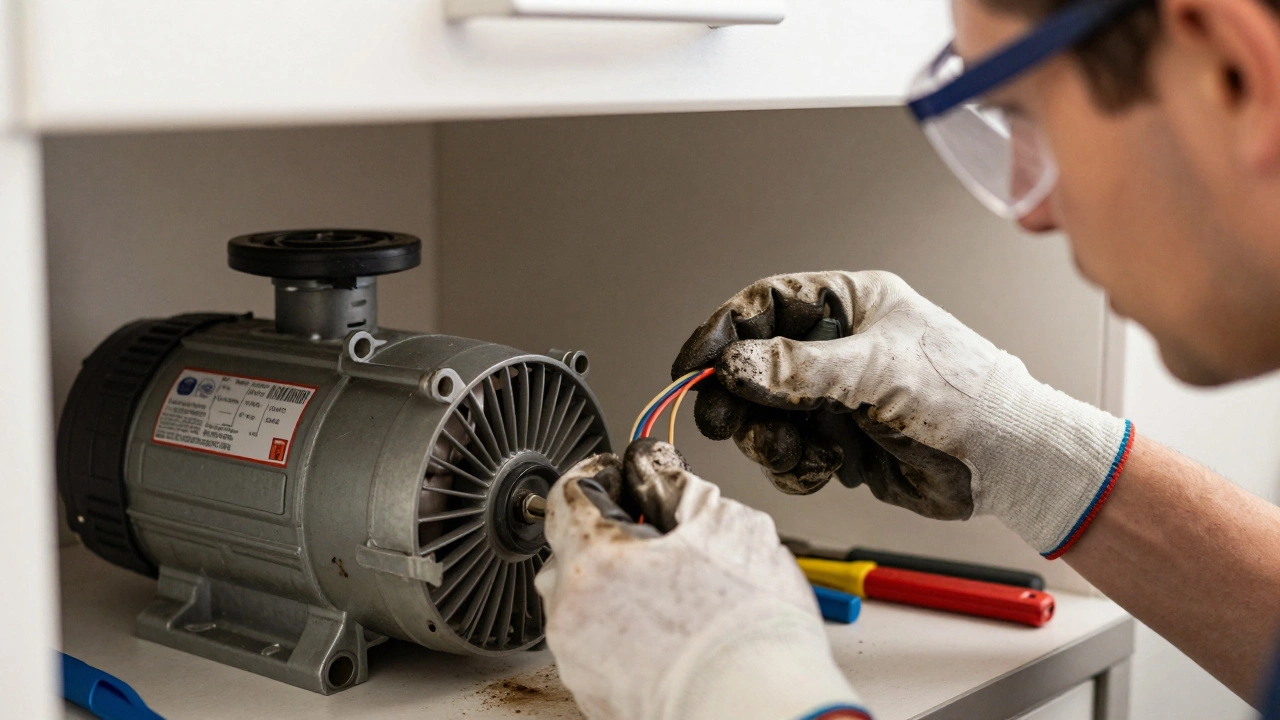
Ever turn on your extractor fan and hear a weird grinding noise? Or maybe it’s just not moving air like it used to? If you’ve been wondering whether you can replace the motor in an extractor fan yourself, the answer is yes-if you’re comfortable with basic tools and a little patience. Most extractor fans are designed with replaceable motors, and doing it yourself can save you hundreds compared to hiring a technician or buying a whole new unit.
Why the motor fails
Extractor fan motors don’t last forever. They’re small, work constantly, and get exposed to grease, steam, and dust. Over time, the bearings wear out, the windings overheat, or the capacitor fails. You’ll know it’s the motor if:- The fan makes a humming sound but doesn’t spin
- It spins slowly or unevenly
- It trips the circuit breaker when turned on
- There’s a burning smell coming from the unit
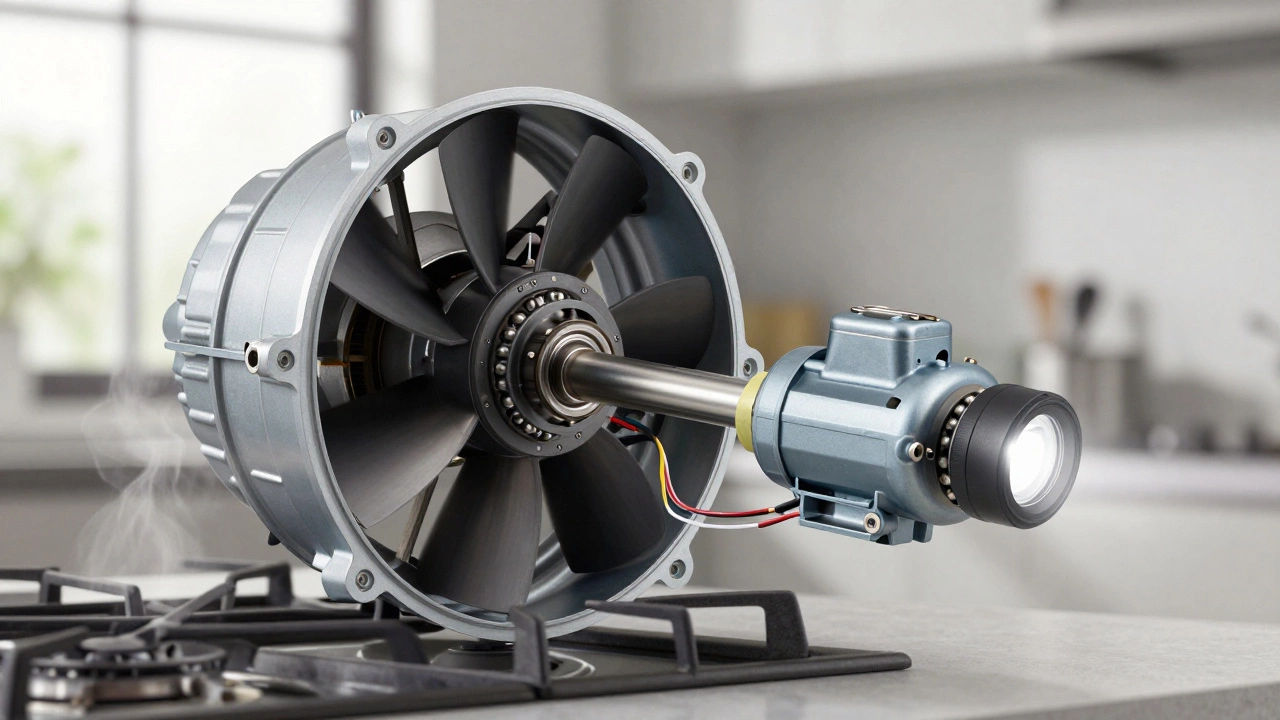
None of these mean you need to replace the whole fan. In fact, the motor is often the only part that fails. The housing, blades, and duct connections usually stay in perfect condition.
What you’ll need
Before you start, gather these tools and parts:- Replacement motor (match the model number exactly)
- Screwdrivers (flathead and Phillips)
- Wire cutters and strippers
- Electrical tape or wire nuts
- Non-contact voltage tester
- Work gloves and safety glasses
- Flashlight or phone light
Don’t guess the motor. Find the exact replacement. Look for the model number on the old motor-it’s usually printed on a label. Common brands include Ebac, Zehnder, and Vent-Axia. You can order the replacement from appliance parts sites like Appliance Parts Warehouse or local suppliers like Trade Tools in New Zealand.
Step-by-step: Replacing the motor
- Turn off the power. Go to your circuit breaker and shut off the power to the extractor fan. Use your voltage tester to confirm there’s no current running to the unit. Don’t skip this.
- Remove the fan cover. Most covers snap off or are held by screws. Take note of how it’s attached-some have clips, others use magnets. Set it aside carefully.
- Disconnect the wiring. Take a photo of the wire connections before you touch anything. Most motors have two or three wires: live, neutral, and sometimes a ground. Unscrew the wire nuts or terminal block. If wires are crimped, cut them cleanly and strip about 1 cm of insulation.
- Remove the old motor. The motor is usually held by screws or clips. Remove these, then gently pull the motor out. Watch out for the fan blade-it might come off with the motor. If it does, slide it onto the new motor’s shaft. It usually fits snugly and doesn’t need screws.
- Install the new motor. Slide the fan blade onto the new motor shaft. Secure the motor into the housing using the same screws or clips. Make sure it’s aligned and sits flush.
- Reconnect the wires. Match the wires the same way they were before. Use wire nuts or terminal blocks. Wrap connections tightly with electrical tape. Don’t let bare wires touch each other or the metal housing.
- Reattach the cover. Snap or screw the cover back on. Double-check that nothing is pinched or obstructing the fan blade.
- Test it. Turn the power back on. Flip the switch. The fan should spin up smoothly and quietly. If it doesn’t, turn it off immediately and check your wiring.
What if it still doesn’t work?
If the fan still hums but doesn’t spin, the capacitor might be bad. Some motors have a built-in capacitor, others have a separate one. If your replacement motor didn’t come with one, check if the old one can be reused. Capacitors look like small silver or black cylinders. Swap them carefully-polarity doesn’t matter for fan capacitors.If the fan spins but makes noise, the bearings might be bad. That means you got a low-quality replacement. Buy a motor from a reputable brand-avoid no-name options on eBay or Amazon. A good motor lasts 5-8 years. A cheap one might fail in 6 months.
When not to DIY
Some extractor fans aren’t meant for motor replacement. If:- The housing is cracked or warped
- The ductwork is corroded or disconnected
- The fan is part of a built-in range hood with complex electronics
- You’re not confident with electrical work
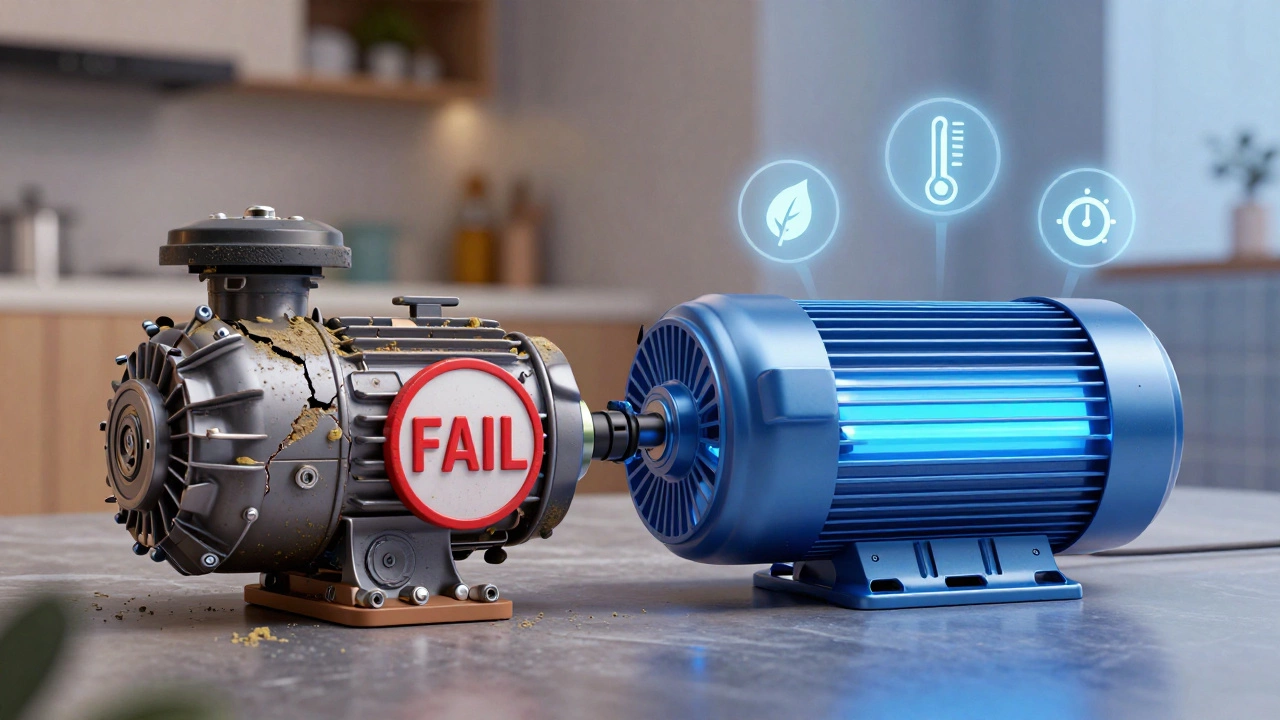
Then it’s safer to replace the whole unit. Modern extractor fans are more efficient, quieter, and often come with timers or humidity sensors. A decent new unit costs between $150-$300, but you’ll save on long-term energy bills and maintenance.
Pro tips from the field
- Label your wires. Use masking tape and a pen. Write “L,” “N,” “G” on each wire before disconnecting. - Check the fan blade. If it’s cracked or bent, replace it too. An unbalanced blade stresses the new motor. - Clean the duct. Grease buildup reduces airflow and makes the motor work harder. Vacuum the duct before reinstalling the fan. - Use a timer. If your new motor doesn’t have one, install a simple 15-minute timer switch. It prevents the fan from running too long.Cost comparison: Replace motor vs. buy new
| Option | Cost (NZD) | Time to Install | Expected Lifespan |
|---|---|---|---|
| Replace motor only | $40-$80 | 1-2 hours | 5-8 years |
| Buy new fan | $150-$300 | 1 hour | 10-15 years |
Replacing the motor is almost always cheaper. But if your fan is over 10 years old, or if you’ve replaced the motor twice already, it’s time to upgrade. New models use 40% less energy and are far quieter.
Where to buy replacement motors
In New Zealand, reliable sources include:- Trade Tools (Wellington, Auckland, Christchurch) - carries Ebac and Vent-Axia parts
- Appliance Parts Warehouse - online, ships nationwide
- Harvey Norman - some stores stock replacement motors for popular models
- Local electrical suppliers - ask for “extractor fan motor, 12V AC, 50W”
Always match the voltage, wattage, and shaft size. A 12V motor won’t work in a 240V system. Don’t assume “it’ll fit.”
Common mistakes to avoid
- Not turning off the power-this is how people get shocked
- Using duct tape instead of wire nuts-tape melts over time
- Forgetting to clean the duct-grease kills new motors fast
- Buying a motor without checking the RPM or airflow rating-wrong specs cause poor performance
- Forcing the fan blade onto the shaft-this cracks the plastic hub
If you’ve done this before, you know how frustrating it is to reassemble everything, turn the power back on, and realize the fan still doesn’t work. That’s why taking photos and labeling wires matters. It’s the difference between a 30-minute fix and a 3-hour headache.
Should you replace the whole fan instead?
Sometimes, yes. If your fan is older than 10 years, it’s likely using outdated technology. Newer models have:- Brushless DC motors (quieter, more efficient)
- Humidity sensors (auto-start when steam rises)
- Smart controls (connect to home assistants)
- Sound ratings under 20 dB (quieter than a whisper)
For example, the ventilation system is a modern extractor fan designed for kitchens and bathrooms with low noise and energy efficiency. It uses 18W to move the same airflow as a 45W old model. That’s a 60% energy drop.
If you’re planning to renovate, or if you’re tired of the noise, upgrading is worth it. But if you just want your fan to work again, replacing the motor is the smart, simple choice.
Can you replace the motor in any extractor fan?
Most extractor fans have replaceable motors, especially those made after 2000. But some low-cost models or integrated range hoods have sealed units. Check the manufacturer’s manual or look for a model number on the motor. If you can access the motor without breaking the housing, you can replace it.
How long does a replacement motor last?
A quality replacement motor lasts 5 to 8 years with normal use. Cheaper motors might fail in under a year. Look for motors with ball bearings-not sleeve bearings-because they handle heat and continuous use better.
Is it safe to replace the motor yourself?
Yes, if you turn off the power at the breaker and follow basic electrical safety. If you’re unsure about wiring or feel uncomfortable working with live circuits, hire an electrician. The job takes about 90 minutes, and electricians usually charge $80-$120 for it.
What if the fan spins but doesn’t pull air well?
That’s usually a duct issue, not a motor problem. Check for kinks, blockages, or loose connections. Grease buildup inside the duct can reduce airflow by up to 70%. Clean it with a vacuum and brush before reinstalling the fan.
Do I need to replace the fan blade too?
Only if it’s cracked, warped, or noisy. A damaged blade puts extra strain on the motor, which can shorten its life. If the blade looks fine and spins smoothly, reuse it. Just make sure it fits snugly on the new motor shaft.
Next steps
If you’ve got the right motor and tools, start today. Power off, take photos, label wires, and go slow. Replacing the motor is one of the easiest and most satisfying DIY repairs you can do. It’s not just about saving money-it’s about keeping your home safe, dry, and free of mold from poor ventilation.If you’re still unsure, take a photo of your motor’s label and visit a local appliance parts store. Most technicians there will help you match it. And if you decide to upgrade instead, look for models with an energy star rating-they’ll pay for themselves in lower electricity bills within 3 years.