
Extractor Fan Calculator
Room Dimensions
Buying an extractor fan isn’t like picking out a light bulb. Get it wrong, and you’ll deal with foggy mirrors, musty towels, or grease buildup that won’t wipe off. Get it right, and your bathroom stays dry, your kitchen smells clean, and your walls don’t grow mold. But with so many options-sizing, noise levels, airflow, ducting types-it’s easy to feel overwhelmed. Here’s how to cut through the confusion and pick the one that actually works for your space.
Start with the room size
The most common mistake? Buying a fan that’s too small. A fan that’s underpowered won’t remove moisture or odors fast enough. The rule of thumb is simple: calculate the room’s volume in cubic meters, then multiply by 15. That’s the minimum airflow you need in cubic meters per hour (m³/h).For example, a standard bathroom that’s 3m wide, 2.5m long, and 2.4m high has a volume of 18m³. Multiply that by 15, and you need at least 270 m³/h. If you’re replacing an old fan, check the label on the back of the unit-it’ll list the airflow rating. If it’s below 270 m³/h, upgrade. New Zealand building codes require at least 15 air changes per hour in bathrooms and kitchens, so don’t go below that.
Match the fan to the room type
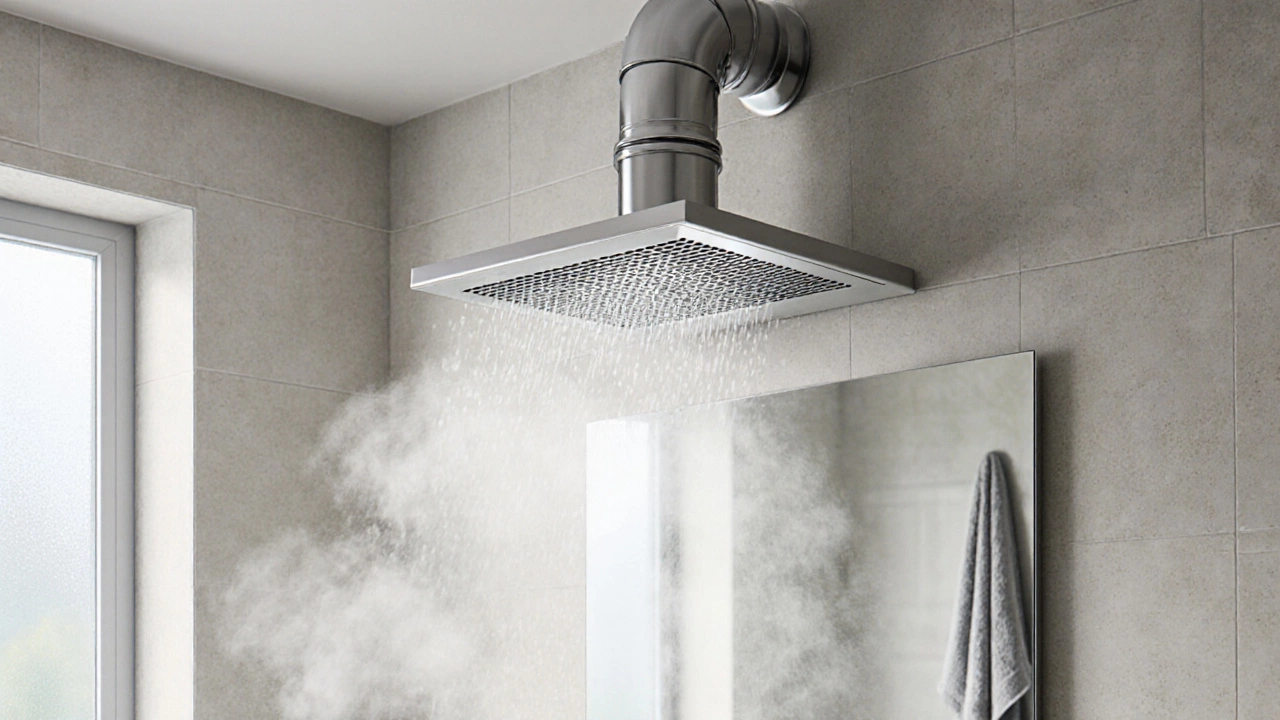
Not all extractor fans are built the same. A fan for a bathroom isn’t the same as one for a kitchen.Bathrooms: Look for moisture-sensing models. These turn on automatically when humidity rises and stay on until the air is dry-no more forgetting to flip the switch. Brands like Vent-Axia and Xpelair make models with built-in timers that run for 10-20 minutes after you leave the room. This prevents condensation from settling overnight.
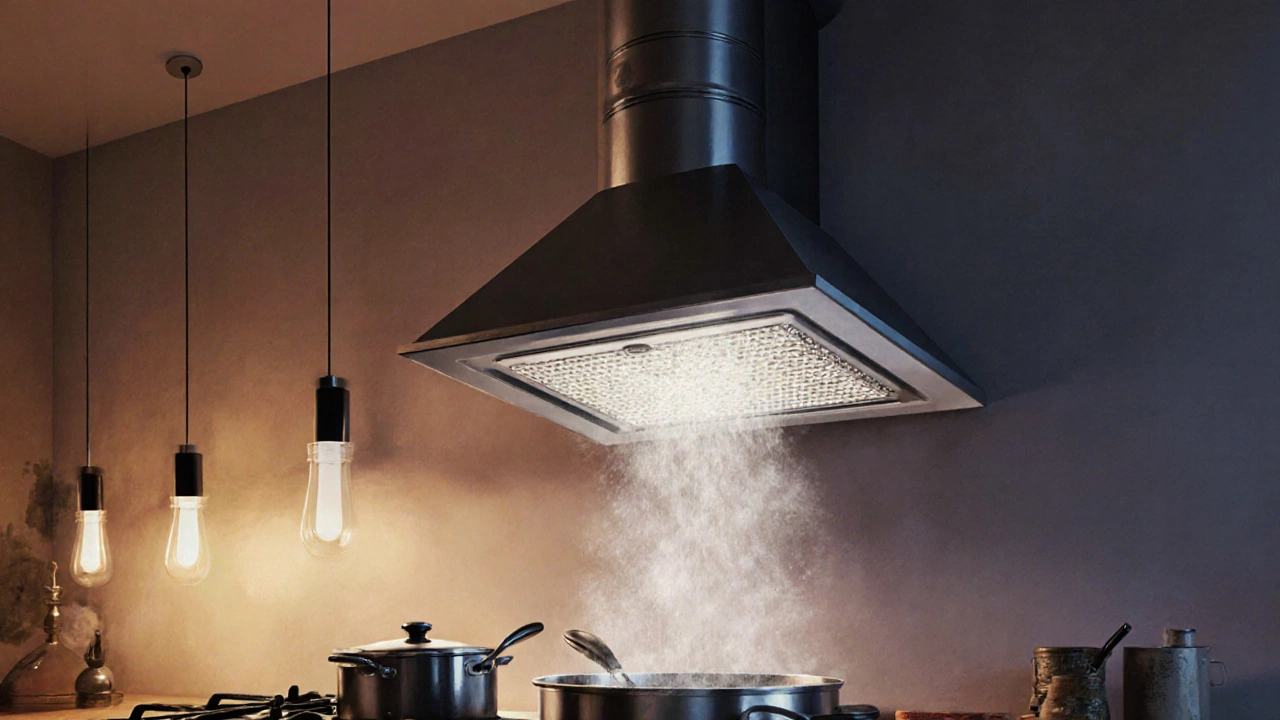
Kitchens: You need grease resistance. Kitchen fans get coated in oil from cooking. Choose one with a metal grease filter that’s dishwasher-safe. Avoid plastic filters-they warp and trap grease, becoming fire hazards over time. Also, look for higher airflow: kitchens need at least 300 m³/h, even for small spaces. If you cook with gas or fry often, go for 400+ m³/h.
Noise levels matter more than you think
A fan that’s too loud becomes a reason to avoid using it. You don’t want to hear it over the TV or wake up because it’s still running. Fan noise is measured in sones. One sone is about the sound of a refrigerator humming. For bathrooms, aim for 0.8-1.2 sones. Anything above 1.5 sones will be noticeable and annoying.Check the product specs for sone ratings-not just decibels. Decibels can be misleading because they measure sound pressure, not perceived loudness. Sones are the industry standard for residential fans. Brands like EnviroVent and Ductless Fan Company publish real sone ratings. If the label doesn’t list it, skip it. Most cheap fans from hardware stores don’t test this properly.
Ducting: Is it direct to the outside?
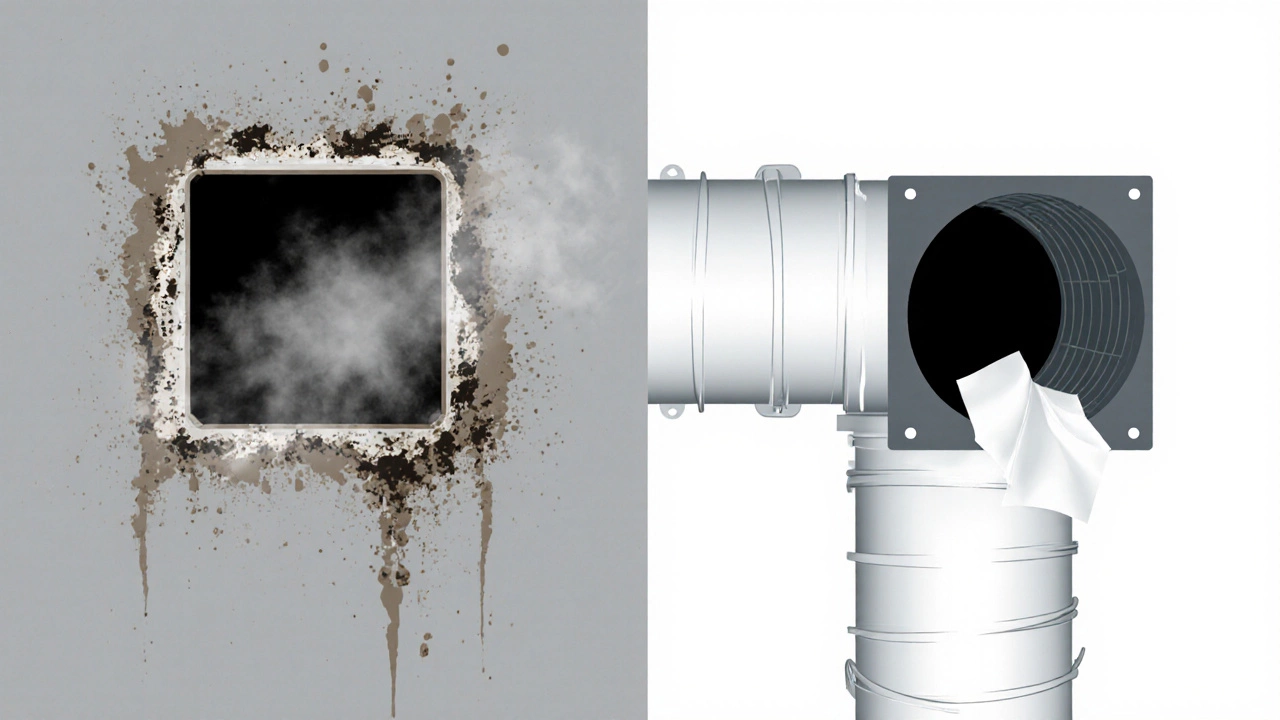
The fan’s job is to move air out of your home. If it’s ducted into the ceiling cavity, attic, or between walls, you’re just moving moisture around-not removing it. That’s why mold grows behind tiles.Look for fans that connect to rigid metal ducting that runs straight to an external wall or roof outlet. Avoid flexible plastic or foil ducts. They sag, trap moisture, and collect dust. If your home doesn’t have an easy path to the outside, consider a ductless recirculating fan with a carbon filter. But know this: they only remove odors, not moisture. They’re okay for small powder rooms, but not for showers or kitchens.
Energy efficiency and smart features
Modern extractor fans use brushless DC motors. They’re quieter, use less power, and last longer than old AC motors. A good DC fan uses 5-10 watts on low speed. That’s less than a phone charger. Look for the Energy Star label or the New Zealand Energy Efficiency Label-fans with a 5-star rating are worth the extra cost.Smart features aren’t just gimmicks. Motion sensors turn the fan on when you enter the room. Humidity sensors auto-adjust speed. Some even connect to smart home systems like Home Assistant or Apple HomeKit. If you already use smart lighting or thermostats, a connected fan adds real value. You can schedule it to run after showers, even if you forget.
Installation: DIY or pro?
If you’re replacing an old fan in the same spot, and the wiring and ducting are already in place, you can do it yourself. Most modern fans mount with clips and plug into a standard junction box. But if you’re adding a fan where there wasn’t one, or need to cut through a brick wall or roof, hire an electrician and a builder. Poor installation leads to leaks, electrical faults, or ineffective airflow.Also, check local regulations. In Wellington, new installations must meet the New Zealand Building Code (Clause G12 for ventilation). Some councils require a permit if you’re modifying ducting or adding a new outlet. Don’t assume your landlord or previous owner did it right-old systems often violate current standards.
What to avoid
- Fans with no airflow rating listed. If they don’t say m³/h, they’re not designed for serious use. - Plastic housings in kitchens. Heat and grease degrade plastic over time. - Fans advertised as “silent” without sone ratings. That’s marketing speak. - Buying from overseas sites without local support. If the fan fails in two years, you’ll need a replacement part. Brands like Xpelair, Vent-Axia, and EnviroVent have local distributors in New Zealand.Top 3 picks for New Zealand homes (2025)
- Xpelair SILENT 100 - 270 m³/h, 0.9 sones, humidity sensor, DC motor. Perfect for standard bathrooms. Comes with a 5-year warranty.
- EnviroVent ECO 400 - 420 m³/h, 1.1 sones, grease filter, ducted to outside. Best for kitchens with gas stoves.
- Broan-Nutone 9093 - 300 m³/h, 1.0 sones, LED light, motion sensor. Great for combo bathroom-kitchen spaces.
All three are available at Mitre 10, Bunnings, and local electrical suppliers. Avoid buying from eBay or Amazon without checking the warranty is valid in New Zealand.
Final tip: Test before you commit
Before installing, turn the fan on and hold a tissue near the grille. If it sticks firmly, airflow is strong. If it just flutters, the fan’s underpowered or the duct is blocked. Always test airflow before sealing anything in.Don’t rush. A good extractor fan lasts 10-15 years. Spending a bit more now saves you from mold repairs, repainting, and health issues later. Your future self will thank you.
How often should I clean my extractor fan?
Clean the grease filter every 2-3 months if you cook often. For bathrooms, wipe the grille and check the duct for dust every 6 months. If you notice reduced airflow or more condensation, clean it sooner. A clogged filter can cut airflow by up to 40%.
Can I use an extractor fan with a window?
Yes, but it’s not ideal. Opening a window helps, but it doesn’t remove moisture fast enough during showers or cooking. Fans create negative pressure that pulls air out consistently. Windows rely on wind and temperature differences, which are unpredictable. Use both together for best results.
Why does my extractor fan run all the time?
It’s likely a humidity sensor model, and your space is still damp. Check if you’re drying clothes indoors, taking long showers, or have poor insulation. If the fan runs for more than 30 minutes after use, your duct might be blocked, or the fan is undersized. Test airflow with a tissue-if it doesn’t stick, the system isn’t working right.
Do I need a fan in my laundry room?
If you dry clothes indoors, yes. Wet laundry releases a lot of moisture-up to 10 liters per load. Without ventilation, that moisture turns into mold on walls and ceilings. A 150-200 m³/h fan with a timer is enough. Don’t rely on just opening a window; the air needs to be actively pulled out.
What’s the difference between an extractor fan and a range hood?
A range hood is designed specifically for kitchens and usually sits above the stove. It has stronger suction (400+ m³/h), built-in lighting, and grease filters. An extractor fan is a general term-it can be installed in bathrooms, laundries, or kitchens. Range hoods are a type of extractor fan, but not all extractor fans are range hoods.