
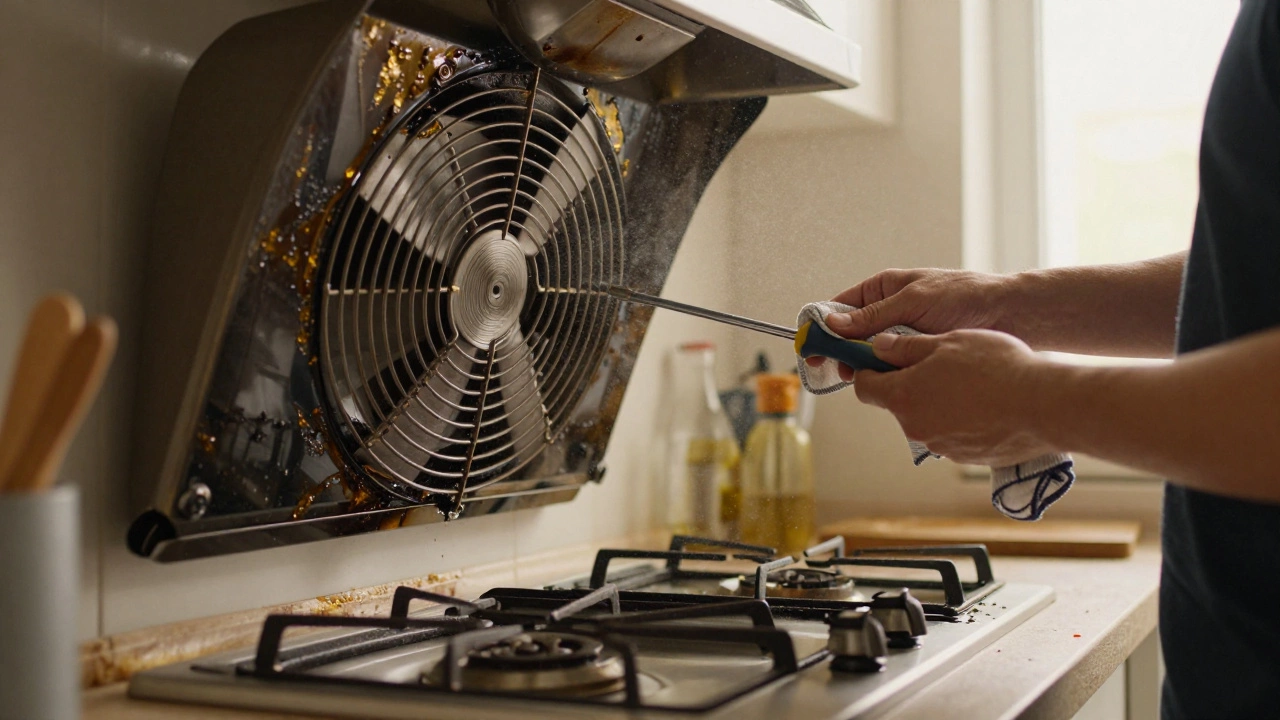
extractor fan not working? It’s one of those problems you notice right away - the kitchen smells like last night’s dinner, the bathroom stays foggy after a shower, or you hear a strange rattling noise coming from the ceiling. Most people assume it’s broken beyond repair and call a technician. But in most cases, you can fix it yourself with a screwdriver, a cloth, and a little patience. Here’s how to troubleshoot an extractor fan step by step.
Check if it’s getting power
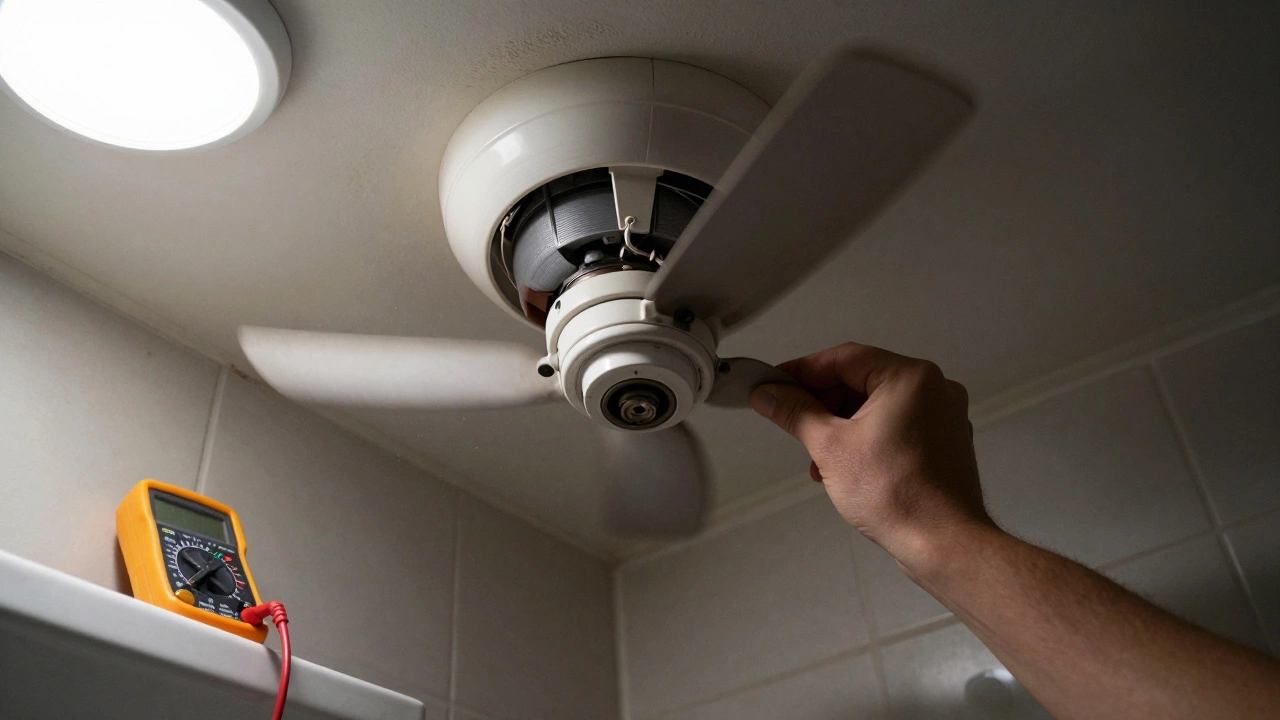
Before you take anything apart, make sure the fan isn’t just dead because it’s not getting electricity. Start by checking the circuit breaker. If it tripped, reset it. If the breaker keeps tripping, there might be a short in the wiring - that’s a job for an electrician. Next, test the wall switch. Sometimes the switch itself fails. Try flipping it on and off a few times. If you have a multimeter, test for voltage at the switch terminals. No power? You’ve found your first clue.
Some extractor fans, especially in newer homes, are connected to a timer or humidity sensor. These can malfunction and prevent the fan from turning on even when the switch is flipped. Try bypassing the sensor temporarily by turning the fan on manually. If it runs when you override the sensor, the sensor is faulty and needs replacement.
Listen to the noise - or lack of it
A silent fan is usually a dead fan. But a fan that’s making grinding, squealing, or rattling noises? That’s not always a sign of total failure. A high-pitched squeal often means the motor bearings are dry or worn. A low rumble or vibration could mean the fan is unbalanced. A clunking sound? Something’s loose inside - maybe a blade has come loose or a mounting screw has fallen out.
Here’s a quick test: turn off the power, then gently spin the fan blade by hand. If it spins freely and stops smoothly, the motor is probably fine. If it feels stiff, catches, or wobbles, there’s debris or a mechanical issue. If it spins but doesn’t stay spinning, the bearings might be failing. In older fans, lubrication isn’t possible - you’ll need to replace the motor. Newer models often have sealed bearings, so if they’re noisy, replacement is usually the best fix.
Clean the fan and duct
The #1 reason extractor fans stop working well isn’t broken parts - it’s grease and dust buildup. Over time, cooking oils, steam, and airborne particles stick to the blades, motor housing, and ductwork. This buildup makes the motor work harder, causes overheating, and eventually kills the fan.
Turn off the power. Remove the grill or cover - most snap off or are held by two screws. Use warm soapy water and a soft brush to clean the blades and housing. Don’t use harsh chemicals; they can melt plastic parts. Let everything dry completely before reassembling.
Now check the duct. Go into the attic or crawl space and trace the duct from the fan to the outside vent. If it’s crimped, kinked, or full of lint, airflow is restricted. That’s why the fan sounds louder than usual - it’s straining. Clean the duct with a vacuum and a long brush. If the duct is made of flexible plastic or foil, consider replacing it with rigid metal ducting. It lasts longer and doesn’t trap grease.
Check the backdraft damper
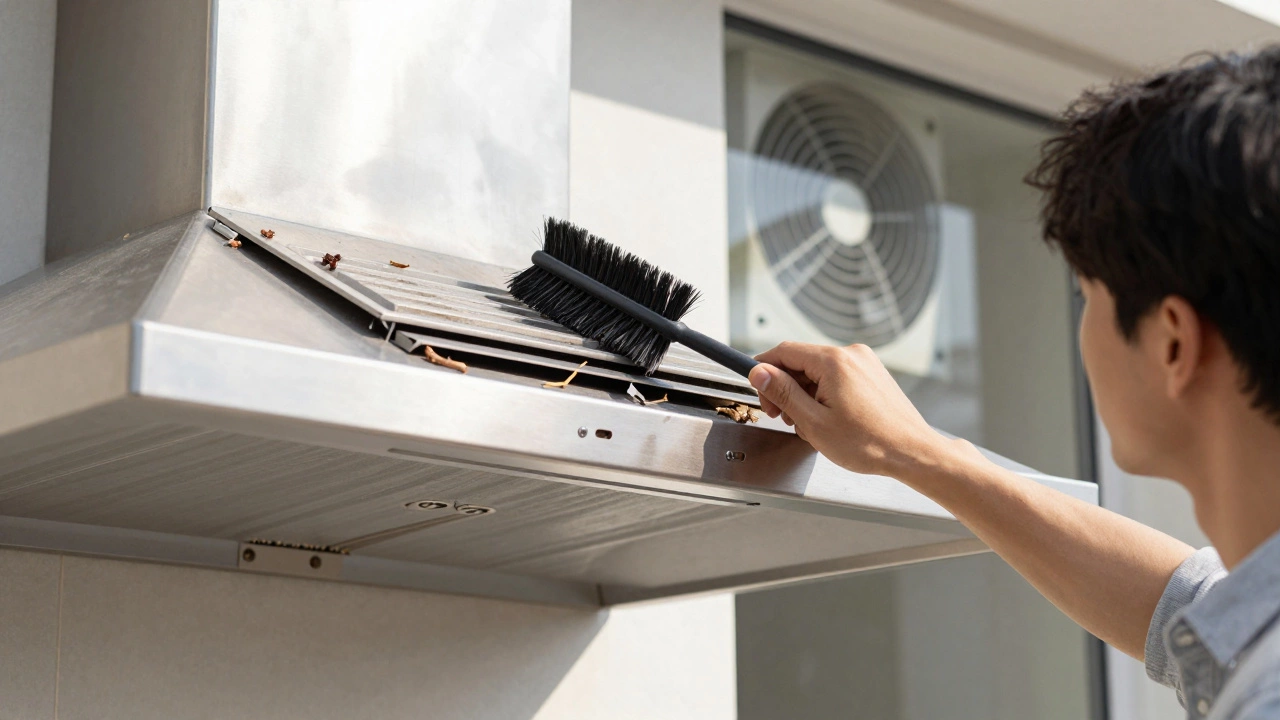
Every extractor fan has a small flap - called a backdraft damper - at the outside vent. It opens when the fan runs and closes when it stops to keep cold air, bugs, or rain out. If this flap is stuck shut, the fan can’t push air out. If it’s stuck open, cold air sneaks in and makes your bathroom feel drafty.
Go outside and look at the vent. If you see debris, bird nests, or ice buildup, clear it. Gently push the flap with a stick. It should swing open easily and snap shut. If it’s stiff, clean it with a damp cloth and a little silicone spray. If it’s broken or warped, replace the entire vent hood. You can buy a new one at any hardware store for under $30.
Test the fan speed and airflow
Once everything’s clean and reassembled, turn the fan back on. Hold a piece of tissue paper near the grill. If it sticks firmly and stays pulled in, airflow is strong. If it barely moves, you’ve still got a blockage or a weak motor.
Some extractor fans have multiple speed settings. If one speed works but another doesn’t, the issue is likely the speed control switch. These are cheap and easy to replace. You can find the exact part by looking up your fan’s model number - usually printed on a label inside the housing or on the motor.
When to replace the fan
Not every problem is worth fixing. If your fan is over 10 years old, has rusted metal parts, or the motor hums but doesn’t spin, replacement is smarter than repair. Modern extractor fans are quieter, more energy-efficient, and come with smart features like humidity sensors and timers.
Look for models with an airflow rating (measured in cubic meters per hour or CFM) that matches your room size. A small bathroom needs around 50-80 m³/h. A large kitchen might need 150 m³/h or more. Check the manufacturer’s recommendations. Don’t oversize it - too much airflow can create noise and pressure issues.
Also, consider noise levels. Look for fans rated below 1.0 sone. Anything over 2.0 sone will be noticeable even at low speed. Brands like Vent-A-Hood, extract, and Elica make reliable, quiet models available in New Zealand.
Prevent future problems
Once you’ve fixed your fan, don’t let it get clogged again. Clean the grill every month. Vacuum the duct every six months. Replace the fan if it’s older than 10 years. And if you cook a lot of fried food, consider installing a grease trap or a higher-capacity fan designed for heavy use.
Extractor fans aren’t glamorous, but they’re essential. A working fan stops mold, reduces condensation, and keeps your home smelling fresh. A little maintenance now saves you from costly repairs - or worse, a moldy ceiling - later.
Why does my extractor fan make a loud buzzing noise?
A loud buzzing usually means the motor is struggling. This can happen if the blades are clogged with grease, the bearings are worn, or the fan is trying to push air through a blocked duct. Turn off the power, clean the blades and duct, and check if the motor spins freely. If the noise returns after cleaning, the motor may need replacing.
Can I clean my extractor fan without turning off the power?
Never. Always turn off the power at the circuit breaker before cleaning or touching any part of the fan. Even if the switch is off, wiring can still be live. A quick trip to the fuse box is safer than risking electric shock or damaging the motor.
My fan runs but doesn’t pull air well. What’s wrong?
This is almost always due to a blocked or kinked duct. Grease and dust build up over time, especially in long or flexible ducts. Check the entire path from the fan to the outside vent. Clean it with a vacuum and duct brush. Also, make sure the backdraft damper opens fully. A stuck damper can cut airflow by half.
Should I replace my extractor fan if it’s over 10 years old?
Yes. Older fans are less efficient, noisier, and more prone to failure. Modern models use less energy, operate more quietly, and come with features like automatic humidity sensing. Replacing it is cheaper than paying for repeated repairs or dealing with mold damage from poor ventilation.
Is it safe to use a fan with a cracked plastic housing?
No. A cracked housing can let moisture into the motor, leading to short circuits or electrical hazards. It can also allow dust and grease to enter areas it shouldn’t, increasing fire risk. Replace the entire unit - don’t try to glue or tape it. Safety isn’t worth the risk.