
Extractor Fan Service Calculator
How often should you service your extractor fan?
This calculator determines your ideal maintenance schedule based on your room type and usage frequency. Follow these recommendations to keep your fan running efficiently and safely.
Most people don’t think about their extractor fan until it stops working-or starts sounding like a jet engine. You turn it on, and instead of pulling out steam and smells, it just hums, rattles, or barely moves air. That’s when you wonder: should extractor fans be serviced? The short answer is yes-and not just when they break. Regular servicing keeps them quiet, efficient, and safe.
Why extractor fans need regular attention
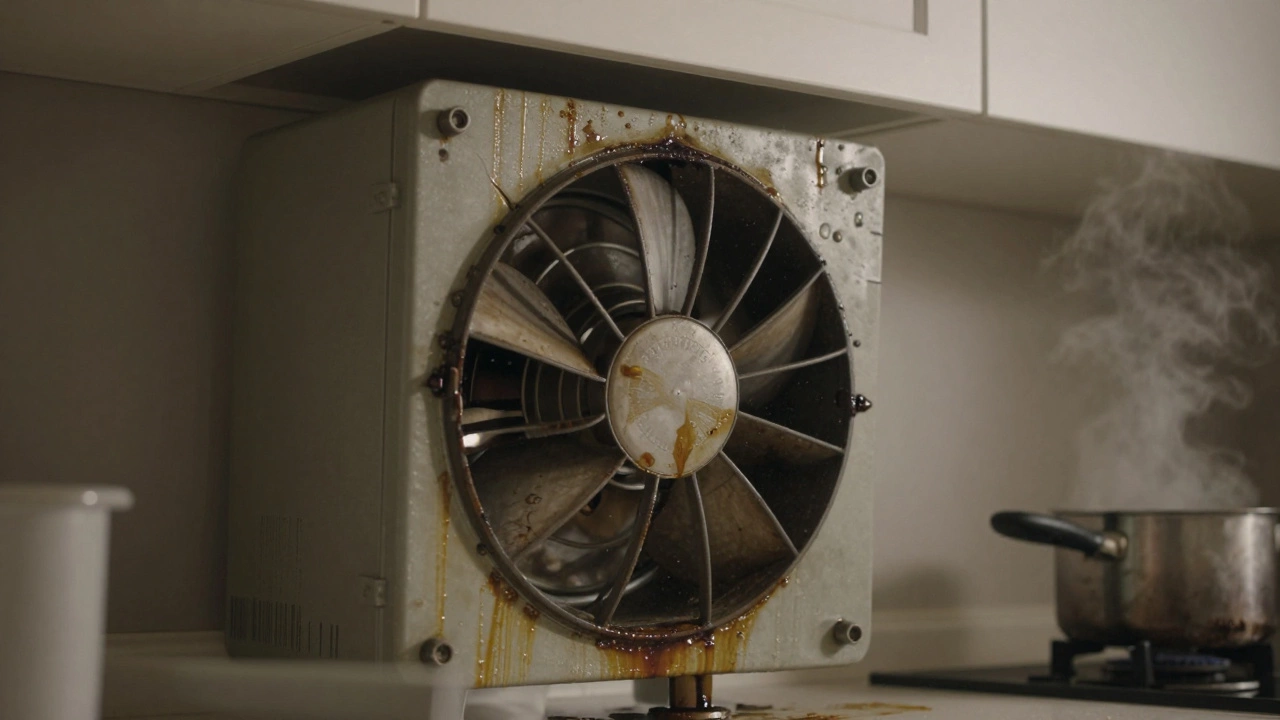
Extractor fans in kitchens and bathrooms work hard. Every time you cook, shower, or boil water, they pull out moisture, grease, and airborne particles. Over time, that grime builds up inside the housing, on the blades, and in the ductwork. A thin layer of grease might seem harmless, but it’s not. In kitchens, grease buildup can become a fire hazard. In bathrooms, mold grows easily in damp, dirty environments.Studies from the New Zealand Building Code Authority show that poorly maintained extractor fans are 40% more likely to fail within three years. That’s not because they’re cheap-it’s because they’re ignored. Unlike your fridge or washing machine, extractor fans rarely get a second glance. But they’re just as important. If your fan isn’t moving air properly, humidity stays in your home. That leads to peeling paint, warped wood, and black mold on walls and ceilings.
What happens when you don’t service your extractor fan
Think of your extractor fan like a car engine without oil changes. It doesn’t break all at once. It just gets slower, louder, and less reliable.- Reduced airflow: Grease and dust clog the fan blades and motor. Airflow drops by up to 60% in just two years without cleaning.
- Noisy operation: Dust buildup unbalances the motor. That’s why your fan starts buzzing or vibrating. It’s not just annoying-it’s a sign the bearings are wearing out.
- Higher energy bills: A clogged fan has to work harder. That means more electricity used for less results.
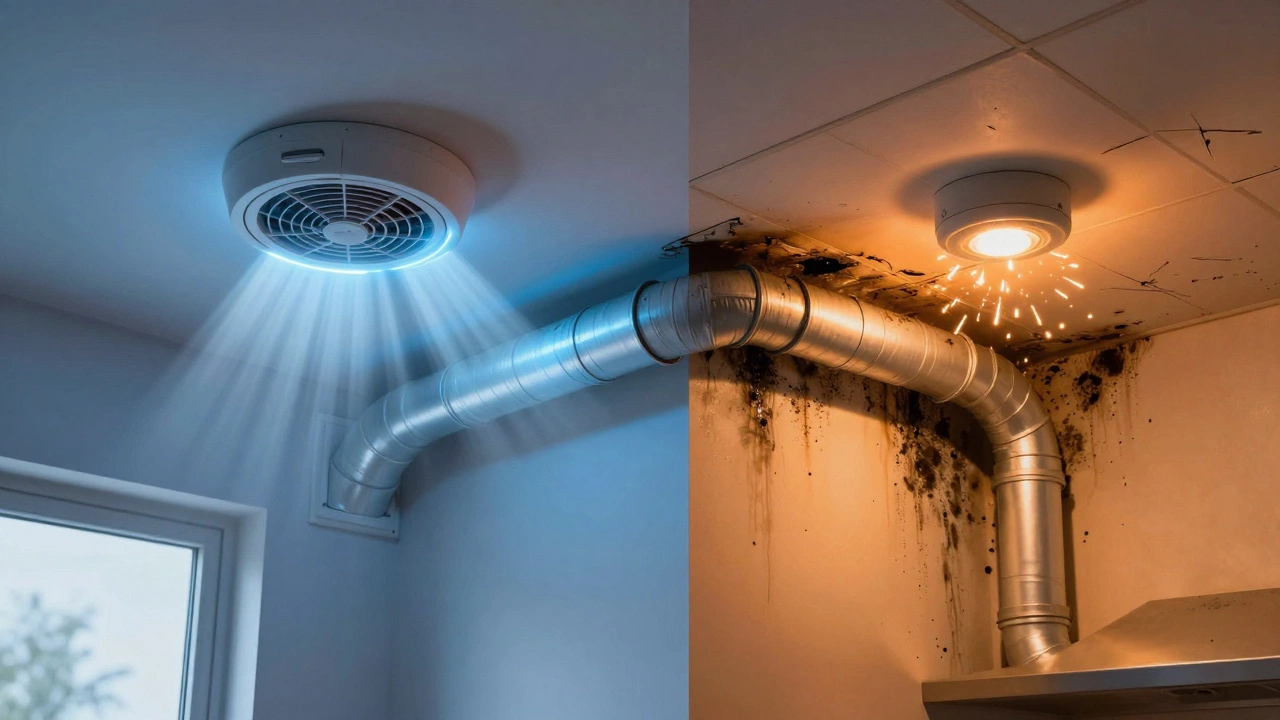
- Mold and mildew: In bathrooms, moisture doesn’t escape. Walls stay damp. Grout turns black. Ceiling tiles swell.
- Fire risk: In kitchens, grease accumulates in the duct. If the motor overheats, that grease can ignite. There were 17 kitchen fires in Wellington in 2024 linked to uncleaned extractor fans.
These aren’t theoretical risks. They’re real problems you’ll see if you’ve lived in an older home or rented a place where maintenance was skipped.
How often should you service your extractor fan?
There’s no one-size-fits-all schedule, but here’s what works in real homes:- Kitchen fans: Clean the filter every 2-3 months. Do a full service-motor, blades, duct-once a year.
- Bathroom fans: Clean the grille and blades every 6 months. Full service every 18-24 months.
- High-use homes: If you cook daily or have multiple bathrooms in use, do a full service annually.
Seasonal timing helps. Clean kitchen fans in spring, before heavy cooking season. Check bathroom fans in autumn, before winter humidity kicks in.
What’s involved in servicing an extractor fan
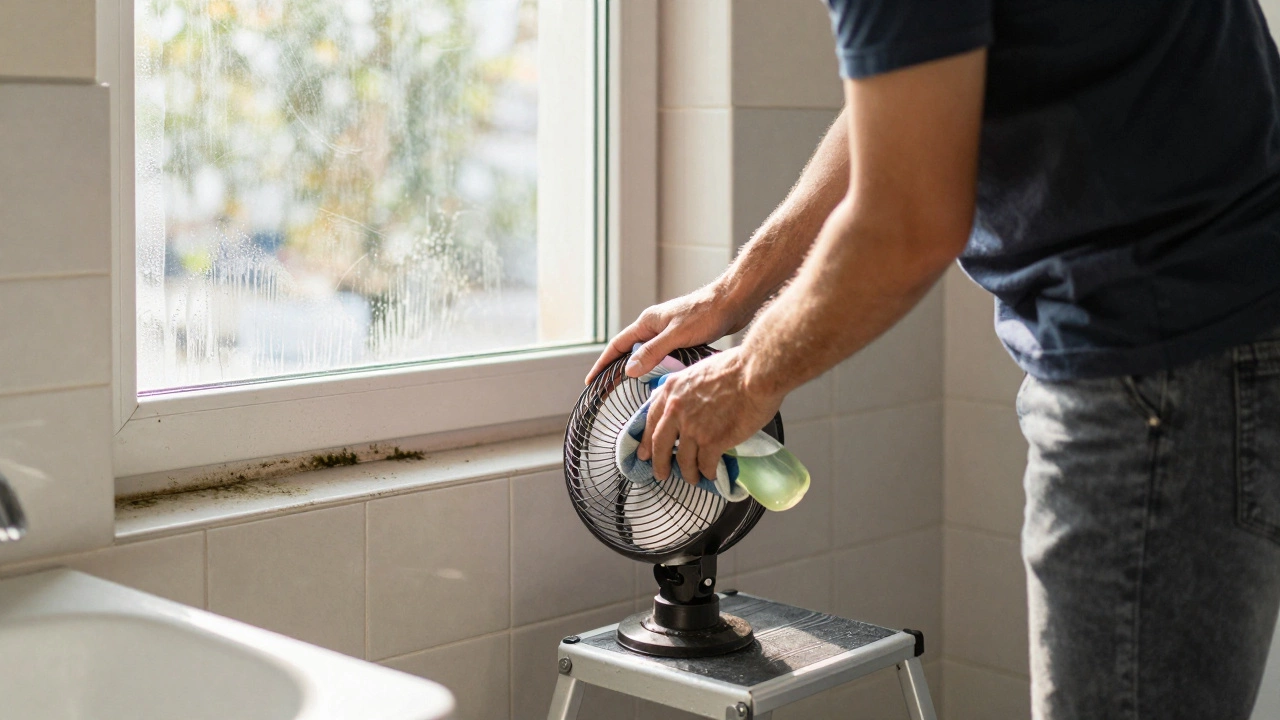
You don’t need to be a technician. Most servicing is simple DIY work.- Turn off the power. Always. Flip the circuit breaker, not just the switch.
- Remove the grille or cover. Most snap off or are held by screws. Keep the screws in a small container.
- Take out the filter (if present). Wash it in warm, soapy water. Let it dry completely before putting it back.
- Clean the fan blades and housing. Use a soft brush or cloth with white vinegar or mild degreaser. Avoid harsh chemicals-they can damage plastic parts.
- Check the duct. If you can access the duct from the roof or attic, look for blockages, bends, or animal nests. A vacuum with a long nozzle helps.
- Test the fan. Turn the power back on. Listen for unusual noises. Feel the airflow. It should be strong and steady.
If the fan still runs poorly after cleaning, the motor might be failing. That’s when you call a professional.
When to call a professional
DIY works for cleaning. But some problems need tools and training.- The fan won’t turn on at all.
- You hear grinding or screeching sounds.
- There’s a burning smell when it runs.
- The motor is visibly damaged or leaking oil.
- You can’t access the duct or it’s sealed behind drywall.
In Wellington, licensed electricians who specialize in extractor fan repair can test motor windings, replace capacitors, and reseal duct joints. A good technician will also check if your fan is the right size for the room. A tiny fan in a large bathroom won’t do the job, no matter how clean it is.
Signs your extractor fan is beyond repair
Sometimes, servicing isn’t enough. Here’s when it’s time to replace it:- It’s over 10 years old.
- It’s a cheap, no-name brand with no replacement parts available.
- The motor runs hot even after cleaning.
- Repair costs more than 50% of a new unit.
Modern extractor fans are quieter, more efficient, and smarter. Many now have humidity sensors that turn on automatically. Some even connect to smart home systems. Replacing an old fan isn’t just a fix-it’s an upgrade.
What to look for in a new extractor fan
If you’re replacing, don’t just grab the cheapest one. Look for:- CFM rating: For kitchens, aim for at least 100 CFM. For bathrooms, 50-80 CFM is enough for a standard room.
- Noise level: Look for 1 sone or less. Anything above 2 sones is noticeable.
- Energy Star rating: Saves power over time.
- Easy-to-clean design: Removable filters and smooth surfaces make future cleaning easier.
- Backdraft damper: Prevents cold air from coming back in through the duct.
Brands like Broan, Vent-A-Hood, and Extract-Air are common in New Zealand homes. They’re reliable, and parts are easy to find.
Cost of servicing vs. replacing
A basic service-cleaning and inspection-costs between $80 and $150 in New Zealand. If you do it yourself, it’s under $20 in cleaning supplies.A new extractor fan runs $120-$400, depending on features. Installation by a professional adds $100-$200. But if your old fan is struggling, the long-term savings on energy and repair bills often make replacement worth it.
Think of it like changing your car’s oil. Paying $100 now avoids a $2,000 engine replacement later.
Final advice: Make servicing part of your home routine
You don’t need to wait for a problem to act. Set a reminder on your phone: every six months, check your extractor fan. Wipe down the grille. Clean the filter. Listen for noise. It takes five minutes.Good ventilation isn’t a luxury. It’s what keeps your home healthy, dry, and safe. And unlike a fancy new fridge, you won’t notice a well-serviced fan-until you realize your walls haven’t gone moldy in years.
How often should I clean my kitchen extractor fan?
Clean the filter every 2 to 3 months if you cook daily. Do a full service-including blades, housing, and duct-once a year. If you fry or grill often, clean the filter monthly and service the fan every 6 months.
Can I clean my extractor fan myself?
Yes, most cleaning is safe to do yourself. Turn off the power, remove the cover and filter, wipe down blades and housing with vinegar or mild degreaser, and vacuum the duct if accessible. Avoid water on the motor. If you’re unsure, hire a professional.
Why is my extractor fan so loud?
Loudness usually means dust or grease has built up on the blades, unbalancing the motor. It can also mean worn bearings or a failing motor. Cleaning often fixes it. If noise returns quickly after cleaning, the motor may need replacement.
Does an extractor fan use a lot of electricity?
No, most modern fans use between 10 and 30 watts-less than a lightbulb. But if it’s clogged and working harder, it can use up to 50% more power. A clean fan runs efficiently and costs pennies to operate.
What happens if I don’t service my extractor fan?
Moisture and grease build up, reducing airflow. This leads to mold, peeling paint, higher energy bills, and in kitchens, a fire risk. Over time, the motor burns out. In New Zealand, extractor fan neglect is a common cause of hidden damp damage in older homes.