
When you’re replacing a boiler, a central heating unit that warms water for radiators and hot taps. Also known as a heat generator, it’s the heart of your home’s heating system. Turning off the water supply, the main line that feeds cold water into your home’s plumbing and heating system isn’t just a step—it’s the foundation. Skip this, and you’re not just risking a mess. You’re risking flood damage, pressure imbalances, or even a dangerous burst pipe. Most people think a boiler change is about swapping out the unit. It’s not. It’s about managing the whole system around it.
The water pressure, the force that pushes water through your pipes and boiler has to drop to zero before you start. If it doesn’t, water will keep flowing even after you shut the valves. That’s why you need to isolate the boiler using the dedicated stop valves—not just the main house supply. And don’t assume the pressure gauge on the boiler means it’s safe. Those can be misleading. You’ve got to physically drain the system, open the bleed valves on your radiators, and let gravity do its job. A lot of repair techs see homeowners try to rush this part. It never ends well.
There’s also the heating system, the full network of pipes, radiators, pumps, and controls that work together to deliver heat. When you change the boiler, you’re not just replacing a box. You’re reconnecting it to a living system. Old pipes might be corroded. Airlocks might be hiding in high points. The new boiler might need a different flow rate than the old one. That’s why professionals check the entire loop—not just the unit. If your system hasn’t been flushed in years, sludge buildup can clog the new boiler’s heat exchanger. That’s a $1,000+ problem you could’ve avoided.
And here’s something no one tells you: the water supply doesn’t just mean the cold feed. It also means the expansion tank, the filling loop, and the automatic air vent. Get any of those wrong, and your boiler will keep cutting out, making noise, or showing error codes. You’ll think it’s faulty. It’s not. It’s just not properly connected to the water system.
If you’re doing this yourself, you need the right tools: a pressure gauge, a drain hose, a spanner, and patience. If you’re hiring someone, ask them how they handle the water isolation. If they say, "I just turn off the mains," walk away. Real technicians know the difference between shutting off the house supply and isolating the boiler circuit. They know to test for residual pressure. They know to flush the system before refilling. They know that a boiler change isn’t a quick swap—it’s a system reset.
What you’ll find below are real stories from people who tried to cut corners on water supply during a boiler change—and what happened when they did. You’ll also see guides on how to safely drain a system, what tools you actually need, and why some "easy" boiler installs turn into disasters. This isn’t theory. It’s what happens on the ground in homes across Taunton. And if you’re about to replace your boiler, you need to know it before you start.
Posted by
Orin Trask
0 Comments
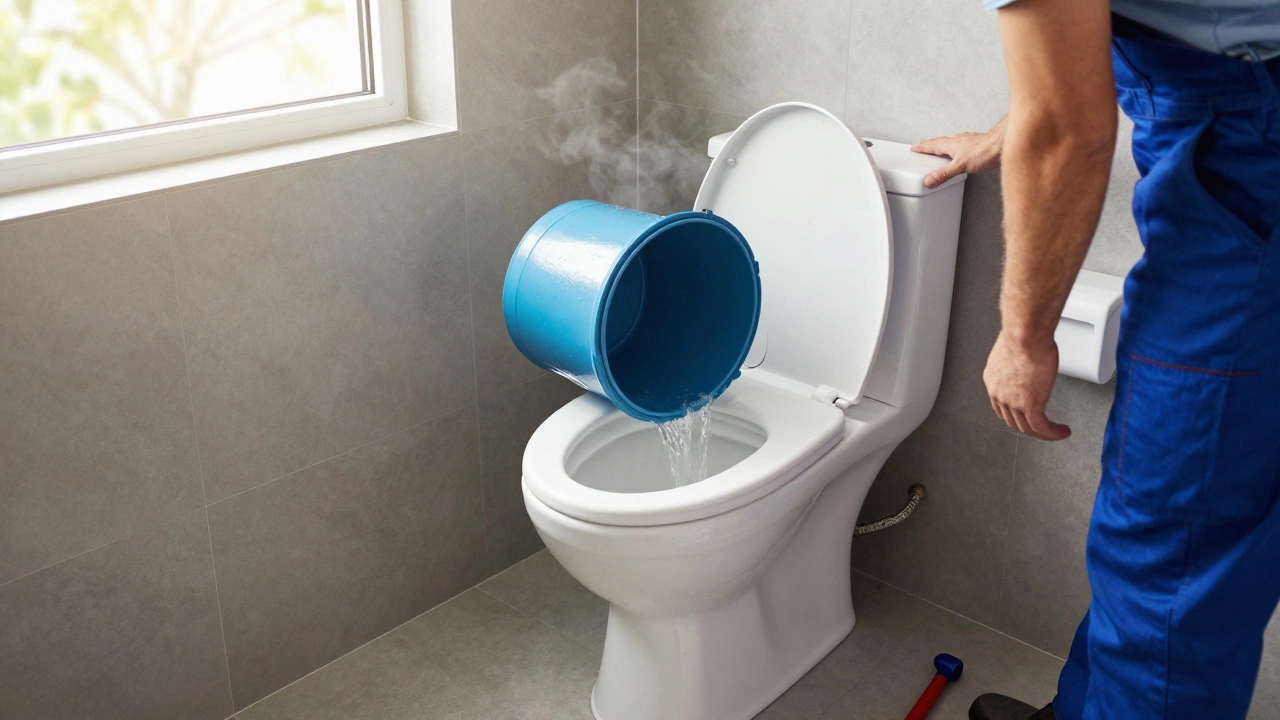
You can usually still use the toilet when replacing a boiler, since it runs on cold water, not the boiler. But if the plumber shuts off the main water, you'll need to flush manually. Prepare ahead to avoid hassle.
read more