
Major Appliance Repair vs. Replace Calculator
Walk into any modern home, and you’ll see them immediately. They are the heavyweights of household chores, the machines that save us hours of manual labor every single week. But when people ask, what are the 4 major appliances, they aren’t talking about your toaster or your coffee maker. Those are small appliances-plugged in, portable, and easily replaced if they break.
The term "major appliances" (often called white goods) refers to the large, stationary units that form the backbone of daily life. While definitions can vary slightly depending on who you ask-a retailer might count a dishwasher as major, while an electrician might focus on power requirements-the industry standard generally groups them into four core categories based on their function and installation complexity.
The Big Four: Defining Major Appliances
To understand what makes an appliance "major," you have to look at three things: size, installation, and lifespan. Small appliances sit on a counter. Major appliances usually require dedicated circuits, plumbing connections, or venting systems. You don’t just unplug a major appliance; you often need a professional to move it.
Here are the four primary categories that define this group:
- Refrigerators: The cold storage unit that keeps food safe and extends shelf life.
- Ovens/Ranges: The cooking powerhouse that handles baking, roasting, and stovetop heating.
- Washing Machines: The laundry workhorse that cleans clothes using water, detergent, and agitation.
- Dryers: The machine that removes moisture from wet laundry using heat and airflow.
These four units represent the essential infrastructure for feeding, cleaning, and maintaining a household. Let’s break down why each one earns its spot in the club.
1. Refrigerators: The Cold Heart of the Kitchen
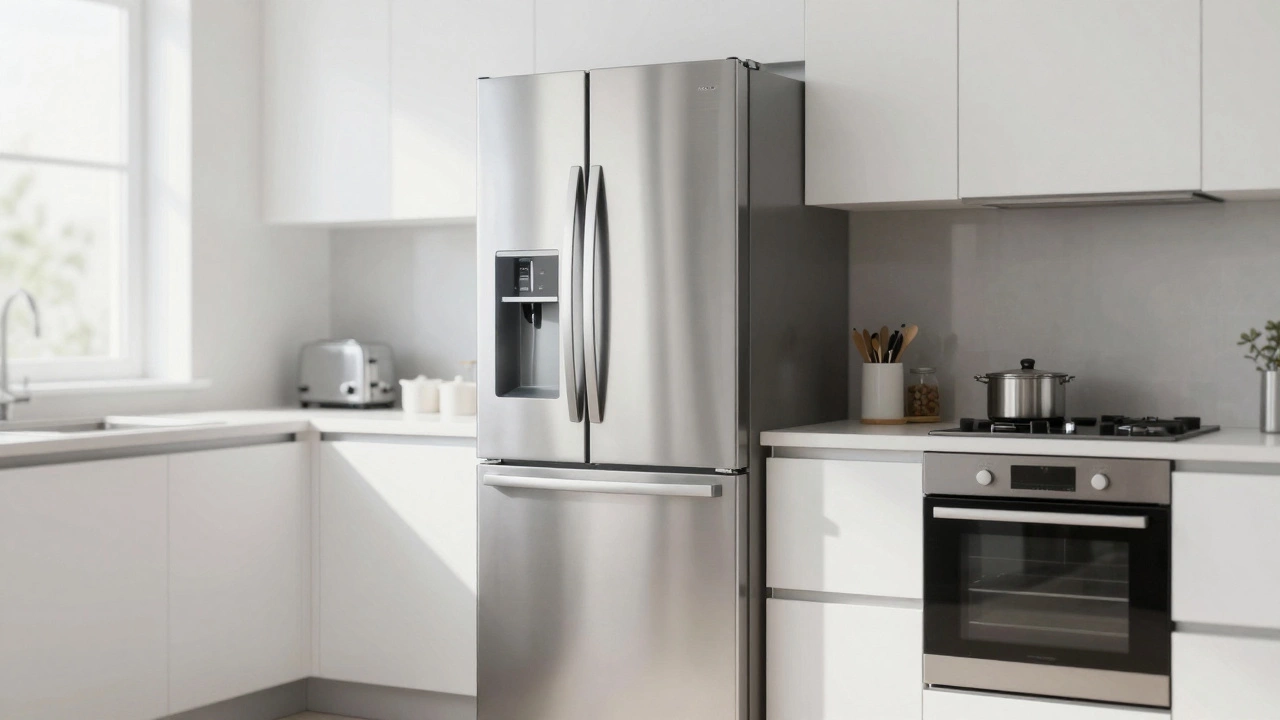
A refrigerator is arguably the most critical major appliance. Without it, modern grocery shopping habits collapse. You’d be eating fresh produce within days rather than weeks, and meat would spoil rapidly. These units are complex mechanical systems involving compressors, condensers, evaporators, and refrigerants like R-600a or R-134a.
Unlike a blender, a refrigerator runs 24/7. It requires precise temperature control-usually between 35°F and 38°F (1.7°C to 3.3°C) in the main compartment-to prevent bacterial growth. Because they are permanently installed with specific dimensions for cabinetry or freestanding spaces, replacing one involves measuring clearances, checking electrical amperage, and sometimes modifying doorways to fit the new unit.
In New Zealand, where energy efficiency ratings matter due to higher electricity costs, choosing a fridge isn’t just about capacity. It’s about how well the compressor manages cooling cycles without spiking your power bill. A broken fridge doesn’t just inconvenience you; it risks thousands of dollars worth of perishable food.
2. Ovens and Ranges: Cooking Infrastructure
Next up is the oven or range. This category includes standalone ovens, cooktops, and combined range units. Whether gas or electric, these appliances demand significant safety considerations. Gas ranges require ventilation to handle combustion byproducts, while electric induction or coil ranges often need dedicated 240-volt circuits.
Consider the difference between a microwave and an oven. A microwave heats water molecules quickly for reheating. An oven provides consistent, ambient heat for chemical reactions like baking bread or roasting chicken. That distinction matters because ovens involve thermal mass, insulation layers, and precise thermostat controls. When an oven fails, it’s rarely a simple fix. Thermostats drift, heating elements burn out, and igniters fail. These repairs require specialized diagnostic tools and parts knowledge.
For many households, the oven is the centerpiece of holiday meals and daily dinners. Its reliability directly impacts the ability to prepare nutritious, home-cooked food efficiently.
3. Washing Machines: Water Management Systems
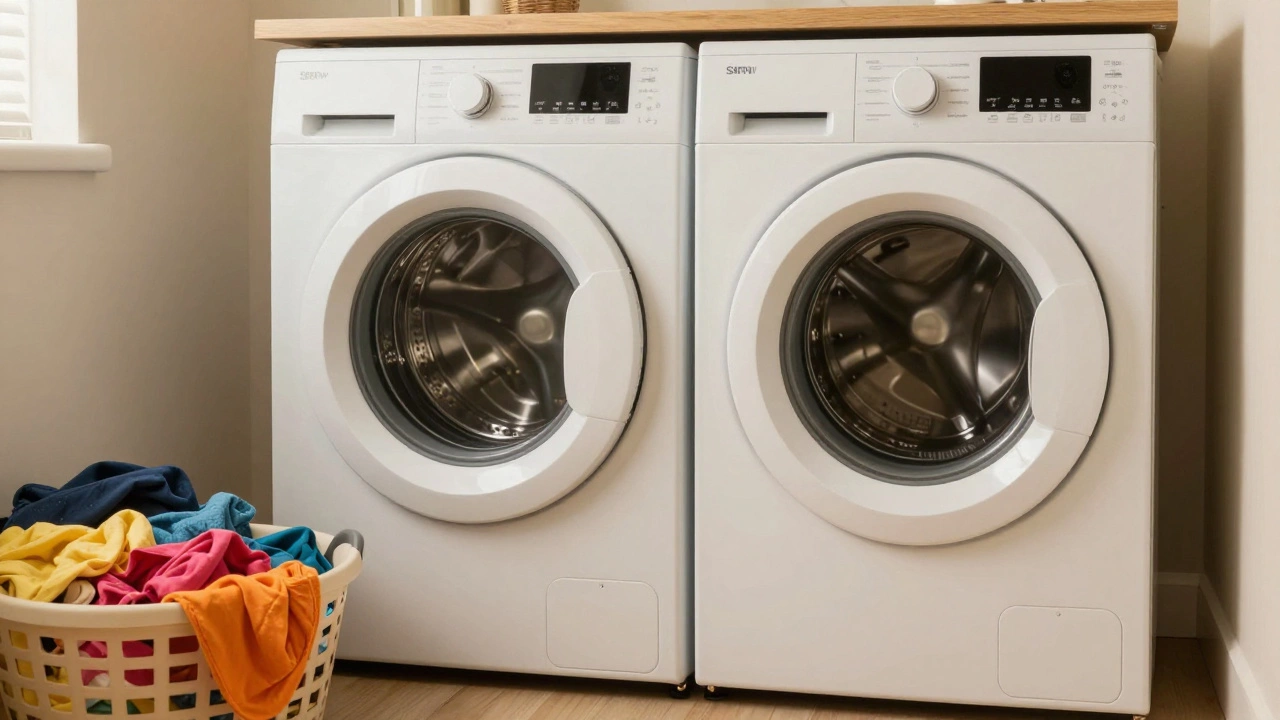
The washing machine sits at the intersection of plumbing and mechanics. It draws water from your home’s supply lines, mixes it with detergent, agitates clothes to remove dirt, and then drains the wastewater into your sewage system. This cycle happens multiple times per load, putting stress on pumps, valves, hoses, and motors.
There are two main types: top-loaders and front-loaders. Top-loaders use an agitator or impeller to move clothes through water. Front-loaders tumble clothes through a small amount of water, which is more efficient but prone to mold issues if not maintained properly. Regardless of type, washing machines are considered major appliances because they require permanent water hookups and drainage connections. You can’t just plug them into a standard outlet and place them anywhere; vibration isolation and floor leveling are crucial to prevent "walking" across the room during spin cycles.
In Wellington, where hard water can be an issue in some areas, washing machines face additional challenges. Mineral buildup affects sensors and heating elements, leading to premature failure. Regular maintenance, like cleaning filters and using vinegar rinses, extends their lifespan significantly.
4. Dryers: Heat and Airflow Dynamics
Finally, we have the dryer. Often paired with the washing machine, the dryer completes the laundry process by removing moisture. Electric dryers use heating coils powered by high-amperage circuits. Gas dryers use natural gas or propane burners. Both types rely heavily on airflow to push moist air out of the drum and vent it outside.
Why is a dryer a major appliance? First, the power requirements. Electric dryers typically need 240V outlets, distinct from the 110V used by lamps or phones. Second, safety. Lint accumulation in vents is a leading cause of house fires. Proper installation requires rigid metal ducting, correct slope, and external termination caps to prevent animal entry and backdrafts. Third, complexity. Modern dryers include moisture sensors, tumblers, belts, and electronic control boards. When a dryer stops working, it’s not always a tripped breaker; it could be a failed thermal fuse, a broken belt, or a clogged vent.
Without a functioning dryer, laundry piles up, especially during rainy seasons common in coastal regions like Wellington. The convenience factor alone elevates it beyond the status of a small appliance.
| Appliance Type | Primary Function | Installation Complexity | Typical Lifespan | Key Maintenance Need |
|---|---|---|---|---|
| Refrigerator | Food preservation via cooling | High (electrical clearance) | 10-15 years | Clean condenser coils annually |
| Oven/Range | Cooking and baking | Medium-High (gas/electric hookup) | 13-15 years | Calibrate thermostat; clean seals |
| Washing Machine | Cleaning clothes | Medium (plumbing + leveling) | 10-12 years | Clean lint filter; check hoses |
| Dryer | Removing moisture | High (ventilation + power) | 10-13 years | Clean vent ducts quarterly |
Why the Distinction Matters for Repairs
You might wonder why categorizing these four items matters. If your toaster breaks, you buy a new one for $30. If your refrigerator dies, you’re looking at a $1,500 replacement and potential food loss. The distinction dictates how you approach ownership.
Major appliances are investments. They require proactive maintenance. For example, ignoring a leaking washing machine hose can lead to structural damage in your home. Neglecting dryer vent cleaning increases fire risk. Understanding that these four units are integral to your home’s infrastructure helps you prioritize repair over replacement when feasible.
Repair professionals specialize in these systems. An appliance technician knows how to diagnose a faulty capacitor in a fridge compressor or replace a broken drive belt in a dryer. They carry specific parts and tools for these major units. Trying to DIY complex repairs on major appliances can void warranties and create safety hazards, especially with gas lines or high-voltage components.
Common Misconceptions About Major Appliances
Not all large devices are major appliances. Here’s where confusion often arises:
- Dishwashers: Often grouped with major appliances due to size and plumbing needs, but technically classified separately in some insurance policies. However, for practical purposes, they share the same repair complexity.
- Microwaves: Even built-in microwaves are usually considered small appliances because they lack the mechanical complexity and dedicated circuit requirements of ovens.
- Vacuums: Portable vacuums are small appliances. Central vacuum systems, however, are part of the home’s infrastructure and lean toward major appliance territory.
- Water Heaters: While essential, water heaters are often categorized under HVAC or plumbing rather than general appliances, though they share similar installation complexities.
The key takeaway is that the "Big Four"-refrigerator, oven, washer, and dryer-are the core set because they address basic human needs: food safety, nutrition preparation, clothing hygiene, and moisture management. Everything else supports these functions.
Extending the Life of Your Major Appliances
Since replacing these units is costly, extending their lifespan saves money and reduces waste. Here are practical tips tailored to each category:
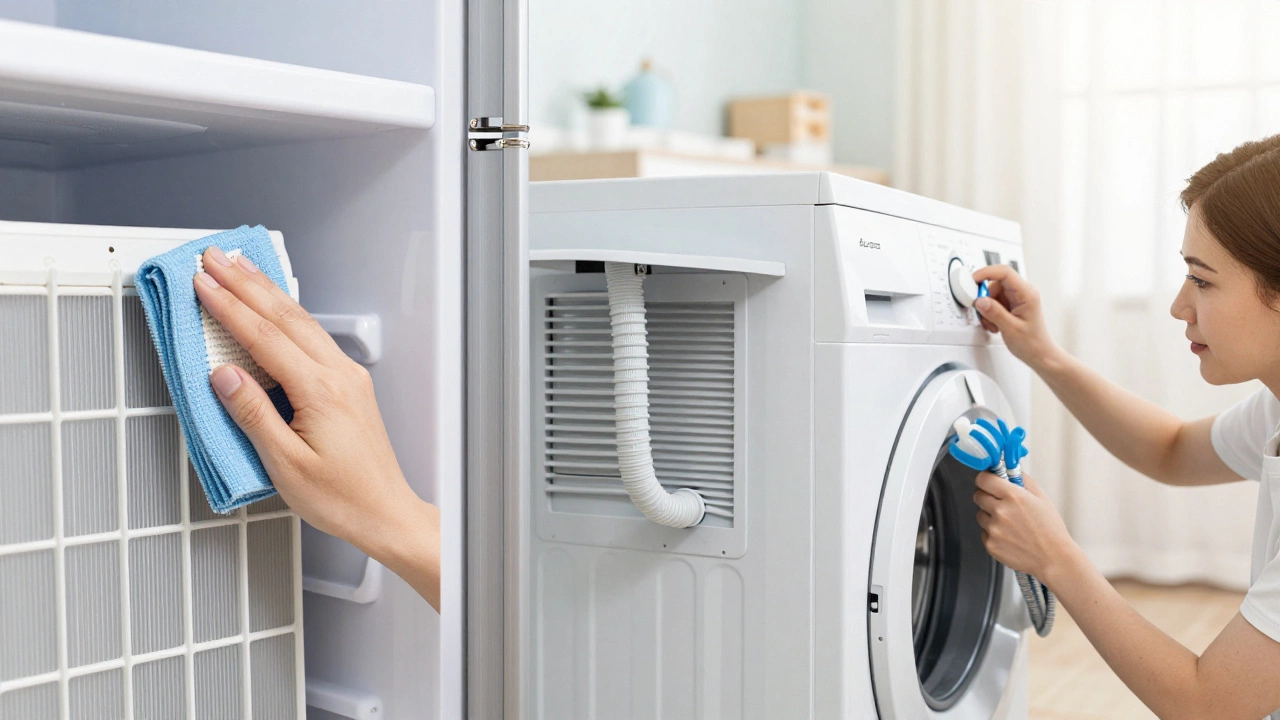
- Refrigerator: Keep the area behind and above the fridge clear for airflow. Clean the condenser coils every six months using a brush or vacuum attachment. Ensure door seals are tight by closing a dollar bill in the door; if it slips out easily, replace the gasket.
- Oven: Avoid using abrasive cleaners on self-cleaning linings. Calibrate the temperature annually using an oven thermometer. If the reading differs by more than 25 degrees, adjust the thermostat setting or call a pro.
- Washing Machine: Run a hot water cycle with vinegar or a dedicated cleaner monthly to remove residue. Check inlet hoses for bulges or cracks every year. Replace them every five years to prevent floods.
- Dryer: Clean the lint trap after every load. Inspect the vent duct connection behind the machine quarterly for disconnections or blockages. Never use plastic flex ducting; opt for rigid metal for safety.
Regular care prevents minor issues from becoming catastrophic failures. A small leak fixed early won’t destroy your subfloor. A cleaned vent won’t ignite a lint fire.
Is a dishwasher considered a major appliance?
Yes, dishwashers are widely considered major appliances. Like the big four, they require permanent plumbing connections, dedicated electrical circuits, and are built into cabinetry. While some strict definitions limit "major" to the original four, retailers, insurers, and repair services classify dishwashers alongside refrigerators and washers due to their size, cost, and installation complexity.
What is the difference between a major and a small appliance?
The main differences are size, installation, and portability. Small appliances (toasters, blenders, microwaves) plug into standard outlets, sit on counters, and are easily moved. Major appliances (fridges, ovens, washers, dryers) are large, stationary, often require special wiring or plumbing, and are difficult to relocate without professional help.
How long do major appliances last?
Lifespans vary by type and usage. Refrigerators typically last 10-15 years. Ovens and ranges last 13-15 years. Washing machines average 10-12 years. Dryers last 10-13 years. Proper maintenance, such as cleaning coils and vents, can extend these lifespans significantly. Poor maintenance or harsh water conditions can shorten them.
Should I repair or replace my major appliance?
Use the "50% rule." If the repair cost is less than 50% of the price of a new unit and the appliance is less than halfway through its expected lifespan, repair it. If it’s older, frequently breaking down, or inefficient (high energy/water use), replacement is usually more economical in the long run. Always get a written quote before deciding.
Why are major appliances called "white goods"?
The term "white goods" originated in the mid-20th century when most large household appliances were painted white enamel. This color hid dust and stains better than darker paints and gave homes a clean, modern look. Even though today’s appliances come in stainless steel, black, and other colors, the industry term persists.