
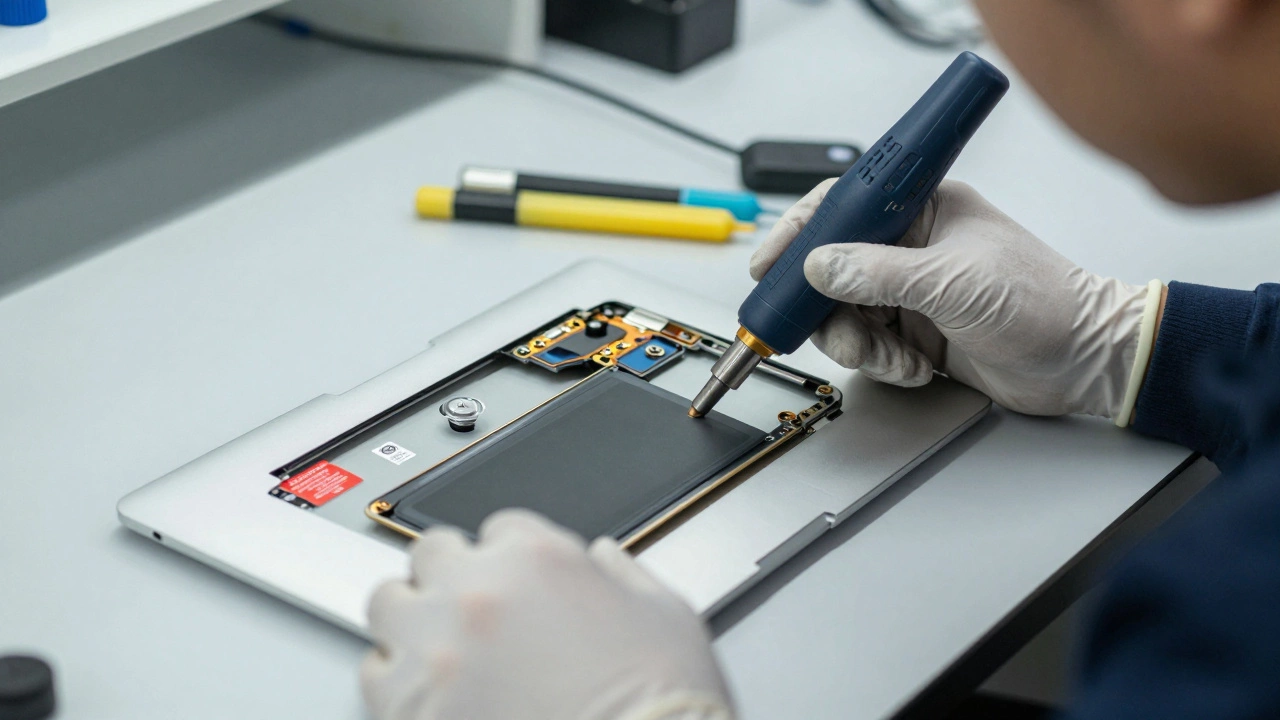
Laptop Repair Cost Calculator
Ever opened your laptop to find it won’t turn on, only to get a repair quote that feels like a punch to the gut? You’re not alone. A simple screen replacement can cost $300. A broken motherboard? That’s often $500 or more. And that’s before tax. Why does fixing a laptop cost nearly as much as buying a new one? The answer isn’t just about labor-it’s a mix of hidden costs, supply chains, and design choices that make repair a financial gamble.
Parts aren’t sold like they used to be
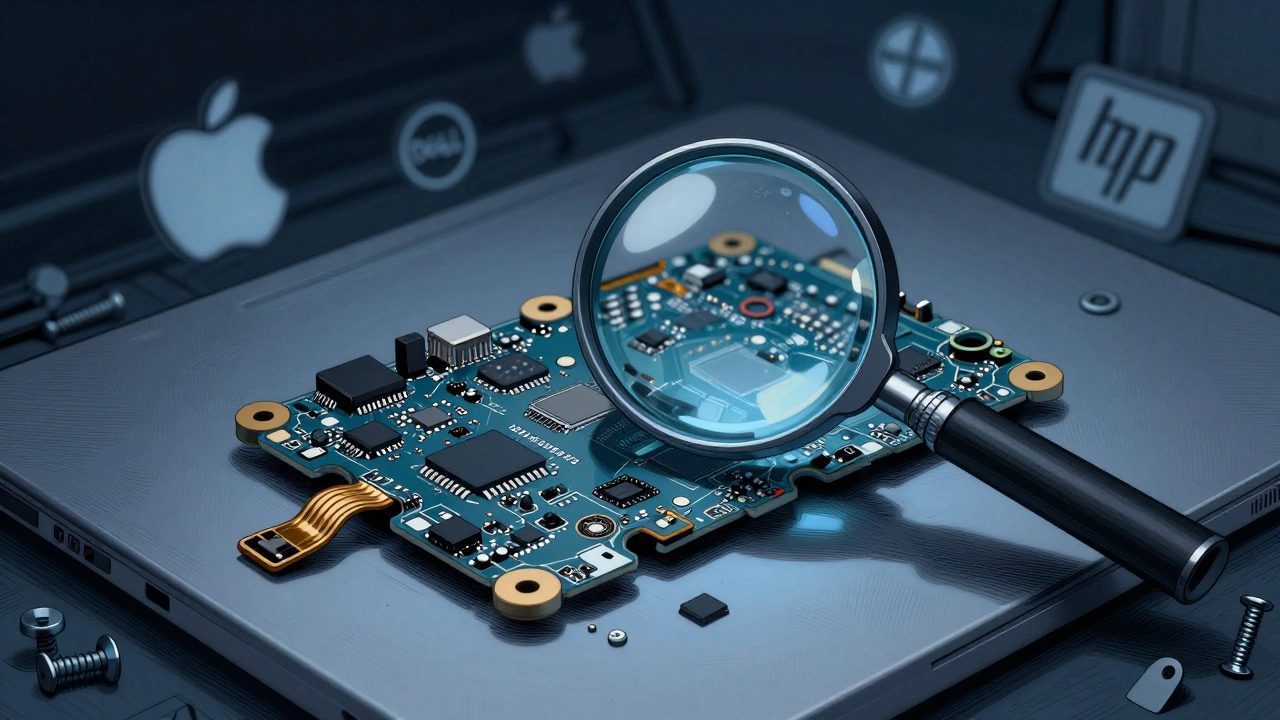
Back in the 2000s, you could walk into any electronics store and buy a replacement keyboard, battery, or hard drive off the shelf. Today, most laptop parts are proprietary. Apple, Dell, HP, and Lenovo design their laptops with custom connectors, soldered components, and unique screw placements. These aren’t standard parts you can find at Best Buy. They’re made for one model, one year, and often only sold to authorized repair shops.
Take the MacBook Air M2. Its battery is glued into the chassis. Replacing it isn’t just about swapping a component-it’s about heating the entire bottom panel, carefully prying it open without cracking the display, and then resealing it with special adhesive. The battery itself? Apple sells it to repair centers for about $120. But you won’t find that same battery for sale online unless you’re buying from a third-party supplier with questionable quality. And even then, you risk voiding warranty or damaging the trackpad.
Manufacturers don’t sell these parts to the public. They don’t even sell them to most independent repair shops. That means only certified technicians can get them. And when supply is limited, prices rise.
Labor isn’t cheap-and it’s getting harder
Fixing a laptop isn’t like fixing a toaster. You don’t just unscrew a panel and swap a fuse. Modern laptops are packed with micro-soldered chips, tiny flex cables, and layers of components so thin they’re measured in microns. A single misstep with a heat gun can kill the entire logic board.
Technicians need specialized tools: micro-soldering stations, precision screwdriver sets, anti-static mats, and sometimes even X-ray machines to diagnose hidden board damage. These tools cost thousands. A good micro-soldering station runs $2,000. Add in training, certification, and ongoing education, and you’re looking at $10,000+ in overhead just to start repairing laptops.
And time? A screen replacement takes 45 minutes if you’re experienced. A motherboard repair? That’s 3-6 hours of focused, high-risk work. Most shops charge $80-$120 an hour. Multiply that by five hours, add in the cost of the part, and suddenly you’re at $600 before tax.
Warranty and liability lock you in
When you take your laptop to a certified repair center, you’re paying for more than just the fix-you’re paying for peace of mind. These shops carry liability insurance. They guarantee their work. If the repair fails, they fix it again-for free.
Independent repair shops don’t always offer that. And if you go the DIY route? You’re on your own. No warranty. No recourse. One wrong move and your $1,200 laptop becomes a paperweight. That risk matters. People pay extra to avoid it.
Manufacturers also use software locks. If you replace a screen or battery with a non-OEM part, your laptop might show a warning like “Non-Apple Part Installed” or “Battery Not Authentic.” Some systems even limit performance or disable features like True Tone or battery health monitoring. That’s not a bug-it’s intentional. It pushes users back to official repair channels.
The repair industry is shrinking
There used to be hundreds of local laptop repair shops in every city. Now? Many have closed. Why? Because the cost of staying in business is rising while profit margins are shrinking.
Repair shops used to buy bulk parts at discounts. Now, manufacturers restrict access. Some only sell parts to shops that sign exclusive contracts. Others charge high minimum order amounts. A small shop can’t afford to stock 20 different MacBook logic boards just to serve five customers a month.
Plus, the rise of cheap laptops has changed the game. A $400 Chromebook doesn’t justify a $300 repair. Even mid-range Windows laptops now cost $600-$800. At that price point, many people decide it’s cheaper to replace than repair. That means fewer repairs, less volume, and higher prices for the ones that do come in.
Manufacturers don’t want you to fix it
This isn’t an accident. It’s business strategy. Companies like Apple and Dell make more money selling new devices than repairing old ones. The more devices you buy, the more software, accessories, and subscriptions you’re likely to purchase.
Right-to-repair laws have been fighting this for years. In 2023, the EU passed rules forcing manufacturers to make spare parts available for 10 years. The U.S. FTC has cracked down on companies that block repairs with software locks. But change is slow. In the U.S., most consumers still can’t legally buy the parts they need.
Even when parts are available, instructions aren’t. Apple doesn’t publish repair manuals for newer models. Dell hides service guides behind login walls. Without access to official documentation, even skilled technicians are flying blind.
When repair makes sense-and when it doesn’t
Not every broken laptop is worth fixing. Here’s a simple rule: if the repair cost is more than 50% of the price of a comparable new laptop, walk away.
But there are exceptions:
- Your laptop has a high-end processor (Intel i7 or AMD Ryzen 7) or 16GB+ RAM-you’ll pay more to replace that.
- You rely on specific software that doesn’t run on newer hardware.
- You’re attached to the keyboard layout, screen size, or trackpad feel.
- The laptop is still under warranty or you have extended coverage.
If you’re replacing a 2020 Dell XPS 13 with a 2025 model, you’re paying $1,200 for a 10% performance boost. That’s not always worth it. But if your 2020 model has a cracked screen and a healthy battery, replacing the screen for $250 keeps it alive for another three years. That’s smart.
For older laptops (5+ years), consider upgrading the SSD or RAM instead of replacing the whole machine. A $60 SSD and $40 RAM stick can make a 7-year-old laptop feel like new again. That’s often cheaper than any screen or motherboard repair.
What you can do right now
Don’t panic when you get a high quote. Ask these questions:
- Can you show me the exact part number and where it’s sourced from?
- Do you offer a warranty on the repair?
- Will the fix affect my warranty or software features?
- Is there a cheaper alternative part that still works reliably?
Get a second opinion. Independent shops often charge 30-50% less than brand-certified centers. Check reviews on Google or Yelp. Look for shops that specialize in your brand. A shop that fixes 50 MacBooks a month knows more than one that does 10 of everything.
And if you’re handy? Watch YouTube tutorials. Buy a repair kit from iFixit. Order the part yourself. Just know the risks. You might save $200-or end up spending $800 on a new laptop because you cracked the display trying to fix the old one.
At the end of the day, laptop repair is expensive because the system is designed to make it expensive. But it doesn’t have to be. The more people demand repairable tech, the more companies will have to listen. Until then, you’re paying for convenience, exclusivity, and a system that wants you to buy new-not fix old.
Is it worth repairing a 5-year-old laptop?
It depends. If the laptop still runs your essential software, has a good battery, and the repair cost is under half the price of a new comparable model, then yes. Upgrading the SSD or RAM can breathe new life into an older machine for under $100. But if the motherboard is failing or the screen is cracked, it’s often better to replace it.
Why can’t I buy laptop parts online?
Many manufacturers restrict part sales to authorized repair centers to control quality and protect sales of new devices. While some parts are available on Amazon or eBay, they’re often third-party copies with inconsistent quality. Genuine OEM parts are rarely sold to the public.
Do repair shops mark up parts?
Yes, but not as much as you think. A screen that costs the shop $80 might sell for $250. But that covers labor, tools, overhead, warranty, and the risk of damaging your device. A $250 repair isn’t just the part-it’s the technician’s skill, time, and liability.
Can I fix my laptop myself to save money?
You can, but it’s risky. Simple fixes like replacing a battery or adding RAM are doable with the right guide. But anything involving the motherboard, display connectors, or soldering requires training and tools most people don’t have. One mistake can turn a $200 repair into a $1,000 loss.
Why do Apple repairs cost more than Dell or HP?
Apple uses more custom parts, tighter integration, and stricter repair controls. Their parts are harder to source, labor is more complex, and they charge higher prices to authorized providers. Dell and HP have more open repair ecosystems, so parts and labor are often cheaper.