
Heat Pump Cooling Troubleshooter
Why is your heat pump running but not cooling?
This tool helps you quickly identify the most likely cause of your heat pump issue based on your symptoms.
Select your symptoms
Your likely issue:
If your heat pump is running like it should-fan spinning, air blowing-but the room isn’t getting any cooler, you’re not alone. This is one of the most common complaints we hear in Wellington during summer, especially when humidity spikes and people expect instant relief. The good news? Many of these issues are simple to fix yourself. You don’t always need a technician. Here’s what’s likely going on and how to fix it.
Check the Thermostat Settings First
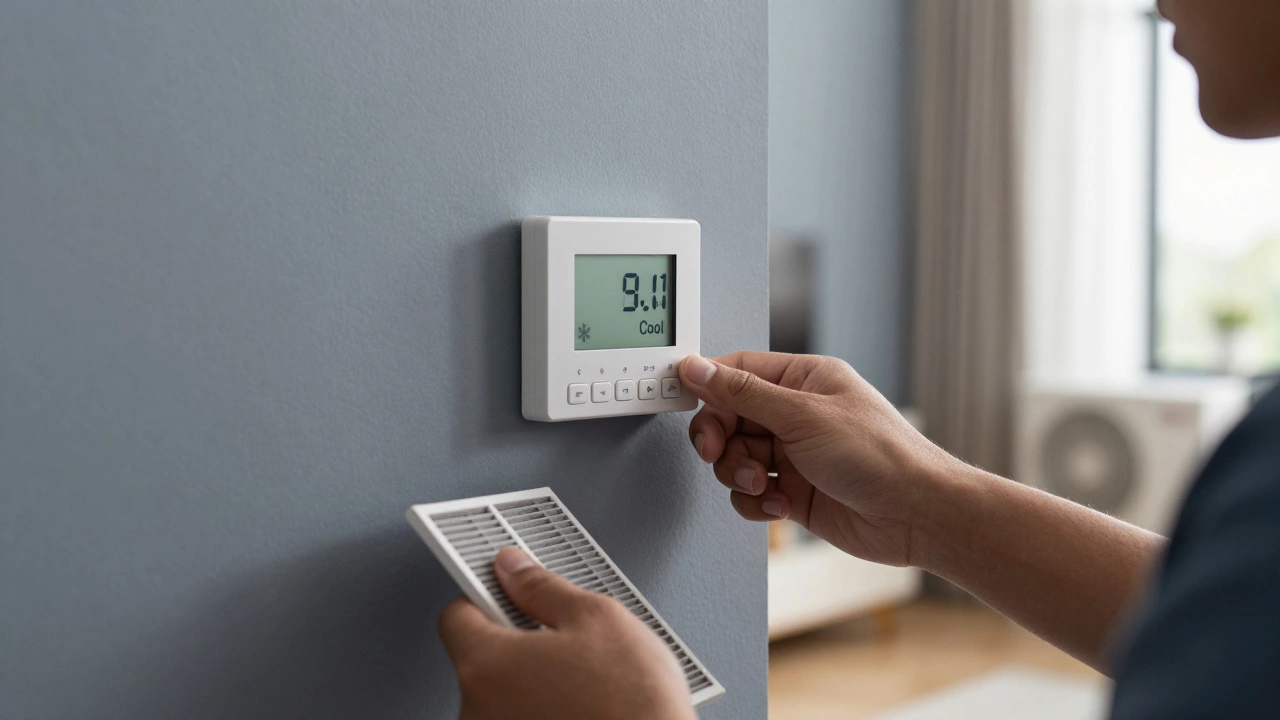
Before you panic, make sure the thermostat is actually set to cooling mode. It sounds basic, but people often switch it to "heat" by accident after winter, or leave it on "fan only" thinking it’ll cool the room. Look at the display: is it showing "Cool" or a snowflake icon? If it says "Heat" or "Auto," that’s your problem. Switch it to "Cool," set the temperature at least 2°C lower than the current room temperature, and wait 10 minutes. If the unit still doesn’t cool, move to the next step.Dirty Air Filter Is the #1 Culprit
A clogged air filter is the most common reason heat pumps run but don’t cool. When dust and debris block airflow, the system can’t pull in enough warm air to cool down. The evaporator coil freezes up, the compressor keeps running, and you get warm air blowing out even though the unit is on. Check your filter-if it’s gray or you can’t see light through it, it’s time to replace it. Most home heat pumps use a 1-inch filter you can buy at any hardware store. Replace it every 1-3 months, especially if you have pets or live near the coast where salt and dust get everywhere. After replacing it, give the system 15-20 minutes to recover. You’ll often feel cooler air return.Outdoor Unit Is Blocked or Dirty
Your heat pump’s outdoor unit needs space to breathe. If it’s covered in leaves, grass clippings, or even just a thick layer of dust, it can’t release heat properly. In Wellington’s damp climate, mold and algae can grow on the coils, especially if the unit sits under a tree or near a garden bed. Turn off the power, then gently rinse the coils with a garden hose-don’t use a pressure washer. Keep the area clear of plants, mulch, or storage boxes. You need at least 60cm of clearance on all sides. A blocked outdoor unit doesn’t stop the fan from spinning, so it’ll keep running, but the heat can’t escape. That means your home stays warm.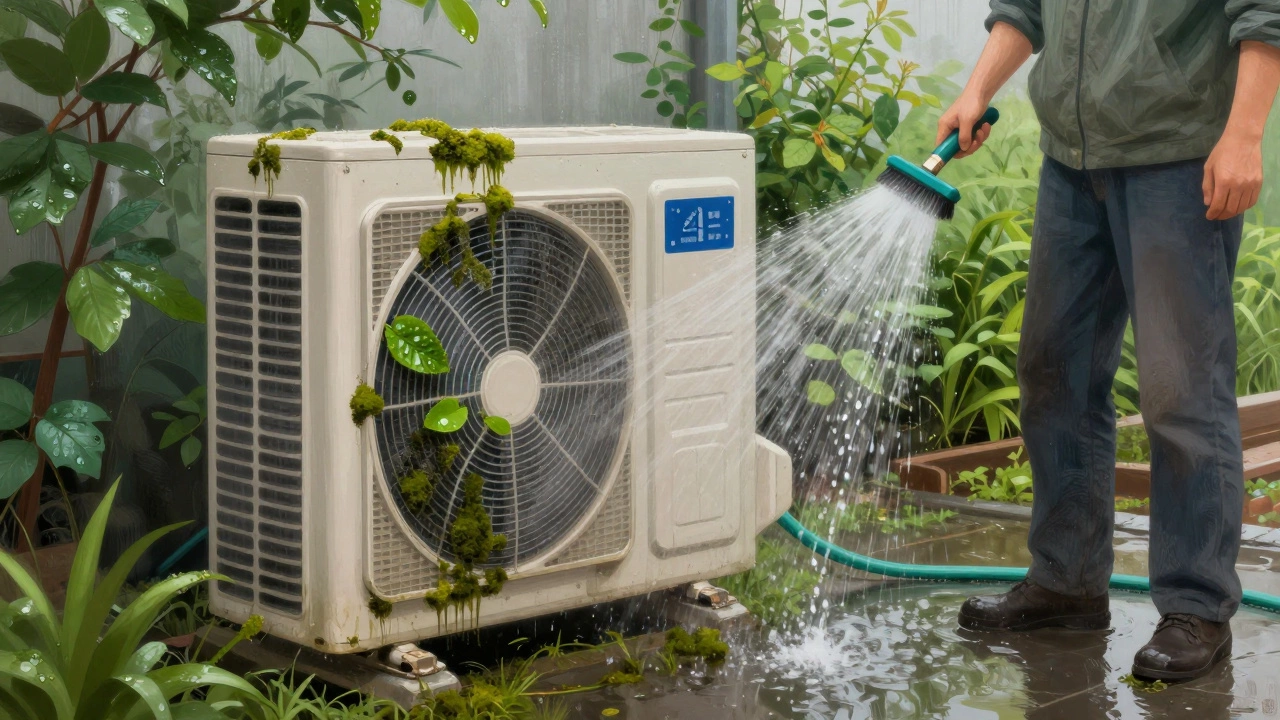
Refrigerant Leak? Look for Ice or Hissing
If your filter and outdoor unit are clean, but the system still isn’t cooling, you might have a refrigerant leak. Signs include: ice forming on the copper lines or indoor unit, a hissing or bubbling sound from the outdoor unit, or the air coming out feeling barely cool even after hours of running. Refrigerant isn’t something you top up like oil-it’s a sealed system. If it’s low, there’s a leak. This isn’t a DIY fix. Trying to add refrigerant without fixing the leak just wastes money and harms the environment. Call a licensed technician. They’ll find the leak, repair it, then recharge the system with the correct type and amount of refrigerant (usually R410A in modern units). Ignoring this can damage the compressor, which costs over $1,500 to replace.Thermostat Wiring or Sensor Issues
Sometimes the thermostat itself is the problem. A loose wire, a dying battery, or a faulty temperature sensor can make it think the room is cooler than it is. If the display is flickering, or the unit turns on and off too quickly (short cycling), the thermostat might be misreading the temperature. Try replacing the batteries. If that doesn’t help, take the thermostat off the wall and check if the wires are snug in their terminals. Dust can build up inside-use a dry toothbrush to clean it. If you’re still unsure, bypass the thermostat temporarily: turn off the power to the heat pump at the breaker, then connect the R and Y wires together (this forces the cooling to run). If the unit cools now, your thermostat is faulty. Replace it with a basic programmable model-no need for fancy smart features unless you need them.Blower Motor or Fan Speed Problems
If the fan is running but the airflow feels weak, the blower motor might be failing or set to the wrong speed. Older heat pumps often have a multi-speed motor controlled by a selector switch inside the air handler. If it’s set to "Low," it won’t move enough air over the cold evaporator coil. Check your unit’s manual for how to adjust it. If the motor is making grinding or squealing noises, or it’s running slower than usual, it could be wearing out. A failing motor won’t stop the system from running, but it will drastically reduce cooling efficiency. Replacing the motor costs between $300-$600, depending on the model. If your heat pump is over 10 years old, this might be a sign it’s nearing the end of its life.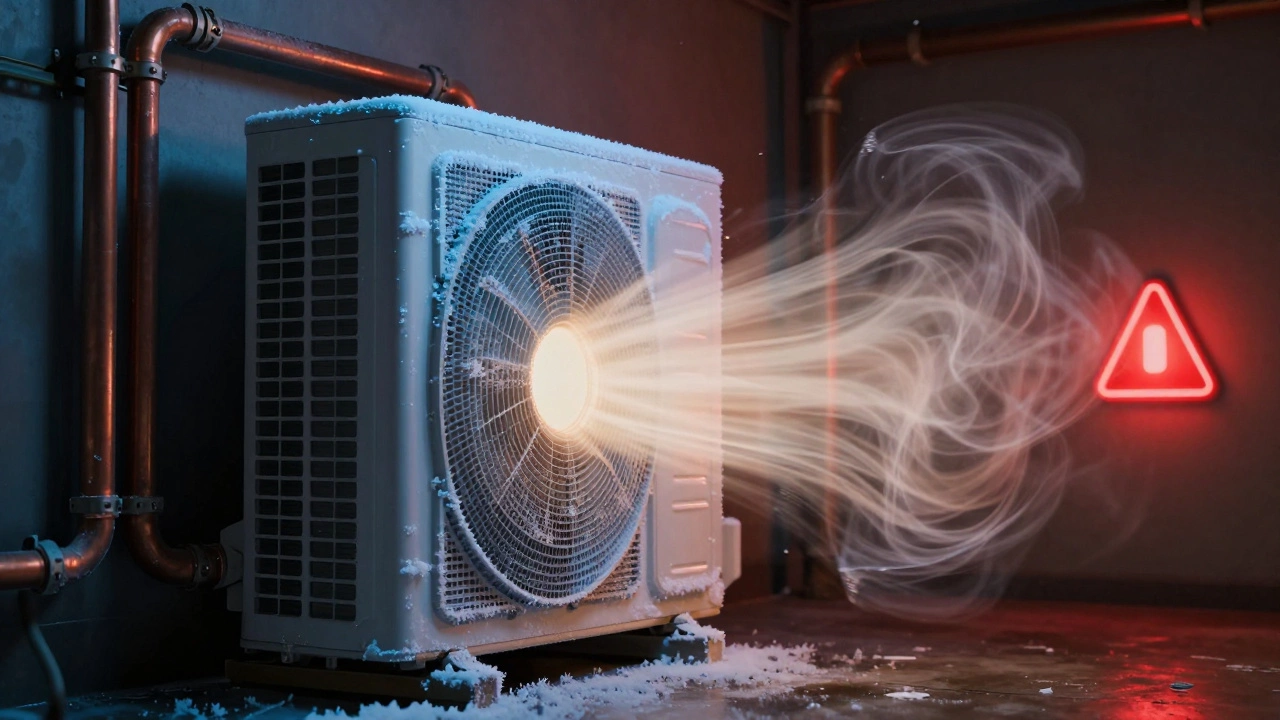
Evaporator Coil Is Frozen
A frozen evaporator coil is a classic symptom of low airflow or low refrigerant. If you see ice on the indoor unit’s metal pipes or inside the air handler, turn the system off and set the fan to "On" (not "Auto"). Let the ice melt completely-this can take 3-6 hours. Don’t chip at it. Once it’s melted, check your filter and outdoor unit again. If the coil freezes again after 24 hours, you’ve got a deeper problem-likely a refrigerant leak or a failing blower motor. A frozen coil won’t cool air, even if the compressor is working. It’s a warning sign, not the root cause.When to Call a Professional
You can fix most cooling issues yourself: filter, outdoor unit, thermostat. But if you’ve tried all the steps above and the unit still runs without cooling, it’s time to call a technician. Look for someone licensed to handle refrigerant (required by law in New Zealand). Ask if they use a manifold gauge set to check pressure-that’s how you confirm a refrigerant leak. Avoid anyone who just says "you need a new unit" without testing first. A good technician will check: refrigerant levels, compressor function, electrical connections, and airflow. If your heat pump is under 8 years old, repair is almost always worth it. Over 12 years? Consider replacement. Modern units are 30-50% more efficient and quieter.Prevention Tips to Avoid Future Problems
- Replace the air filter every 60 days during peak use- Clean the outdoor unit every spring and autumn
- Keep plants and debris at least 60cm away from the outdoor unit
- Schedule a professional check-up once a year, before summer
- Don’t set the thermostat below 18°C-it stresses the system
- Use ceiling fans to help circulate cool air, so you can set the heat pump higher These small habits extend your heat pump’s life by years and keep your bills low.
Why is my heat pump blowing air but not cooling?
The most common reason is a dirty air filter or blocked outdoor unit, which restricts airflow and causes the evaporator coil to freeze. Other causes include low refrigerant, a faulty thermostat, or a failing blower motor. Start by replacing the filter and cleaning the outdoor unit-many people solve the problem in under 30 minutes.
Can a heat pump run without refrigerant?
Yes, it can run-but it won’t cool. Refrigerant is what absorbs heat from inside your home. Without it, the compressor just circulates air without changing its temperature. Running a heat pump with low refrigerant damages the compressor over time. If you suspect a leak, turn the unit off and call a technician immediately.
How long should a heat pump take to cool a room?
In normal conditions, a properly sized heat pump should lower the temperature by 2°C in about 15-20 minutes. If it’s taking over an hour, something’s wrong-usually poor airflow, low refrigerant, or an undersized unit. Don’t wait for it to "get there" if it’s been running for more than 30 minutes with no noticeable change.
Is it normal for a heat pump to run all day in summer?
It’s normal if the outdoor temperature is very high (above 28°C) and your home isn’t well insulated. But if it’s running non-stop and the room still feels warm, it’s not working properly. A healthy system cycles on and off every 10-15 minutes. Constant running means it’s struggling to remove heat-likely due to a dirty filter, blocked coils, or refrigerant issues.
Can I add refrigerant myself?
No. Refrigerant is a controlled substance under New Zealand environmental regulations. Only licensed technicians can handle it. Buying and adding refrigerant yourself is illegal, unsafe, and ineffective if there’s a leak. You’ll just waste money and risk damaging the system or harming the environment.
How much does it cost to repair a heat pump that’s not cooling?
Costs vary: replacing a filter is $15, cleaning the outdoor unit is $50-$100, fixing a thermostat is $100-$200, and repairing a refrigerant leak with recharge is $300-$700. Replacing a blower motor runs $400-$700. If the compressor fails, repair often costs more than replacing the whole unit, especially if it’s over 10 years old.